
Pat’s dual-cab Ranger Super Duty is built to work hard on and off the road. As the Season 19 crew car, it carries camera gear, powers the equipment and gives the team a place to work between shoots. It also needs to handle touring duties and still leave room for passengers.
That balance shaped the whole build. With less space behind the cab than the Super Cab, every drawer, fridge and power socket had to earn its place. Take a closer look and you’ll find a practical touring setup, plenty of clever storage and a few thoughtful touches that make this Ranger work as hard off the track as it does on it.
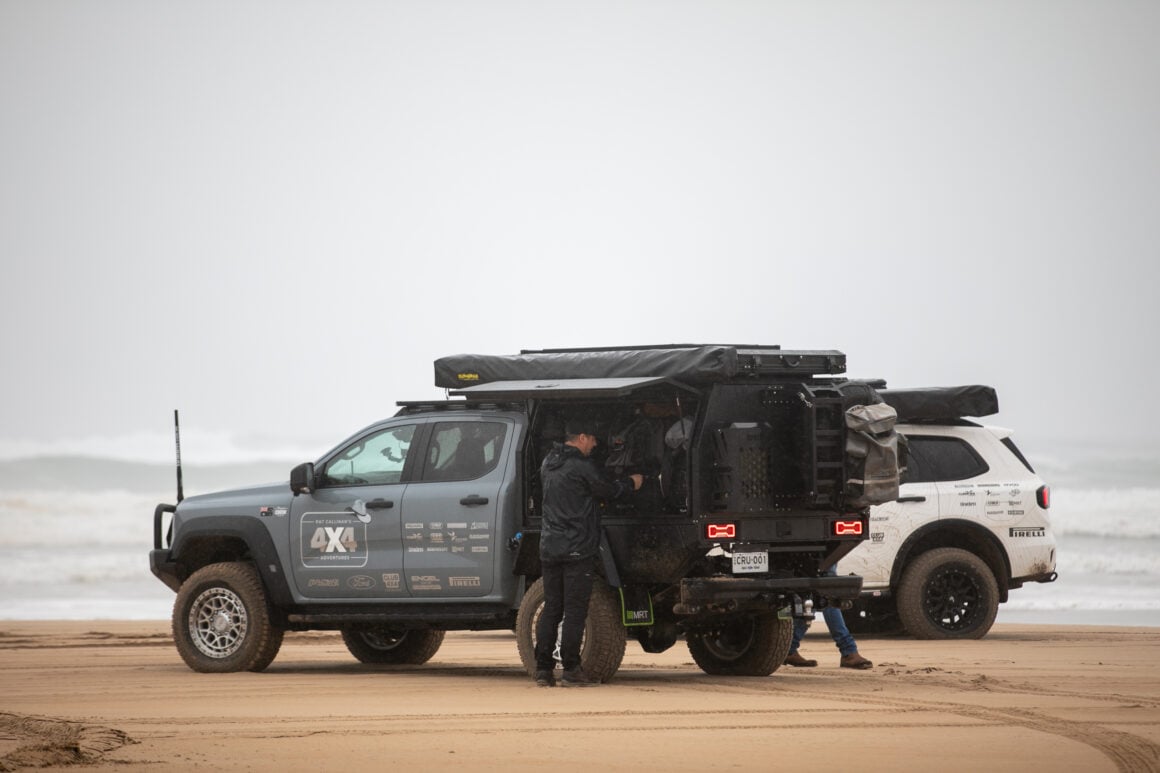
There’s a film crew working out of this canopy
Pat built two Ranger Super Dutys for Season 19. The Super Cab got the hot water and beer on tap. With the dual cab, he wanted room for the crew during the week and the family on a trip. That second row earns its keep, but it leaves less room behind the cab. You can see how much thought went into those missing centimetres when Pat opens the fridge.
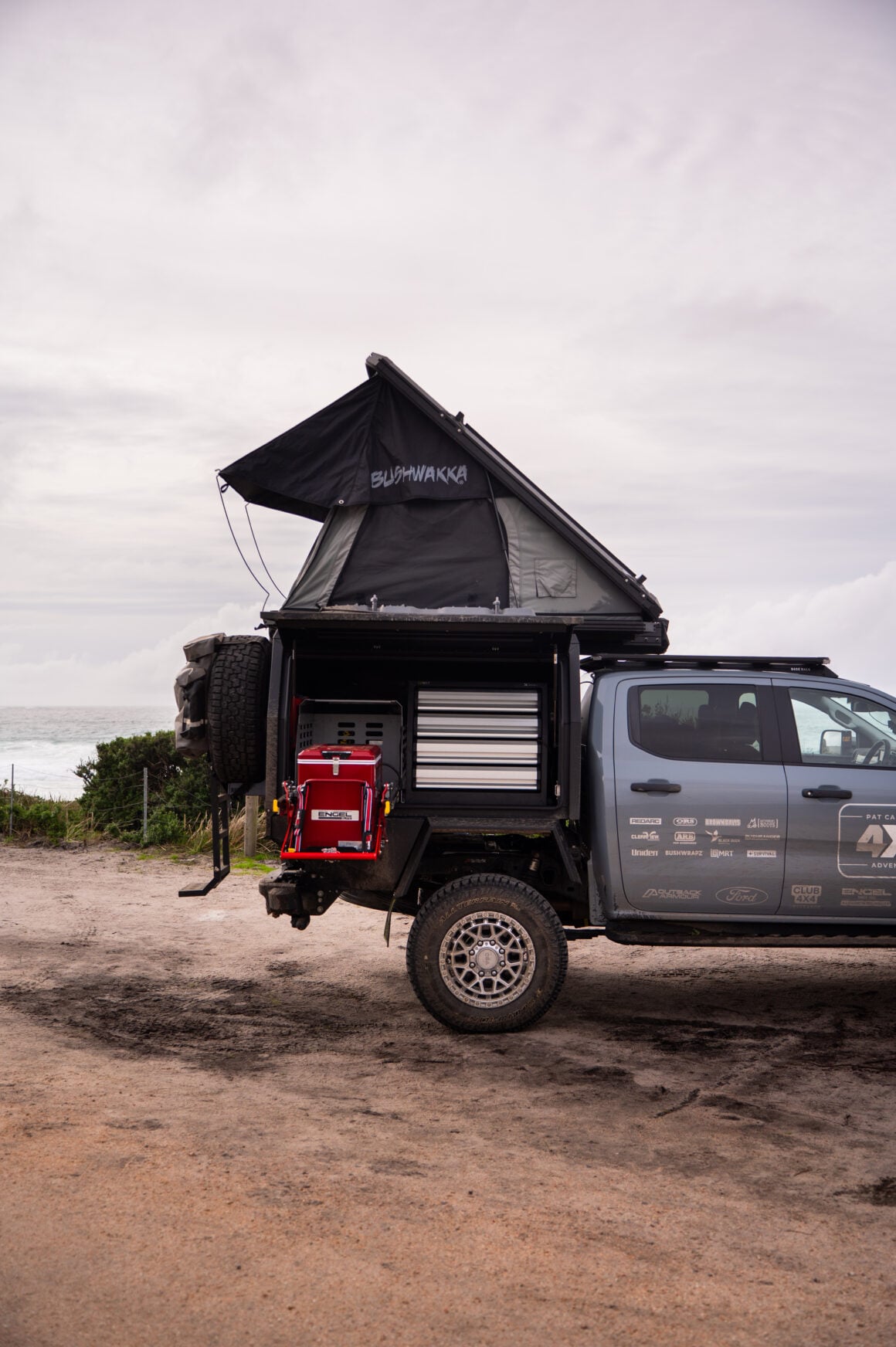
The Engel Elite rides on a Clearview Easy Slide because, left up in the canopy, the fridge sits roughly level with Pat’s nose. Lower it and you can see what’s for lunch. More interesting is the Clearview cage around it, a first for Pat. It keeps luggage clear of the compressor, stops a shifting bag knocking out the plug and gives the crew a shelf for lightweight gear. Anyone who’s arrived at camp to find a perfectly good fridge quietly warming up will appreciate that middle one.
Around the other side, the laptop bench shares space with deep ORS drawers on double runners. Bushranger recovery gear, tools and a SURVIVAL first aid kit live there. The carpet liners lift out for a hit with the gurney after a spill. As for the MRT alloy canopy itself, Pat had already spent a year with one on his F-150. His favourite detail? The automotive seals around the doors. With a season’s worth of camera gear travelling back there, he had good reason to pay attention to the dust.
What happens after Pat calls it a day
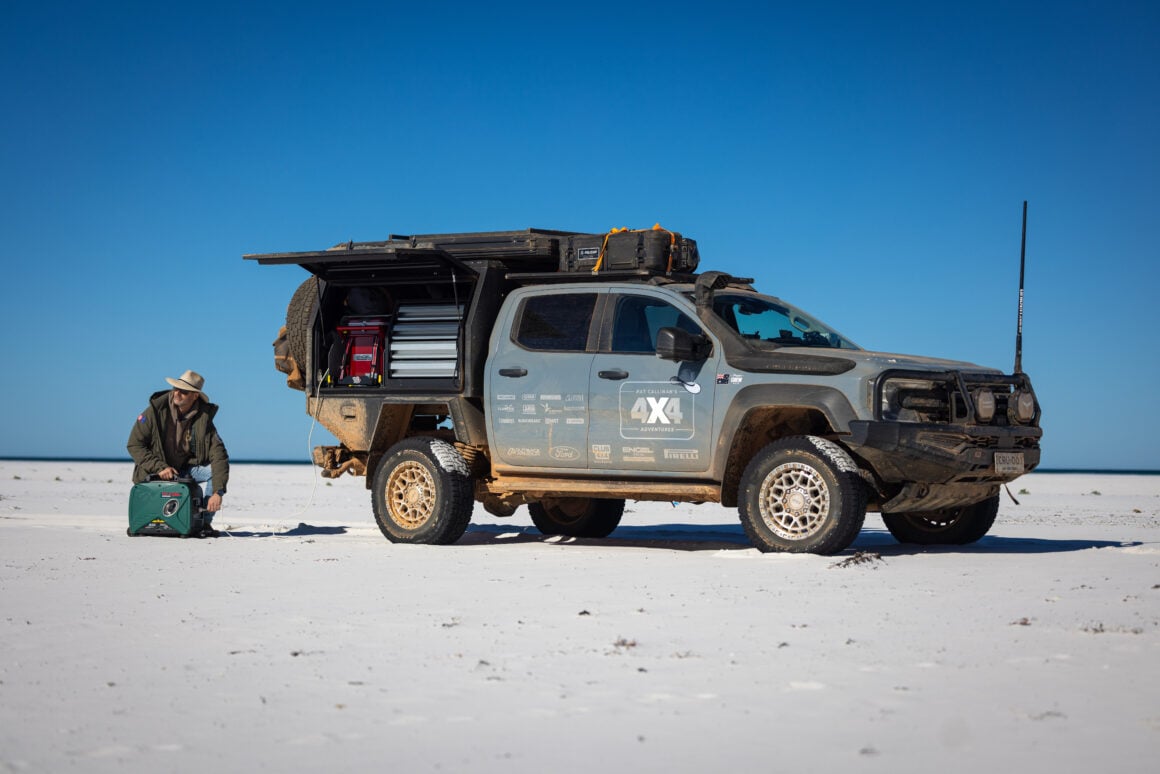
There’s still work to do when the convoy pulls up. Footage needs copying, camera batteries need charging and somebody will want the kettle on. Pat went with a 300Ah REDARC lithium battery and a 2,000W inverter. The BCDC Alpha charger and power panel sit high at the front of the canopy, away from the daily traffic of bags and cases. A REDARC solar panel rides on the rooftop tent, with an Engel generator tucked away for the days, as Pat puts it, “when the sun isn’t sunning”.
The Bushwakka 180-degree awning covers the work area and reaches around the back of the ute. Point your boots up the ladder for a minute and there’s a Bushwakka roof top tent. A step down in boujee levels from the perspex topped Bushwakka Steller in the space cab, but a fantastic option for a comfortable night sleep after a long day on the road.
Water is the compromise Pat’s happy to own. There’s a 20-litre jerry at the back. For a longer run, he’d add a bladder on the rear floor or find space for it in the canopy. That’s worth knowing if you’re pinching ideas for your own dual cab. A second row full of kids changes the packing arrangements pretty quickly.
The gear that earned its keep in Tassie
Ford gave Pat a fair head start with front and rear diff locks, a snorkel, raised diff breathers and recovery points at both ends. Even with all that, the Bushranger REVO winch got a proper workout in Tasmania. So did the Exitrax Ultimate recovery boards. Pat mounted them on a canopy door, about the last place you’d think twice about until you need them. When the ute’s belly-down and the back is packed to the roof, being able to grab the boards straight away is worth plenty.
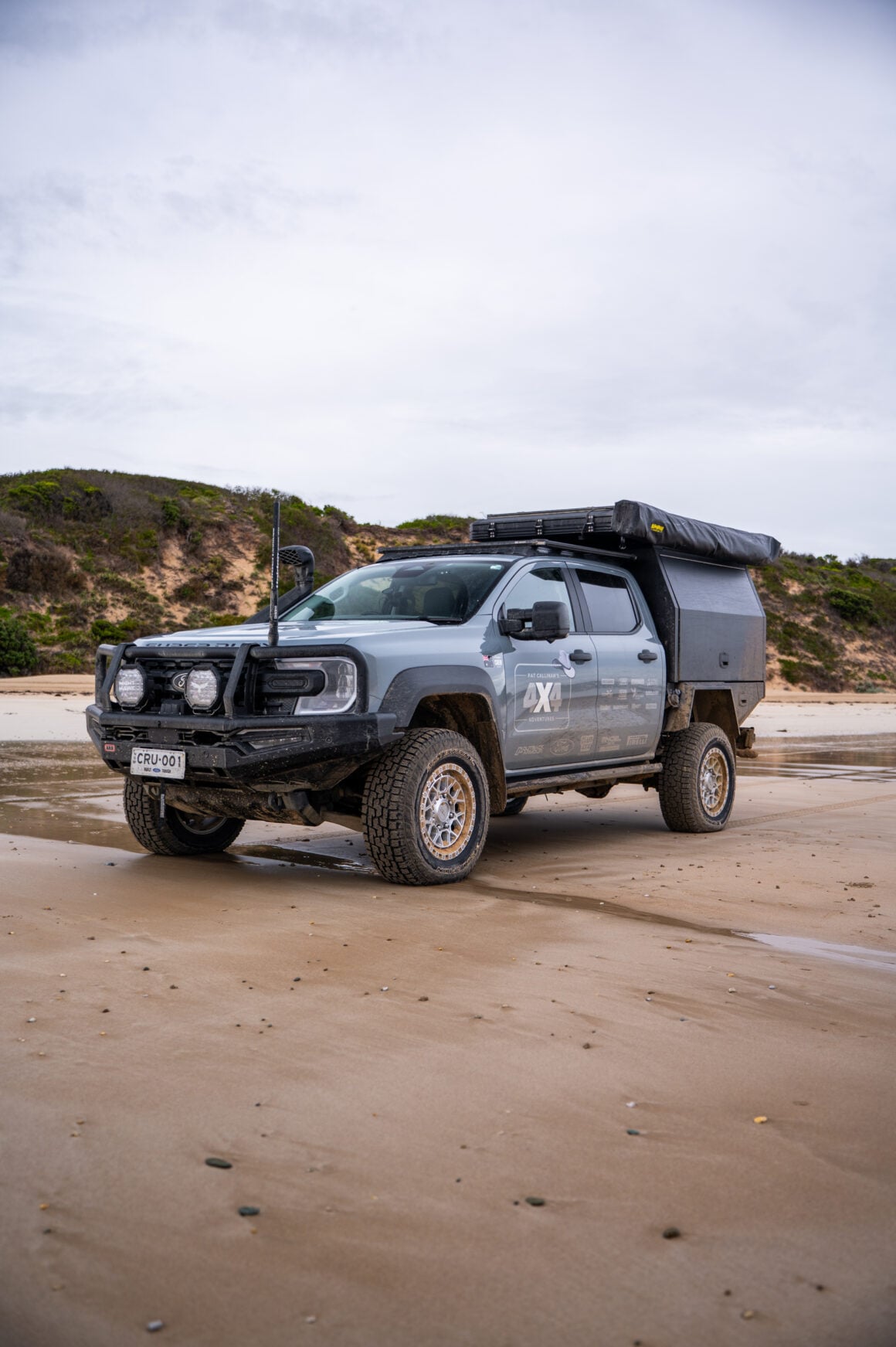
Up front, Pat left the ARB Summit bar black. It saved the cost of colour matching and, against the black grille and Command Grey guards, I reckon he got the better-looking ute out of the deal. Bushranger Nighthawks take care of the night driving. From the driver’s seat, the Clearview Compact mirrors give him a sightline past the canopy, while a Uniden XTRAK Pro handles convoy chatter. Pat’s particular about being able to hear the radio clearly. Fair enough, too. If the first car has just dropped into a hole, you’d like to catch the whole sentence.
Underneath, Outback Armour built the suspension around this rig, with 20 stages of shock adjustment to suit different loads and tracks. Pirelli Scorpion All Terrain Plus tyres handle the mix of dirt and bitumen between shoots. The bigger change for remote trips is the Brown Davis replacement fuel tank. Capacity jumps from the factory 130 litres to 230 litres, which Pat reckons gives him roughly 1,500km of range. That buys the crew another kind of freedom. They can spend a day following a promising track without having to plan the whole shoot around a fuel stop.
Where the $162,000 went
Pat puts the complete rig at around $162,000 including the vehicle, with the MRT canopy package alone in the low $20,000s. It’s serious money for a ute that spends its working life getting dragged through the scrub. That explains some of the less obvious choices, like the BushWrapz clear film over the paint and the Perth-made Black Duck covers over the seats and centre console. It also explains why Pat went for an agreed-value policy with Club 4X4 that accounts for the labour in the build. There are a fair few hours hiding behind those canopy doors.
What I like most is that Pat’s left some room in there. The Ranger has a 4.5-tonne GVM and he could easily have found another tank, drawer or appliance to bolt into the gap. Instead, there’s somewhere for the extra bag that turns up on departure morning. The fridge still opens. The recovery boards are still within reach. And when the crew noses into something Pat specifically remembers telling them to drive around, there’s a dry bench waiting for whoever gets to review the footage.