

If you’ve been following the chatter on socials lately, you might’ve seen some funky photos going around from K’gari, the place most of us know as Fraser Island, of fake tents rigged with cable loops that give dingoes a zap when they touch them. Yeah, it sounds like a bush hack someone dreamt up after too many espressos… but it’s actually a real trial cooked up by Queensland Parks and Wildlife rangers.
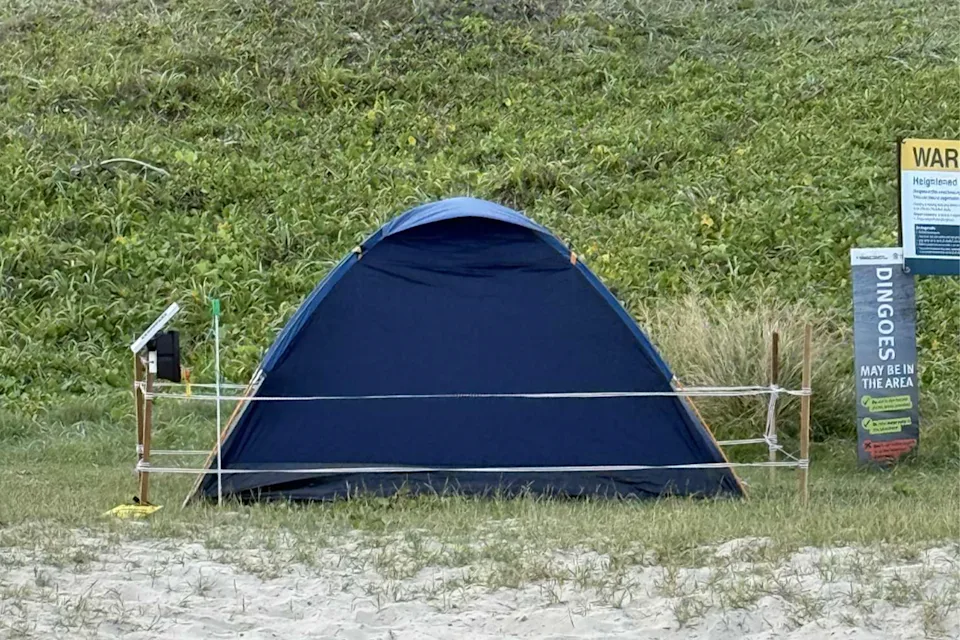
What’s the Shock Cable Tent Trial All About?
The basic idea is pretty simple: dingoes on K’gari have learned pretty quickly that where there are tents, there is often food; scraps, ice boxes, smelly gear left inside, you name it. That means they often check tents out, sometimes bite through them, dragging gear around or tearing them apart looking for grub.
So rangers set up mock tents, wired a cable around them, and when dingoes got close … zap. Not high voltage, not trying to cook them, just enough to make them associate tents with a crappy experience instead of the reward that comes with snagging a half-open zipper and a cheeky snack.
That’s basically operant conditioning in the wild, dingoes learn that tents don’t equal food anymore. In theory, they’ll start leaving real campers and their gear alone.
It’s novel, it’s a bit guerrilla, and it’s a reflection of how weird and awkward human-animal interactions on K’gari have become.
Why Did This Become a Thing? Campers vs Dingoes Reality
Here’s the background you need:
- K’gari dingoes are wild, protected animals — they’re not pests like on the mainland, and there are laws protecting them.
- Dingoes naturally scavenge and hunt; where there’s food, they investigate. That’s just survival behaviour.
- Campers sometimes leave food in tents or rubbish around campsites (sometimes accidentally, sometimes lazily), and dingoes have learned to associate human camps with free food.
- Rangers have been fighting this behaviour for years with education campaigns, “Be Dingo-Safe!” signs, guides on how to store food, and even physical fences around certain areas like Orchid Beach.
When dingoes get regular rewarding access to tents or food, they habituate, meaning they lose their fear of humans and get bold. That’s where negative interactions can escalate.
This shock cable trial is basically taking that old-school “punish the behaviour” approach, not to harm animals, but to change behaviour without feeding them.
How Effective Could It Actually Be?
Here’s where opinions and science diverge a bit:
On the one hand, research into predator management shows that non-lethal deterrents aimed at reducing food-related interactions can work, if animals consistently learn that human sites aren’t worth the effort because they don’t get food from them anymore.
The cable tents are an adaptation of think like a dingo, instead of reinforcing the idea that human gear = snack, you reinforce annoyance = rewardless behaviour.
On the other hand, dingoes are intelligent and contextual learners. They might generalise a zap around tents only if that’s repeated consistently. One random cable rig might just confuse them. For this kind of approach to stick, it’d likely need long-term rollout, not just a few tents in a corner somewhere.
Plus, the bigger problem remains human behaviour, campers leaving food accessible in their tent, coolers or rubbish. Until we fix that, dingoes will keep testing noses where they shouldn’t be.
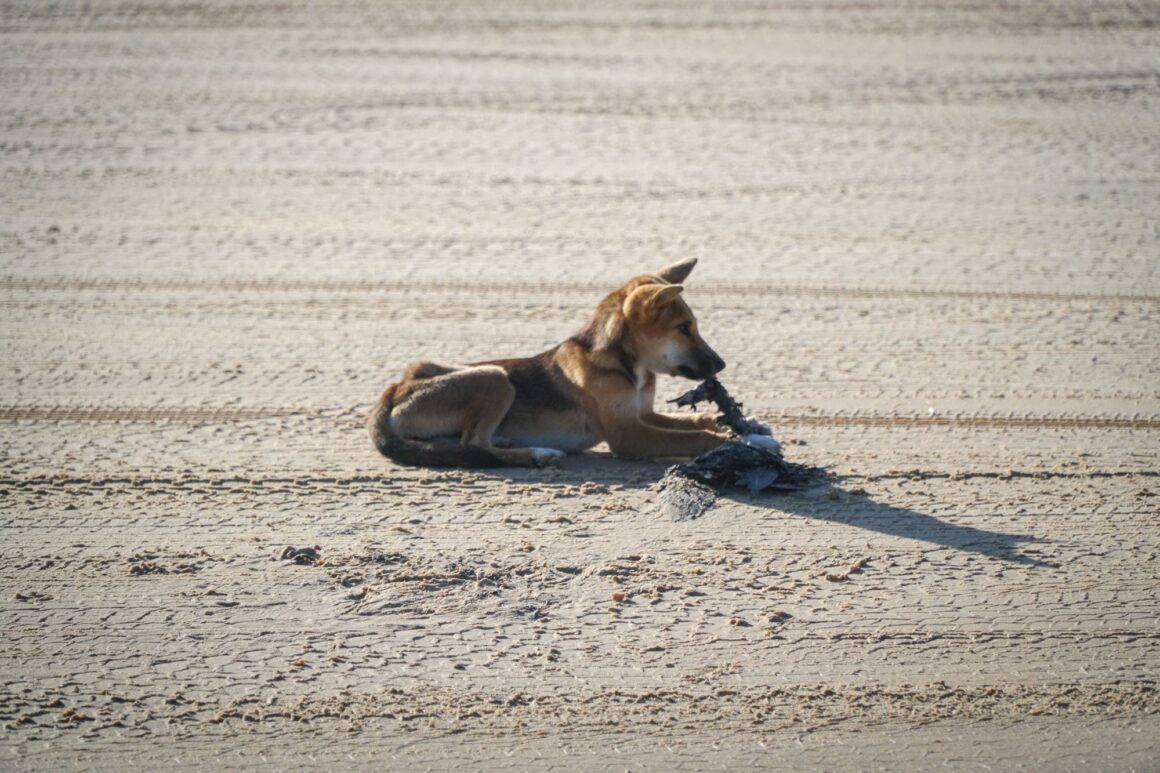
The Bigger Picture: Dingo Management on K’gari
The shock tent news isn’t happening in isolation:
- Queensland maintains a fraser island dingo management plan aimed at balancing dingo conservation with visitor safety. It’s been running since the early 2000s and includes education, enforcement and engineered barriers.
- Dingoes are a protected native species there — outside parks they’re considered pests, but on K’gari they’re wildlife to be conserved.
- Habitat protection and avoiding habituation is a pillar of the strategy, and feeding, deliberate or accidental, is illegal.
- In recent weeks there’s also been heightened debate on how to deal with aggressive or habituated animals after a tragic tourist death that sparked government action.
In short, authorities are juggling wildlife protection, visitor safety, tourism interests and traditional owner voices — and it’s messy.
Tips for 4X4ers: How to Stay Out of Dingo Drama
If you’re heading up to K’gari with your rig and a tent, here’s what actually makes a difference:
- Store food properly — airtight, zipped, in your vehicle or locked into a fridge. Never leave food in tents.
- Keep rubbish sealed and don’t leave scraps outside or near camp. Dingoes have crazy noses.
- Never feed dingoes — even if they look cute or friendly. It’s illegal and it trains negative behaviours.
- Be vigilant around kids and alone travellers — dingoes can move quick and curiosity isn’t cuddly.
- If you’ve got dogs, keep them off the island — they bring disease, risk cross-breeding and create management headaches.


2 comments
I like my deterent much better and it only costs $1, hollow points work well, the dingoes are great target practice.
Another trick Tony Tatts is puting a ton of Ratsak with mince in a toy doll, It is an absolute laugh a minute watching the evel killers choke on there own vomit. so good happy days 🙂