
Pat hooks into the tracks and surrounds of Litchfield National Park – and comes up trumps
ADELAIDE RIVER – COOMALIE AIR STRIP – SNAKE CREEK – TIN MINE – THE LOST CITY – LITCHFIELD – REYNOLDS RIVER TRACK – CENTRAL VALLEY – PINE CREEK – BUFFALO CATCHING
Story by Pat Callinan
Images by Tommy Salmon
Cities on the remote extremities of our nation are oft outward-looking. I’m talking about places like Perth and Darwin. They masquerade as cities but walk through their city streets on a Sunday, and the streets are dead, save for a few touristy pubs. The good people are doing what good people do. Either going to church or exploring god’s church – the Australian bush.
Now with a city like Darwin, 4X4s are some type of religion; so when you plant an extraordinary national park just a few hours south, with incomparable swimming holes, then it’s bound to get busy. Some might say too busy. So, the attempt with this adventure is to show you where to go, what to do, and how to avoid the crowds. Sound good? Well let’s get started, shall we?!
ADELAIDE RIVER & SURROUNDS


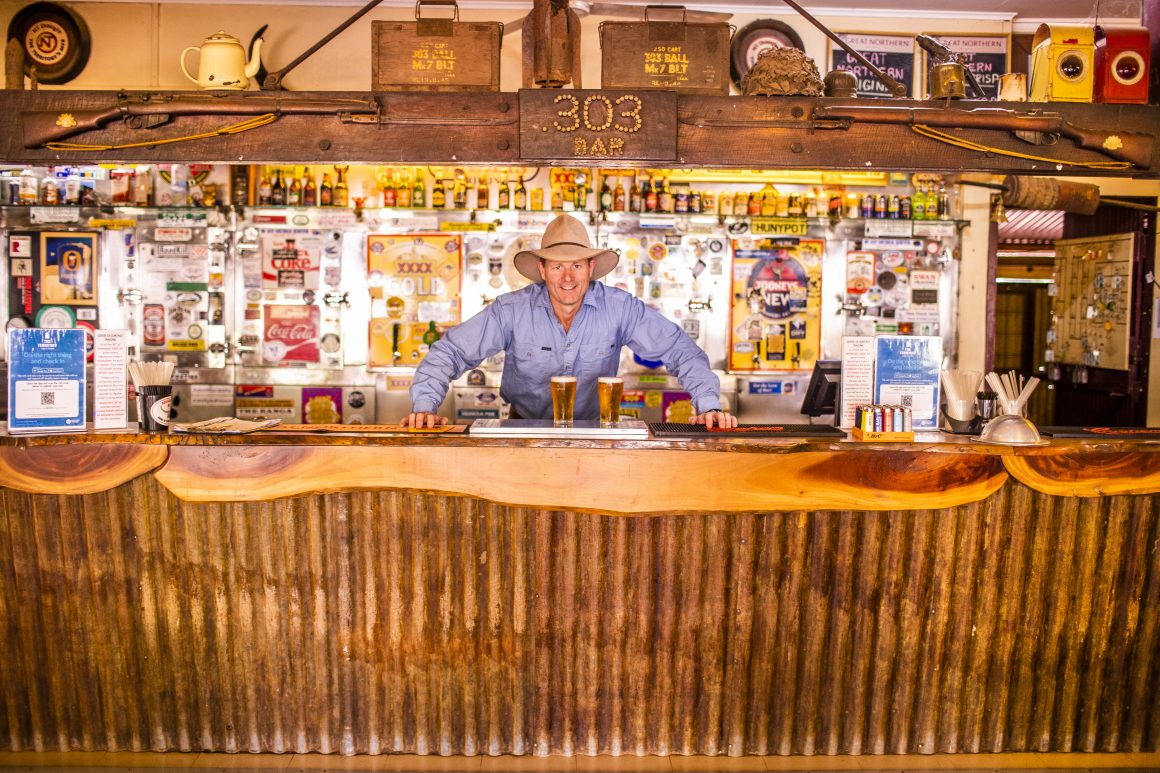
An almighty big buffalo called ‘Charlie’ presides over the iconic 303 Bar. Charlie starred in Crocodile Dundee alongside Paul Hogan, in that mesmerising scene where he was hypnotized. If character is what you’re after, the Adelaide River Hotel is the place to go. Located on the Stuart Highway, it’s a tribute to the mighty .303 calibre rifle that saw our soldiers through World War Two. The pub is outstanding, serving humungous meals and cold beers, but the Adelaide River township has a story to tell. On the southeastern edge of town sits the Adelaide River War Cemetery.
During WWII more bombs rained down on the Northern Territory than Pearl Harbour, many unfortunately finding their mark. So, it was decided that rather than scattering our fallen across the Territory, they would build a place worthy of their sacrifice – if that even possible. The Adelaide River War Cemetery is that tribute, and it was one of the most moving places I have visited in this country. Trimmed and coiffed to perfection by the gardeners, it is a beautiful place. Majestic tropical tree species line the extremities, while smaller shrubs define the sections. I implore you to visit, even if, like me, your close relatives never served. You won’t regret it. Oh, and entry is free.
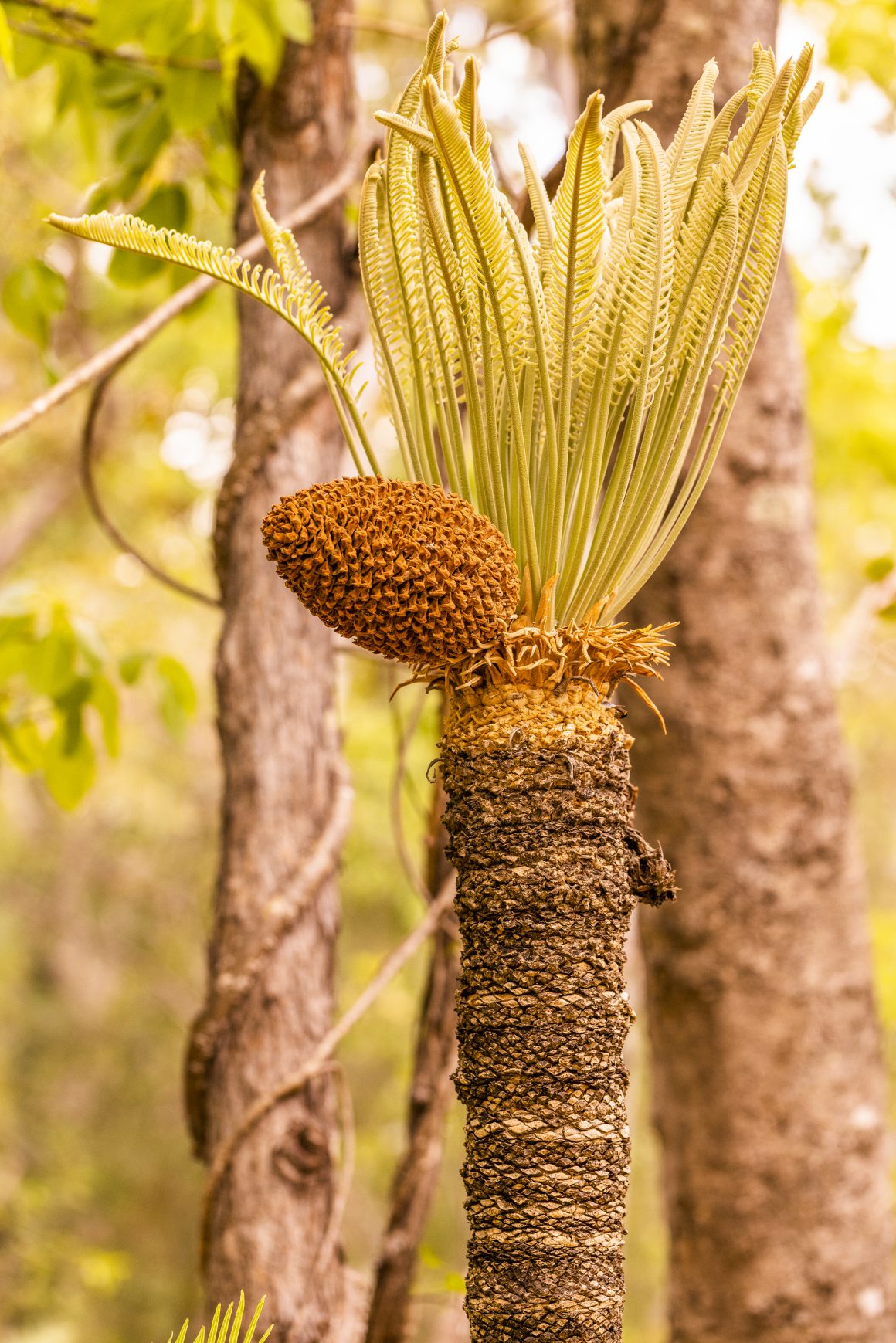
Just a few kilometres southwest of town sits Robin Falls. The bitumen winds its way to the lower river section, where small rapids sit astride some nice little campsites. Few facilities are here except for some purple wheelie bins, but if you’re looking to save a dollar then it’s a fine camp. Yet the lower reaches of the falls are not what you have come here for. Point your bonnet back towards town, and then take a left turn up towards the Telstra Tower. The steep road rides up to the ridgetop, and then you’ll turn left, engage low range and duck down to the valley. The country here is dry open scrub – in the dry season. The wet season breeds grass that is higher than your roof. But that’s the Territory – a place of extremes. The track winds its way through some interesting country, with punchy green palms and cycads littering the otherwise beige scrub. There are a few little rock jump-ups and dry river crossings, but nothing some judicious wheel placement won’t solve. We travelled in late September when it was dry and dusty, but I would love to do this rack in May or June at the end of the wet. After skirting out around some clean rock faces and darting between trees, the one-lane track ended. Yet it ended at the top of … Falls. A good 20-metre drop, and a superb sight. Given the season the water wasn’t running, but regardless, it still made a wonderful destination.
Footnote: Go here as early in the season as you can after the wet!
To understand this slice of the Northern Territory, you do need a basic understanding of World War II. Darwin and the N.T was Australia’s first line of defence. The Japanese were attacking from the north (although God knows what they wanted. There weren’t even bloody mango farms back then!). The Japanese planes had zeroed in on Darwin, so our defensive lines move southwards by approximately 100km. This defensive retreat was never communicated to the masses in the east coast capitals, as they didn’t want to cause mass hysteria.
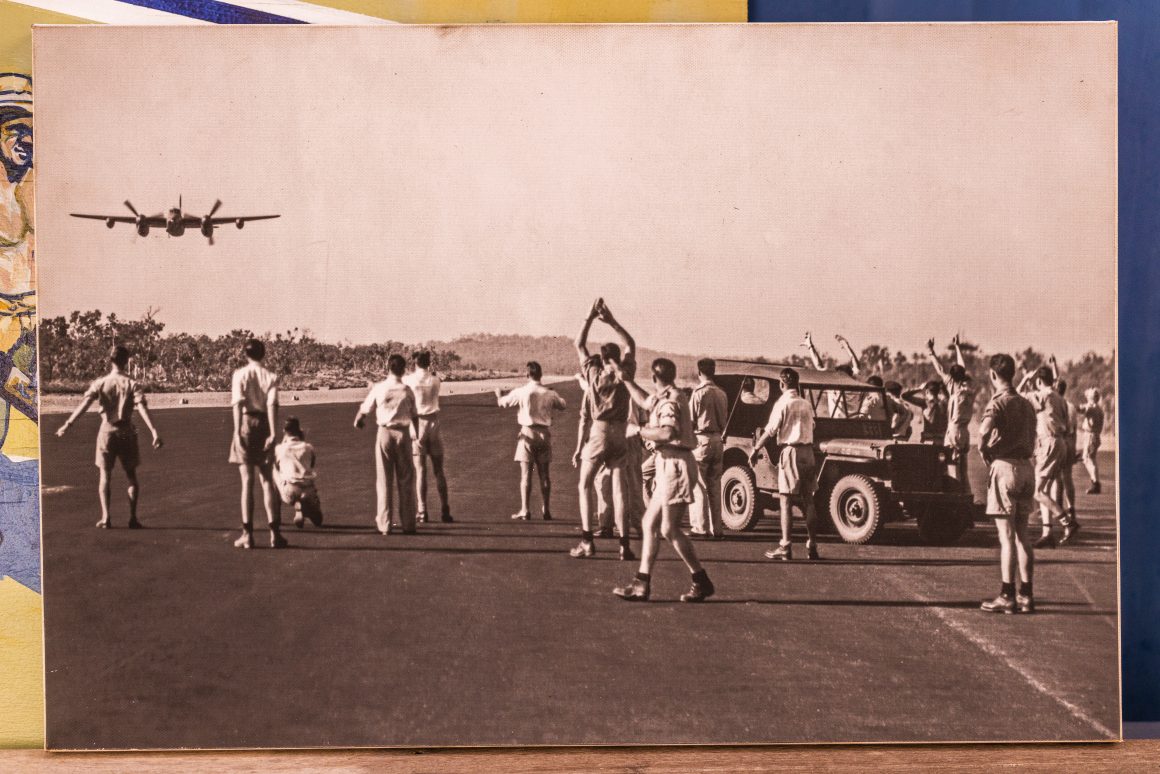
In the area around Adelaide River, a concentration of airbases and armament depots were erected. The enemy planes would then have to fly inland, exposing themselves to gunfire and depleting their fuel load. As you drive up the Stuart Highway, you will see sign after sign saying: ‘WWII Airstrip’. Surely one of the most impressive is Coomalie Airstrip, owned privately now by Richard Luxton.
In wartime, around 2200 men and women lived on the base here, and remnants and relics from that era continue to be found today. Spitfires, Beaufort Bombers, and many others graced the airstrip here, and Richard has painted the outlines of these planes on the airstrip, giving you a real feel for the size of these places. A passionate historian, Richard would like to see a WWII-based history centre built in the area but has found successive governments unwilling to support such a project. In a country like Australia, I think a centre like this would be a boon for tourism, and a wonderful learning experience for travellers. You need look no further than the Stockman’s Hall of Fame to see how a remote tourist attraction can thrive.
Just a few kilometres northwest of town lies the Snake Creek area.
Here, you can drive along the old railway line and see the ingenious design of the old Nissen huts. Inside these sheds, armaments were made and stored. The sheds were either built into the side of hills or buried under masses of dirt, making them imperceptible from the air. You can also fossick through an old rubbish dump, where old military relics are slowly succumbing to iron decay.
LITCHFIELD NATIONAL PARK
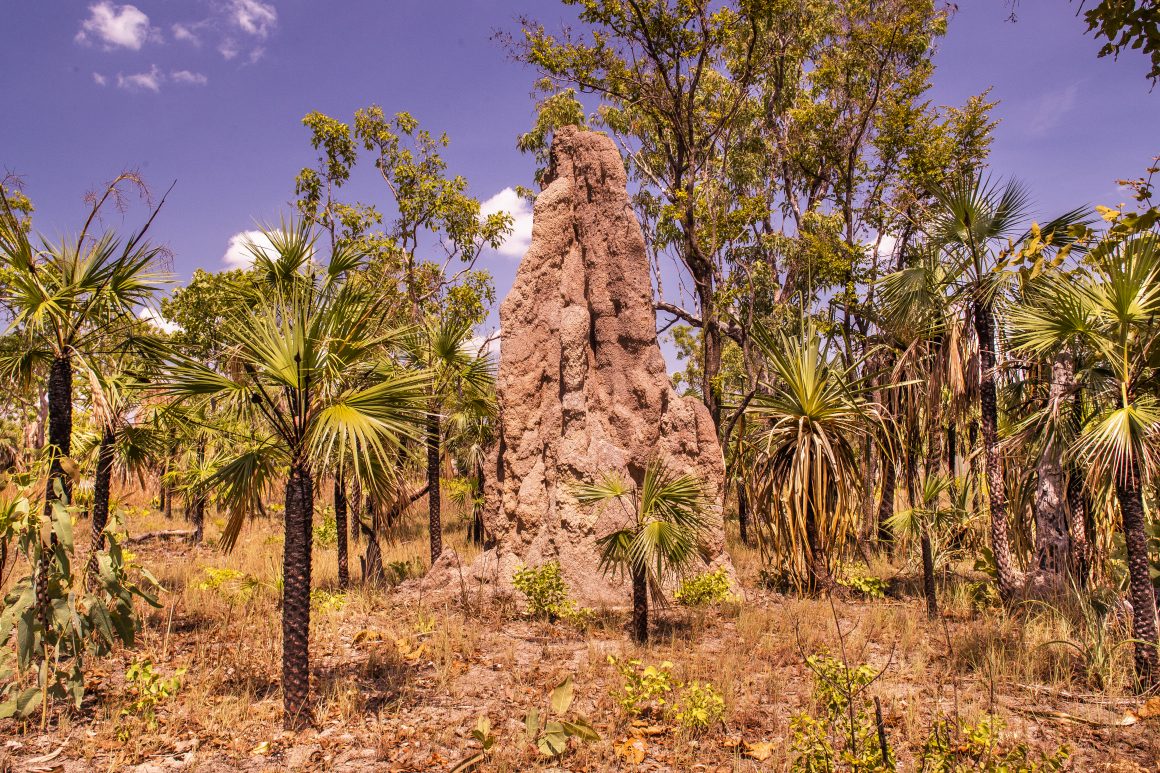
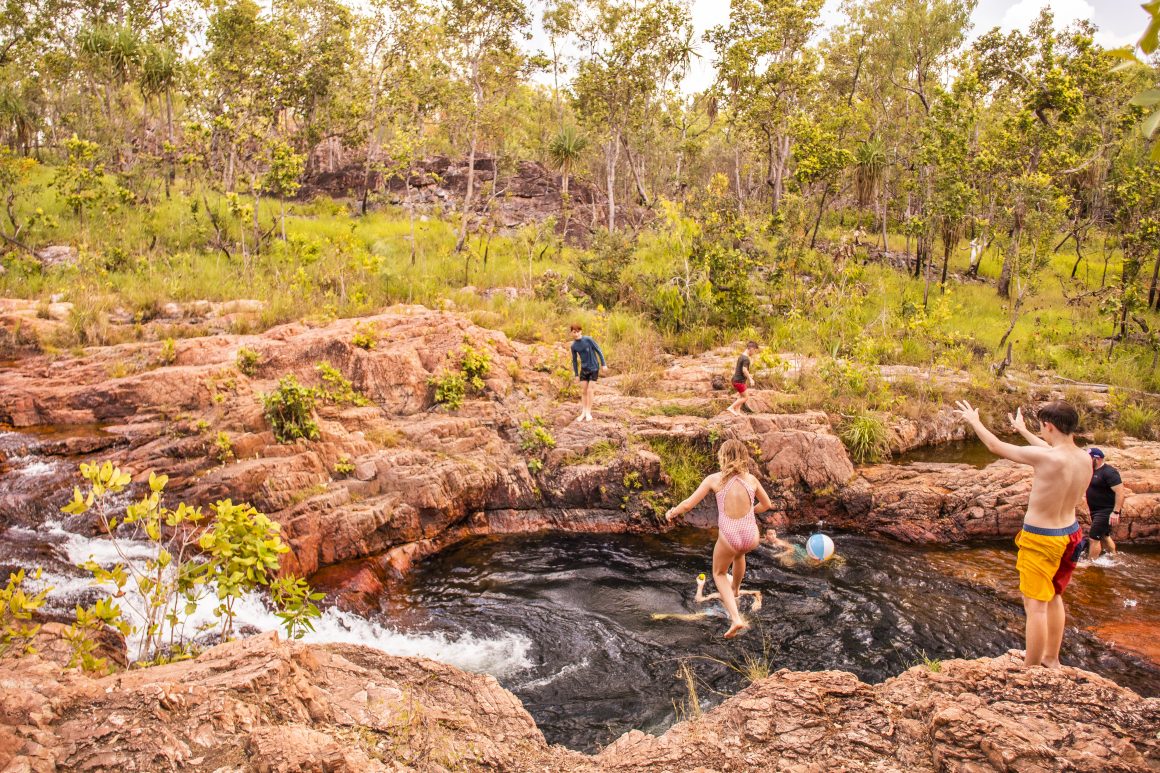
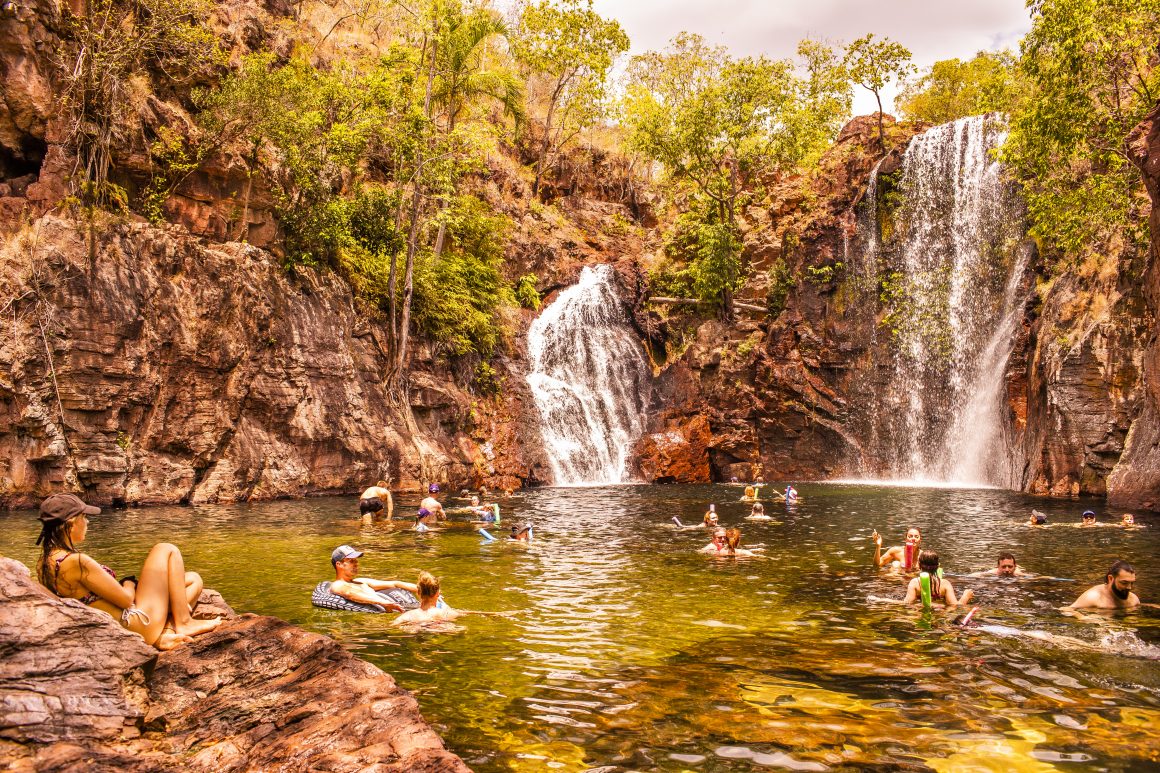
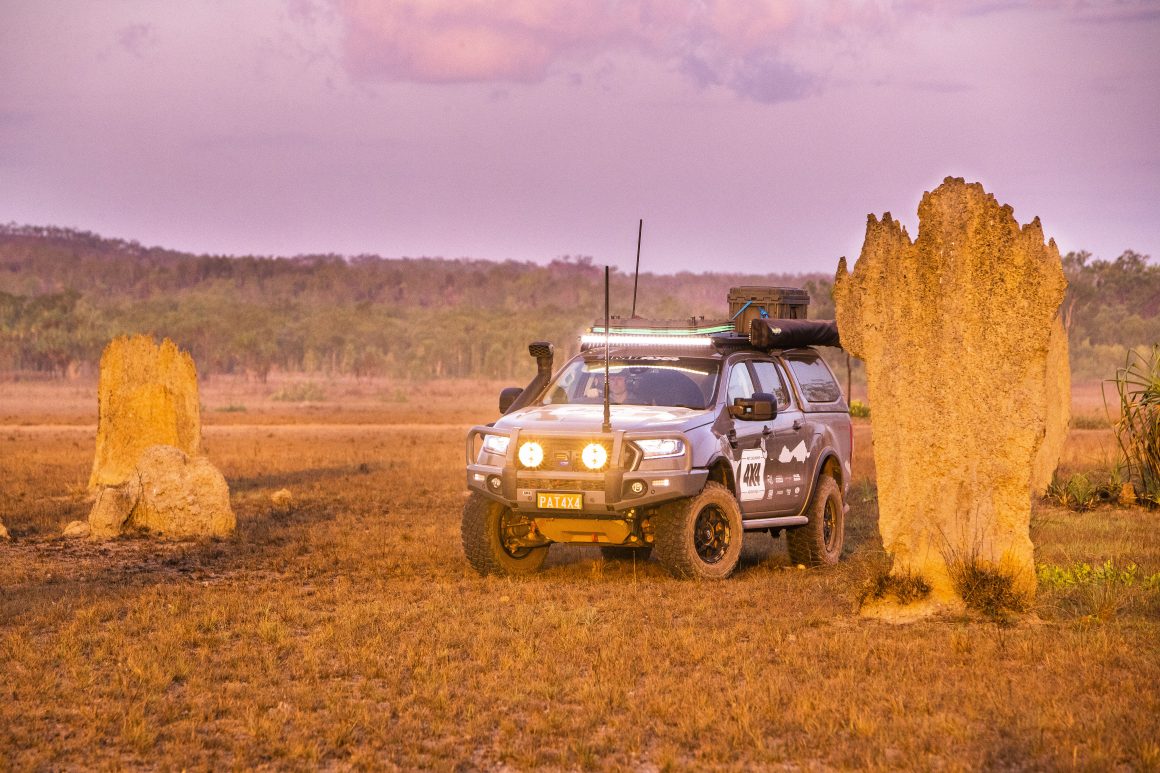
The northern attractions of the Litchfield National Park are many and varied. Waterfalls, rock holes and magnificent magnetic termite mounds combine to make it one of the most visited attractions in the Northern Territory. And while the smooth stretch of winding bitumen wrapping around the park makes it impossible to call it a 4X4 destination, you would be mad not to visit the highlights. For me, those highlights include Florence Falls, Buley Rockholes and Wangi (pronounced Wonguy) Falls. Florence Falls has an enormous wooden staircase that leads you to the bottom. It’s visually spectacular given the height of the drop. Buley Rock holes is the most easily accessed, and the most fun for families. It gets crowded though, so try and time your visit for sunrise and sunset.
Wongi Falls has a majestic vibe to it and is probably my favourite of the three. Swimming up to the base of the waterfall will net you rewards. Clamber up a few rocks and you will have your own circular rock pool. It’s more than worth the 100-metre paddle out there. Again, this place can get crowded, but with a camp nearby you can time your visit to be sans crowds.
It may sound obvious, but saltwater crocodiles do inhabit these waterholes during the wet season. They are caught and relocated downstream, and traps are set to catch them should they wander back upstream. The advice here? Don’t swim out of season when it’s closed. Unless your surname is Dundee…
At the northern end of Litchfield NP, sits a small tin mine. The mine itself stopped functioning more than 50 years ago, but from the sparkling gravel, it’s easy to see why the place was chosen. There’s a nice (short) loop walk around ruins, although they have been really quite well preserved. Allow about 30-60 minutes for this one.
THE LOST CITY
Access to the Lost City runs south off Litchfield Park Road. It’s high-speed gravel until you turn right at the T-Section. There are some angry bulldust holes here, but once through them, the one-lane track meanders through the scrub. It’s a pretty drive, that only gets more interesting the longer it runs. Soon enough, the rocks start to appear, giving you a hint of what’s to come.
The Lost City is a collection of ancient sandstone rock structures, the likes of which few have ever seen. Even people who live around the east coast sandstone escarpment will be surprised by the complexity of the structures. The shapes, the patterns and the irregularities of the rocks combine to make both an interesting and stunning scene. And there are a few million reasons why this place looks nothing much like its east coast cousins. That’s because it’s a few million years older, so the erosive effects of wind and rain have had longer to make their mark on these mega stones.
CENTRAL VALLEY
Returning from the Lost City, at the intersection, you could either turn left and return to the bitumen or go straight on. However, you would hit a gate. This is the newest national park campground and 4X4 track in the Northern Territory. Access to Central Valley takes some time money and effort, as you need to secure a gate key from a Parks NT office in either Batchelor or Darwin. This will allow you access through a couple of gates, and then it’s strictly 4X4 territory.
The road winds its way along a rocky ridge, where local 4X4 clubs helped Parks NT trace old farm tracks. So rather than cutting an entirely new track, they have resurrected and linked a bunch of old ones. The result is a single lane track that’s good fun to drive. You’ll know you’re getting close to camp when the road dives abruptly to the valley floor. Low range or hill descent control may come in handy here, particularly if you’re towing a trailer.
Currently, there are ten camps, but there are another 20 in the making. Each camp is separated from the next, and this is no coincidence. Central Valley is designed for campers who want to get away from noisy, crowded camps. People who plan their journey, and don’t mind the inconvenience of having to grab a key.
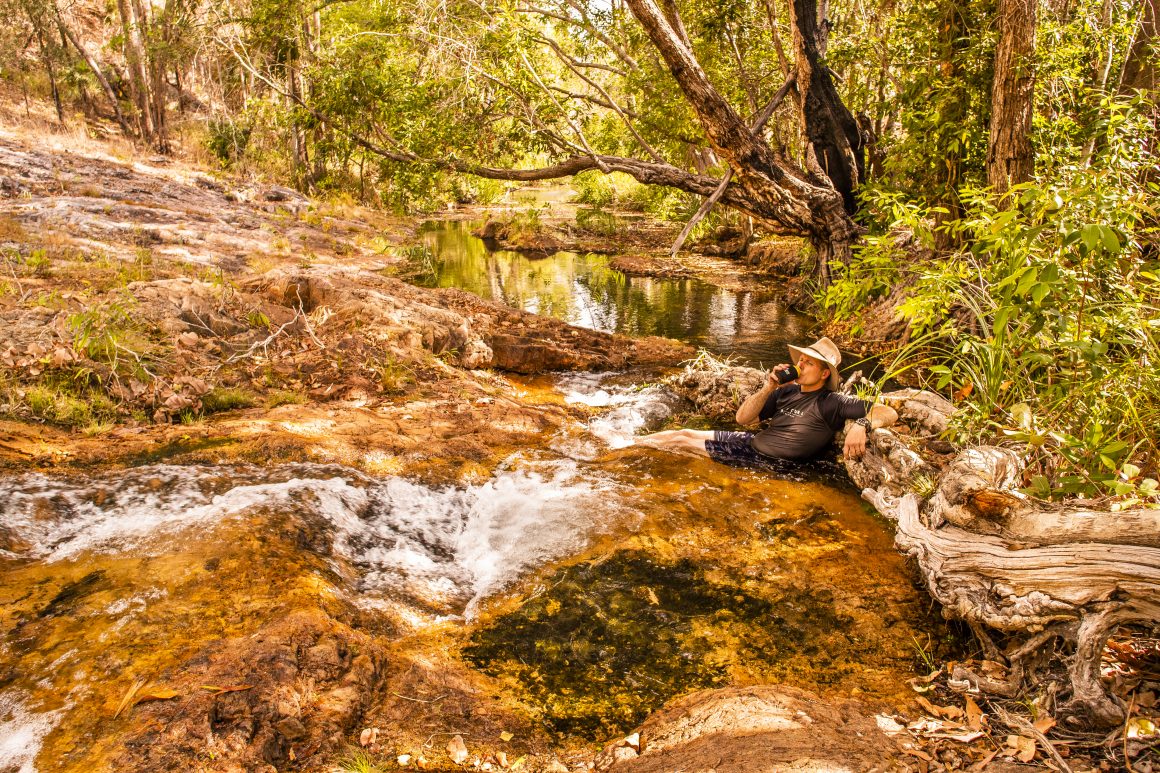
The rewards here are many though. Most camps are oversized and feature a little path leading down to your very own plunge pool. Yes, this is paradise.
My advice? Book in advance because these camps make the more crowded camps look rather bad.
REYNOLDS RIVER 4X4 TRACK – SANDY CREEK FALLS – SURPRISE CREEK FALLS
If Central Valley boasts the best campsite, then the Reynolds River Track surely boasts the finest 4X4 track. It has it all – water crossings, lush greenery, barren termite plains and some incredible waterholes. Even explaining this place is doing it an injustice – you just need to experience it!
Vehicle suitability depends largely on the water content on the track. Late in the dry season, you could get a standard high clearance dual cab or 4X4 wagon through no problems. But early in the season when the wet season runoff is still flushing out, a snorkel and a minor lift would be preferable.
We entered from the north, and the first stop was Blyth Homestead. It’s a beautifully maintained old house and is dotted with historical facts from the Blyth family who called this place home.
Keep trekking further south, and you’ll land at Sandy Creek Falls. It’s a rocky 1.5km walk to the spectacular waterfall, and I’d recommend wearing some good boots. I mistakenly wore thongs but should have kept the Mongrel boots firmly attached to my feet.
Sandy Creek Falls, also known as Tjaynera, is gorgeous and spectacular, as fresh spring water tumbles gallantly over the reddish-black rock face. A tyre tube or flotation device will ensure extended fun too, as there are no gentle beaches here, just a few rocks.
Surprise Creek Falls is another superb campsite and a short stroll away from yet another magnificent waterhole. Although beware the sunset stroll, as on one occasion I was in thongs and swimmers and saw about six black snakes slithering across the track just after dark…
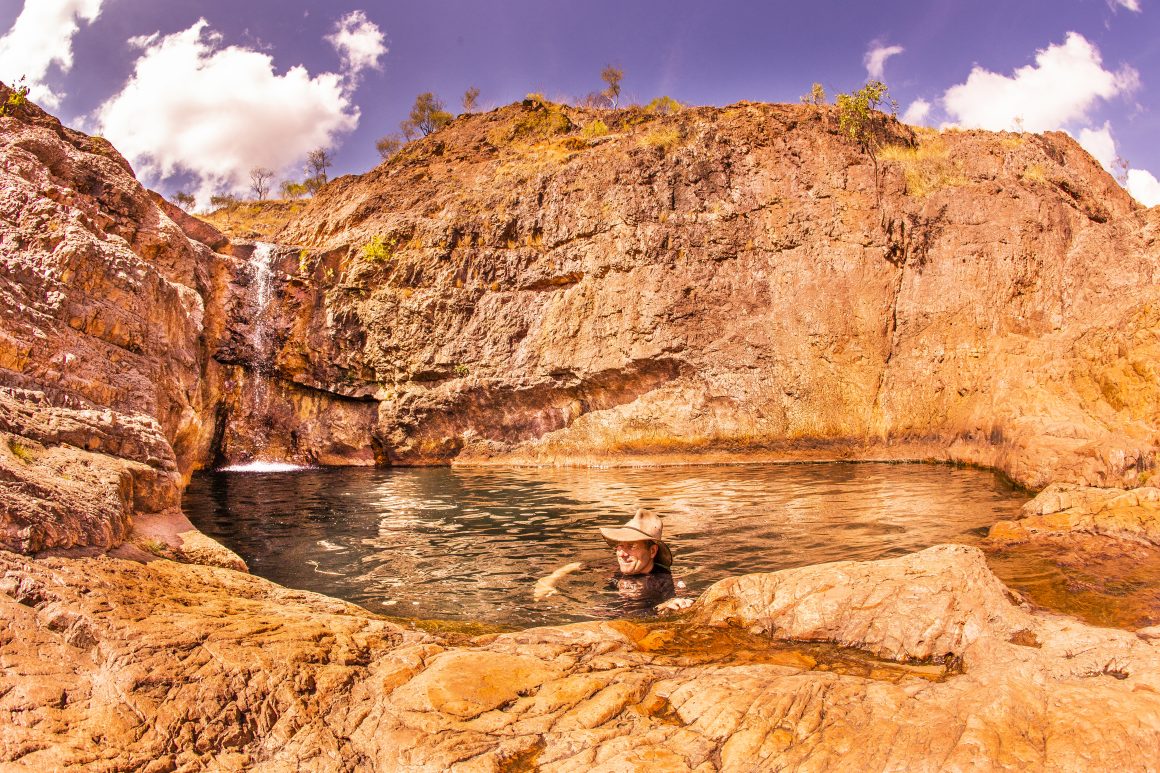
Surprise Creek Falls is made up of two beautiful circular pools that flow into each other, and then a third pool at the bottom. Clamber up the rocks and there are some neat bathtub sized pools here as well. The middle pool is well-suited to rock jumps, but obviously, check your landing zone for obstacles that may have washed down in the wet season. I absolutely adore this place, and it always sticks in my mind as the iconic Litchfield waterhole. Probably because of its beauty, its fun and its location. Being at the end of the Reynolds River Track, you’re less likely to see other humans.
PINE CREEK
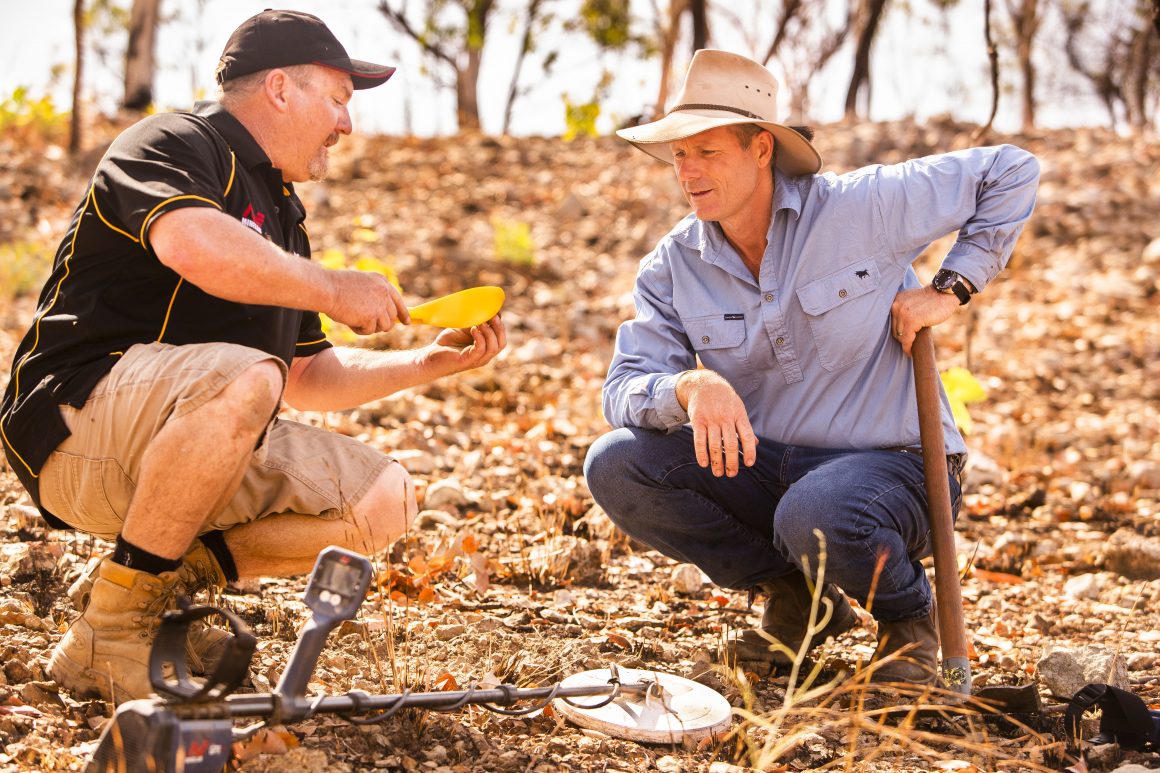
You already know the Northern Territory as a 4X4 paradise, but you may not know that it’s considered by many as the last frontier of gold prospecting. It was oft-thought as ‘tapped-out’ until a consistent flurry of discoveries sparked a new rush of interest. I’ve little doubt that the rush is supported largely due to the technology in handheld detectors by companies like Minelab, allowing easier and more accurate prospecting. These machines can even operate underwater, and their military-grade technology has paid dividends for many amateurs. Although I’m not too sure my mate Mick Brown would be considered an amateur, after picking up a $200K nugget in Victoria, he moved to Darwin and opened The Outback Prospector selling gear both in-store and on the net. Mick even showed me the ropes, and I finally managed to pick up my very own nugget to take home! Prospecting and fossicking is such a natural marriage with 4X4 exploration, as the places we like to go are often full of relics and gold. It just adds another great dimension to your adventure, and these things pack up to be around 40cm long, so they don’t add much to your payload.
BUFFALO CATCHING – CONWAYS STATION
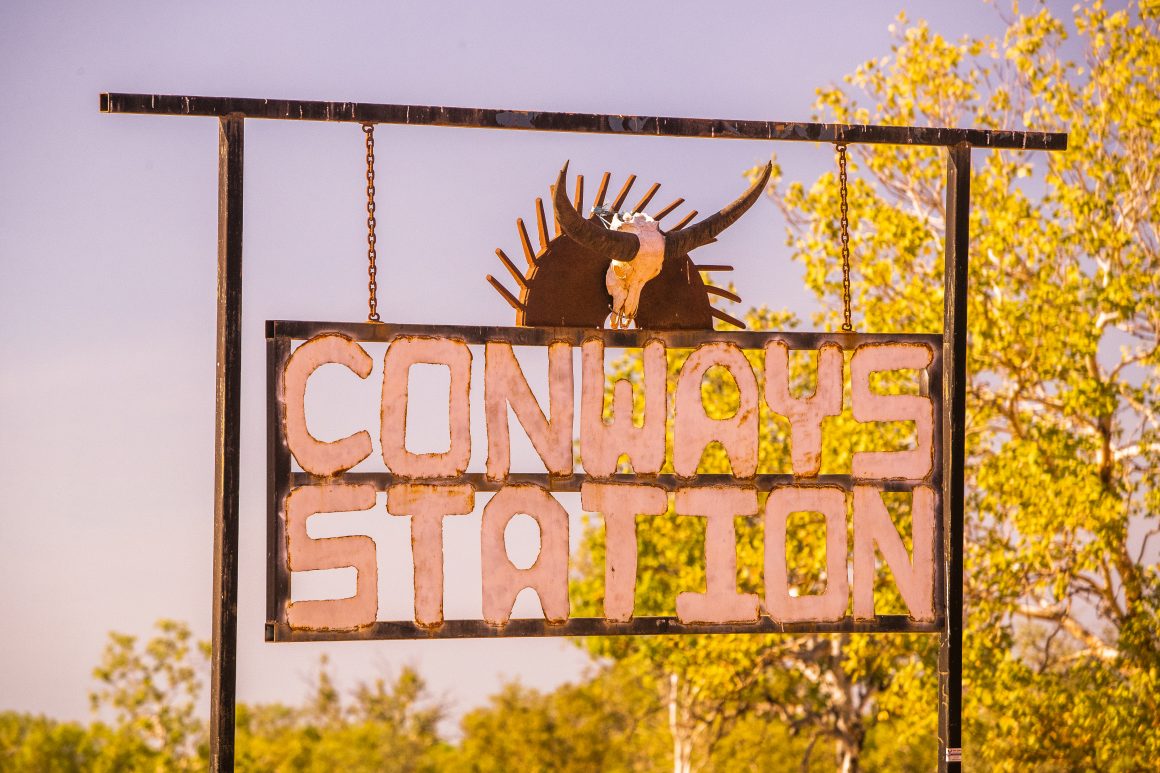
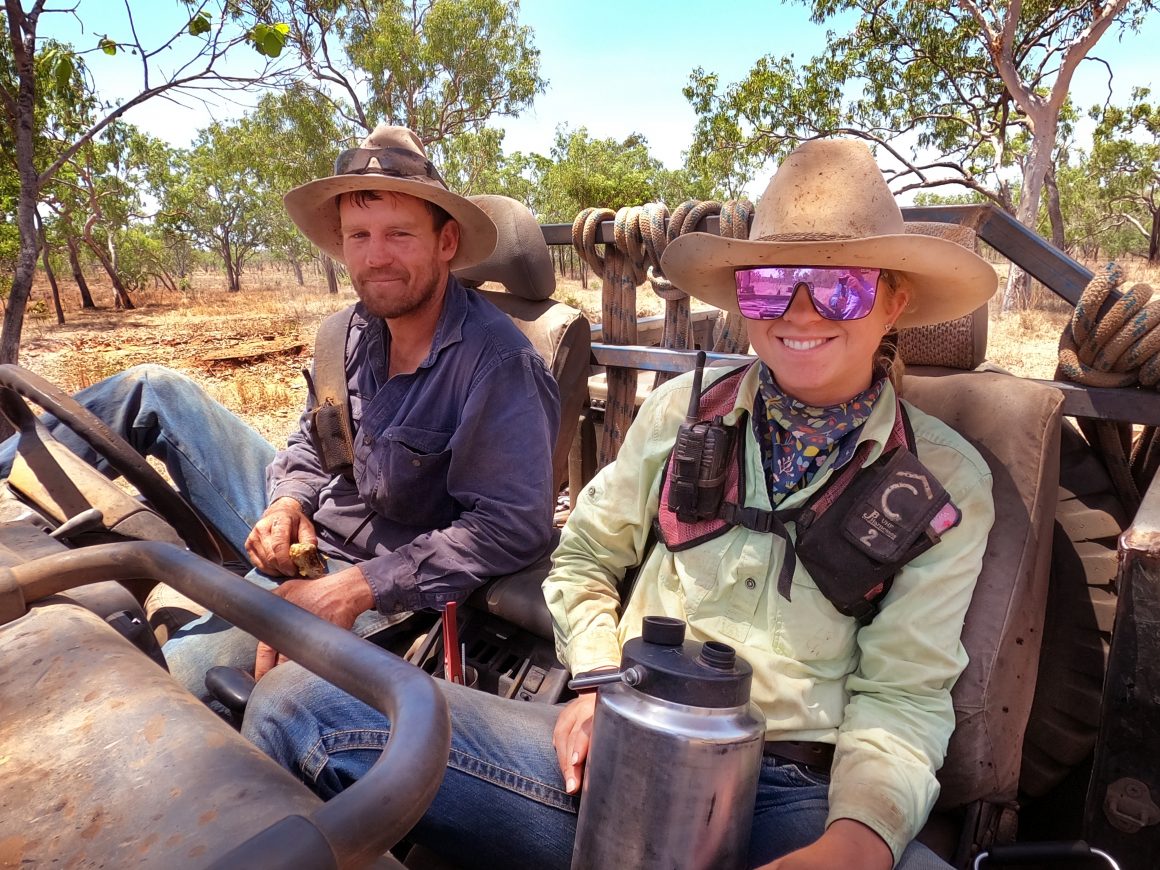
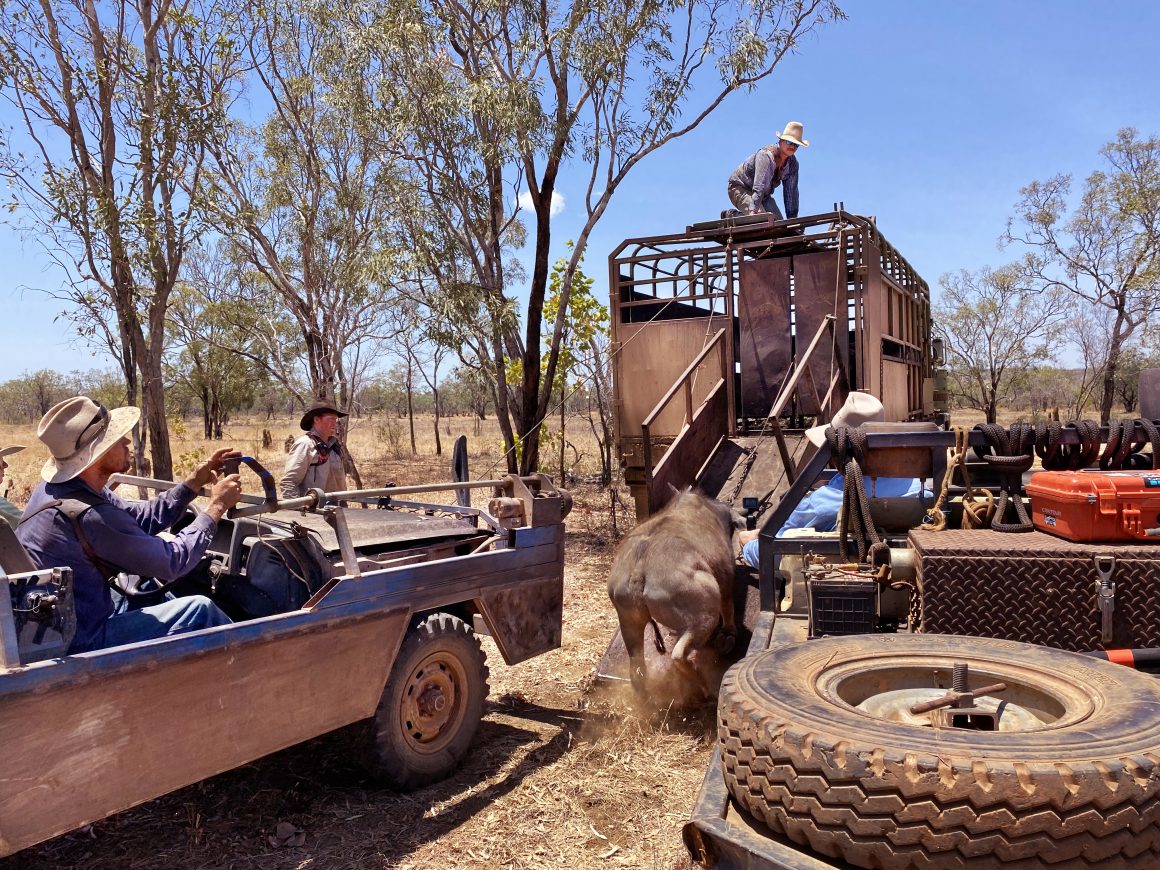
If you want to put this author in heaven, strap him into a nutty 4X4 with no windscreen and let him chase buffaloes through the Northern Territory. I’ve dreamt of doing this, and thanks to my Producer Paul and the wonderful team at Conways Station, they dusted off the rigs and off we went. The experience was exhilarating and awesome. The buffalo are completely feral and unfarmed, but a valuable source of income up here in the N.T. They only survive around the edges of Arnhem Land, Litchfield, and the Cobourg Peninsula, but have done so for over 100 years. They’re caught live and then shipped to Indonesia. Weighing between 500 and 800kg, they are a valuable commodity, with prices around $1.50 to $2.00 a kilo being common.
While it might look simple enough, there is a lot of strategy and experience in rounding up these big grey beasts. There’s the lead vehicle, which boasts the giant hydraulic arm (which gives the buff a gentle headlock!), and the hazing vehicle, which encourages the beast to run straight and not evade the lead vehicle,
Conways Station is most certainly a working cattle and buffalo station, but they also offer guided hunting tours on the property.
This Litchfield adventure was definitely one of my most enjoyable. I will be back.