

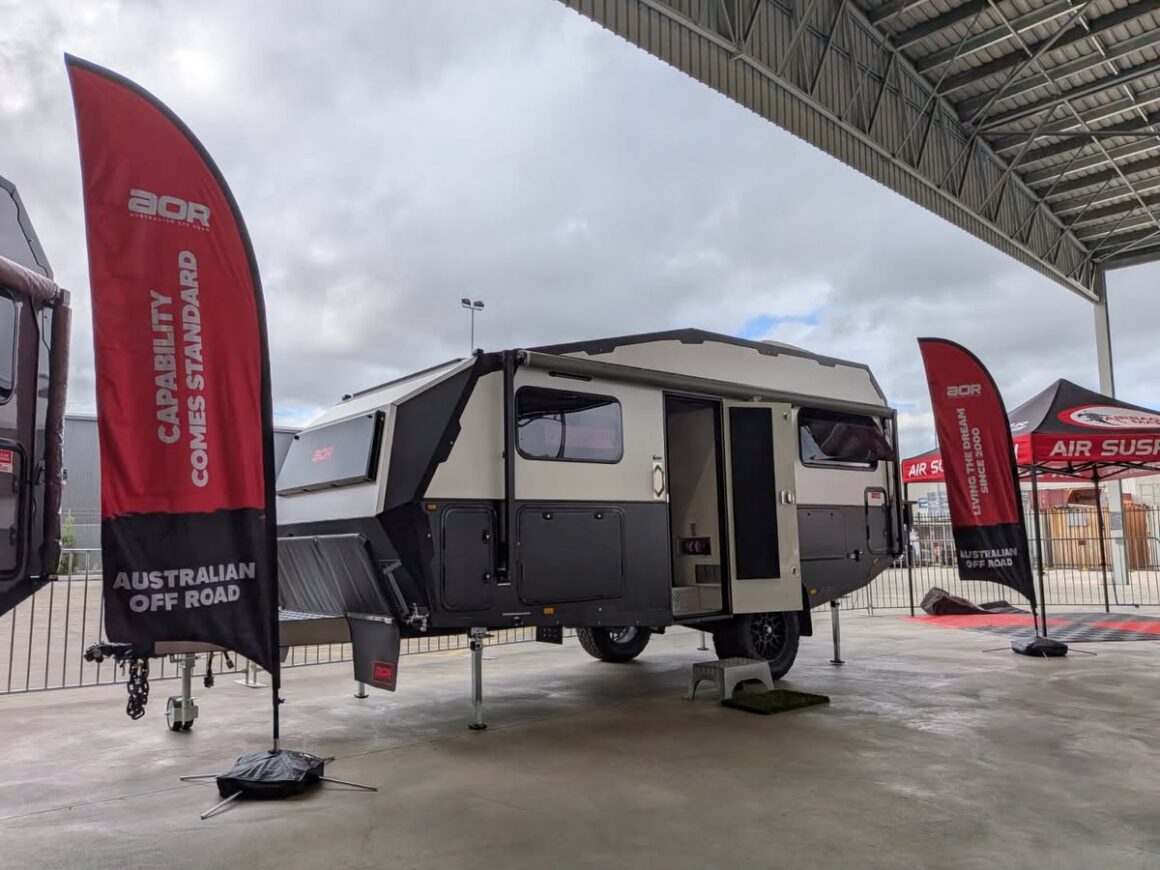
Another established Australian caravan manufacturer has hit the wall, with Queensland-based Australian Off Road entering voluntary administration after 26 years in business.
AOR’s collapse came quickly from the outside. Phones were disconnected, its website disappeared and the gates at its Sunshine Coast factory were locked before the company subsequently confirmed it had appointed administrators. Around 100 employees worked for the business, while customers and suppliers are left waiting to find out what happens next.
It’s important to make one distinction here: voluntary administration doesn’t necessarily mean AOR is finished. Administrators now control the company while its future is assessed, and possible outcomes can include restructuring, a sale, or ultimately liquidation. ASIC describes administration as a process designed to give an insolvent or potentially insolvent company breathing room while determining whether the business can be saved or creditors can receive a better outcome than an immediate wind-up.
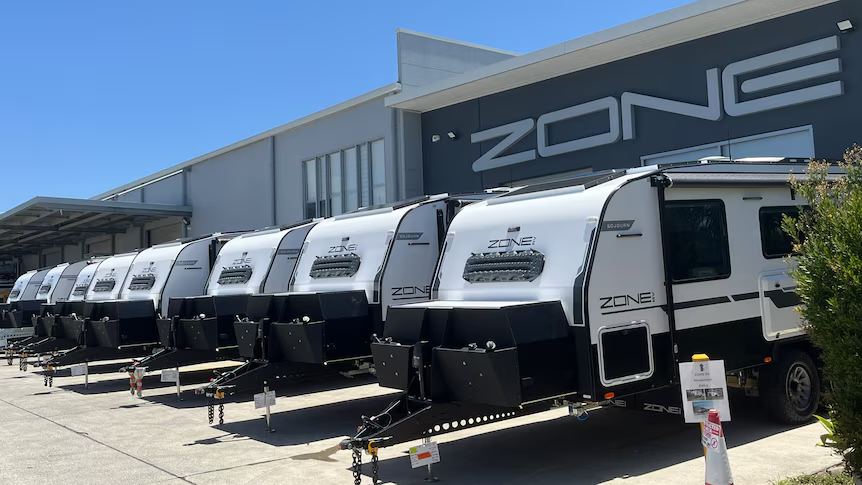
Even so, this is another significant failure in Australia’s caravan manufacturing industry. Sunshine Coast manufacturer Zone RV entered administration in late 2025 before being sold, and AOR’s troubles will inevitably make buyers wonder how much risk exists elsewhere in the market.
So what’s going wrong?
There doesn’t appear to be one simple explanation. AOR founder Steve Budden pointed directly at the changing economics of Australian manufacturing, saying the company was struggling to compete with imported products and businesses operating with substantially lower overheads. Rising wages and other manufacturing costs were also identified as pressures on the company.
AOR’s directors had been discussing some of those pressures well before the administration. Fellow director Russell Evans spoke last year about rising supplier costs, increasingly complex planning and a rapidly changing competitive environment, particularly from overseas manufacturers.
Then there’s the other elephant in the room: the caravan market isn’t operating under COVID-era conditions anymore. Caravanning Queensland CEO Jason Plant described the current period as a “normalisation” following the extraordinary boom when domestic travel exploded and manufacturers struggled to keep up with orders. He argues the broader industry remains strong, but says trading conditions are returning closer to those experienced in 2019.
That combination creates a difficult environment. Manufacturers expanded into a booming market, while buyers now have more choice, imported competition has intensified and the costs of building locally have increased. That doesn’t explain every caravan company failure, nor does it mean Australian manufacturers are universally in trouble. It does, however, make financial stability something buyers should probably consider alongside suspension, layouts and battery capacity.
Your deposit can be more exposed than you think
This is where the AOR situation becomes particularly relevant for anyone currently shopping for a caravan.
Only a month before entering administration, AOR was advertising more than $9,000 worth of bonus equipment on new orders scheduled for delivery in early 2027. There is no suggestion that offer was improper, but the timing illustrates just how difficult it can be for an ordinary customer to judge the financial position of a company from its advertising or public appearance alone.
If a business becomes insolvent while holding your deposit or payment for something that hasn’t been delivered, the situation can become ugly. The ACCC says customers owed money by an insolvent company will usually be treated as unsecured creditors. That puts them behind secured creditors and certain priority creditors when remaining assets are distributed, meaning there is no guarantee all, or even any, of their money will be recovered.
That’s very different from the normal consumer guarantee protections buyers associate with a new caravan. Australian Consumer Law still provides substantial protection against defects and failures in caravans that have actually been supplied, but insolvency can dramatically complicate things when the company responsible no longer has the money or ability to provide a remedy.
How caravan buyers can reduce the risk
There is no magic test that’ll tell you whether a caravan manufacturer will still be trading when your van reaches the production line. There are, however, ways to reduce how much money you have exposed.
Start by checking exactly who you’re contracting with. Look up the ABN and company details rather than relying solely on the brand name painted across the showroom. ABN Lookup allows anyone to check whether an ABN is active, its entity type, GST status and other public information. ASIC’s published notices can also be searched for insolvency appointments. Neither tells you whether a healthy-looking company will fail next year, but they’re basic checks worth doing before transferring tens of thousands of dollars.
The payment structure matters as well. Buyers can ask whether a large deposit is genuinely necessary and whether later payments can be linked to identifiable construction milestones rather than handing over most of the purchase price months before delivery. Get the payment schedule, estimated build and delivery dates, specifications, cancellation provisions and refund conditions in writing, and understand exactly what the contract says before signing it.
Payment method can provide another possible layer of protection. AFCA says a customer who paid by card may be able to request a chargeback if a merchant becomes insolvent and doesn’t provide the purchased goods or services, subject to the applicable card scheme rules and time limits. It isn’t a guaranteed refund, but it’s one reason paying a deposit by card can offer a potential avenue that a direct bank transfer may not.
None of this means buyers should suddenly avoid buying made-to-order caravans. Plenty of manufacturers continue to trade successfully and build excellent products. But after seeing established names fall into administration, financial risk deserves a place on the pre-purchase checklist.
A caravan can easily represent $80,000, $100,000 or considerably more of someone’s savings. Before worrying about whether it has enough solar panels or the right suspension underneath it, it’s worth spending some time working out exactly who has your money, how much of it they need upfront, and what protection you have if the factory doors don’t open tomorrow.


3 comments
I own an AOR and I can tell you they made a great product. I have absolutely no doubt it will go where my cruiser can go. My last trip was Brisbane to William Creek and back over the best corrugations the Maree to William Creek Road can deliver. I am pretty sure I will still be loving it in 10yrs time. My suggestion to the administrators is to reopen AOR as a Van/Hybrid Van service centre. Costs can be controlled and profits made. I for one would still take my Quantum Plus there for a service.
Everybody needs to keep on buying Australian caravans. If we don’t then it will be like Ford’s, Holden going. Cmon Oz.
The AOR situation is bad for everyone involved. 50 % of all caravans sold in Australia were either partially or fully Chinese made. Recently I read and articulate that stated Chinese manufacturing employee was earning the equivalent of $1,200AD per month. There would be no possibility an Australian manufacturer would be able to compete with a competitor paying these wages along with work practices, taxes etc in Australia. Hopefully more Australia caravan builders won’t go under also.