

The updated Ford F-150 has arrived with a fresh face, more technology and three distinct specification levels, but the real question is whether one of these enormous American pickups actually makes sense in Australia.
After owning and extensively touring in a similar F-150 for the past three years, Pat has a better idea than most. His rig has crossed Australia twice, tackled Cape York, the Old Telegraph Track, the Simpson Desert, the Flinders Ranges and plenty of remote country in between.
So, before you decide whether the new XLT, Lariat or Platinum deserves a spot in your driveway, here’s what you need to know.
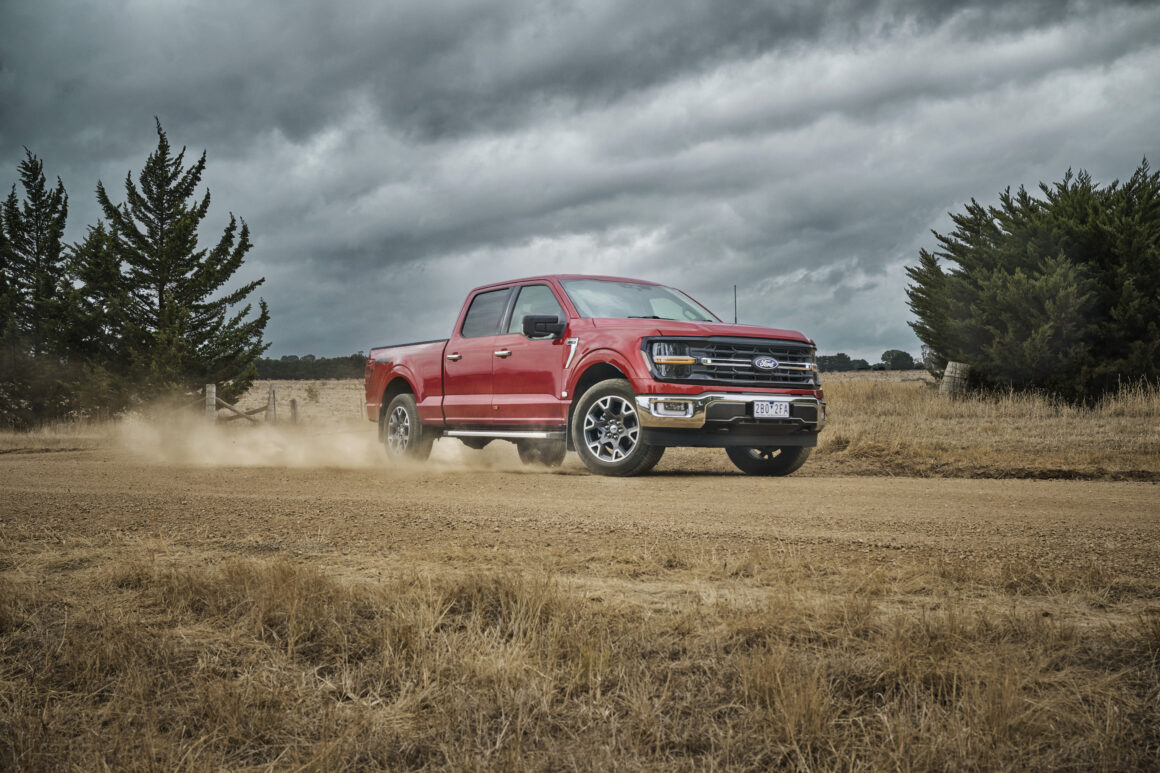
The XLT may be the smartest touring platform
The XLT is the entry point into the range, starting at $115,000 driveaway at the moment, and while it misses some of the luxury equipment found further up the range, that may actually work in its favour.
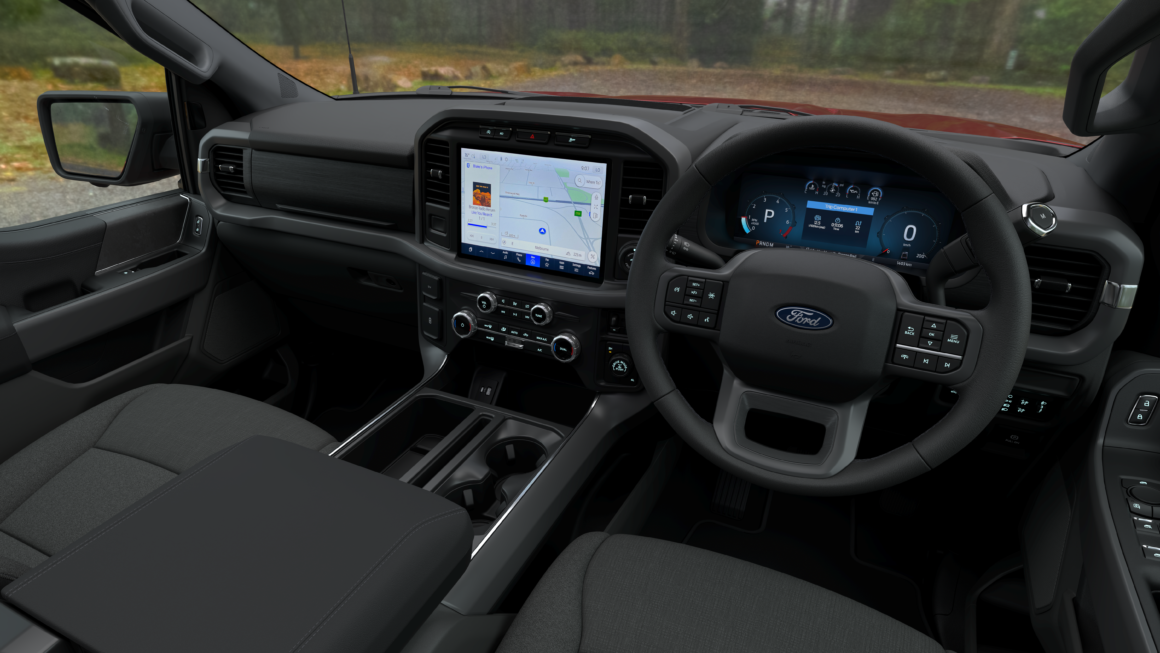
Inside, you get cloth seating, a column-mounted shifter and Ford’s fold-out interior work surface. The big improvement over the previous model is the new 12-inch touchscreen, replacing the much smaller unit fitted previously.
For buyers already planning suspension, tyres, underbody protection, a canopy or a full touring setup, the XLT gives you the important mechanical package without paying for equipment you may not need. By the time you fit seat covers and a roof rack there’s very little difference to a more up-spec model.
Pat reckon’s it’s his pick as the foundation for another touring build, and it is difficult to argue with that logic.
The Lariat is the comfortable middle ground
The Lariat sits in the middle of the updated range and adds a noticeable jump in comfort. Leather-trimmed heated and ventilated seats, more premium finishes and extra interior equipment make it feel far more luxurious than the XLT.
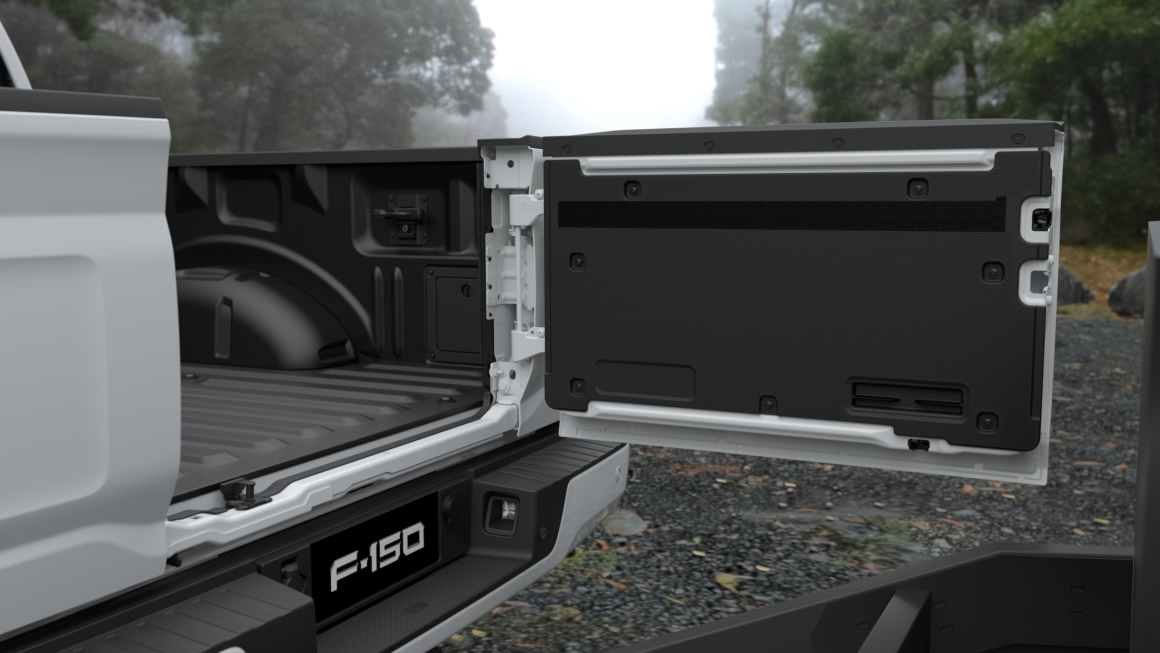
It also gains the new powered tailgate with a split-opening section. Instead of dropping the entire tailgate every time you need something from the tray, part of it can swing open like a conventional door.
That may sound like a gimmick until you have a trailer connected or need to reach something sitting towards the front of the tub. It gives you much easier access without leaning across a wide, lowered tailgate.
For someone using the F-150 as both a family vehicle and a heavy tow rig, the Lariat is probably the sweet spot.
The Platinum takes luxury seriously
Sitting at the top of the Australian range is the Platinum, priced at around $164,000. It gets a blacked-out grille, powered side steps, premium finishes and leather front seats that are heated, ventilated and equipped with massage functions.
Those seats can also recline close to flat, allowing the driver to pull over and properly rest during a long trip. Ford is clearly positioning the Platinum as a premium long-distance tow vehicle rather than a stripped-back off-road rig.
Pat asked Ford Engineer’s why Australia wasn’t receiving the American-market Tremor, which combines additional clearance and off-road equipment with the F-150 platform.
Ford’s reasoning was that local buyers typically use the F-150 to tow large caravans, boats and other expensive toys. For that market, the Platinum’s comfort-focused equipment arguably makes more sense.
It may use less fuel than you expect
One of the most common assumptions about an American pickup is that it must drink fuel at an alarming rate. Pat’s experience suggests otherwise.
Before modifying his current F-150, he regularly saw consumption between 9 and 11 litres per 100 kilometres during normal driving. That’s pretty remarkable for a petrol-powered vehicle of this size and performance.
Once lifted, loaded and fitted with touring equipment and a rooftop tent, consumption climbed closer to 16–18L/100km. That’s no doubt a big jump, but it’s hardly outrageous considering the weight, aerodynamics and equipment involved. Large, modified 4X4s can easily reach similar figures while delivering significantly less power and interior space.
Naturally, driving style, load, tyres, terrain and towing weight will all affect the final result. Pat’s figures should be treated as real-world ownership experience rather than a guarantee.
It can handle Australian touring
The other big concern is whether a vehicle designed in America can survive harsh Australian roads and remote-area touring.
Pat’s F-150 has crossed the continent twice and travelled through Cape York, the Simpson Desert, the Nullarbor, the Flinders Ranges and Western Australia’s remote coastline without major reliability problems.
The petrol engine also avoids some of the emissions equipment associated with modern diesels. There’s no AdBlue system or diesel particulate filter to manage, which removes a couple of potential complications when travelling remotely.
There is also something deeply satisfying about having almost 300kW available when overtaking a road train on the Nullarbor. Despite its size, the F-150 is surprisingly quick, and the effortless performance makes long-distance driving far less tiring.
Size is still the compromise
There is no getting around the fact that the F-150 is a large vehicle.
It’ll feel enormous in narrow shopping-centre car parks, old suburban streets and tight bush tracks. Its width becomes particularly noticeable when squeezing between trees, banks or rock ledges.
Pat found that out in Cape York, where his rig suffered sill damage after tackling difficult terrain without suitable protective side steps or rock sliders.
That doesn’t mean the F-150 can’t be used seriously off-road, but buyers planning to take one beyond open dirt roads should budget for proper protection and carefully consider its dimensions before committing to particularly tight tracks.
Which F-150 should you buy?
The XLT is arguably the best option for anyone building a proper touring vehicle. It has the same fundamental capability as the more expensive models, an enormous and comfortable interior and fewer luxury features to damage or pay for.
The Lariat makes more sense as an all-round family tow vehicle, while the Platinum is the premium highway and towing option.
Whichever model you choose, the F-150 is more than an oversized American novelty. It’s powerful, comfortable, surprisingly efficient and, based on Pat’s experience, entirely capable of handling serious Aussie touring.


