

There are plenty of ways to prove a 4X4 is capable. Tow a big van. Load it with touring gear. Point it at a tough track and see what happens. Ford Australia and Deakin University have gone a little further, turning the new Ranger Super Duty into a fully equipped Fire Response Unit designed to explore how trained responders could reach emergency scenes faster.
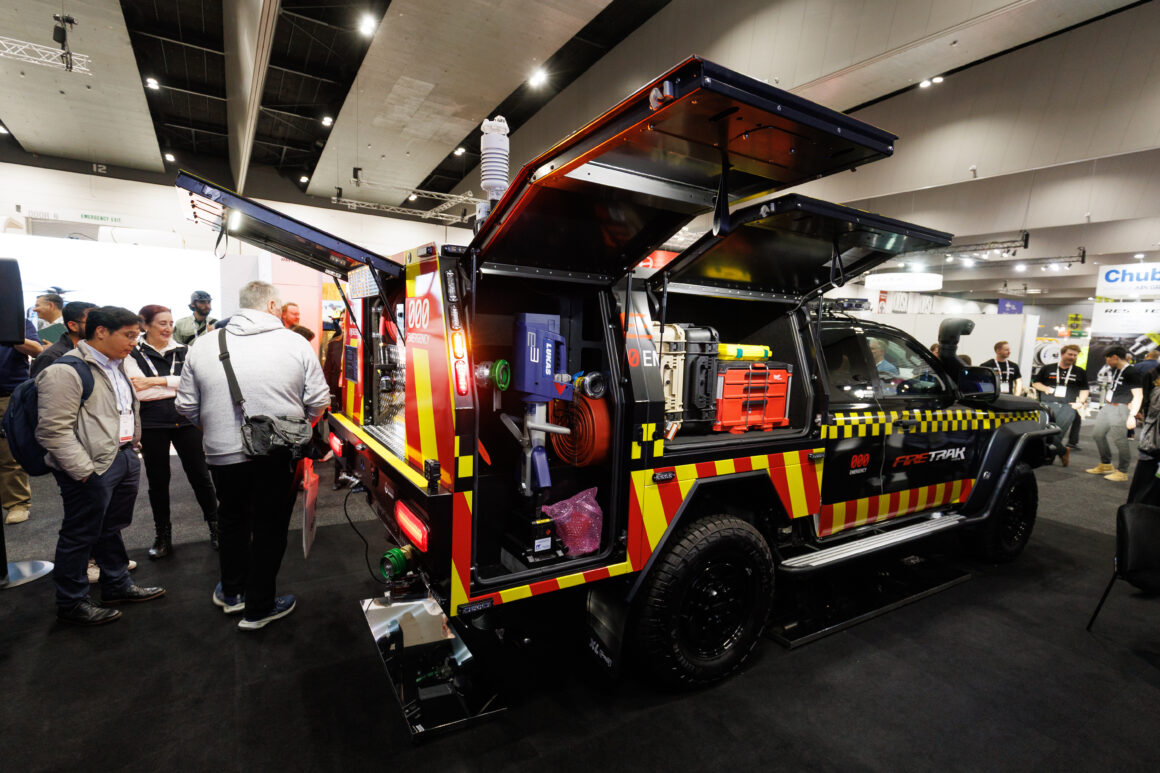
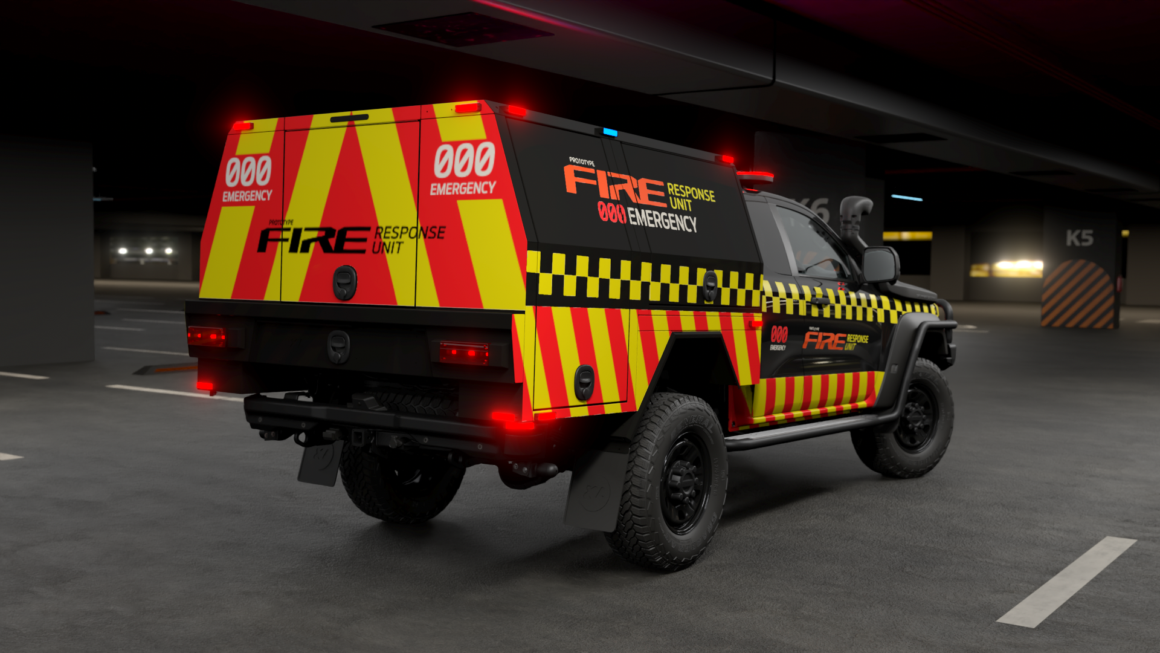
Unveiled at the 2026 AFAC conference in Melbourne, the concept takes a Ranger Super Duty Super Cab and combines its heavy-duty payload capacity and off-road capability with a purpose-built service body, firefighting equipment, water and an integrated electrical system. And while it’s designed around emergency response, there’s plenty here that should get serious 4X4 tourers thinking.
Why the Ranger Super Duty?
The biggest challenge with any heavily modified 4X4 is weight. Start adding a canopy or tray, water, batteries, pumps, recovery equipment, tools, communications gear and passengers, and a standard ute can run out of legal payload surprisingly quickly.
That is where the Ranger Super Duty comes into its own. Ford says the platform’s 4,500kg GVM and strong payload capacity made it suitable for the project without requiring major changes simply to handle the load. For anyone building a serious touring 4X4, that same principle matters.
It’s easy to focus on horsepower, tyre size and suspension travel, but payload is often what ultimately determines how much vehicle you can actually build. Water tanks, long-range fuel systems, drawer setups, spare wheels, rooftop tents and batteries all add up quickly.
The Fire Response Unit is essentially an extreme example of the same problem. Engineers selected the Super Cab version to maximise tray space while retaining secure internal storage for electronics and first-aid equipment. That’s not hugely different from the compromises plenty of remote-area travellers make when choosing between cabin space, tray length and overall payload.
Built to go beyond the bitumen
One of the more interesting parts of the project is that the Ranger Super Duty wasn’t chosen purely because it could carry the equipment. Deakin University also wanted a vehicle capable of getting that equipment into places where larger conventional vehicles may struggle.
The Ranger Super Duty has been developed with off-road durability as part of its factory package, which makes it an obvious candidate for situations involving fire trails, remote communities or difficult terrain. That makes the concept particularly relevant in Australia.
Plenty of emergencies occur well away from sealed roads, whether it’s a bushfire, vehicle accident, medical incident or stranded traveller. A relatively compact 4X4 carrying essential equipment could potentially access rough tracks and tight areas faster than a much larger truck.
Ford stresses that the vehicle is not intended to replace conventional full size fire appliances. Instead, the concept explores whether trained personnel carrying critical equipment could reach an incident first and begin assessment, communication, first aid or initial suppression.
A serious 12V setup — taken to another level
There is another part of the build 4X4ers will recognise immediately: power management. Instead of fitting a separate petrol or diesel generator to run the Fire Response Unit’s pumps, Ford and Deakin partnered with Zeliox Australia to install an integrated inverter and charging system with solar capability. It’s effectively the same philosophy behind modern high-end touring builds, only scaled for a much more demanding job.
More Australian 4X4s are moving towards substantial lithium battery systems, powerful inverters and solar charging as owners try to run induction cooktops, air-conditioning, fridges, Starlink and other equipment without carrying a generator. The Fire Response Unit shows how far that idea can be pushed when the vehicle and electrical system are designed together from the start.
Designing the whole vehicle as a system
Ford and Deakin used computer-aided design and full-scale virtual reality to plan the equipment layout before constructing a physical mock-up. That might sound excessive for a touring ute, but the principle is worth remembering.
The best 4X4 builds are rarely the ones where accessories have simply been added one after another. Weight distribution, access to equipment, electrical loads, water placement, suspension, storage and vehicle dimensions all interact.
Treating a touring build as one complete system generally produces a much better result than treating every accessory as an isolated purchase. The Ranger Super Duty Fire Response Unit takes that concept to the extreme, but the lessons translate surprisingly well.
Ford says the vehicle remains a demonstration project and has not been certified by any emergency service authority. Still, it’s an interesting showcase of what happens when a heavy-duty 4X4 platform is built around payload and purpose rather than simply bolting accessories onto a conventional ute.
And with more Australian 4X4 owners demanding increasingly capable touring setups, the Fire Response Unit might be designed for emergencies, but plenty of its thinking belongs in the bush.


