Ahhh the great outdoors. Home to some of the most spectacular sights you’ll ever lay eyes on. Stunning outback sunsets. Epic mountain vistas. Sub-tropical rain forests straight out of the Amazon. And most importantly, solitude far beyond the reaches of the daily grind. The only problem is, it’s just so darn far away. Unless you want to sleep in the front seat you’re going to need to bring some sort of camping setup, and if you’re looking to step things up a notch from the humble swag and awning, there’s three paths you’ve got laid out in front of you. Caravans, camper trailers, or a canopy setup of some description. So, what’s right for your needs? What are the pros and cons of each? And how much are you going to need to spend to make it happen?
CAMPING CANOPIES
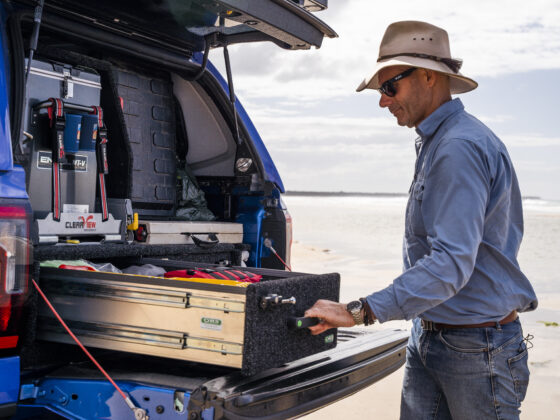
If you’re on a budget, prefer quick overnight camps, or lust for the harder tracks in life then a canopy camping setup should undoubtedly be on your short list. Depending on the setup you’re going for these can be had as a DIY project from as little as $1500, right up to light weight high-tech materials with 90% of the mod cons of a camper trailer for a similar $30,000+ budget. They really are a choose your own adventure kind of affair and as such, no two setups are ever the same.
Creature Comforts
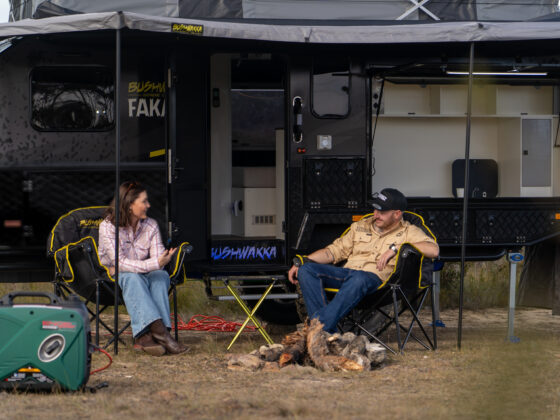
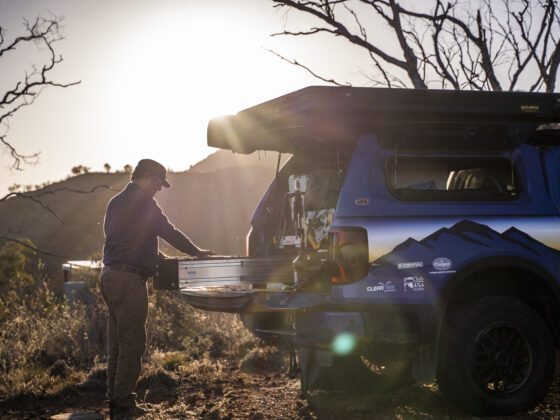
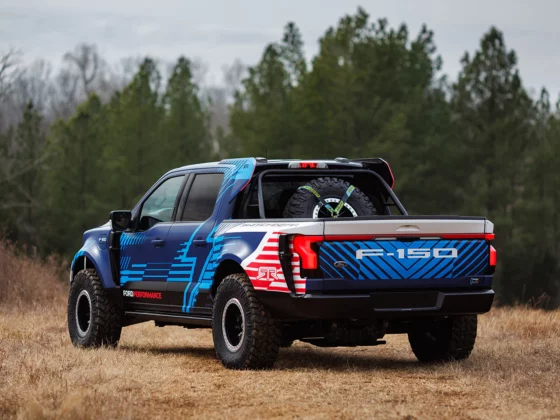
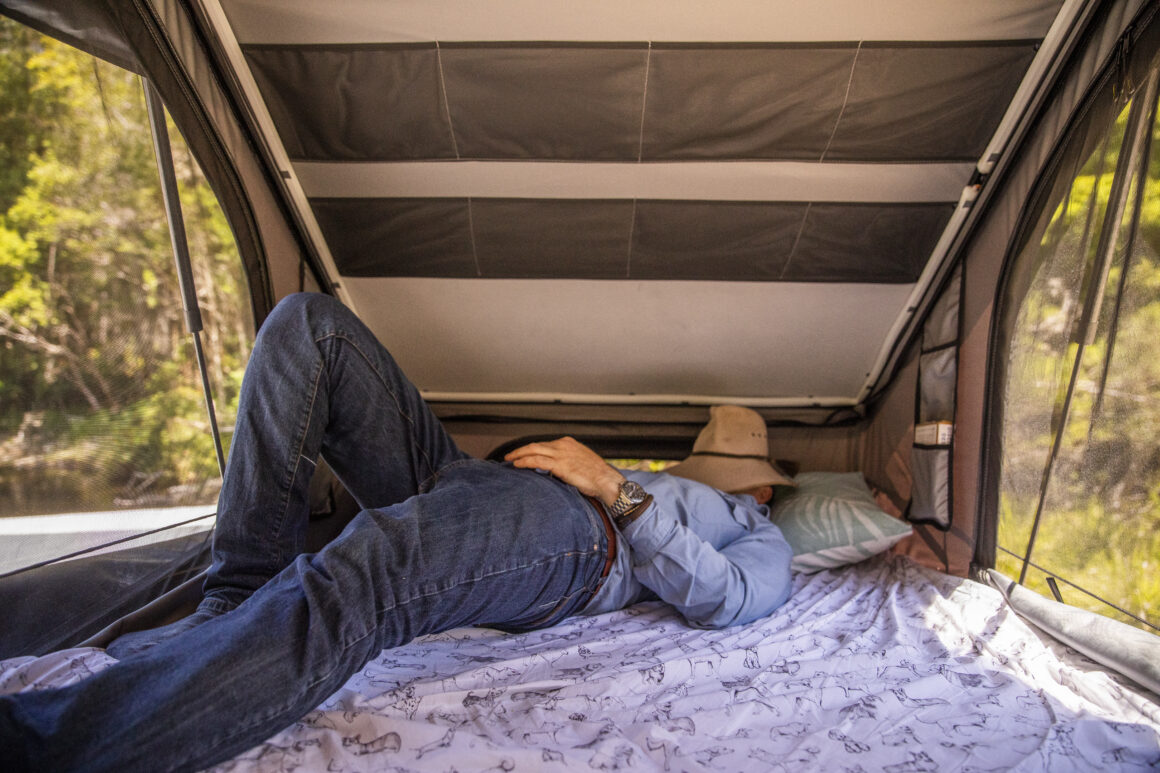
Most people running a camping canopy will typically have an awning and roof top tent combo. On the budget end, these can be had under $1000 for the pair with budget brands and no-frills products. Pony up for a more premium package like the Bushwakka range on Pat’s F-150 and you start looking at wrap around free standing awnings for significantly more space, and hard-shell roof top tents like the Penthouse that offer a more comfortable night’s sleep and better protection from the elements. The downside to any camping canopy is no internal seating space and only room for two, although these problems can be rectified with a swag and some awning walls for the tin lids. You can option up canvas ensuites pretty easily these days, Pat’s just put one on the F-150. And with a chemical toilet and on-board water and lithium power you won’t be missing too many mod cons. Storage will be light on, but if you don’t tick every option box you’ll still have room for a few bags of clothes.
Off-road Ability
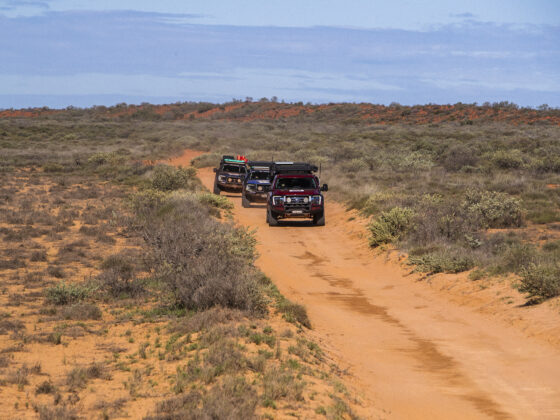
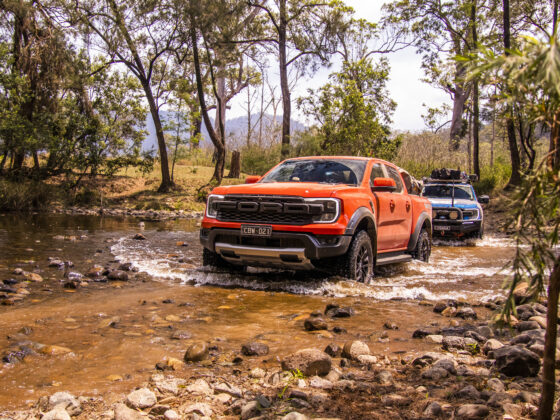
If you’re after a tough-as-nails-tourer then a camping canopy is without a doubt something you should be seriously considering. They forego many comforts in the name of a compact footprint making them easier to navigate through tight tracks and up and down steep embankments than even the most hard-core camper trailer. That relative simplicity also means you’ll have very little setup time. If you’re doing an A to B trip like across the outback, up the Tele’ Track, or a lap of Tassie this can be seriously convenient.
Everyday practicality
There’s no such thing as a free lunch and the off-road and budget friendly benefits of having a tub or canopy setup come at an expense in other areas. The obvious one right from the get-go is you have to have a ute of some description to run a setup like this, while that may not seem like a big deal, an Everest compared to a Ranger will ride smoother, quieter, negotiate tight turns better and be nicer to live with day to day.
Secondly, you’ll effectively lose the day-to-day use of your tub. You’ll be primed and ready to go for a Simmo’ crossing with a moment’s notice, but picking up that new lounge from IKEA will be a non-starter. You’ll also find the roof top tent will restrict you from underground carparks. Not an issue if you live in Tibooburra, but if you’re from the ‘burbs you’ll notice.
Finally, and this one is a solid positive. You won’t be losing a parking space at home like you would with a caravan or camper trailer, both of which can eat up serious real-estate. You could live in a Vaucluse apartment with on-street only parking and still have everything you need for the big lap.
Budget
Can be as cheap or as expensive as you want it to be. A basic tub rack and a second-hand roof top tent with a few space cases thrown underneath could be done for under $1500, but if you pony up big bucks you can easily spend camper trailer money for near camper trailer conveniences. You won’t get your money back either way. The value of your 4X4 may increase slightly, but you can sell a camper or caravan for near what you paid for it.
CAMPER TRAILERS
If you’re looking to step things up a notch with comfort, space, and budget, then a camper trailer is the next logical step. Much like a camping canopy, the world is your oyster, or your leftover Christmas prawns, depending on your budget. You can pick up a second-hand unit from the classifieds for under $10k and do the big lap with a family of four, or spend $80k+ for something that only sleeps two and can’t go far from the blacktop, the choices are endless depending on what you’re looking for.
Creature Comforts
No matter what camper trailer you’re looking at, the biggest selling point is undoubtedly a living space. Somewhere you can hide from the elements, a place to get dressed, and for the kids to curl up with some books while the adults tell tall tales late into the night. Depending on the camper, this could be a giant tent that takes 100 poles and the better part of an hour to set up if it’s a soft floor. A rear fold can have a small room worth of flat space elevated off the ground perfect for some cots or camp chairs out of the weather in a few minutes. The forward fold is the undisputed king for a reason though. With the same amount of setup time, you’ve got either two beds, or a bed and a lounge area. Some twin fold or rear slide models can sleep up to six.
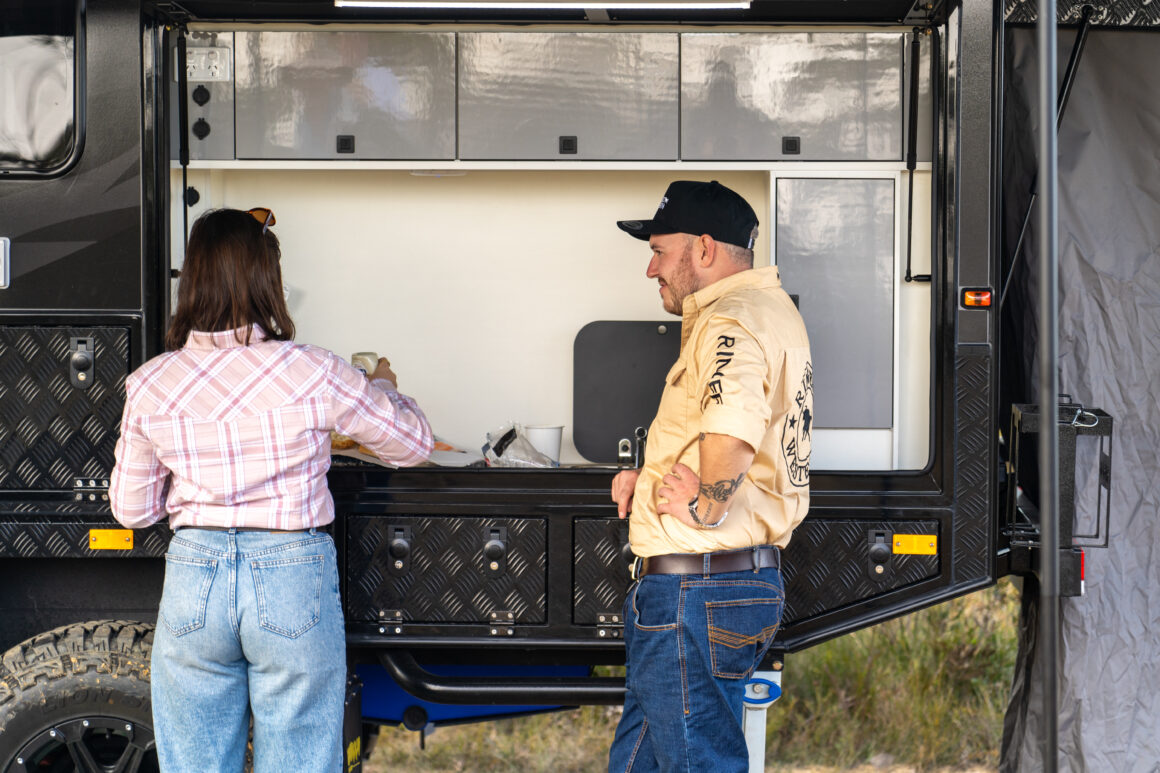
There’s big perks on campsite luxuries. You’ll often have a pull out kitchen, cold running water, and some can be optioned up with a canvas external ensuite and hot shower. Even things like Diesel heaters are popular upgrades these days. It is worth mentioning though that while a more expensive price tag doesn’t necessarily correlate directly to a bigger feature list, it typically means a lighter camper, and quicker setup times. It’s not uncommon for two campers with the same spec sheets to have a setup time of 2 minutes Vs 20 minutes.
Off-road ability
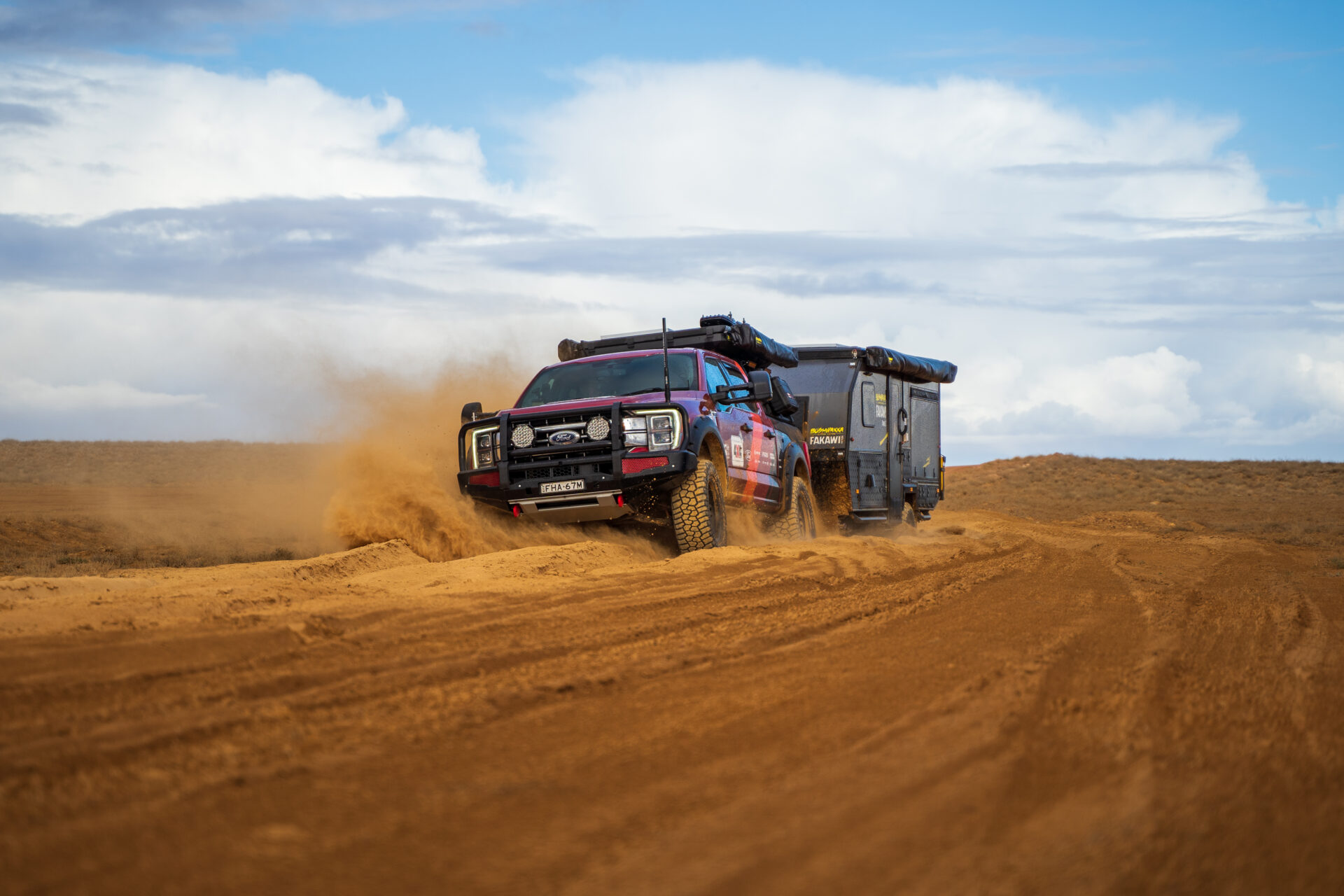
Without a doubt, this is the area you’ll find the biggest drawbacks of any camper trailer. There’s no getting around the effect a trailer has on the back of your 4X4 when off-roading. Line selection will get harder. You’re less able to back out of tricky situations if you need a second crack at an obstacle. You’ll need a wider turning circle to get the camper around corners, and things get a lot more complicated if you need to do a recovery.
It’s not all doom and gloom though. Lighter, more off-road focused camper trailers typically tow better and can handle being bounced around. You can also un-hitch your camper and head out to do tougher tracks. That won’t work too well on an A-to-B trip, but if you’re camped up somewhere for a week exploring you won’t be bouncing your eggs up every rock ledge like you would with a canopy. You won’t find big comfort, low costs, and good off-road performance in one package though. You can only have two at a time.
Everyday practicality
There’s a few extra considerations you’ll need to make that don’t involve rock steps and camp showers. First of all, do you actually have somewhere convenient to store it at home? Even a compact camper will occupy a full car spot, if you’re tripping over it every day trying to get to the bin and only using it twice a year it won’t last long. Offsite storage is an option, but not cheap.
One major positive though is it frees your 4X4 up to have less accessories. Sounds odd, but if your trailer houses your dual battery system, water storage, your tent, and kitchen, your 4X4 gets a lot more practical as a daily driver for the school pickup or grocery store run.
Budget
While they might seem like an extra expense, over the lifespan of a camper trailer they’re actually one of the more affordable options. Sure, like anything there’ll be an initial depreciation when you buy new, but there’s not a big price difference between an 8 year old and a 16 year old camper in the same condition. You’ll get most of your money back when it comes time to upgrade or cash out. If you’re dipping your toe into the camper world for the first time it could be worth buying second hand to get you started, and then moving into new when you know exactly what suits your needs.
CARAVANS
The big daddy of the big lap, caravan’s are a common sight out past the black stump for a reason. If you’re effectively living on the road for a couple weeks at a time being able to crawl into a proper bed, have the weather proofing of solid walls, and have near enough to zero setup time can be an absolute game changer. You don’t need to spend the earth to make an off-road caravan happen, but there are some pros and cons to be aware of.
Creature Comforts
A caravan, weather big or small, is effectively like a tiny apartment, and that means fantastic things on the creature comfort front. You’ll typically score yourself an actual proper bed, that’ll stay made up with all your bedding ready to climb into. You’ll have insulated walls that mean it’ll be both cooler in summer and warmer in winter than a camper trailer or tent.
Many caravans on the market will include internal ensuites too which are undoubtedly a step up from external offerings. In summer the difference is negligible. But in the heart of winter you’ll soon appreciate not standing outside soaking wet as you quickly try to dry off.
You may need to stretch out on the bed as most off-road caravans typically won’t have a dedicated lounge space, but with reading lamps, plenty of storage, a hot cuppa from the internal kitchenette and your favourite movie playing on the TV nights hiding from the rain will be well spent.
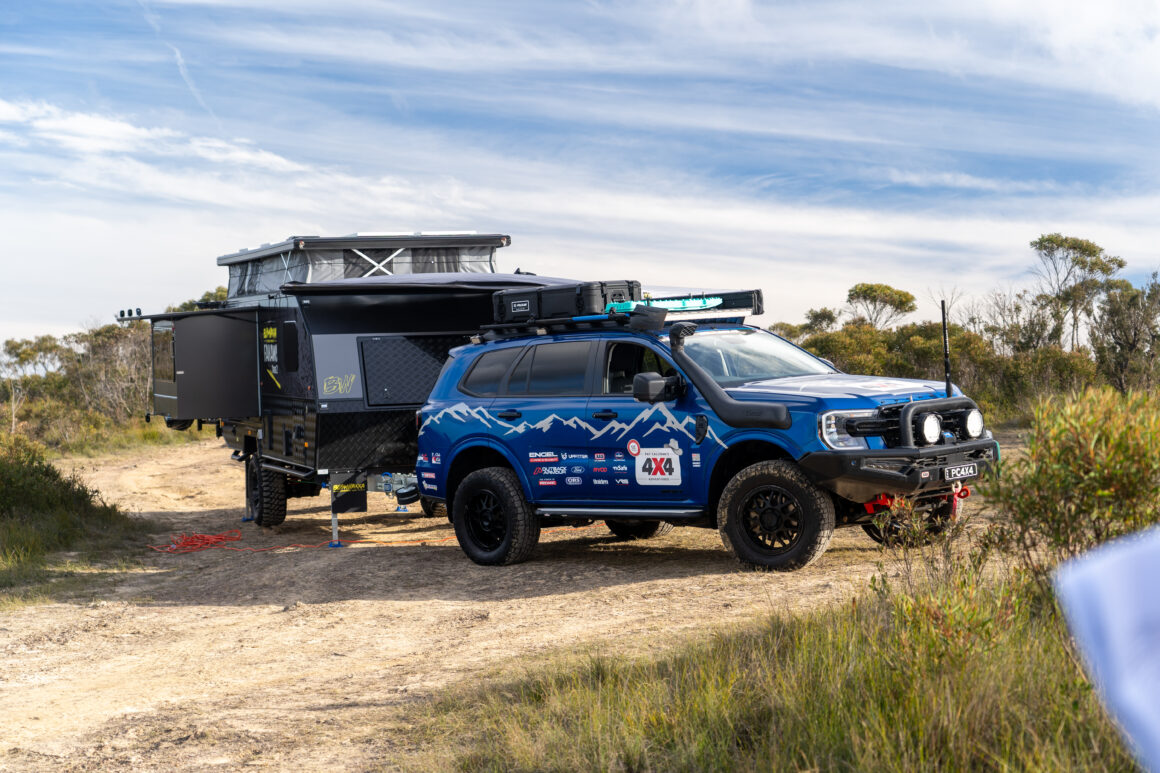
Off-road ability
If caravan’s are the Super Man of off-road comforts then off-road ability is their kryptonite, at least depending on the off-roading you like to do. If you’re heading off to do big lap trips like the Gibb River Road, Canning Stock Route, or the Strzelecki Track then a good off-road caravan with off-road-focused suspension will be fine. Likewise, if you’re meandering your way down into the High Country and leaving it parked up at camp you won’t have too many issues. But, punting a big van up the Old Tele’ Track or up and over Pinnibar flat out just isn’t an option. Sure, you might be able to skull drag it through, but you become a rolling roadblock for anyone else on the track, can do serious track damage, and you’re in for a world of hurt if you do get stuck.
Some caravanners scratch this itch by setting off on day trips to explore, or taking a small tent and over night camp setup so they can park the ‘van somewhere safe and still get to camp on that deserted beach.
Everyday practicality
As far as everyday practicalities go, you won’t notice much of a difference day to day between a caravan or a camper trailer. Both are going to occupy a car space at a bare minimum, although caravans typically won’t be able to be kept in a garage due to their higher rooflines. Some models, like the Bushwakka Fakawi have a pop-top roof which may let them sneak in under a carport or into a bigger shed.
Their increased water, power, and clothing storage means your 4X4 can have even less mods on it day by day too. You could have a bulbar, a lift, and some wheels and tyres, and still be ready for the big lap 5 minutes after knocking off work.
Budget
This brings up the old “how long is a piece of string” conundrum. There are caravans you can buy brand new for $25k, and caravans you can buy for $250k. Generally, around $60-80k will get you in something decent that’ll handle most of what you’ll want to see.
One benefit of caravans, like camper trailers, they tent not to lose their value too much and can be sold as a stand alone item with very little depreciation. If you’re typically a swag or tent camper and you’re looking to do the big lap, you could buy a brand new camper for 80k, tour the country in comfort, and then sell it when you get back for 65k.