

With fuel prices bouncing around like a kangaroo on a trampoline and remote outback bowsers regularly charging eye-watering amounts per litre, stretching every drop of diesel or petrol has become a genuine touring skill.
Anyone who’s spent time planning a remote trip knows the maths can get pretty serious. Distances are huge, fuel stops are sometimes hundreds of kilometres apart, and once you start adding roof racks, bar work, drawers, fridges, recovery gear and a caravan or camper trailer into the mix, fuel consumption can climb fast.
The good news is you don’t need to turn your touring rig into a stripped-back hypermiler to make a difference. A few smart habits and setup tweaks can easily add tens, sometimes even hundreds of kilometres to your range.
Here are ten practical tips that actually work in the real world.
1. Slow Down On The Highway
This is the easiest win of the lot. Aerodynamic drag increases dramatically with speed. That means the difference between cruising at 110km/h and sitting at 100km/h can be far bigger than most people realise.
For a typical touring setup with a roof rack, awning and possibly a caravan or camper behind it, dropping just 10km/h can improve fuel consumption by 10–20 percent. Over a long highway stint that can translate into dozens of extra kilometres of range.
It might feel slow at first, but once you settle into the rhythm it becomes surprisingly relaxing.
2. Don’t Fill Water Tanks Until You Need Them
Water is heavy. Really heavy. One litre weighs one kilogram, so a 100L water tank adds 100kg instantly. Many touring setups carry multiple tanks or jerry cans, meaning it’s easy to unknowingly drive around with 200kg or more of water.
If you’re starting a trip near civilisation, it often makes more sense to run your tanks light and fill up closer to where you actually need it. Less weight early in the trip equals less fuel burned.
3. Remove Gear You Don’t Actually Need
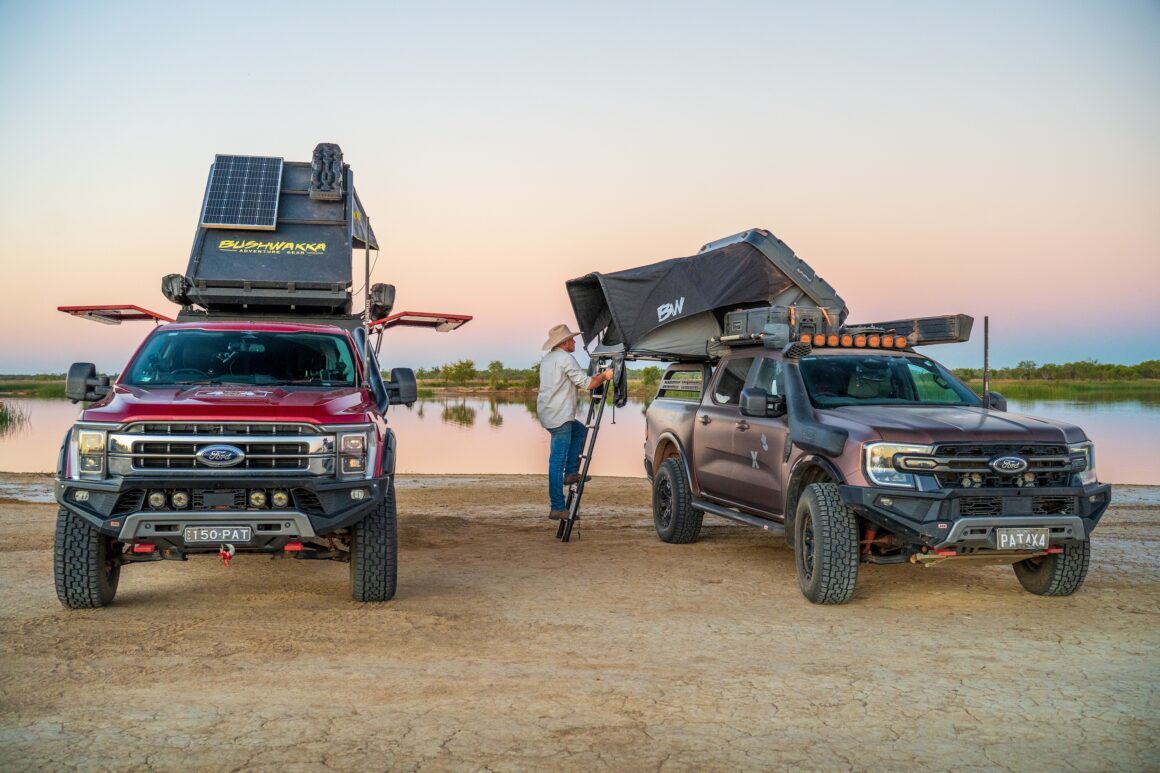
Touring vehicles have a bad habit of slowly accumulating gear. Shovels stay mounted long after the last desert trip. Traction boards live on the roof year-round. Recovery kits, spare parts and tools multiply in drawers.
Before a big trip, it’s worth taking a brutally honest look at what’s in the vehicle. Every unnecessary item adds weight, and weight equals fuel consumption. The lighter the rig, the less energy the engine needs to move it.
4. Manage Your Roof Rack Carefully
Roof racks are incredibly handy. Unfortunately they’re also terrible for aerodynamics. Even an empty rack can increase drag, and once you start stacking items up there, things get worse quickly. Swags, spare tyres, fuel jerries and bulky gear act like a parachute in the airflow.
If you can keep heavy items lower in the vehicle, you’ll reduce both drag and fuel consumption.
5. Drive Smoothly Off-Road
Fuel use off-road is heavily influenced by driving style.
Constant hard acceleration, spinning tyres and charging obstacles all chew through fuel surprisingly quickly. Smooth throttle inputs and controlled momentum use far less energy.
In technical terrain, maintaining steady forward motion often works better than stabbing the throttle anyway.
Slow and steady isn’t just easier on your rig, it’s easier on the fuel gauge too.
6. Get Your Tyre Pressures Right
Tyre pressures have a massive effect on rolling resistance. Running overly high pressures on dirt or sand forces the tyres to dig and fight the terrain, making the engine work harder. Dropping pressures appropriately lets the tyre float over the surface instead.
The result is usually better traction, a smoother ride and less fuel consumption. Just remember to air back up once you return to higher-speed sealed roads.
7. Avoid Idling For Long Periods
Modern engines don’t burn huge amounts of fuel at idle, but over the course of a long trip it adds up.
If you’re stopped for lunch, setting up camp or chatting to other travellers, switching the engine off can save more fuel than you’d expect.
It also reduces heat soak in the engine bay and generally keeps things quieter around camp.
8. Keep The Vehicle Well Maintained
A well-maintained engine is a more efficient engine.
Dirty air filters, clogged fuel filters and poorly serviced driveline components all force the engine to work harder.
Before heading out on a big trip, it’s worth making sure the basics are sorted:
- Clean air filter
- Fresh engine oil
- Healthy fuel system
- Correct tyre pressures
- No dragging brakes
Small things add up.
9. Think About Drag From Accessories
Some accessories look tough but aren’t doing your fuel bill any favours. Large light bars, wide awnings, bulky antenna mounts and oversized mirrors can all increase aerodynamic drag at highway speeds. This doesn’t mean you shouldn’t run them, but it’s worth being aware of the trade-offs. If something isn’t necessary for the trip, removing it might claw back a bit of range.
10. Plan Your Fuel Stops
Good trip planning can make a surprising difference. Knowing where fuel is available allows you to manage weight and refuelling strategy more efficiently. Instead of carrying maximum fuel capacity everywhere, you can top up strategically along the way.
It also reduces the chance of panic buying expensive jerry cans or detouring hundreds of kilometres when supplies run low.
Small Gains Add Up
None of these tips are revolutionary on their own. But when you stack them together, the impact can be significant. Dropping your cruising speed slightly, carrying less unnecessary weight, managing tyre pressures properly and keeping drag under control can easily extend your touring range by 20 percent or more.
And in remote Australia, that extra range can mean the difference between comfortably reaching the next roadhouse… or nervously watching the fuel gauge fall. Sometimes the smartest modification you can make to a touring vehicle isn’t another accessory. It’s simply using the one you’ve got a little more efficiently.




1 comment
I certainly know that slowing down saves a heap of fuel.
My 1988 hj75 cruiser with the big 12HT gets the same mileage whether towing a van across the country or running to the tip 1 K away from home.
But what does change is when I’m towing, no matter what the trailer is, the slower I drive the better fuel consumption I get.
So at 100kph or more it’s a tad over 7ks per litre. What’s that in ks per 100? 🤷♂️ I don’t know. At 70+yo I’m too old to work it out but you younger ones can work it out.
But at 90kph I get an extra K per litre of usage. Now I’ve only got a 60lt tank but that gives me an extra 60 ks. So it goes up from 440ks per tank to a tad over 500ks per tank. Which is a big saving for a small tank.
And I’m not always towing inanimate objects as I often have a large fully ladden horse float behind and I need to drive slower for the horses.
Other times I’ve got a big open trailer on or a small camper.
But none of them make much difference.
Just the speed.
And for a girl with a bit of a lead foot holding that speed down can be quite hard to hold together and my licence reflects that. Yet after 55yrs of driving I still have that licence so I must have it worked out. I just keep telling myself the load is alive and it will kick my a!se when we stop!
That seems to do the trick. 😁