

Diesel is getting painfully expensive, and there’s even been serious rumours around Australian prices pushing beyond $4 a litre. For anyone driving a big, heavy 4X4 around the country, that turns fuel economy from something you occasionally glance at on the dash into a fairly serious part of the touring budget.
But expensive diesel doesn’t mean parking the 4X4 and cancelling the trip. There’s a surprising amount you can do to reduce how much fuel you burn without crawling along the highway at 70km/h or stripping every accessory off the vehicle. Drive it smarter, set it up properly and be strategic about where you fill up, and the savings across a big trip can be substantial.
Slow down and drive smoothly
If there’s one free modification that’ll improve the economy of almost any touring 4X4, it’s the right foot. At highway speeds, aerodynamic drag becomes increasingly important, and our lifted, accessorised, roof-rack-equipped bricks aren’t exactly starting with an aerodynamic advantage.
You don’t need to become a rolling roadblock, but sitting comfortably at 95–100km/h rather than religiously pushing the speed limit on an open highway can make a noticeable difference, particularly with a rooftop tent, awning or trailer hanging off the vehicle. Even more important is maintaining momentum. Accelerating hard towards traffic, braking late and then accelerating again simply converts diesel into heat through the brakes. Look further ahead, roll into the throttle progressively and let the vehicle carry its momentum.
Cruise control is useful on relatively flat country, but don’t assume it’s always the most economical option. In rolling hills it can aggressively add throttle or downshift to maintain exactly the selected speed. Sometimes allowing a few kilometres per hour to wash off uphill before gently recovering it on the other side uses less fuel. The aim isn’t to drive painfully slowly; it’s to stop unnecessarily asking a three-tonne 4X4 to accelerate like a sports car.
Stop carrying the entire shed
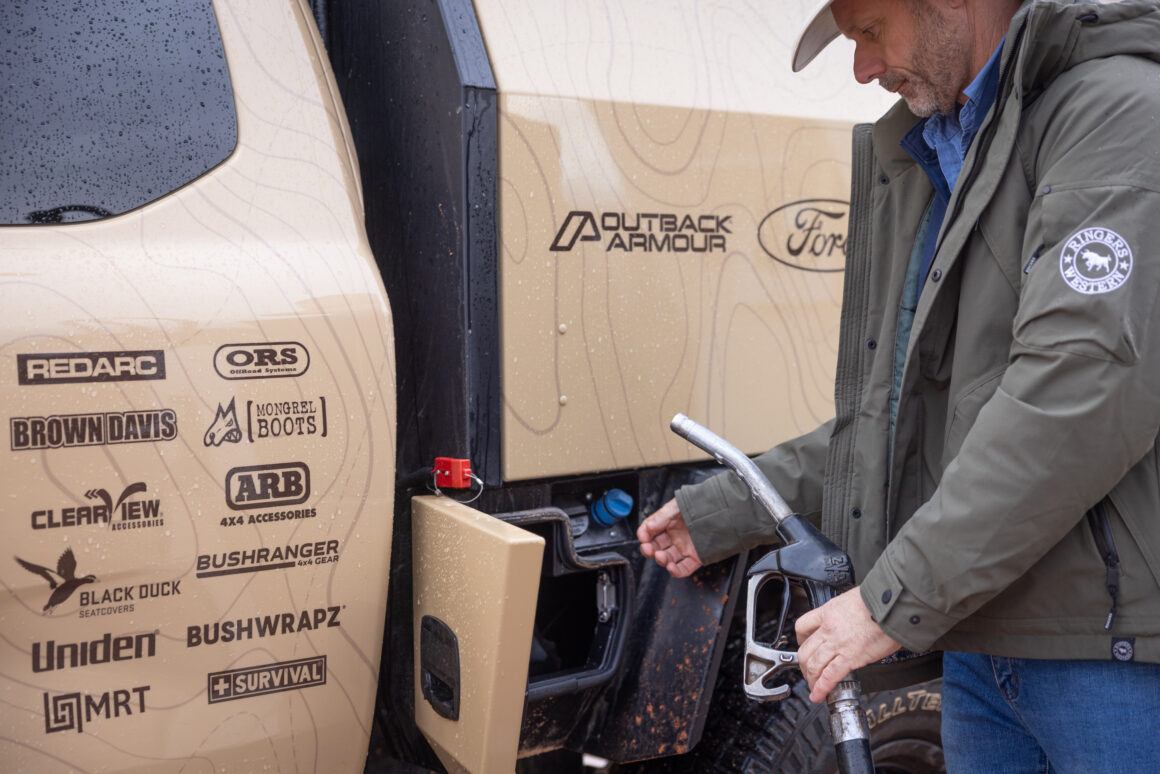
Touring 4X4s have a habit of gaining weight. First comes the bullbar, then the winch, drawers, second battery, fridge, long-range tank, roof rack, awning, recovery gear and enough tools to rebuild a gearbox beside the Birdsville Track. Individually everything has a justification. Collectively, you’re hauling hundreds of kilograms around Australia.
Weight matters most when accelerating and climbing, while accessories hanging out in the airflow can hurt you continuously at highway speeds. It’s not exactly rocket surgery, but it’s worth reducing unnecessary vehicle weight and removing external accessories such as roof racks when they aren’t needed; combined reductions in weight and aerodynamic drag can deliver significant improvements in fuel consumption.
That doesn’t mean removing equipment you genuinely need. It means being ruthless about equipment you don’t. Leave the second spare at home for a weekend trip where it isn’t necessary. Empty the recovery gear after the trip instead of carrying it to work for six months. Don’t leave an empty roof basket fitted all year. If you’ve got a rooftop tent that gets used twice annually, consider whether it needs to live permanently on the roof. And when modifying a touring build, think about aerodynamic drag as well as weight. A slimline platform and sensible awning are very different propositions to stacking bulky gear half a metre above the roof.
Tyres, pressures, and mechanical setup matter
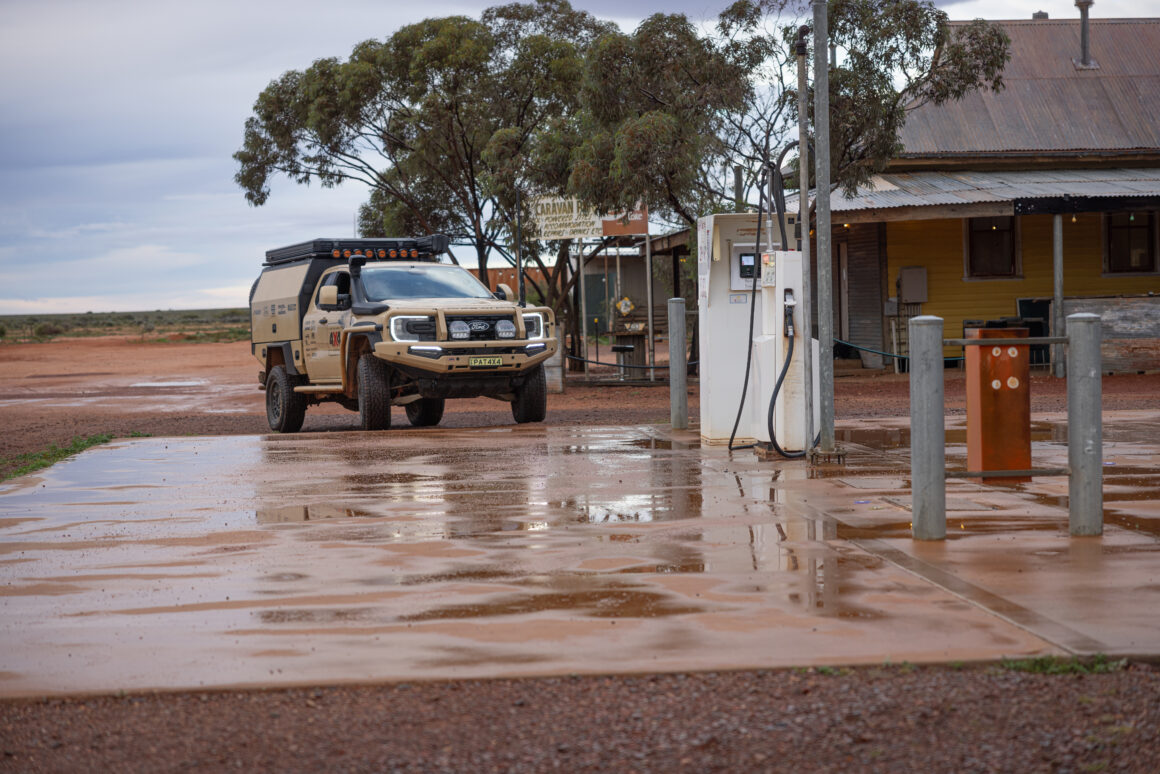
Tyres are one of the easiest places to throw economy away. Underinflated tyres increase rolling resistance, while aggressive mud terrains, oversized rubber and heavy wheel-and-tyre combinations can all ask more from the engine than the standard setup. For highway touring, run an appropriate road pressure for the vehicle’s actual load and tyre combination and check it cold. It’s worth reaching out to your tyre’s manufacturer with some numbers in hand to see their recommendations.
Obviously, those pressures change when the blacktop ends. Dropping pressures on sand or rough tracks is about traction, flotation and protecting the vehicle, not fuel economy. The important part is airing back up once you’re on the highway again. Driving hundreds of kilometres on pressures intended for the beach isn’t doing your tyres, handling, or fuel bill any favours.
The rest of the vehicle deserves attention too. A dirty air filter, dragging brakes, poor wheel alignment or overdue servicing can all work against you. Then there’s modification choice. Bigger tyres, lifts, heavy steel accessories and roof-mounted gear all have legitimate purposes, but every modification involves a compromise. If your 4X4 spends 90 per cent of its life touring highways and maintained dirt roads, building it like a competition truck and then complaining about 18L/100km is probably attacking the problem from the wrong end.
Buy fuel smarter, not just less of it
The other half of the equation is what you pay for every litre. Fuel pricing can vary enormously between service stations, so blindly pulling into the first servo you see can be expensive. Fuel-price apps are now one of the easiest touring tools available. The ACCC actively recommends using them to shop around, with government services including NSW FuelCheck, WA FuelWatch, MyFuel NT and FuelCheck Tasmania among the available options.
NSW FuelCheck is particularly useful for travellers because its My Trip feature can search along a journey rather than simply around your current location. That lets you look ahead and decide whether to fill up here, 80km down the road or at tomorrow’s destination. Don’t burn $10 worth of diesel making a massive detour to save $6 at the bowser, but on a 100-litre fill, even a 15-cent difference is $15 staying in your pocket.
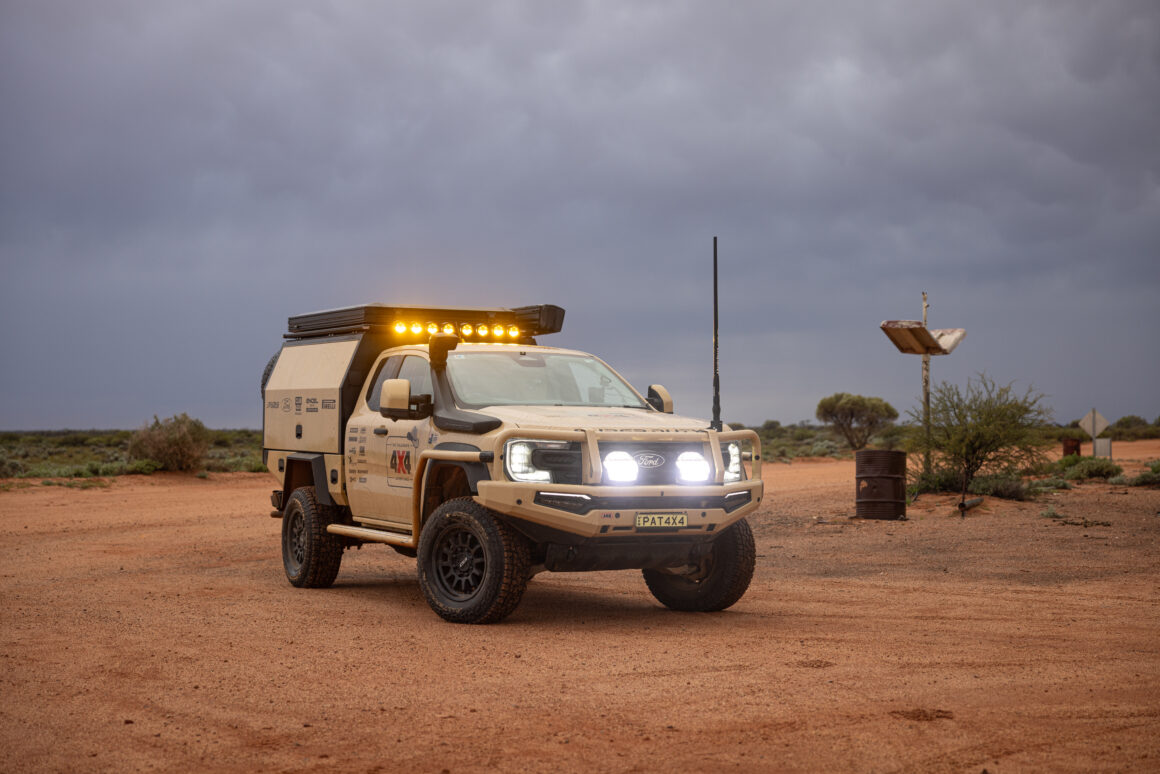
Remote touring requires a slightly different mindset. The cheapest diesel isn’t necessarily the smartest fuel if skipping it leaves you relying on the next roadhouse 400km away. Know your vehicle’s genuine touring consumption, calculate your usable range conservatively and leave a reserve for headwinds, soft sand, detours and changing conditions. A long-range tank can be useful here because it gives you the freedom to choose where you buy fuel rather than simply where you run out of it.
Most importantly, keep the numbers in perspective. Take a 4X4 averaging 12L/100km on a 5,000km trip and it’ll consume around 600 litres. Improve that to 10.5L/100km and you’ve saved 75 litres. At $3 a litre that’s $225. At $4, it’s $300.
None of that requires staying home. It just means making every litre work a little harder.
Because if diesel really does head towards four bucks a litre, the answer isn’t necessarily seeing less of Australia. It’s getting smarter about how we see it.




1 comment
I believe you’ve left out a key consideration. Get your car properly tuned.
I got 30% gain in torque, 15% gain in horsepower and 10% improvement in fuel consumption.
#berrimadiesel