

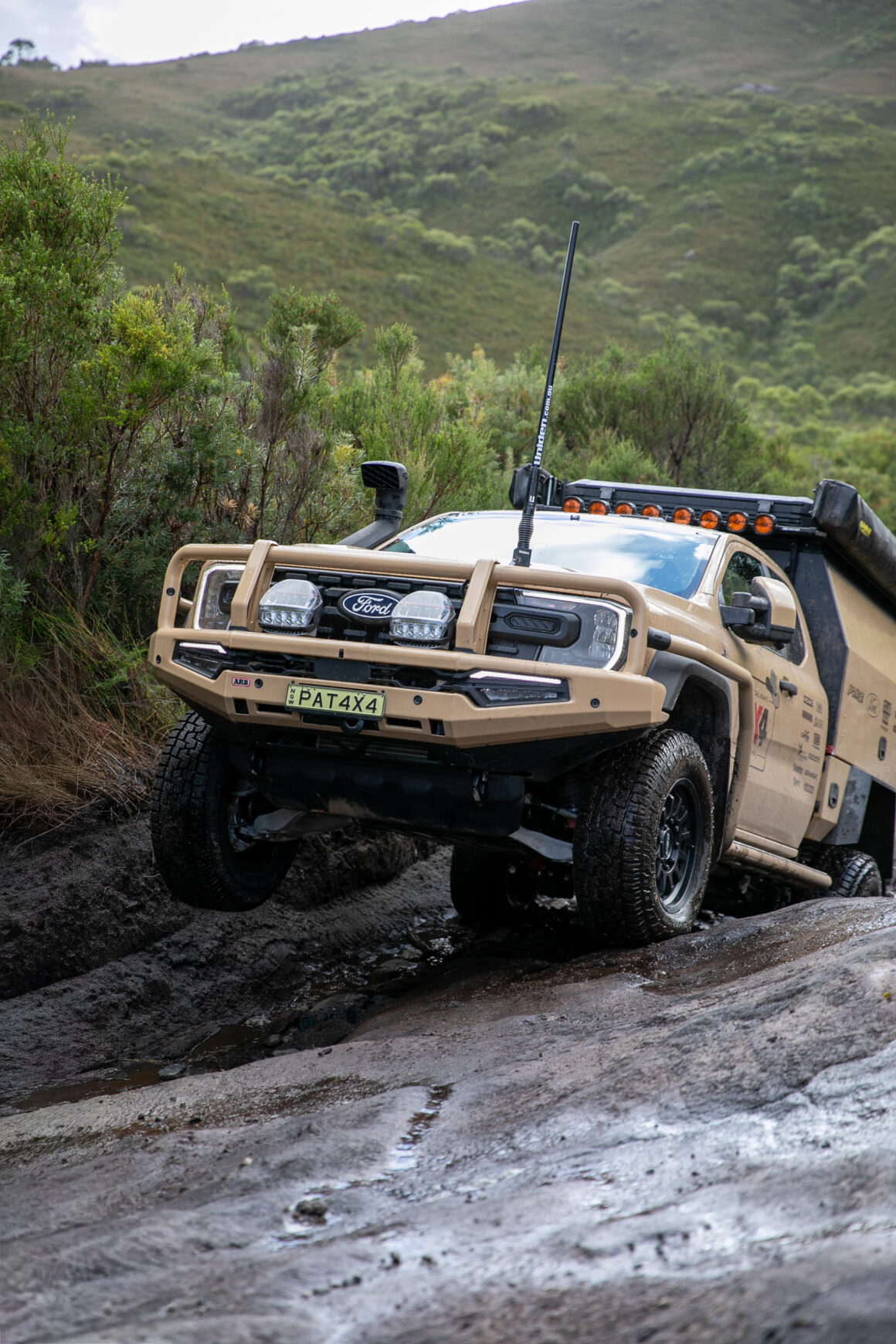
A muddy track can go from a bit of fun to an afternoon of digging surprisingly quickly. One moment the tyres are finding grip, the next you’re sitting still while all four wheels rearrange the countryside. The trick is to recognise when progress has stopped and change your approach. More throttle can deepen the holes, ground the underbody and turn a simple recovery into a much bigger job.
Start with the easiest suitable option and reassess as you go. These four options give you a useful order to consider, but the situation decides the method. A deeply buried vehicle may need a winch before a snatch strap.

Option 1: Reverse the way you came
If you’ve only just lost traction, backing out may be all it takes. You’ve already travelled over the ground behind you, and it could offer a shorter exit than the bog ahead.
Check that the route is clear and safe. Select the appropriate drive mod and low range where fitted, following your vehicle’s instructions, then try reversing with gentle throttle.
Small steering movements from side to side can help the front tyres find fresh purchase against the rut edges. On tyres fitted with shoulder lugs or side biters, this can bring those edges into play. Keep the movements controlled; you’re searching for grip, not sawing between full steering lock.
If the vehicle starts moving, continue steadily towards firmer ground. If the tyres spin without useful progress, stop. Repeated attempts can bury it deeper.
Secure the vehicle and assess from safe ground before moving to another option. Don’t wade into an unknown muddy hole. If the vehicle is unstable or sliding sideways on a slope, seek experienced assistance.
Option 2: Dig a little and use recovery boards
When reversing alone doesn’t work, a shovel and recovery boards are the next things to consider.
Clear mud from around the tyres in your chosen direction of travel and create gentle ramps out of the wheel holes. Remove accessible mud beneath grounded diffs or chassis components too. Work from outside the vehicle, watch for hot exhaust parts and never crawl underneath an unsupported 4X4.
A lightly bogged vehicle might only need a little digging. If the underbody is carrying its weight, there’s more preparation to do before the tyres can work.
Recovery boards, such as Exitrax, provide a surface the tyres can grip. Position them firmly against and partly beneath the tread, with the traction surface upwards, following the manufacturer’s instructions.
Attach retrieval leashes if supplied, keeping them clear of moving parts. Clear everyone from the vehicle’s path before applying gentle throttle. Let the tyres climb onto the boards without spinning across them.
If they don’t bite, stop and reposition. Repeat as needed to reach firm ground, securing the vehicle before anyone retrieves or resets the boards.
Option 3: Use a snatch strap
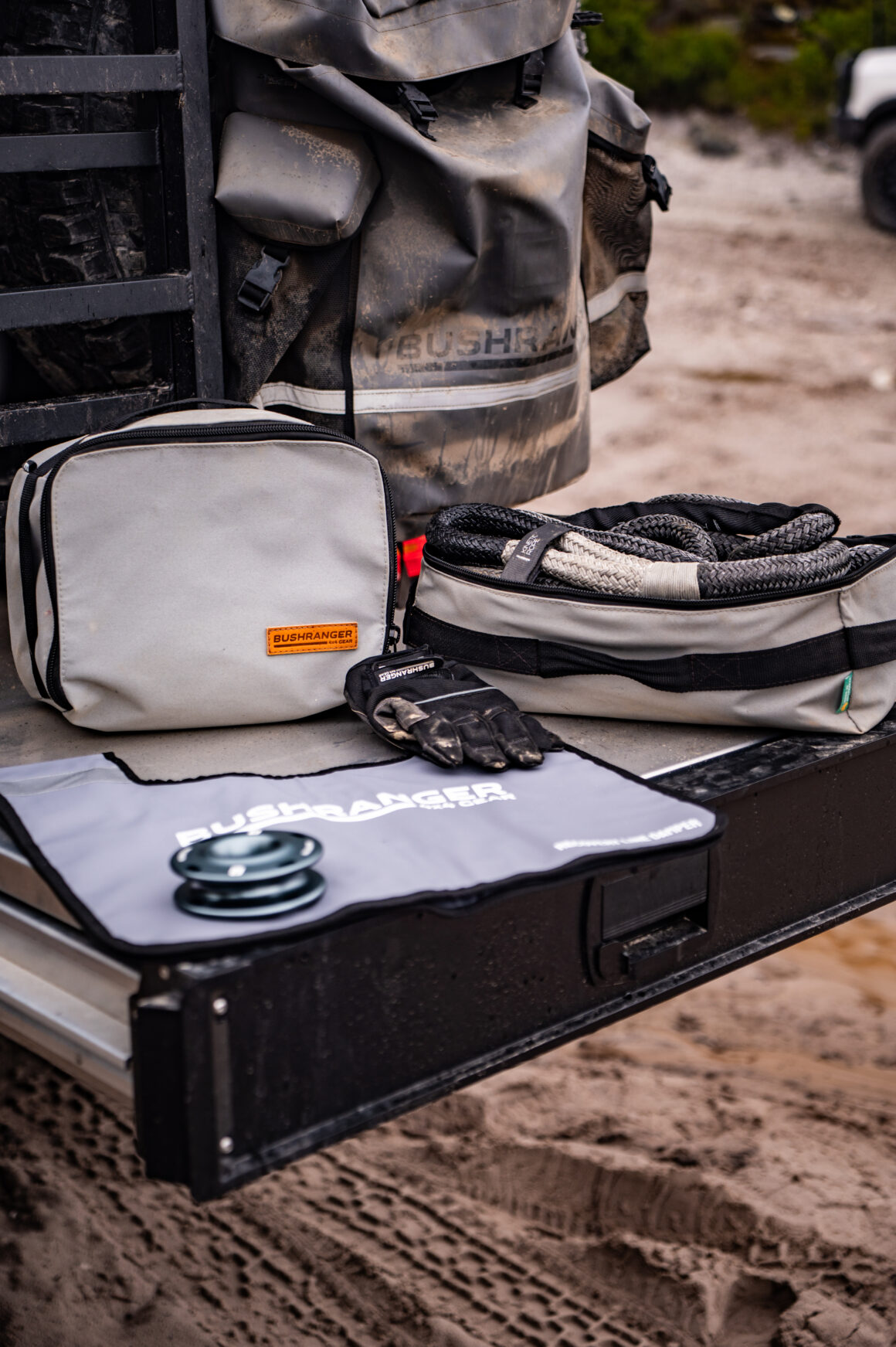
A snatch strap can help when another suitably equipped vehicle is available and the bogged 4X4 can be recovered safely with a dynamic pull.
Preparation still matters. Clear mud and obstructions first, and position the recovery vehicle on ground where it can maintain traction, as close to straight in line with the intended pull as practical.
Both vehicles need recovery points approved for snatch recovery. Never attach to a towball, transport tie-down or unverified hook. Inspect the strap and connections, use a recovery damper and follow the equipment instructions.
Choose the correct strap rather than simply the strongest available. It should have a minimum breaking strength of two to three times the lighter vehicle’s GVM.
Appoint one person to coordinate and agree on a stop signal. Move passengers and spectators outside the recovery area, to the side of the line, at least 1.5 times the unstretched strap length from both vehicles; follow any greater manufacturer requirement.
Use a controlled recovery within your training and the equipment’s instructions. If it fails, stop and reassess. Bigger run-ups and repeated violent pulls can overload the equipment and vehicle components. A deeply buried vehicle may be better suited to winching.
Option 4: Set up a winch recovery
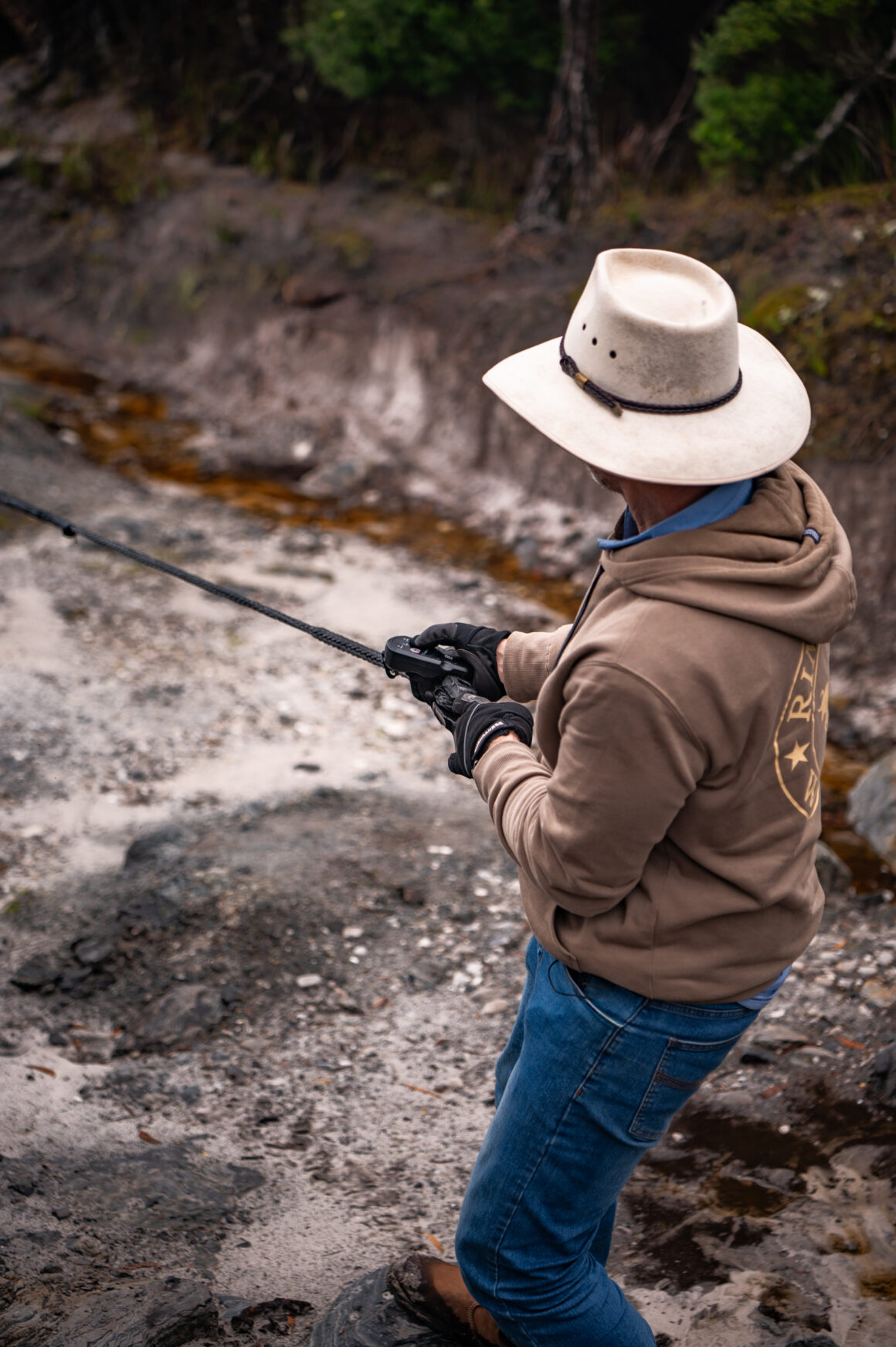
A suitable winch offers a slow, controlled pull when the vehicle needs more assistance. It can also be the preferred option earlier, particularly when a snatch recovery would introduce excessive loads or unwanted movement.
You need a sound anchor, suitable recovery points and equipment rated for the recovery. Mud resistance can make the required pull substantially greater than the vehicle’s weight alone.
Prepare the exit and remove obstructions before loading the winch. When using a suitable tree anchor, fit a correctly rated tree protector. Inspect the rope and connections, fit dampers as directed and follow the winch manufacturer’s operating instructions and duty cycle.
Establish an exclusion zone and clear communications. Keep people away from the tensioned rope, anchor and vehicle path. Never step over the line or handle loaded rigging.
If the winch stalls, the anchor moves or the vehicle behaves unexpectedly, stop. Reassess the setup and get professional help if the recovery exceeds your equipment or experience.
Once free, inspect the vehicle, retrieve the gear and choose a safer route onwards. Getting out is the win; there’s no need to tempt fate.