

There’s a moment in a river crossing when the tyres start spinning and the water suddenly looks a lot deeper than it did standing on the bank. You’ve stopped moving, but the river hasn’t. It’s a poor time to discover the recovery strap is underneath the fridge and nobody knows where the rear recovery point is.
Getting stuck doesn’t automatically mean the day is over. But it does mean the plan needs to change, quickly and calmly. The aim is to get the vehicle onto safe ground without turning a loss of traction into an engine replacement, or putting someone in the water who shouldn’t be there.
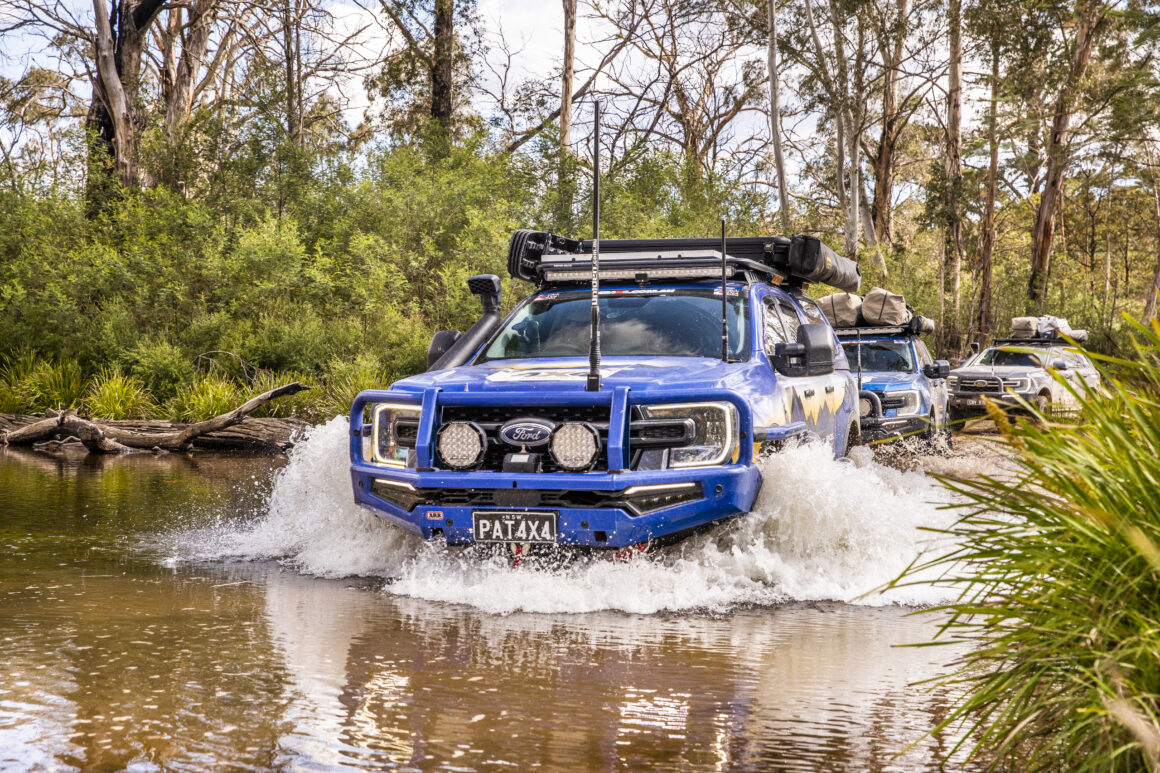
Do the thinking before you get wet
A decent recovery plan starts on the bank. Check that the crossing is open, assess the conditions and know your vehicle’s wading limits. Depth matters, but so do the current, riverbed and exit. A firm entry doesn’t mean there isn’t a soft hole halfway across.
Assess from safe ground. Don’t enter dangerous water to find out whether it’s safe to drive. Fast, rising or floodwater is a reason to find another route, regardless of what the bloke in front managed.
Choose your line and select the appropriate gear and drive mode before entering, following the vehicle’s instructions. Aim for slow, steady progress. Charging in with a bonnet-high splash might look impressive, but it doesn’t help keep water out of the intake. A correctly installed and sealed snorkel helps protect the intake; it doesn’t waterproof everything else.
Think about the way out if the crossing goes wrong. Identify suitable winch anchors, somewhere another vehicle could pull from firm ground, and whether recovering backwards would offer a safer exit.
Have the gear accessible, check the winch before the trip and agree on communications. Know which recovery points you’ll use. Where appropriate, trained operators can prepare connections before entering, with everything securely stowed clear of wheels, steering and moving parts. A loose strap trailing through the crossing creates its own problems.
Cross one vehicle at a time and leave help available. If the first vehicle struggles, keep the others on the bank.
If you stop, reassess rather than digging deeper with wheelspin. If the engine stalls in the water, don’t restart it. Shut it down if the intake is threatened or water ingestion is suspected. If rising water or vehicle movement threatens anyone, call Triple Zero and follow rescue advice. Saving the vehicle doesn’t justify entering dangerous water.
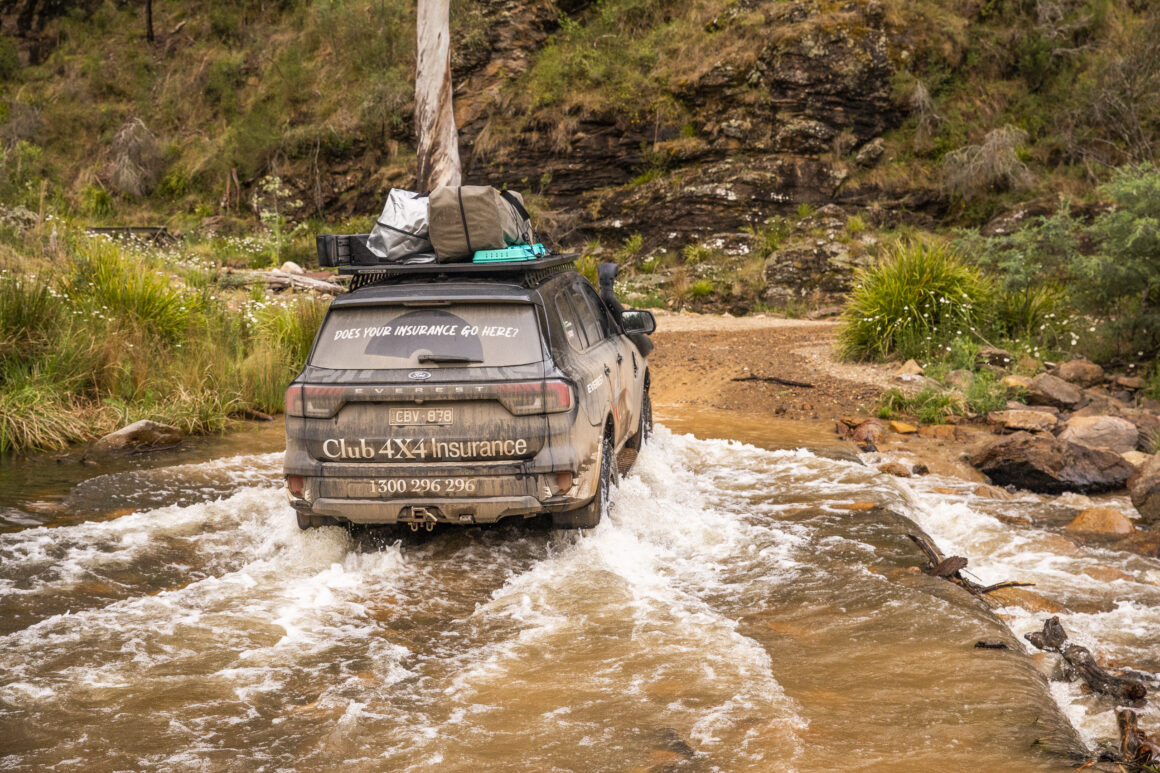
A snatch strap needs a sensible pull
A snatch strap can help when the vehicle has lost traction and another suitably equipped 4X4 can recover it from firm ground. That second vehicle needs somewhere to grip, move and stop. Sending it into the same soft patch is a good way to double the workload.
Choose the pull around the safest exit and keep it as straight in line as practical. Pulling towards the nearest bank makes little sense if it drags the vehicle sideways across submerged rocks.
Work out what’s holding it there. Tyres slipping on a soft bottom and a chassis wedged against a rock are different jobs. If sudden movement could swing the vehicle into deeper water or damage it against an obstacle, favour a controlled winch recovery.
Both vehicles need recovery points approved for snatch recovery. Never attach to a towball or transport tie-down. Inspect the strap and connections, fit a damper and follow the equipment instructions. Choose a strap with a minimum breaking strength of two to three times the lighter vehicle’s GVM. Wet straps can lose strength and stretch, so follow the manufacturer’s guidance.
Keep spectators to the side of the line and at least 1.5 times the unstretched strap length from both vehicles, or further if required. Coordinate the pull and agree on a stop signal. If it fails, reassess. Twice the run-up won’t fix the wrong recovery.
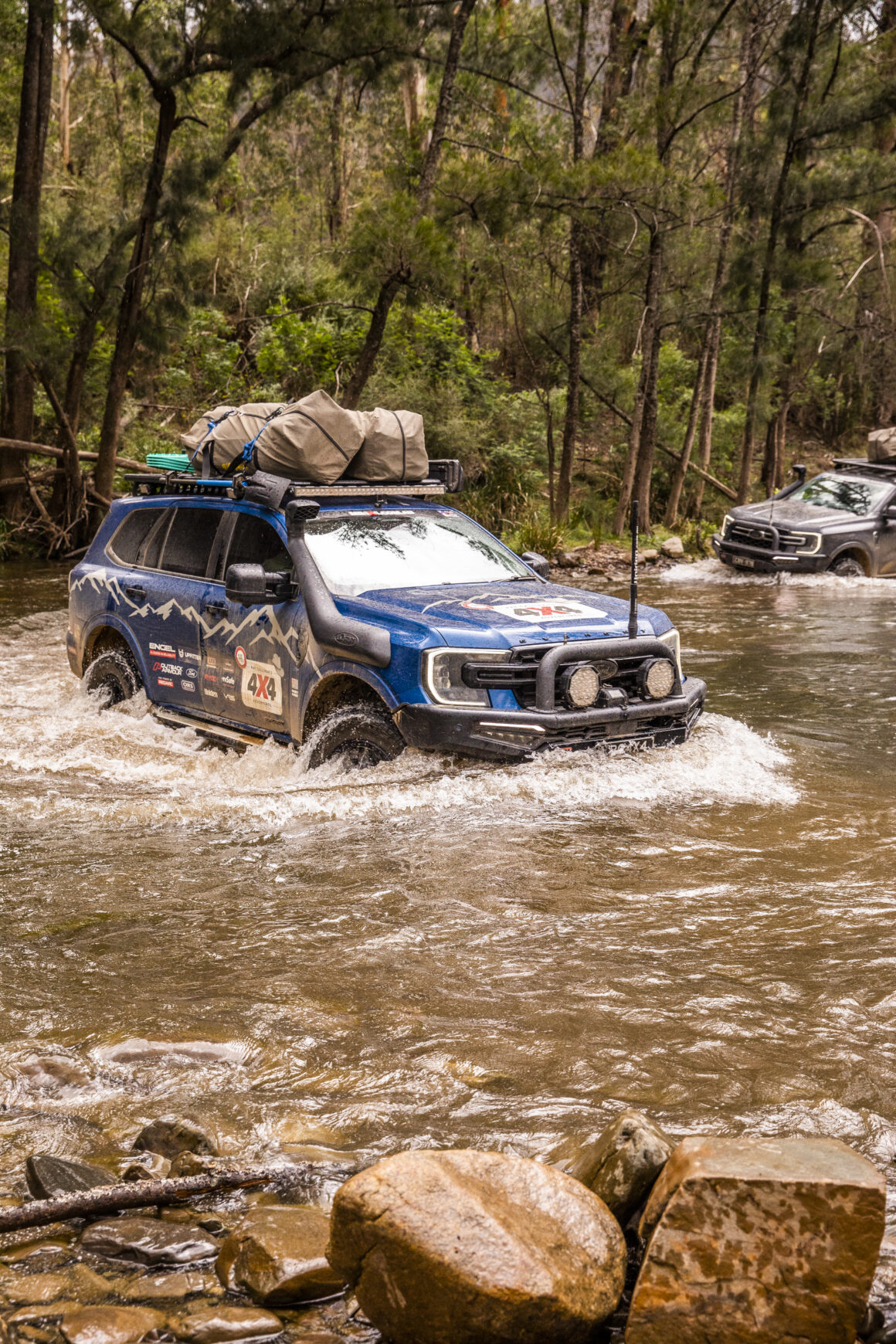
Get the winch out when control matters
A suitable winch earns its keep when the riverbed is hiding obstacles, the vehicle needs careful placement or you don’t have a tow rig on the bank you want. A gradual pull gives you time to watch what’s happening and stop before a small change becomes a big problem.
Choose a sound anchor that suits the extraction line. A substantial tree on an undercut bank may have less holding it there than you think. Use a correctly rated tree protector and recovery points approved for the task.
Inspect the rope and connections, fit dampers as directed and plan the pull before loading the line. Water resistance, soft ground and the climb onto the bank can all add to the load. Direction changes and multiple-line setups need suitable equipment and someone who understands the rigging.
Making the connections must be safe too. Don’t crawl beneath the vehicle or wade into dangerous water to reach a recovery point.
Keep people clear of the rope, anchor and vehicle path. Never step over a tensioned line or handle loaded rigging. Follow the winch instructions, capacity limits and duty cycle. If the engine must stay off, assess the available electrical supply rather than restarting it to charge the battery.
Stop if the anchor moves, the winch stalls or the vehicle starts shifting unexpectedly. Get professional assistance if there’s no safe setup.
Once recovered, inspect before continuing. Suspected water ingestion needs mechanical assessment before restarting, and significant immersion means checking driveline fluids, brakes and electrics.
Getting onto the bank is a win. Making it home under your own steam is better.


