

River crossings are one of those classic 4X4 challenges that can turn a straightforward trip into a genuine adventure. They can also turn serious very quickly. Water hides holes, rocks and soft riverbeds, while even a modest current can have far more influence over a vehicle than it appears to from the bank.
The actual driving technique is relatively simple. The difficult part is deciding whether the crossing should be attempted at all, then preparing the vehicle and choosing a line before committing. Get those decisions right and the crossing should feel controlled and almost uneventful. Get them wrong and a drowned engine may be the least of your problems.
Read the crossing before you drive it
A river crossing should never begin with the front wheels already in the water. Stop well back and examine the entry, exit and country downstream. Check for depth markers and signs the river has recently risen, but never assume another vehicle getting through means yours will. Levels, current and the riverbed can change within hours.
Think beyond the water directly in front of you. Rain falling upstream can send a sudden rise through an otherwise manageable crossing, even when the sky above you is clear. Check recent weather, local warnings and track conditions before leaving camp, and treat closed gates or road-closure signs as the end of the discussion rather than an invitation to test your luck.
If it’s safe, inspect the line with a depth stick, looking for holes, rocks, mud and drop-offs. Walking it is not always the answer: never enter floodwater, fast-flowing water or water where crocs or submerged debris may be present. If you can’t assess it safely, you can’t justify driving it. A current that challenges a person can also push a 4X4 sideways once its tyres lose grip.
There is no universal safe wading depth. The owner’s-manual figure is a vehicle limit under particular conditions, not a promise. When water is rising, the bottom is unknown or the exit looks doubtful, the smart line is the one that stays dry.
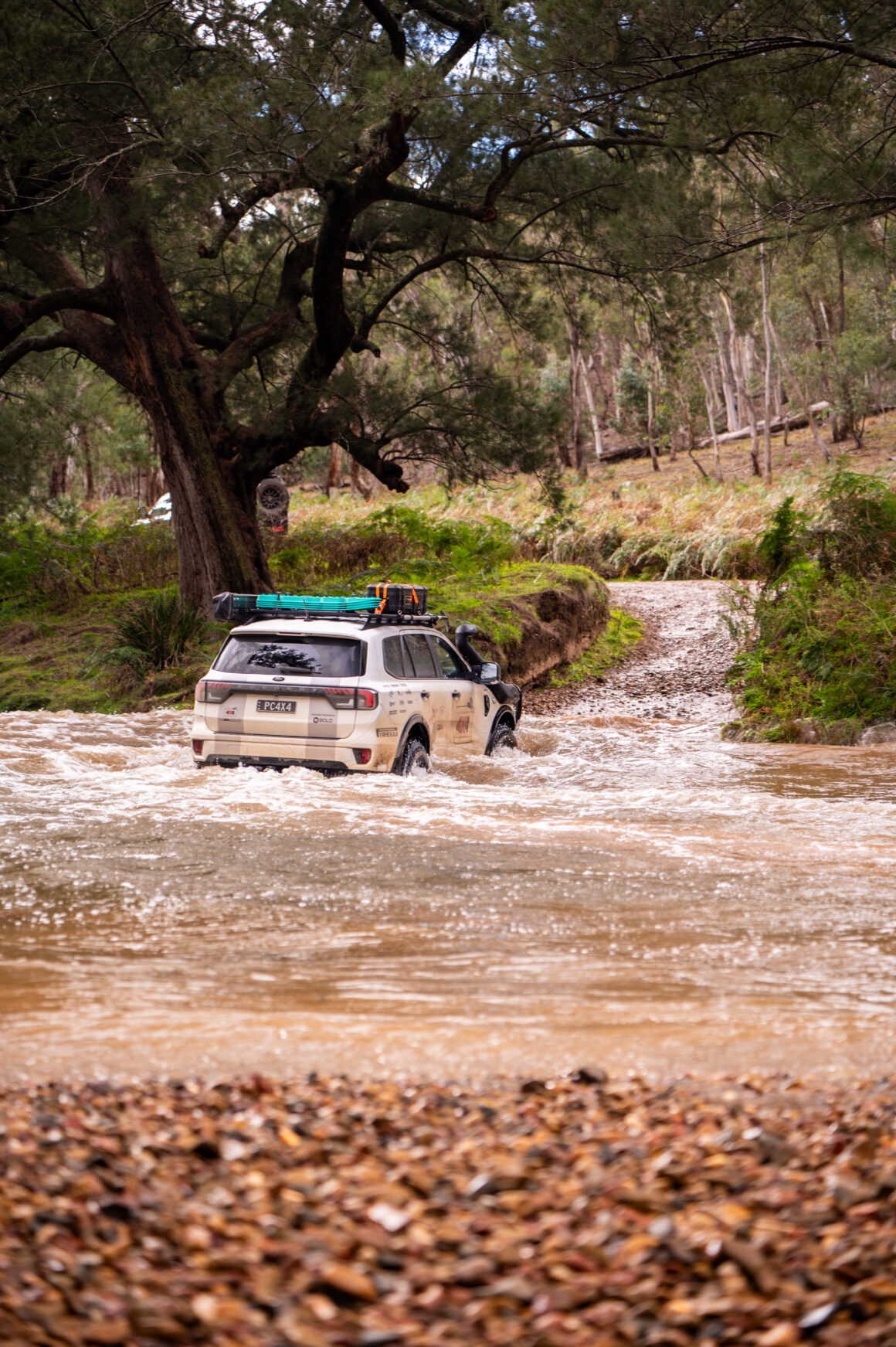
Prepare the vehicle and the recovery plan
Select the appropriate 4X4 setting before entering. Low range is generally best because it reduces the throttle required and improves control on a rough riverbed. Choose a gear you can hold throughout the crossing. Automatic drivers can use manual selection, while manual drivers should avoid touching the clutch in the water.
Know where the engine air intake is and ensure the airbox, plumbing and snorkel connections are sealed. A snorkel raises the intake point; it doesn’t turn a 4X4 into a submarine. Extended breathers help protect the driveline. Water blinds can suit some older vehicles, but check the manufacturer’s advice before using one on anything modern.
Mechanical cooling fans deserve particular care because deep water can pull a spinning blade forward into the radiator. Some older-vehicle procedures call for temporarily disabling the fan, but that creates its own overheating and safety risks and should only be done if you understand the system. With a modern 4X4, follow the manufacturer’s guidance rather than disconnecting components on the riverbank.
Keep recovery gear accessible and use rated recovery points. If the crossing is questionable, attach a rated recovery line before entering so nobody ends up standing in moving water later. Agree on the route and recovery plan, send one vehicle at a time and keep spectators clear. A winch is useful insurance only when there’s a suitable anchor and everyone understands safe procedure.
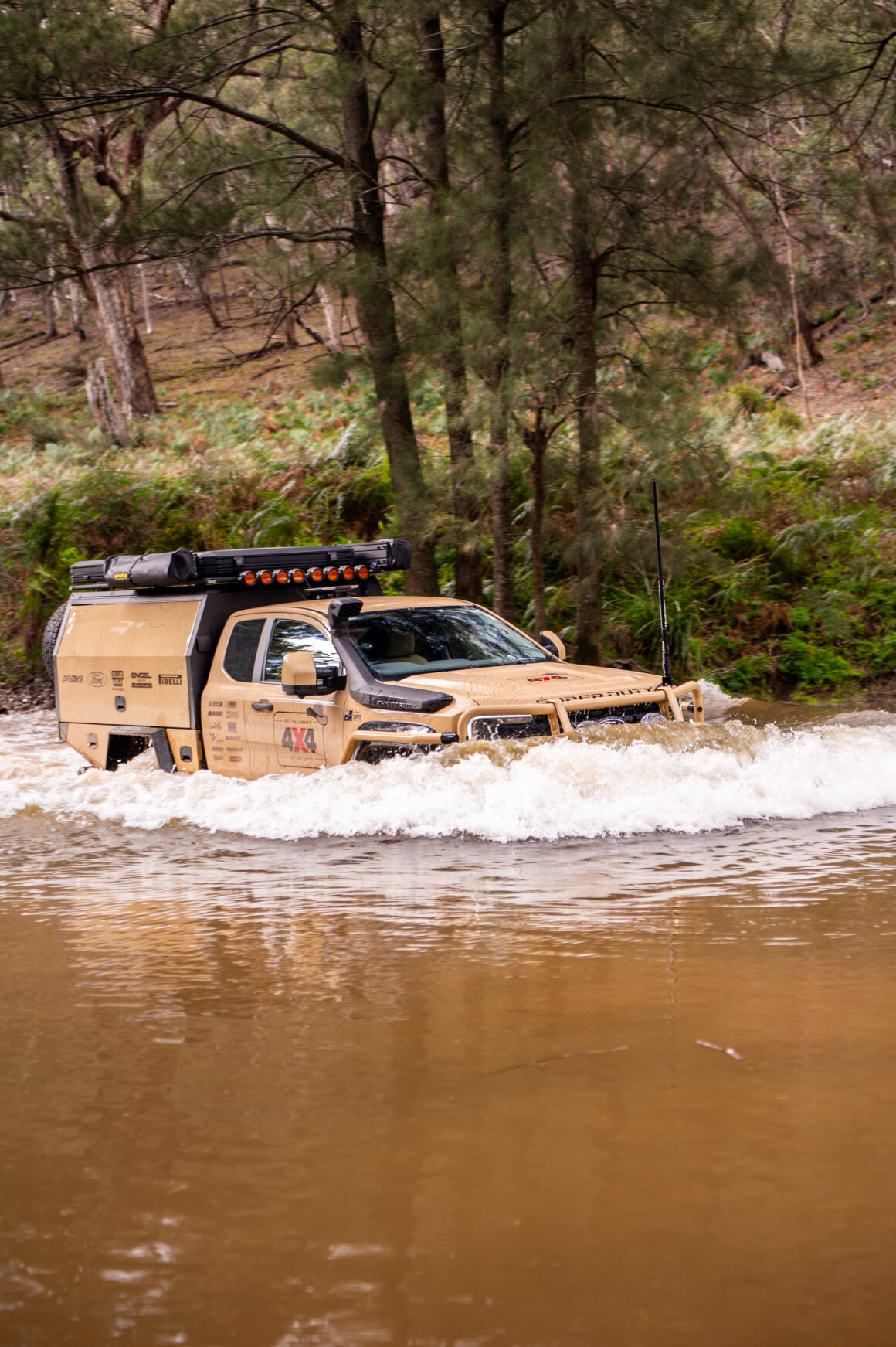
Cross smoothly and keep the momentum boring
Enter gently, build a small bow wave and maintain a steady walking pace. The aim is controlled momentum, not speed. Charging in can force water into the vehicle, hide hazards and damage the track. Keep both hands on the wheel, watch the exit and keep steering corrections small.
Avoid changing gear, dipping the clutch or making sudden throttle inputs. If the tyres spin, more power may dig into a soft bottom or push the vehicle off line. Ease off and let them regain purchase. If the engine stalls, don’t automatically restart it: water may have entered the intake, and cranking it can destroy the engine. Recover and inspect the vehicle first.
The exit may be steep, muddy or cut into steps. Carry enough momentum to climb it, let low range work and avoid wheelspin that tears up the bank. Once clear, leave room for the next vehicle while remaining close enough to assist.
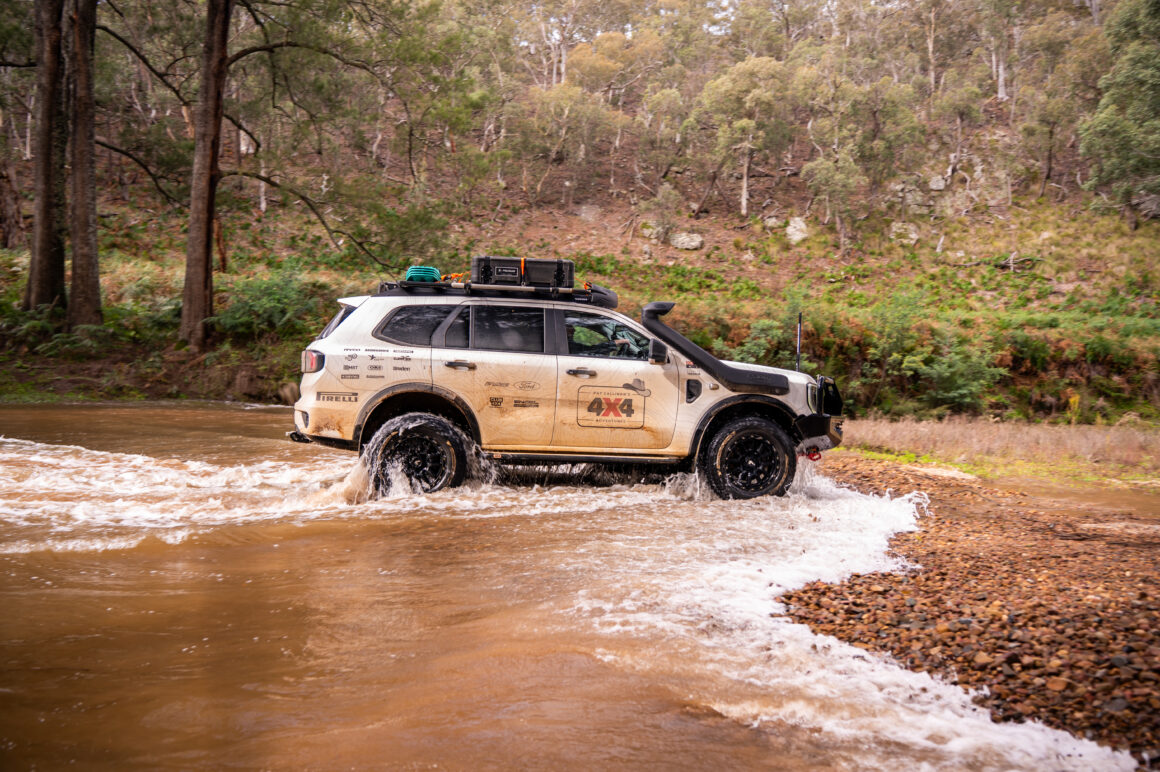
Check the vehicle once you are through
Pause on firm ground and let water drain. Apply the brakes gently at low speed to confirm they work and help dry them. Listen for unusual noises, then check for debris around the radiator, suspension, driveshafts and exhaust. After a deep crossing, inspect the airbox and filter before restarting or driving hard.
After a significant crossing, check the diff, gearbox and transfer-case oils. Milky oil means water has entered and needs prompt attention. Bearings, alternators and electrical connectors can also suffer after immersion. Avoid salt water wherever possible because the corrosion bill may arrive long after the trip.
The real skill in river crossings is judgement. A neat bow wave might look good on camera, but the best drivers are the ones who assess the risk, prepare properly and remain perfectly willing to turn around. No campsite, shortcut or photograph is worth a drowned engine, a swept-away vehicle or someone getting hurt.





1 comment
One important factor to remember is to not push water up the bank exiting, instead stop in the shallows and then drive very slowly so your tyre’s can get a grip otherwise you will find yourself not being able to gain traction .
This I found out delivering freight on Cape York Peninsula in the forest creeks approaching Lockhart River in the early 90’s .