
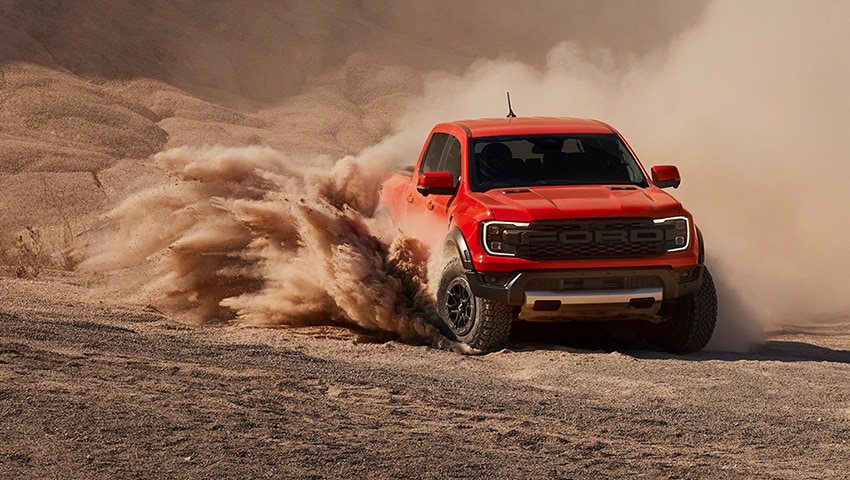
K’gari might be one of Australia’s most famous 4X4 destinations, but for a first-timer it can also be slightly intimidating. You’ve got long beach runs, chopped-up access tracks, inland sand roads, creek crossings and enough bogged vehicles on social media to make you question whether your first trip should involve something less ambitious.
The good news is that Fraser Island sand driving isn’t particularly difficult once you understand a few fundamentals. K’gari rewards preparation and smooth driving far more than horsepower, huge tyres or aggressive momentum. Get your tyre pressures right, work with the tides and learn to read the sand, and most modern 4X4s will handle the island comfortably.
Air down before you need to
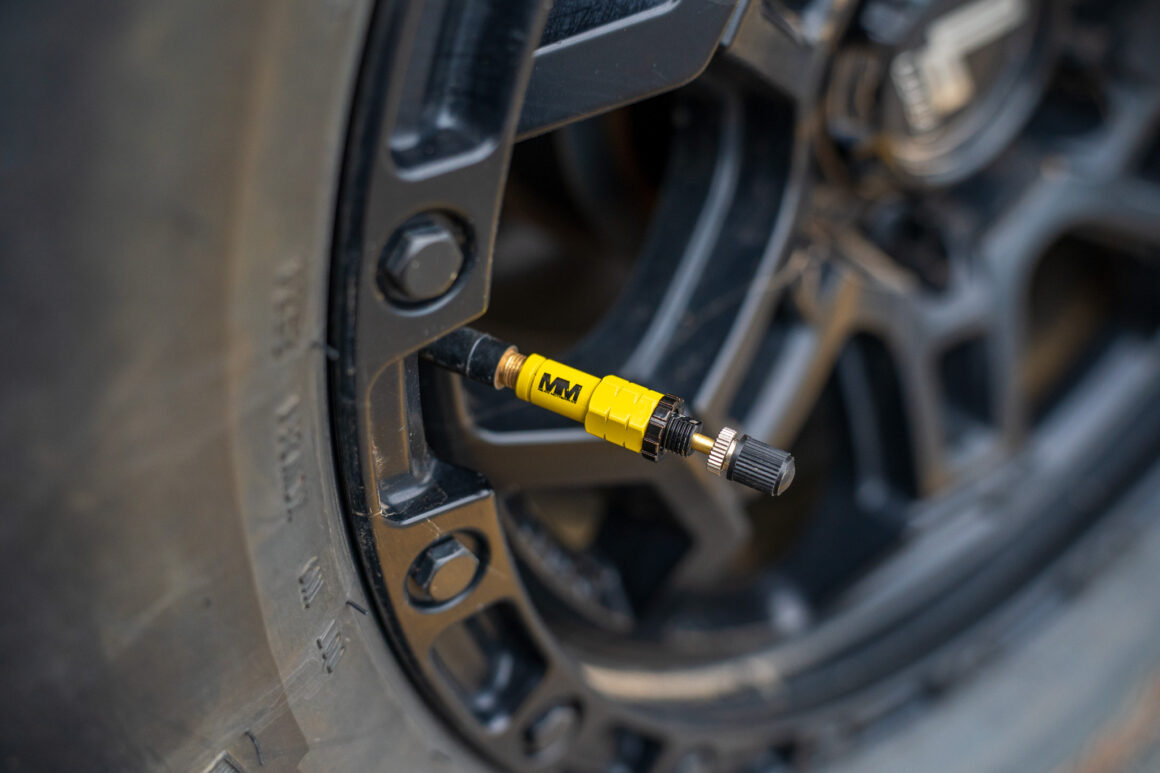
Tyre pressure is the biggest single change you can make to how your 4X4 performs on sand. Lower pressure lengthens the tyre’s footprint, helping the vehicle float across soft sand rather than digging through it.
There isn’t one magic pressure that works for every vehicle because tyre construction, load and wheel size all matter. For many touring 4X4s, somewhere around the high teens is a sensible starting point on soft sand, then adjust from there according to conditions. The important bit is to air down before you’re buried to the chassis. Carry a reliable gauge and compressor, and remember to reinflate before returning to high-speed or sealed-road driving.
Your right foot should be smooth, not brave
Momentum matters on sand, but there’s a huge difference between momentum and speed. The trick is maintaining enough forward movement that the tyres stay on top of the surface without constantly accelerating, braking and digging holes.
Keep your throttle inputs smooth and let the vehicle move around underneath you. Sand ruts will pull at the steering, particularly with reduced tyre pressures, so avoid fighting the wheel with sharp corrections. Sudden steering and braking can also increase the risk of rolling a tyre off the rim.
If the vehicle starts losing momentum, add throttle progressively. If it clearly isn’t going to make it, stop before you bury it. Reversing back along your tracks, dropping another couple of psi if appropriate and trying again will generally beat sitting on the limiter until all four tyres disappear.
The tide runs your itinerary
This is probably the biggest Fraser Island lesson for first-timers: the beach isn’t simply a road that happens to have water beside it.
There’s no set time where you should or shouldn’t travel, but low tide will generally give you the biggest track, with the best beach-driving window generally within two hours either side of low tide. Driving around high tide can force you onto softer sand and can make some sections difficult or impassable altogether.
Plan your day around the tide before you plan your attractions. If you want to visit Eli Creek, the Maheno, Indian Head and several other spots in one day, work out where the tide will put you first. Trying to squeeze a beach run through because you’re running late is how an easy drive becomes a stressful one.
Hard sand can still bite
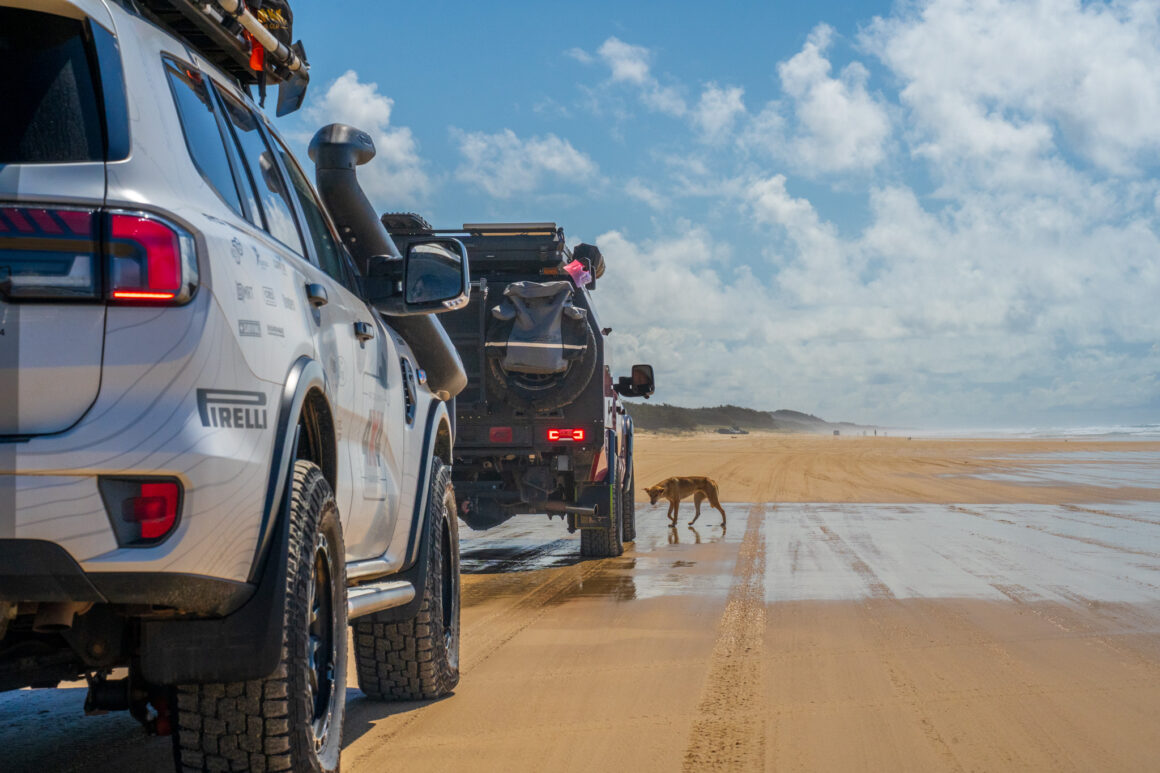
Once you reach the firm sand near low tide, it can feel like a highway. That’s when people tend to get complacent.
The eastern beach has a maximum speed limit of 80km/h in suitable conditions, while inland roads are generally 30km/h and pedestrian beach areas 40km/h unless otherwise signed. But those are limits, not targets.
Creeks can cut deep washouts across the beach, and the shadows they create can make them surprisingly difficult to spot at speed. There can also be pedestrians, wildlife and aircraft operating on sections of the eastern beach. Keep your eyes well ahead and back off whenever visibility or surface conditions deteriorate.
Inland tracks are a different game
The beach gets most of the attention, but K’gari’s inland tracks can be where first-timers work hardest. They’re narrow, often heavily rutted and can develop deep, loose sand after prolonged dry weather.
Low range can be useful here, particularly through slow, churned-up sections where you want controlled momentum without excessive wheel speed. Give way where required, use passing bays and don’t create new tracks around rough sections.
The inland tracks also take much longer than their distance suggests. A 30km drive on K’gari isn’t necessarily a quick half-hour run, so leave plenty of time and avoid building an itinerary that requires you to race the sunset.
Carry enough gear to rescue yourself
At minimum, take a compressor, accurate tyre gauge, shovel and traction boards, along with proper rated recovery equipment if you know how to use it. 4X4ers are generally a good bunch of people, but it’s best to have your own gear rather than relying on someone else’s.
A vehicle access permit is also required before driving on K’gari, and checking the latest island conditions report should be part of your pre-trip routine because beach and inland-track conditions can change quickly.
Most importantly, don’t overthink it. Fraser Island sand driving is less about attacking obstacles and more about making life easy for the vehicle. Air down early, carry momentum smoothly, respect the tides and slow down when the conditions tell you to.
Do that, and your first K’gari trip should spend far more time enjoying the island than digging your 4X4 out of it.


