
How much does it really cost to travel around the country in an RV? Now on his third lap of Oz, Marty Ledwich shares his tips for budgeting for the big lap and sticking to it.
Budgeting for the big lap is one of the most asked questions on caravanning and camping Facebook groups, and for good reason. You need to know how much it is likely to cost before you head off. But how much should you budget for the big trip and how do you stick to the budget? Well, after being on the road now for the last three years and not having gone broke yet, we reckon we have the answer and it is a lot simpler than you could imagine.
HOW MUCH DOES IT COST?
It is almost completely impossible for me to say to anyone how much the big lap is going to cost them for one fundamental reason. My particular situation would be completely different to the next person. I travel with my wife and our three dogs. I have an income but my wife does not. We sold our home and all our possessions so we have no pre-existing bills to pay with the exception of the costs of insuring and maintaining our car and caravan, both of which we own outright. Our overheads are very low.
Compare that to a young couple travelling with three kids who want to keep their home to return to. They may have mortgage payments to keep up as well as rates, insurance, utilities and other costs associated with owning a home. Then there are the costs related to having kids such as their education. Their costs would be hugely different to ours.
If you own your home but intend to rent it out while you’re away, that may offset your costs somewhat but you may need to put your furniture and possessions into storage which will have its own associated costs. The number of variables is almost endless.
To determine what your likely costs will be, consider what you are paying now living in your home before you leave as a guide. Look at how much you will need to pay on a regular basis for things like mortgage payments, rates, insurance, etc. Then look at the usual costs of living such as food, fuel and car maintenance. Write all these items down and put as much detail into them as you can. This will give you a starting point from which to work. Just adjust them to take into consideration the fact you may not be using the utilities while you’re away. Fuel and maintenance costs may change depending on the distances you travel. Having a rough itinerary will help here. Just remember to double the fuel consumption of your vehicle given it will be towing for much of the time.


As for food and accommodation, well they can vary too but if you think about it, you’re not likely to change your diet too much just because you’re living on the road. And, depending on how often you intend to stay at caravan parks or free camping, accommodation costs could be minimal.
At the end of the exercise, you will want to have a weekly amount you believe you will need for each aspect of your life. Accommodation, food and groceries, fuel, insurance, maintenance, pets, recreational activities and ad-hoc expenses.

If you know in advance of a bucket list activity you want to include in your itinerary put the money for it aside before you leave You don’t have to be too stingy with yourself. Enjoy a meal out every now and again.

SETTING THE BUDGET AND STICKING TO IT
Now that you know how much money you will need, you will want a way to set that weekly budget and stick to it. This is where I give you some free budgeting advice that debt management companies will charge you a fortune for. And it is surprisingly simple.
- Pay for everything you can in cash.
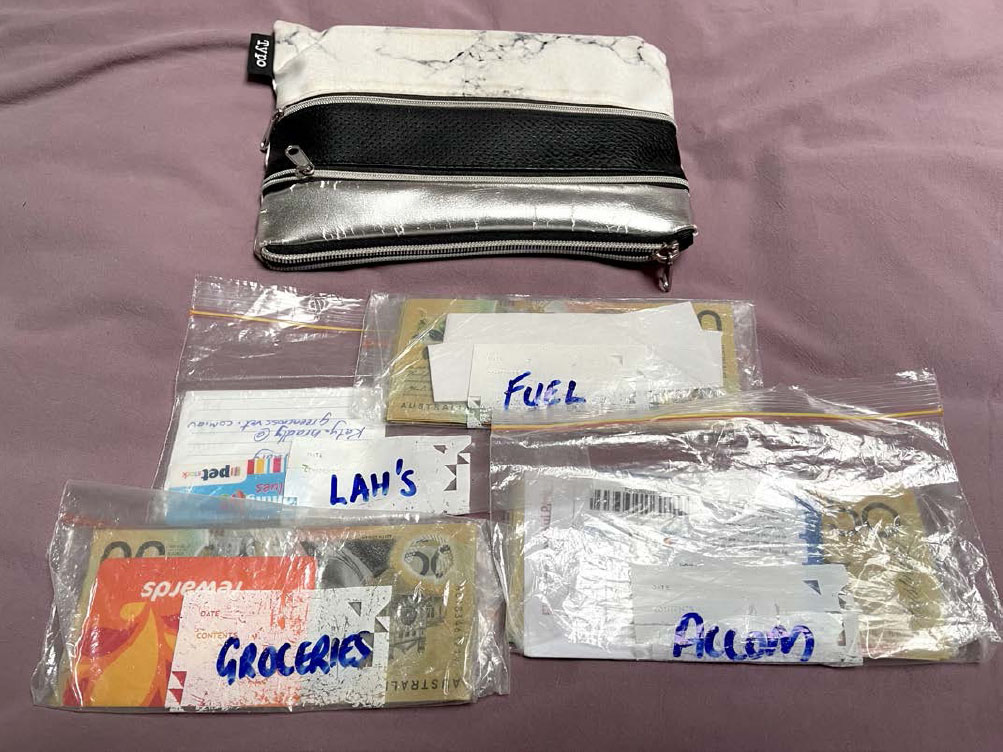
- Withdraw your total weekly or fortnightly budget amount in cash and divide that total into the weekly or fortnightly amounts for each life aspect.
- Place these individual cash amounts into envelopes or zip-lock bags marked with each life aspect.
- Place these envelopes or bags into a large pencil case. This will hold all the money you can spend for the week or fortnight. No more.
- Avoid using funds from one aspect to pay for another unless it is absolutely necessary. The idea is to stick to the budget religiously. If you run out of accommodation money, you will have to free camp for the rest of the period.
- At the end of the period, you will either have money left over for some aspects and, perhaps, none for others. With any excess cash, you can either leave it to bolster your funds for that aspect for the next period or put it aside as a saving that could be used to pay for occasional indulgences.
- Withdraw the same amount for the next period. No more and no less.
- Repeat the process.
Pay for everything with cash to keep control of your spending. Alcohol can be very expensive. Set a budget for it and stick to it.


Do this for a couple of months and reassess your situation. You may find that you have underestimated your accommodation costs but you have overestimated your fuel costs. This is where you can adjust your aspect totals as well as the overall withdrawal amount to suit your situation. You should find that you are able to settle into a comfortable budget that is almost as regular as clockwork without too many surprises. You may even be able to accumulate enough surplus cash to really treat yourselves to something very special like an expensive dinner out or a tour for the family to a popular destination that you may not have thought you could afford before you left for your trip.
THE EMERGENCY FUND
It is easy enough to work out how much money you will need for day to day expenses but what happens in an emergency? How can you budget for that? If you start to think about all the things that can go wrong on your trip, you may end up talking yourself out of doing it in the first place. But, for so many reasons, this is a necessary exercise as you will need to be prepared for many of these emergency situations. Fortunately, you only need one amount put away to deal with any one of these situations so perhaps just considering what would likely be the most expensive situation would be a good place to start and you can work back from there.
For us, a total loss of either our car or caravan or both would be covered by insurance so we need not worry too much about that. But if the engine in our tow vehicle was to suffer a catastrophic failure, that could well cost us in excess of $20,000. This would likely be the case for most modern turbo diesel engines. If you have a large American pickup truck or a motorhome, that figure could be much higher. Let’s call it $30,000 for good measure.
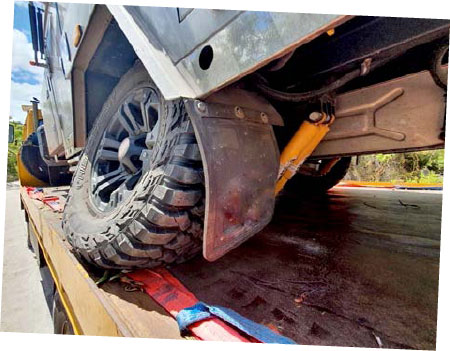
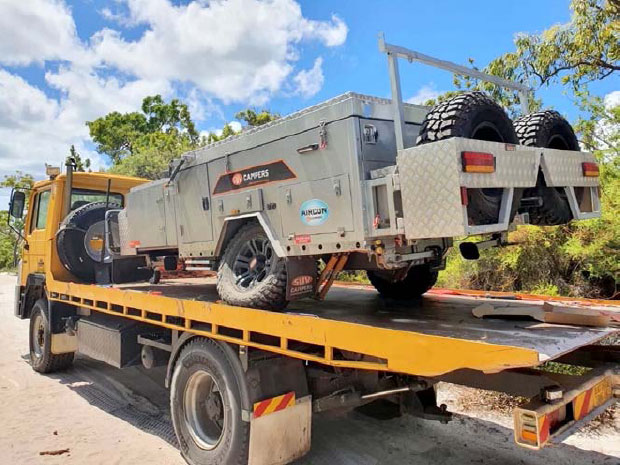
If there was a death or other emergency in your family and you had to get yourselves back home in a hurry, how much would that cost? Probably not more than $30,000.
You start to get the picture. The point is, you will want to have this emergency fund established before you leave and, most importantly, don’t touch it while you’re away unless it is absolutely necessary.
REMEMBER, WE ARE ALL DIFFERENT
Pressed to put an actual figure on what you should be budgeting for, I can only share with you what we do for our particular situation with no major overheads. As a couple with three dogs, we budget for $1,000 per week and, at that level, we have been able to put aside enough cash to indulge ourselves every so often. For many couples and small families, that may well be a good place to start. For larger families, you could multiply that weekly amount by 1.5 to 2 times.
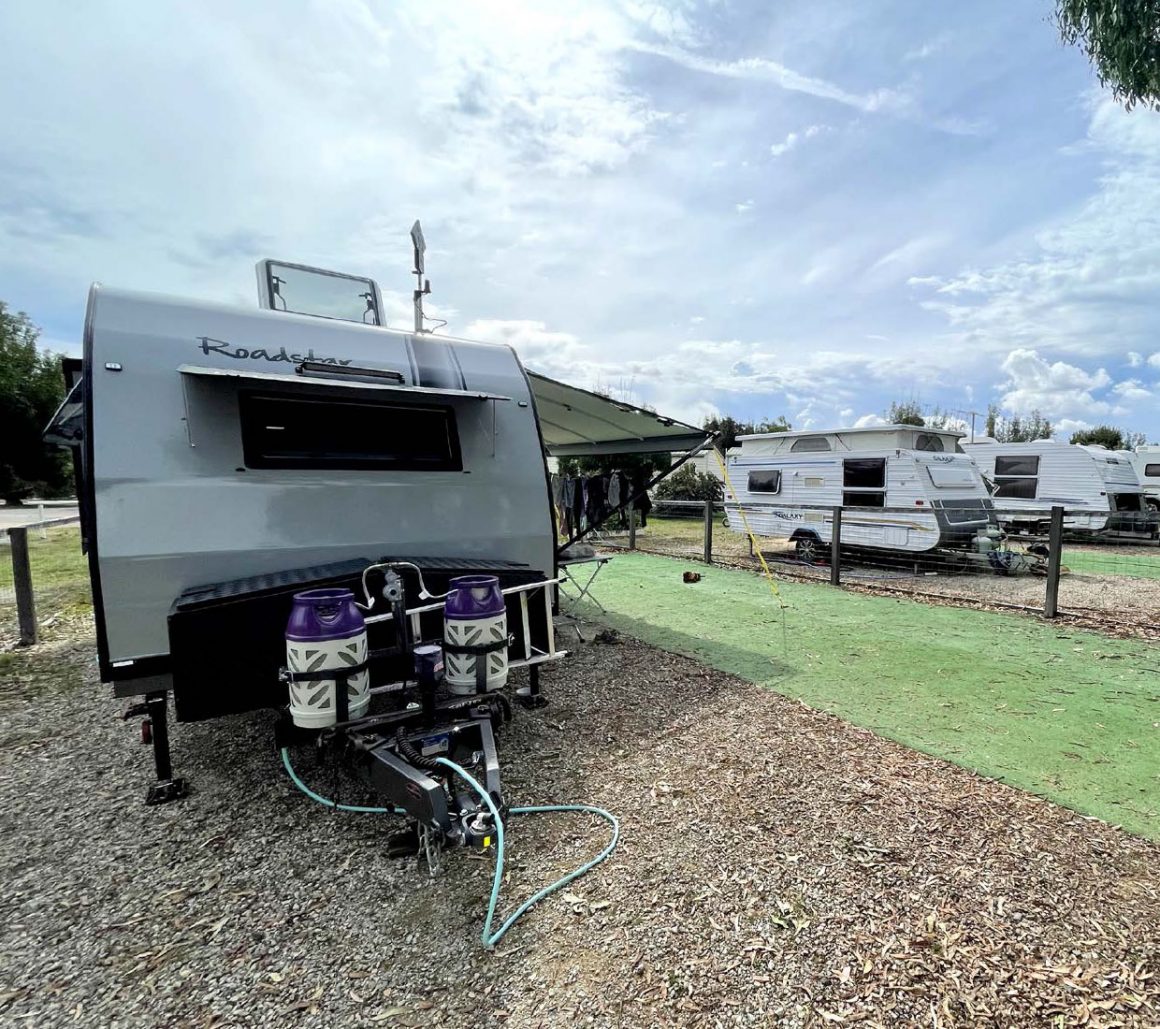
But what suits us may well not suit another couple in a similar situation to us. They may be able to do more free camping to lower their accommodation expenses. They may eat less takeaway food than us or prefer not to do as many expensive recreational activities as we do. They may not have dogs to consider. All these could lower their weekly budget considerably.
At the very least you now have an idea of where to start budgeting and you have a budget management method that will ensure you can keep paying for your trip.
Safe travels.
HOT BUDGET TIPS
Gifts: When family and friends ask you what you would like for a Christmas or a birthday present, ask them to give you gift cards for places you normally shop like Coles or Bunnings or even Dan Murphy’s. Helps pay for the things you purchase regularly.
Money tin: When you pay with cash, you will end up with a lot of loose change. Rather than carry it around with you, put it into a large money tin. When it’s full, take it to the bank and tally it up. You will be amazed at how much money you will have. Pay off the credit card if you have one or treat yourself to a tour, go out for a fancy dinner or top up one of your zip bags if funds are getting low in that life aspect.
Meal planning: We have found it is actually cheaper to do our grocery shopping in small batches as we travel from place to place rather than buying bulk. Meal planning helps greatly. We may pay a little more but we waste far less. This also means we support small local businesses as we move.
Discount schemes: Always try to take advantage of discount schemes like your Woolies card, Toyota app, state automobile clubs, caravan park chains and even seniors’ discounts. If you don’t ask you don’t get. Every little bit saved adds up in the end.