

Beach weather is coming, which means more loaded 4X4s heading through soft access tracks in search of a spot beside the water. It also means a few of those vehicles will finish the journey considerably closer to the sand than their owners intended.
Getting bogged doesn’t have to ruin the day. But what you do in the first few seconds can decide whether you’re dealing with a straightforward recovery or an afternoon of digging. Before someone volunteers a snatch strap and a generous helping of enthusiasm, work through the basics.
Stop before you make it worse
When the wheels are spinning and the vehicle isn’t moving, get off the throttle. Every extra revolution can excavate more sand from beneath the tyres, eventually leaving the underbody carrying weight that should be on the wheels.
Secure the vehicle before getting out, then assess the situation. Look at how deeply the tyres have sunk, whether the diffs or chassis are resting on sand, and where you could realistically drive once you’re moving.
On a beach, check the tide and nearby traffic immediately. A soft access track and a vehicle within reach of incoming waves are very different problems. If the water is threatening the vehicle, get people somewhere safe and call for appropriate help early. A rising tide is a reason to act promptly, not abandon safe recovery practices.
Choose your exit before starting work. Reversing along the tracks you’ve just made may offer a better route than pushing further into the soft patch, provided the ground behind is safe. The goal is to reach firmer ground, not prove you can finish the original line.
Give the tyres a fighting chance
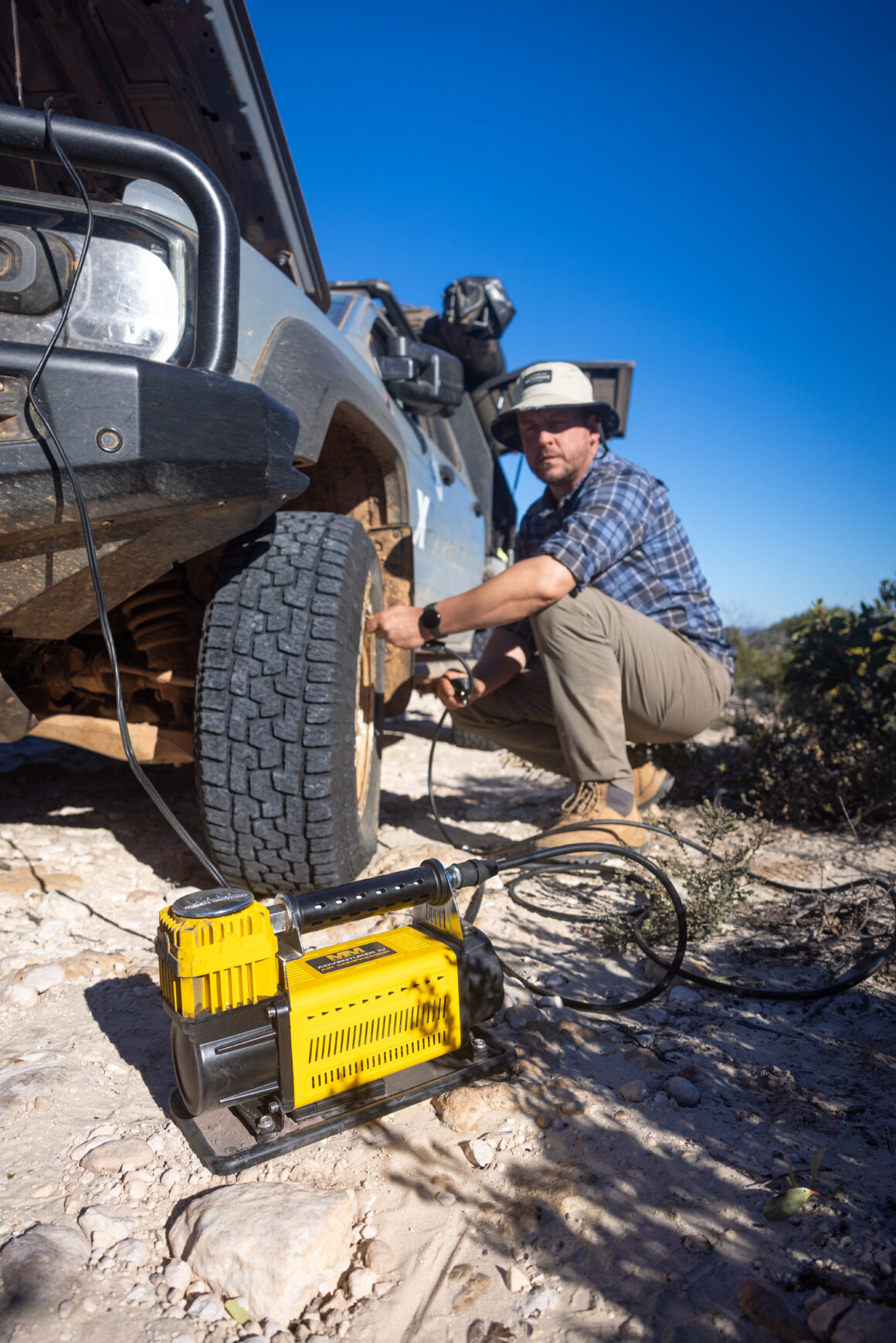
Check your tyre pressures with a gauge. If you entered the beach at high pressures, you’ve made the job harder from the outset. Lower pressures let the tyre’s footprint lengthen, spreading the load over more sand.
There isn’t one magic pressure that suits every 4X4. Vehicle weight, tyre construction, wheel size and conditions all matter. Make measured adjustments within appropriate tyre and vehicle guidance. As pressures come down, so should speed; sharp turns and aggressive inputs increase the risk of unseating a bead. Carry a compressor and restore suitable road pressures before returning to the bitumen.
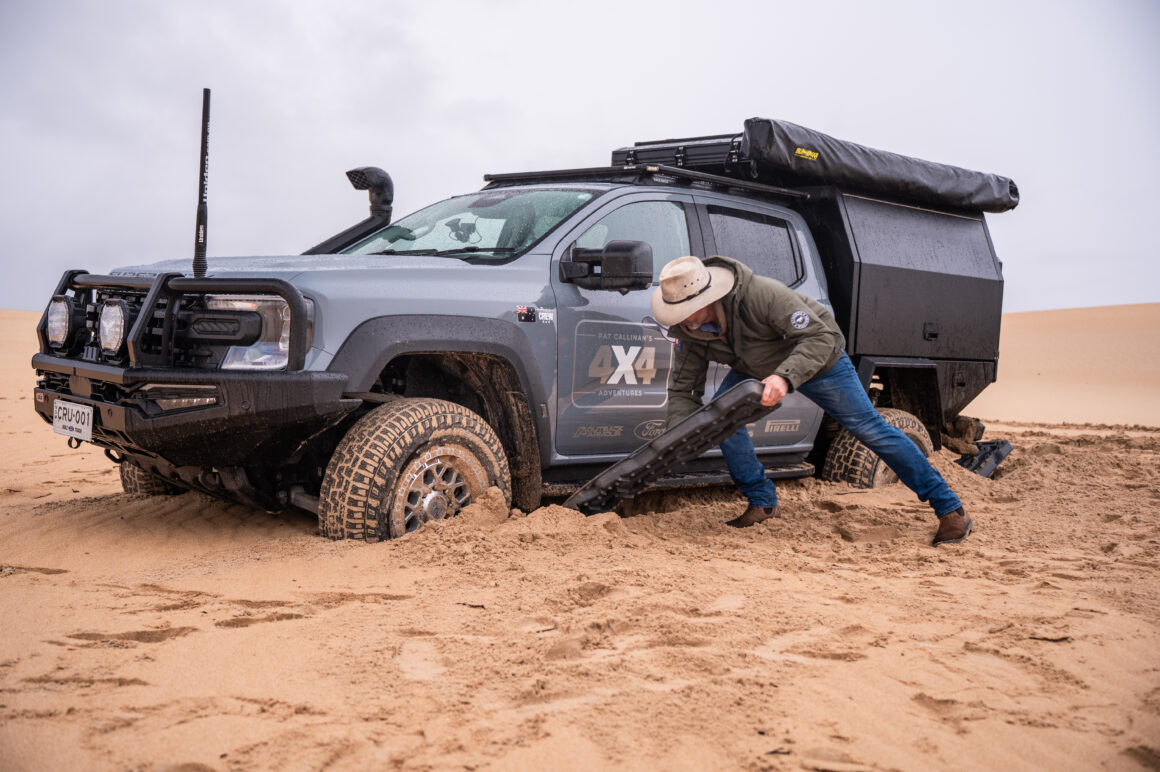
Then get the shovel out. Clear the sand piled in the intended direction of travel and create gentle exits from the holes around the tyres. If the underbody is grounded, clear beneath it too, working from outside the vehicle and watching for hot components. Don’t crawl underneath an unsupported vehicle.
The tyres need to carry the vehicle’s weight and have somewhere to go. A neat ramp beside each wheel achieves very little if the chassis is still resting on a mound between them.
Use recovery boards properly
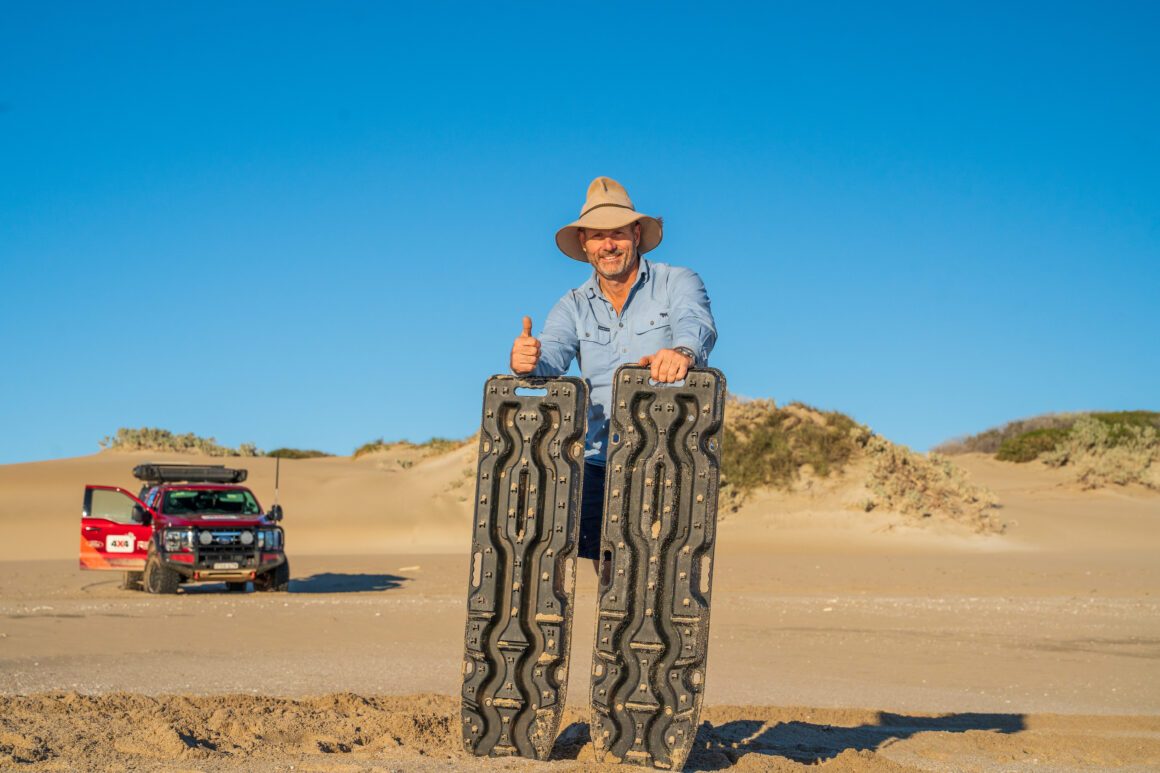
Recovery boards, such as Exitrax, work best when you’ve prepared the ground first. Follow your board manufacturer’s instructions for placement and wedge them firmly against the tyre tread in the direction you intend to travel. Clear enough sand to let the tyres climb onto the boards, rather than leaving a steep wall for them to overcome.
Attach retrieval leashes if supplied, keeping them clear of moving parts. Sand has a remarkable ability to swallow expensive equipment.
Clear everyone away from the vehicle’s path and the boards before attempting to move. Select the appropriate 4X4 setting and low range where fitted, following your vehicle’s instructions, then apply the throttle gently.
The tyres need to grip the boards, not spin across them. Wheelspin can damage the traction lugs and dig the vehicle deeper. If they don’t bite, stop, clear more sand and reposition the boards.
Once moving, maintain controlled progress until you reach a safe place on firmer ground. Then secure the vehicle and retrieve the equipment. Don’t stop halfway out just because the first metre felt promising.
Know when to bring in help
If digging, pressure adjustments and boards haven’t worked, reassess before introducing another vehicle. A deeply buried 4X4 needs more preparation, not simply a harder pull.
Winching and snatch recoveries require suitable equipment, recovery points and trained operators. A winch also needs an appropriate anchor; an open beach may offer few options. Get professional assistance if you can’t establish a safe recovery.
For a snatch recovery, both vehicles need recovery points specifically suitable for the task. Never attach to a towball, transport tie-down or an unverified hook. Inspect the gear, use a damper and follow the equipment instructions. A snatch strap’s minimum breaking strength should be two to three times the lighter vehicle’s GVM.
Agree on communications and a stop signal beforehand. Move passengers and spectators well clear, outside the vehicle paths and recoil zone. At least 1.5 times the unstretched strap length from both vehicles; follow any greater distance required by the equipment manufacturer.
Once recovered, fix what put you there before having another go. Adjust the route, pressures or approach, check the vehicle and pack the gear away.
A good sand recovery is usually fairly uneventful. A bit of digging, the right equipment and a controlled exit will always beat turning a beach day into a recovery spectacle.