

Getting bogged when you’re travelling with mates is usually an inconvenience. Getting bogged when you’re on your own can become a serious problem very quickly.
There’s no second vehicle to snatch you out, nobody standing outside to spot the wheels and nobody else to drive into town for help if things go properly pear-shaped. That means solo recoveries needs a slightly different approach: slow down, think about what actually stopped the vehicle, and use the easiest recovery method first.
The good news is that most recoveries can be solved without doing anything dramatic.
Stop digging before you make it worse
The first rule of solo bog recovery is knowing when to stop.
If the vehicle has stopped moving forward, burying the throttle usually achieves one thing: digging four deeper holes underneath it. In sand you can quickly belly the chassis out, while in mud you can turn a shallow bog into something deep enough to swallow the diffs.
As soon as progress stops, get out and have a proper look.
Check what’s happening around each tyre, whether the diffs or chassis are sitting on the ground, and whether there’s something immediately in front of or behind the wheels preventing movement.
Quite often, the easiest recovery starts with five minutes and a shovel.
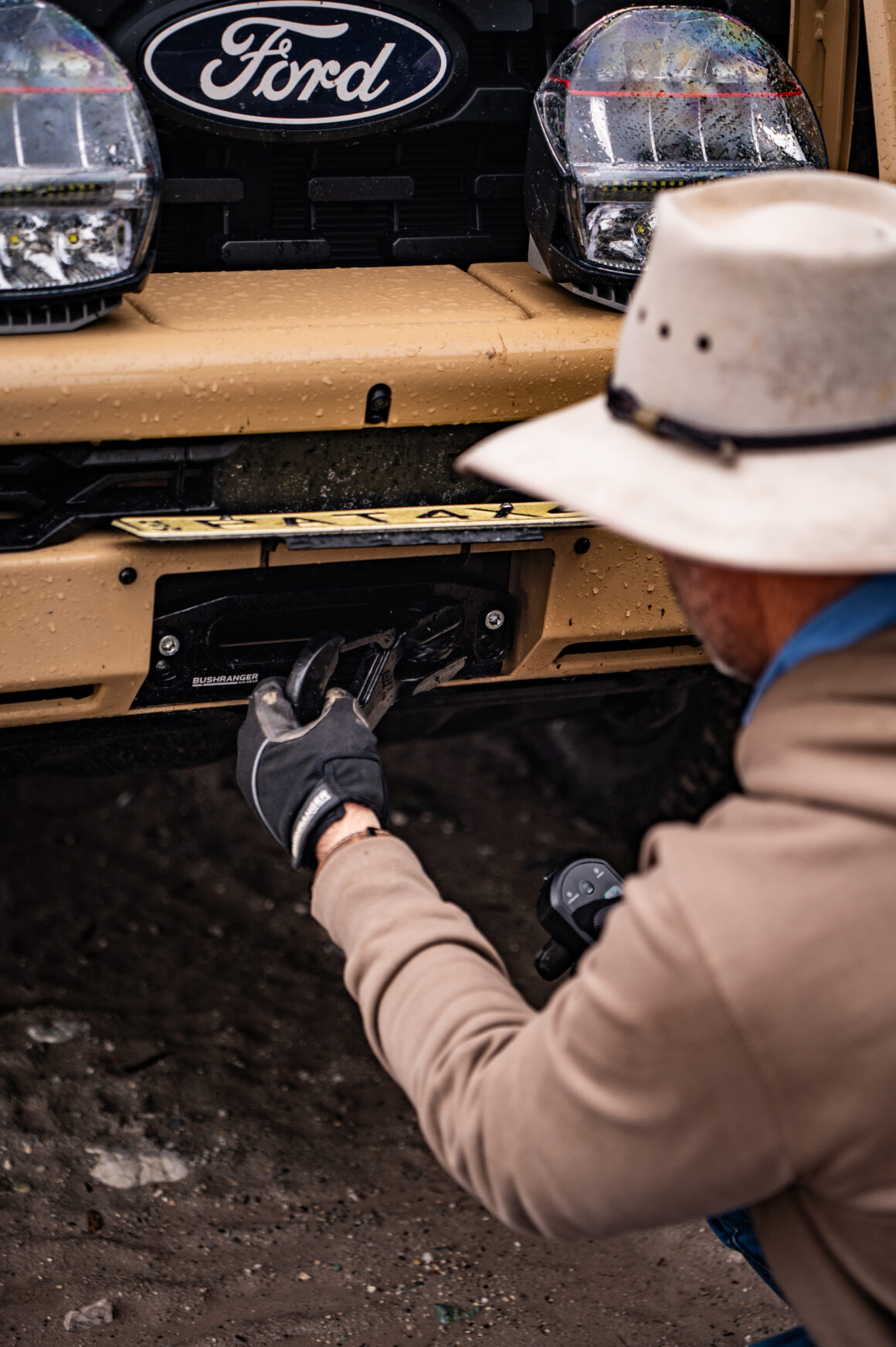
Dig first, recover second
A decent long-handled shovel is arguably one of the most useful pieces of recovery equipment you can carry.
Clear material from in front of the tyres in the direction you want to travel, dig underneath the diffs if they’ve become hung up, and try to create a gentle ramp rather than expecting the vehicle to climb vertically out of its own holes.
In sand, lowering tyre pressures further can make an enormous difference. If you’re already running 20psi and you’re badly stuck, dropping into the mid-teens may be enough to increase the tyre footprint and let the vehicle climb back onto the surface.
Just remember that very low pressures dramatically increase the chance of rolling a tyre off the bead, so keep steering inputs smooth and speeds low once you’re moving again.
Recovery boards are made for this
For a basic solo bog recovery, a set of Exitrax should be near the top of the list.
Dig enough space to get the boards properly underneath the tyres rather than simply throwing them against the front of the wheel. You want the tyre to grab the board almost immediately.
Use gentle throttle and let the tyre climb onto the board. Spinning the wheels aggressively can damage the boards, tyres, or both.
If the rig moves only a metre, that’s still progress. Stop, reposition the boards and go again. A patient recovery in three or four small stages is far better than launching the vehicle out of the bog and straight into the next problem.
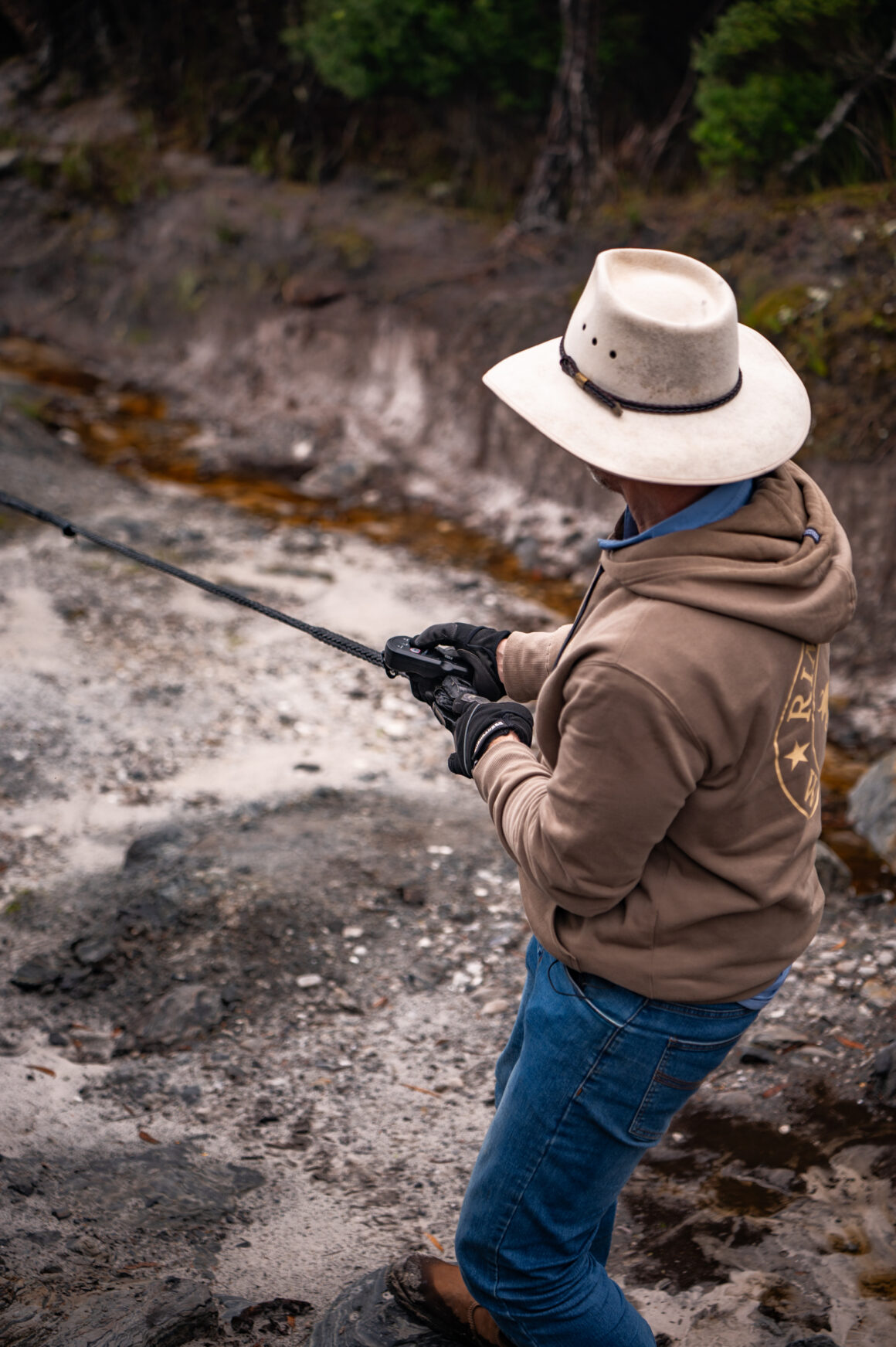
A winch changes everything
If you regularly travel alone, a winch is one of the best pieces of insurance you can bolt to a 4X4.
The important thing is having something suitable to winch from. In the bush that might be a solid tree used with a tree-trunk protector, while in more open country you may need a ground anchor if there’s nothing suitable nearby.
Before winching, clear the vehicle as much as possible with the shovel. A winch shouldn’t have to drag a four-tonne touring rig through half a metre of mud if you can spend ten minutes removing some of the resistance first.
Keep well away from the line, use rated recovery equipment, and never attach a winch rope or strap to a tow ball.
If you need more pulling power, a snatch block or recovery ring can be used to create a double-line pull, effectively doubling the pulling power of your winch and slowing things right down.
Sometimes backwards is easier
One mistake people make when bogged is becoming completely committed to continuing forward.
The easiest way out might be the way you came in.
If the ground behind you is firmer, dig behind the tyres, reposition your recovery boards and reverse out. Once you’re back on stable ground you can reassess the obstacle, choose a better line or decide it simply isn’t worth attempting alone.
That last option is important.
Solo 4X4ing requires a little more restraint because there’s nobody else there to fix a bad decision. Turning around isn’t failure; occasionally it’s the smartest recovery technique you’ve got.
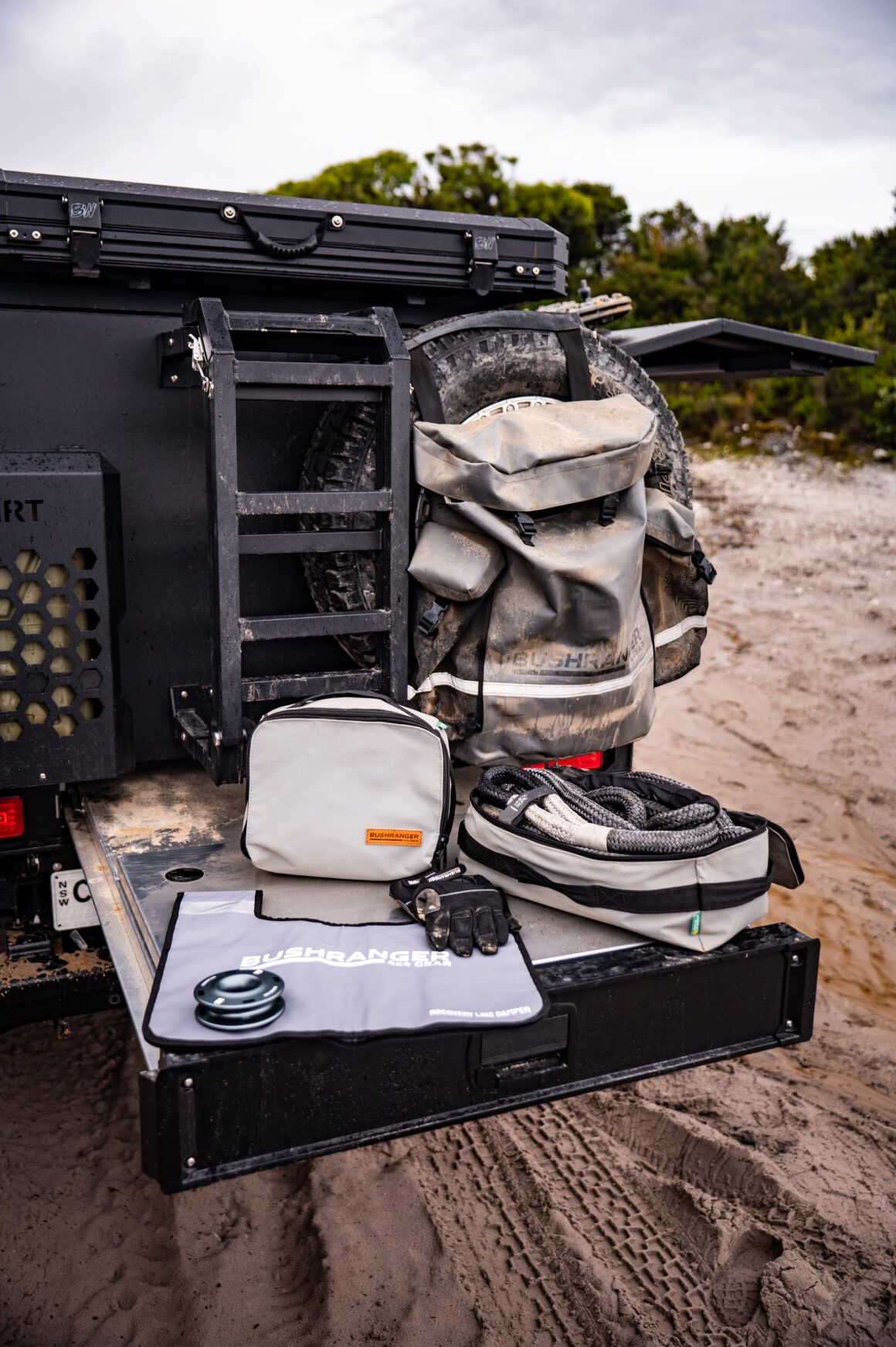
Carry enough gear to recover yourself
A proper solo recovery setup should include a shovel, recovery boards, tyre deflator, compressor, rated shackles or soft shackles, gloves and a winch if your style of travel justifies one. You’ll also want to pack a tree trunk protector, winch extension strap, and winch damper.
Communication matters too. A UHF is useful when other vehicles are nearby, but once you’re genuinely remote, satellite communication can become far more important than another recovery strap.
The best solo recovery is ultimately the one that never becomes an emergency. Read the terrain, lower your tyre pressures early, avoid unnecessary risks and know when the conditions are beyond what you and the vehicle should be tackling alone.
Because when there’s nobody coming along behind you with a snatch strap, getting yourself out starts long before you get stuck.




1 comment
I`m a Nissan Man myself, so it`s not easy to understand all this stuff about getting stuck,bogged or needing recovery!
I guess this article is targeted to Ford – “especially ZFord Ranger owners”, Toyota, Jeep and Landrover vehecle owners to take advantage of this helpul advice.