
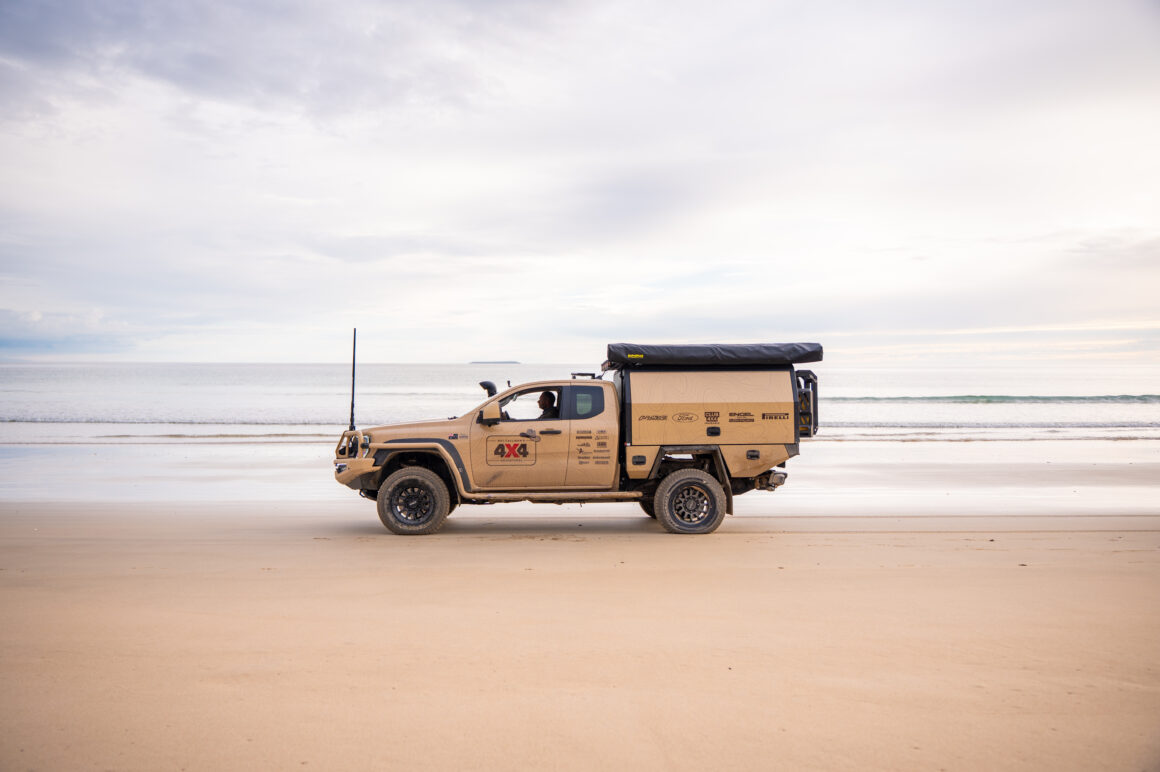
There’s a coffee machine in the canopy, nearly 400 litres of potential fuel capacity underneath and a beer tap out the side. Pat’s new Ranger Super Duty certainly hasn’t arrived at camp underprepared.
But look past the impressive accessories and there’s a fairly straightforward idea behind this build. Pat wanted a vehicle that could cover big distances, tackle proper 4X4ing and make life comfortable when the driving stopped. Something equally suited to a desert crossing or a trip through Cape York, without chasing enormous tyres or a towering suspension lift.
The Super Duty provided the starting point, with a 4.5-tonne GVM and a substantial payload allowance. What followed was a build shaped around how Pat travels in 2026, what he carries and the things he’s learnt from previous touring vehicles.
Some additions have quickly become favourites. One has already tested his patience.
The right cab for the job
Dual cabs might dominate the touring scene, but Pat’s gone with a Super Cab for a pretty sensible reason: he no longer needs all those seats.
With his kids grown up, the space behind the front seats could be put to better use as storage. Choosing the shorter cab also leaves more room for the canopy, where most of the touring equipment lives.
It’s a decision worth making before getting too attached to a particular vehicle. Carrying a family and travelling as a couple are different jobs, and the layout that suits one can compromise the other.
Inside, the focus is on making long days easier. There’s a 21-litre Engel fridge between the seats, Black Duck canvas seat covers and a Uniden UHF. A REDARC RedVision display lets Pat monitor and control the electrical system without climbing out and opening the canopy.
That means the hot water can be warming while he drives towards camp. The beer chiller can also be switched on before arrival, although we’ll come back to that particular piece of equipment.
The aim throughout was to keep the vehicle comfortable and capable without straying too far from its original configuration. There’s plenty bolted to this Super Duty, but each addition still has to earn the space and weight it occupies.
Built for the long way round
Fuel range is one area where Pat has made full use of the platform.
The Brown Davis setup replaces the original tank with a 230-litre unit. Relocating the spare wheel to the back of the canopy frees up room for another 145 litres underneath, bringing the fitted tank capacity to 375 litres. Carry a 20-litre jerry can as well and that becomes 395 litres.
Pat estimates that gives him more than 2,200 kilometres of range off-rad. On a recent filming run he filled up in Bridport, Tasmania, traveled through Victoria and continued into NSW before refuelling in Bathurst.
There’s a lot to like about being able to choose your fuel stops. It leaves more room for exploring side tracks and spending time somewhere good without immediately calculating the drive to the next bowser.
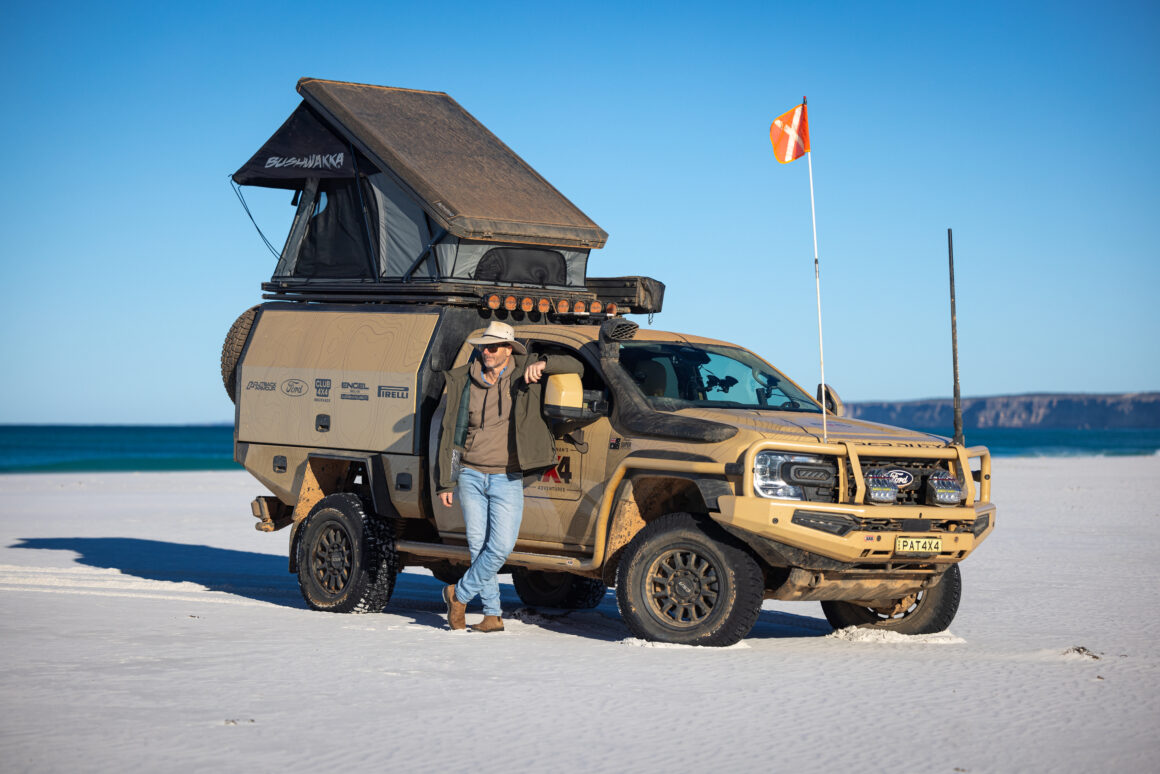
Of course, all that fuel comes with weight. So do the 80-litre water tank, canopy, batteries and camping equipment. Pat says the vehicle weighed over 4.3 tonnes without him aboard when it went over a weighbridge. Even a Super Duty’s payload allowance gets used up when you build this comprehensively.
Outback Armour suspension supports the touring load, and Pat rates the resulting handling among his favourite aspects of the vehicle. Retaining the factory onboard scales was also part of the suspension brief.
Protection comes from an ARB Summit bullbar, side rails and steps, with a Bushranger Covert 12,000lb winch tucked into the front. Pat’s already put the side protection to work, with missing paint showing where it’s made contact.
Pirelli Scorpion tyres in 275/70R18 sit on CSA wheels, while Clearview towing mirrors improve the view around the canopy. It’s a package intended to handle long touring days and rough tracks with a substantial load aboard.
A canopy built around using it
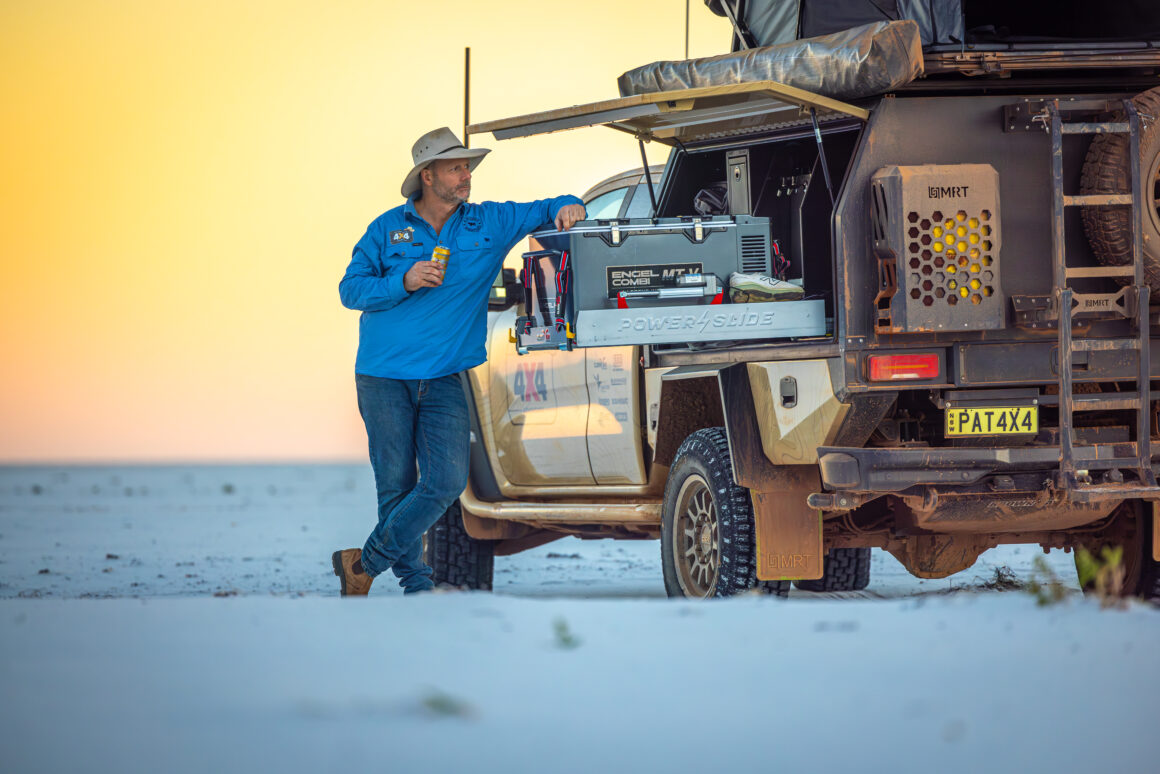
The MRT canopy houses most of the equipment, but the layout deserves as much attention as the contents.
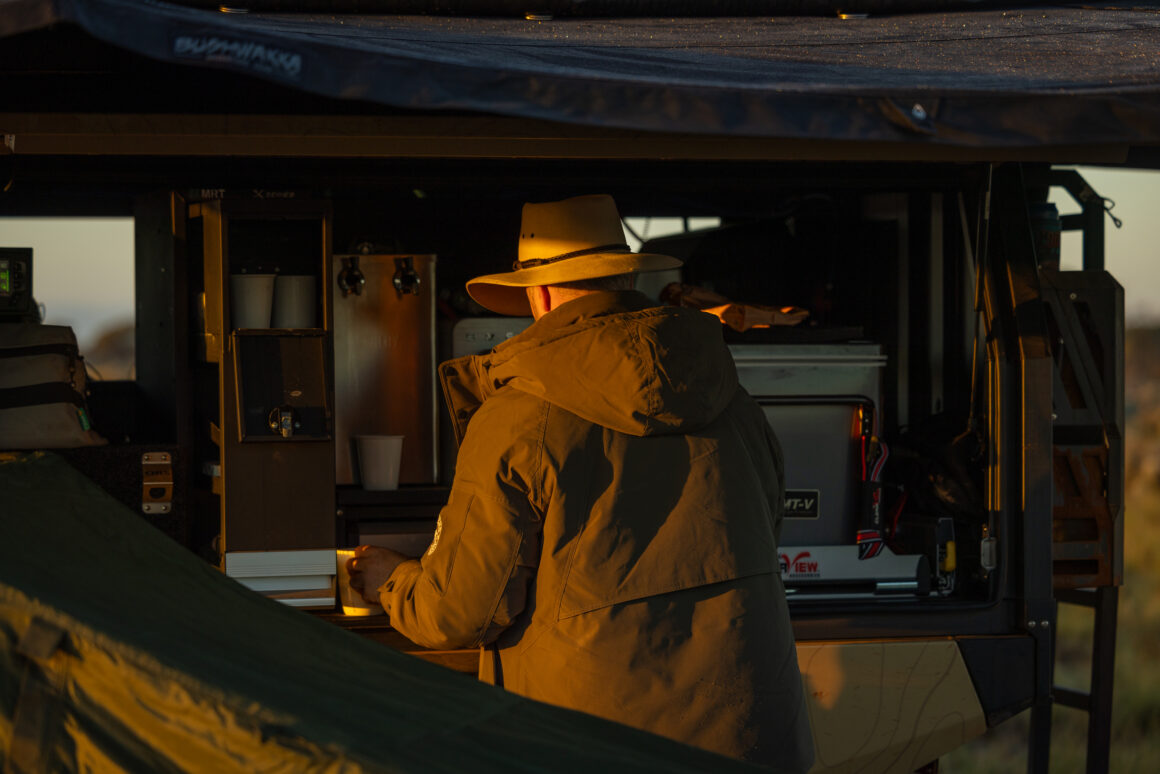
It combines MRT components with custom work from ORS, including drawers, storage and a slide-out stainless steel preparation table. Removable drawer linings make cleaning up a spill considerably less painful, while the Engel fridge-freezer sits on a Clearview Power Slide to bring it down within easier reach.
These are the details that matter once you’ve opened and closed the canopy a few hundred times. A fridge that’s awkward to reach remains awkward every time you want the milk.
Electrical supply comes from two 200Ah REDARC lithium batteries and a 3,000W inverter, supported by vehicle charging and provision for solar. That allows Pat to use household appliances, including the Smeg coffee machine mounted into its own section of cabinetry.
His cooking setup is rather less extravagant than the coffee arrangement: a couple of $80 induction cookers from Big W, which he uses to feed a crew of six.
Hot water comes from a Duoetto Gen 3 system with a 10-litre tank. It’s become one of Pat’s favourite additions because of how often it gets used, whether for washing up or rinsing off after the beach. Switching it on from the cab means it can warm up before he needs it.
Above the canopy, a Bushwakka Darkness 270-degree awning provides shade, with an access opening for the rooftop tent ladder. The Bushwakka Stellar tent adds a ceiling opening for watching the stars from bed.
Around camp, integrated lights on the ARB BASE Rack are positioned so the open canopy doors don’t block all their light. That’s a small detail with a useful payoff when dinner preparations run past sunset.
The favourites-and the frustration
For all the substantial equipment aboard, one of Pat’s strongest endorsements goes to the eight amber Nacho lights mounted up high.
He likes their spread and finds the amber light comfortable during night driving. Their position also avoids the bonnet reflection he’s experienced with other lighting arrangements. That’s Pat’s assessment from behind the wheel, and it helps explain why they’ve become a favourite.
The beer system gets a more qualified review.
The KegLand Benchy promises cold beer on tap without keeping the chiller running all day. In practice, Pat says he’s onto roughly his fourth unit across this vehicle and his previous F-150, with reliability problems during rough-road travel. He likes the concept, but reckons it needs more development for that environment.
There are plenty of ideas worth borrowing from this build, even if a beer tap doesn’t make your own touring checklist. But the real test comes when the canopy doors close, the tyres air down and Pat points more than four tonnes of Super Duty towards the rough stuff.
That’s where Season 19 of Pat Callinan’s 4X4 Adventures comes in. You’ve seen what’s gone into building it. Now you’ll get to see what happens when Pat puts the whole package to work, with big kilometres, proper tracks and a fully loaded touring rig that’s got plenty to prove.


