
Ford didn’t invent the 4WD but they certainly took it to a new level with the introduction of the Bronco. Its history is facinating.
Over 100 years ago Henry Ford revolutionised the automobile, forever changing the world as we know it. While some may argue it wasn’t exactly a positive thing, it’s hard to argue his introduction of the production line directly led to affordable cars for the masses but there’s one quote from the man who revolutionized the world that we can’t help but find ironic so many years later. “If I had asked the public what they wanted, they’d have told me faster horses.” A century later and two of the blue oval’s most successful cars of all time are directly named after horses. The Mustang, and more interestingly for four-wheel-drivers, the Bronco. Of course, there was the Pinto as well, but we did say only two were successful.
With the Bronco recently re-released after a huge 25-year hiatus we thought it was high time to have a look at where the bucking bronco originated, and how it got to where it is today.
The Path to Glory
While Jeep has built a brand around the WW2 Willy’s GPs the reality is far more complicated. Willys-Overland and the American Bantam Car Company were first to tender for the U.S. Army’s request for lightweight go-anywhere vehicles for the war effort. Before a contract was awarded Ford threw their hat in the ring with the Pygmy, and all three companies borrowed each other’s design cues for lack of a better term. Ultimately Willys-Overland won the contract with their MB but couldn’t keep up with demand. Ford was brought in for their manufacturing might in November 1941 and began production of the Ford GPW. By design, it was to be near-identical to the Jeep MB, although Ford did introduce the pressed slat design, something still in use today.
Ford built over 300,000 of these GPs, or ‘jeeps’ as the soldiers called them for short. Jeep and Ford traded places as the main supplier over the decades, with Ford even introducing a fully independent coil-sprung vehicle called the M151, or Mutt for short. A design that’d pop up again decades later in the HMMWV or Humvee as it was known unofficially.
While these developments in agricultural vehicles were developing the early Jeeps were hugely successful with returning veterans and outdoor enthusiasts looking for something capable. There was simply nothing like them on the market. The first F-trucks offered with 4X4 as a factory option weren’t introduced until 1959.
In the Bronco design Room
Meanwhile, Ford was hassling everyone who’d ever driven a Jeep or International Harvester Scout about what they loved and what they hated about their utility vehicles. The response was overwhelming. While the compact 4X4s performed well off-road, with the interstate highway system growing it was painfully obvious the “poor comfort, ride, noise, and vibration qualities” of the compact 4X4s.
Digging through their archives the first sketches resembling a Bronco have been found dating back to 1963 signed by McKinley Thompson. Relatively ignored by history, McKinley was the first African American car designer and worked side by side with Lee Iaccoca, and Don Frey on the Bronco, the Mustang, Thunderbird and even the Ferrari beating GT40. Designed specifically as an off-road counterpoint to the Mustang, the Bronco was to be unlike all the other utility vehicles on the market. It needed to be fun, youthful, affordable, comfortable, and most importantly sport. A Sport Utility Vehicle the marketing materials said.
It’s finally here
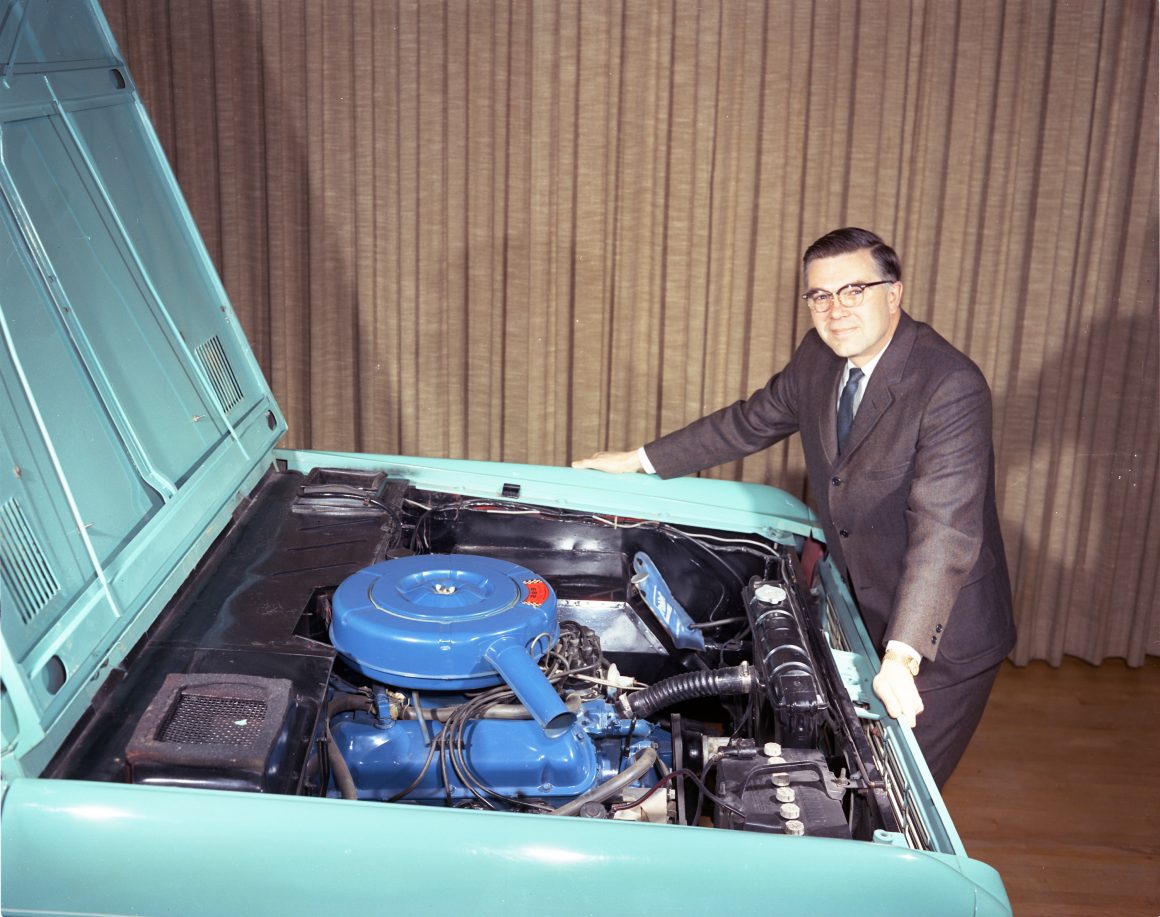
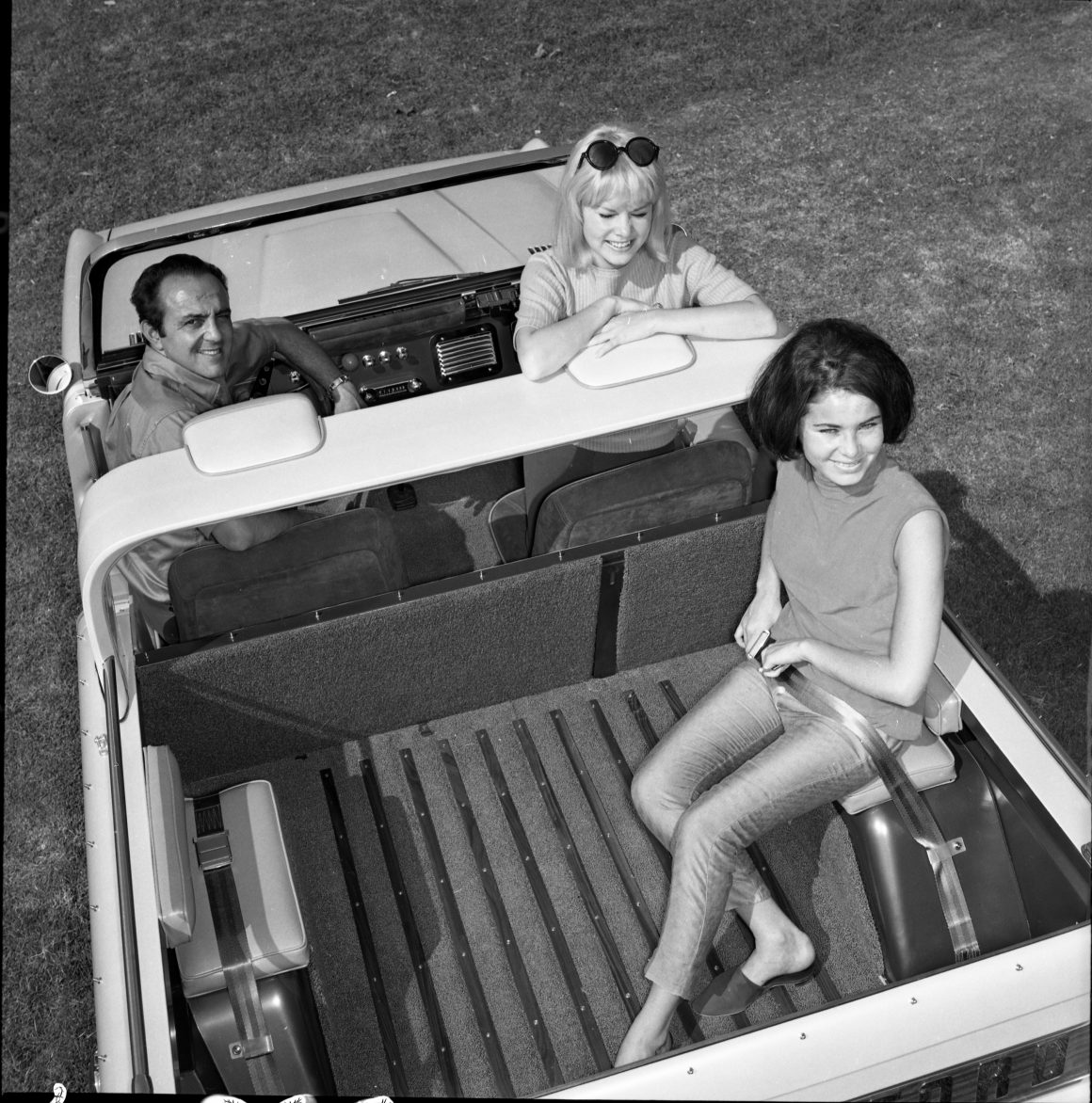
Finally released in ’66 the Bronco was available in a range of specifications. A single cab ute, an open-top roadster, and a two-door wagon with a hard-mounted roof and seating for five. All three came standard with 4X4. A three-speed manual, and a 105hp 170ci straight-six.
The first generation was a huge success. Coil springs up front were a huge departure from the leaf springs all around in its direct competitors, the Jeep CJ5, and the International Harvester Scout 800. It was the customisation that really made it a winner though. You could option up everything you could dream of. Tow hooks, two-way radios, power take-offs and even a snow-plough attachment of all things.
Through the late 1960s, Ford invested heavily in the growing world of off-road motorsport. Legendary car builder and racer Bill Stroppe had a handful of pre-production Broncos sitting in his workshop before they even hit the market. He piloted them near-stock all over North American off-road races before most of them were even named. Including the Baja 1000.
Over the next few years, the Bronco would be developed further in-house and with outside partners. Then president of the motor company, Semon ‘Bunkie’ Knudsen was enamoured with the BOSS program and pushed for a Boss Bronco prototype, sporting a hot-rodded 350ci V8 lifted from a GT350 Shelby, a high-performance C4 automatic transmission and limited-slip diffs.
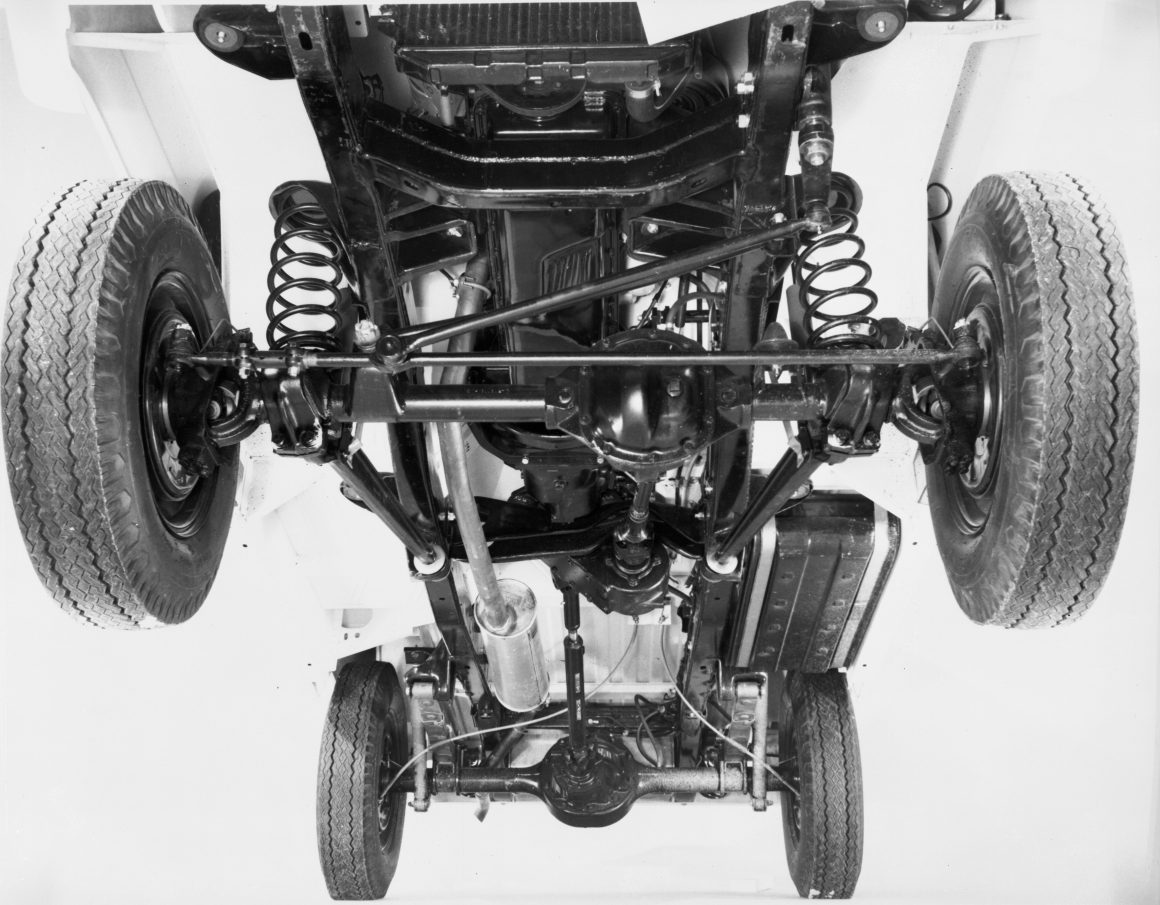
Meanwhile back on the east coast one of the prototype Broncos delivered to Stroppe was beginning down a path that still has flow-on effects today. While most of the Broncos delivered were 4X4s with solid front axles, one was a 2WD with a revolutionary twin I-beam front end Ford had been developing to ride smoother. One of Stroppe’s contracted racers Parnelli Jones was unbelievably fast on the Nascar circuit, but his aggressive driving style meant he left a trail of broken components behind him on every race. Stroppe’s solution was for Parnelli to drive more carefully. Parnelli’s solution was to kick off a clandestine race program in his garage developing a full tube-frame chassis for the prototype bronco, with huge I-beam suspension up front, coil rear end, a full fibreglass body and a 400hp Windsor V8 under the bonnet. The team then proceeded to win back-to-back Baja 1000 races in 1971 and 1972. In 1973 Ford finally offered the Bronco with a 302ci V8 and 3spd automatic transmission.
The second coming of Bronco
While the original Bronco was getting better and better every year it was undoubtedly at the end of its life. Originally the second-generation Bronco was designed to be launched in 1974, but the ‘70s oil crisis put a hold on things, for good reason too. In 1978 the public caught glimpse of the new Bronco and it was immediately obvious it was a giant leap forward, with emphasis on the giant. Now based on the F150 of the same year, the second-generation Bronco grew in every possible way. The wheelbase blew out by 12inches. It was over 10in wider, nearly 30in longer and the weight ballooned from around 1450kg up to a huge 2100kg. It’s no surprise then that the engines were also supersized. The entry-level engine was now a 351ci V8, with a 400ci available as an option.
On the inside passengers were treated to luxury like they’d never before seen in a utility vehicle. Captains’ seats up front, huge legroom in the back, optional AC, and even a power sliding rear window. The ute and roadster models were also long gone, with only the two-door wagon available.
Despite the second-generation Bronco coming standard with engines, the previous model could only dream of it didn’t enjoy the off-road racing success of its older sibling. Two examples were modified into Pope-mobiles though, so that’s cool.
Unfortunately, the lifespan for the second generation was short-lived. The third generation was introduced side by side with the next generation F-trucks in 1980 making the second-generation Bronco one of the shortest-lived Fords in history.
Third times the charm
In 1980 the affectionately named ‘Bull Nose’ Bronco was unveiled, and it’d be here to stay for a long time. The new Bronco was lighter, leaner, more comfortable and more capable than the outgoing giant. While the overall dimensions remained the same, the new design was far more modern and intended to behave like it. Weight dropped by around 140kg and engine options were scaled back. A 300ci inline 6 was added as an entry-level option, with V8s available in both 302 and 351 guises. Most importantly, it was also the introduction of the Twin Traction Beam (TTB) front end, one of the most unique suspension types we’ve ever seen. Ford wanted the on-road handling of its wildly successful twin I-beam front end from its 2WD trucks but wanted the off-road ability and rugged reliability of its solid axle offerings. The solution was a hybrid of the two. Based on the Dana 44 axle it was essentially two solid axle housings upfront, one end attached to a wheel, the other end attached to the chassis on the opposite side of the vehicle. A goofy driveshaft arrangement joined the two with the diff centre integrated into the passenger side axle.
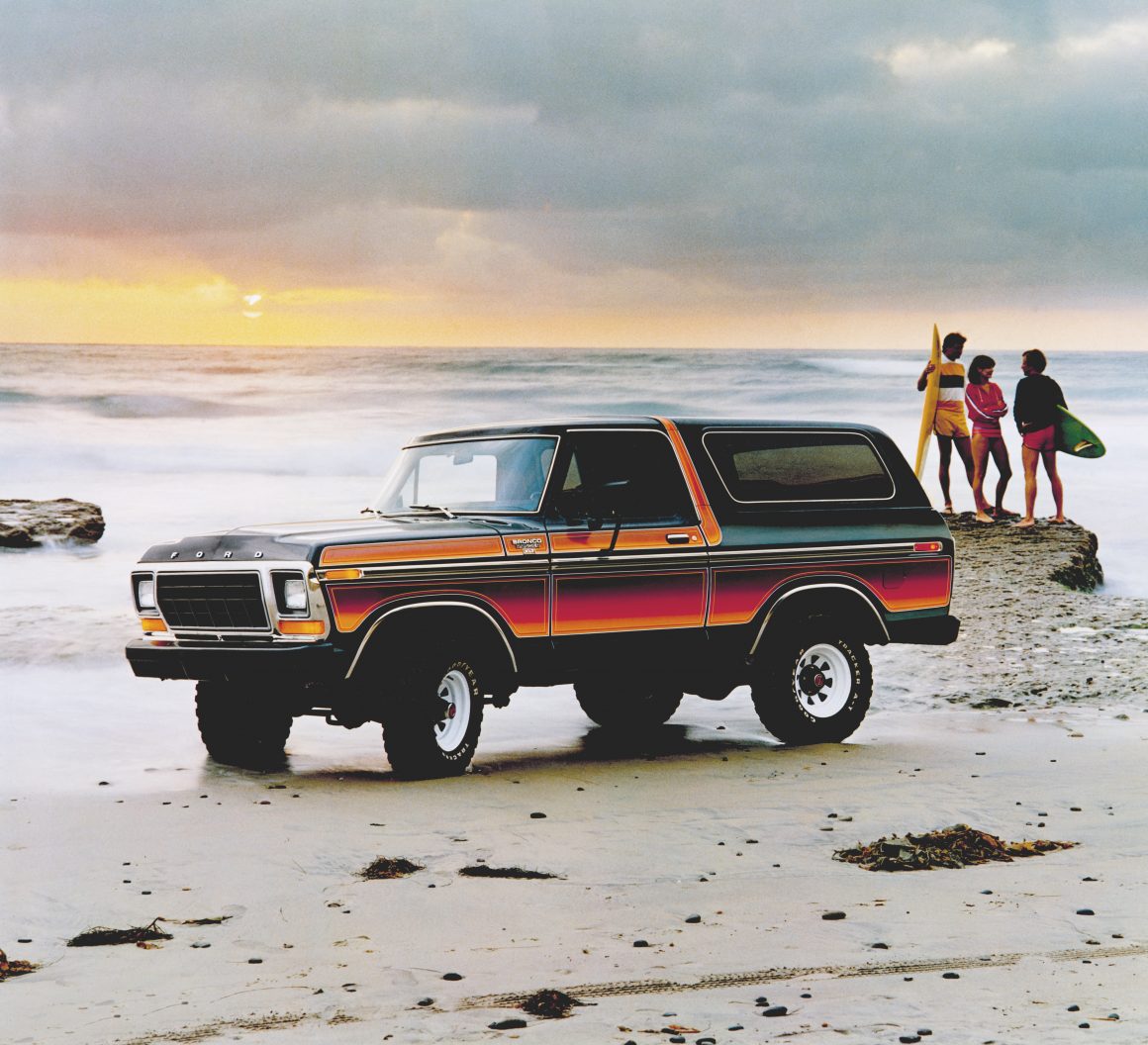
This new model was a success. Minor upgrades took place over the years with different trim levels, front ends, and driveline options all the way through to 1996 when it was finally put out of commission. The introduction of the more practical four-door Explorer cannibalised the Bronco’s sales, although there was a brief surge in sales of white Bronco’s after June 1994.
Back to the future
While Ford didn’t invent the off-road segment it’d be hard to argue they didn’t pick up the ball and do a damn good job running with it. It’s no surprise then that as the world heads to the hills to escape the day-to-day grind Ford would reintroduce the perfect tool for them to do it. In 2021 the 6th generation Bronco hit the market and it’s undoubtedly the most comfortable and capable of the lot. Available in two and four-door options its flagship 2.7L eco-boost engine punches out an impressive 330hp through a 10-speed automatic. It’s available stock with 35in tyres, front and rear diff locks, hydraulically engaging sway bars and even ultra-tight turning ability for weaving through rocks and trees. The downside is, it’s left hook only with no immediate plans to bring it down under. Hey, not every fairy tale has a happy ending, right?
He who must not be named
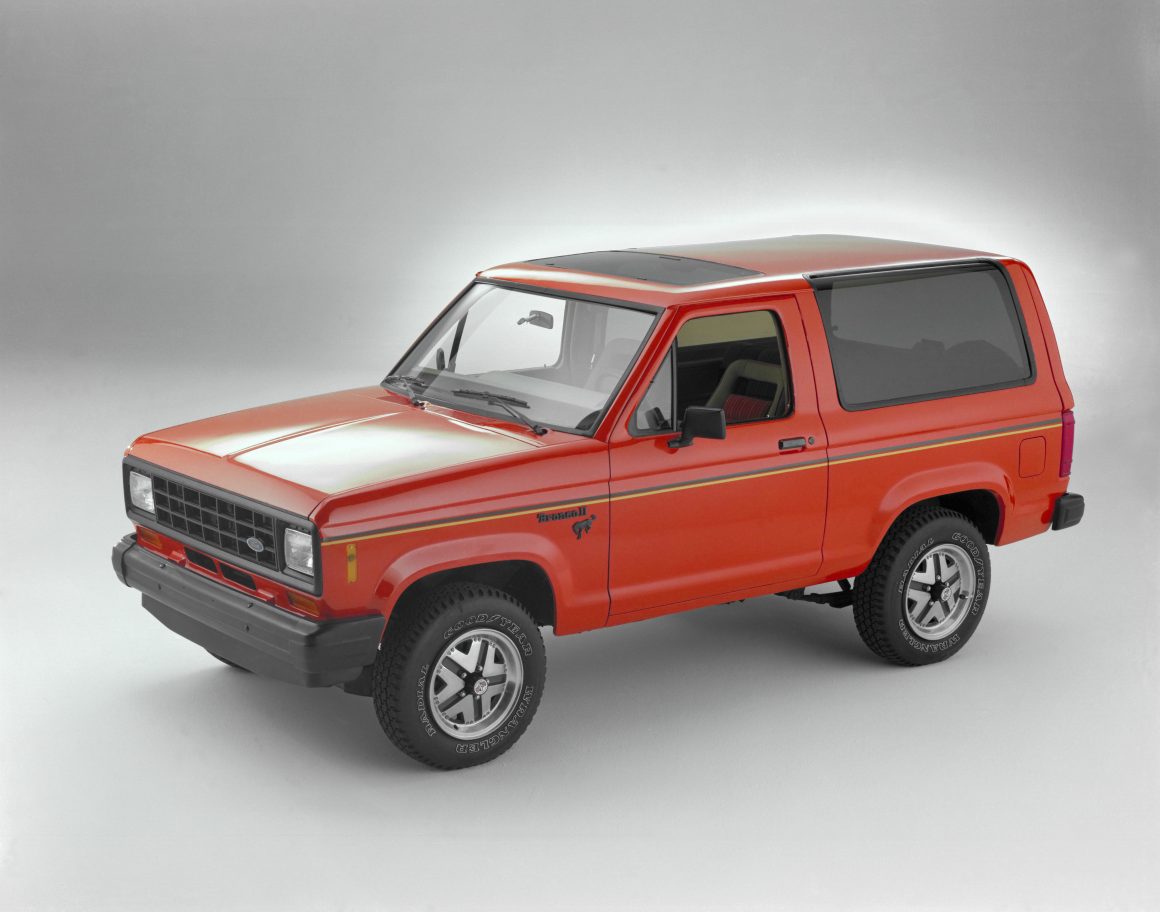
A footnote: While the second and third generation Broncos were based on the F150 platform of the time, there was a Ranger based Bronco called the Bronco II. Despite the Ranger platform being hugely successful, the Bronco II can most politely be described as a flop. Manufactured from 1984 through to 1990 it was powered by an asthmatic family of V6 engines as well as a Mitsubishi turbocharged four-cylinder in later years. It also lost the charm of the removable roof, instead opting for a goofy wagon design that emulated the original Bronco. Its bad looks and worse performance are barely even on the radar as far as problems though. The handling was so bad that it’s reported one in every five hundred Bronco IIs built has been involved in a roll-over.