
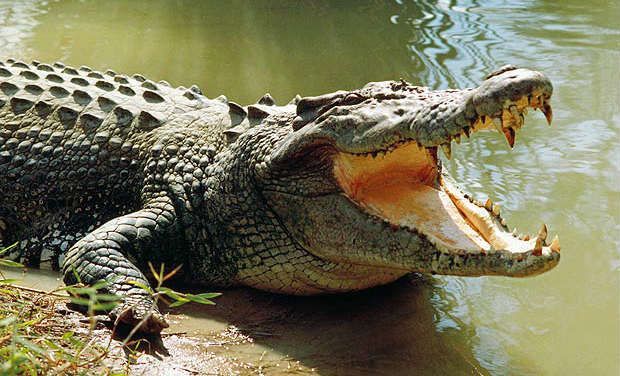
If you’re planning to head north this season, maybe to throw a line in around the Pilbara rivers or enjoy the views at Cleaverville Beach, there’s something you should be packing along with your fishing rod and recovery tracks: a healthy dose of croc awareness.
Western Australia’s Department of Biodiversity, Conservation and Attractions (DBCA) has confirmed seven saltwater crocodile sightings along the Pilbara coast in the last 12 months, that’s more than the last decade combined. And that’s got people talking. From unconfirmed reports near Carnarvon to a legit closure at Cleaverville Beach near Karratha, it’s clear that crocs are now a part of the outback touring equation on the WA coast.
For those of us who live and breathe remote travel, that raises a few important questions. Are the crocs just passing through, or are they setting up shop? How does this change the risk for 4X4ers launching boats, swimming, fishing, or even camping near waterholes? Let’s break it down.
More Sightings, Bigger Crocs
According to experts, what we’re seeing isn’t just a one-off. Croc numbers have bounced back in a big way since hunting was banned in the ’70s. It can take a male saltie more than 50 years to reach full size, and now we’re finally seeing some of those big units heading into new territory, including spots they haven’t been spotted in for years. These aren’t just wayward juveniles.
What This Means for 4X4ers
For 4X4ers, this isn’t a reason to avoid the Pilbara, far from it. But it is a reminder that we need to respect the environment we’re passing through. The old rules about crocs being a Top End issue just don’t apply anymore. You’re not safe just because you’re south of Broome.
Here’s what it means in real terms:
- Rethink the swim spots – That secluded waterhole you found on Wikicamps might look like paradise, but if it connects to the coast, flows from tidal rivers, or has a local name like “Croc Hole,” maybe give it a miss.
- Boat ramps and barra spots need caution – Launching in the dark? Cleaning fish at the water’s edge? That used to be second nature around Karratha and Onslow. But now, it pays to be croc smart. Don’t dangle your arms or anything else off the side of the boat.
- Camp back from the water – Setting up camp right on the edge of a river might make for a good sunrise photo, but it’s also prime territory for a territorial croc on the hunt or a stray juvenile chasing new ground. Stick to higher ground, at least 50m back from the water’s edge.
- Dog owners, heads up – If you’re travelling with a dog, keep it well away from the water. Dogs are croc magnets. They bark, they splash, and they often don’t know any better.
Why They’re Spreading
The crocs pushing into new areas are often subordinate males that couldn’t claim a territory further north. They’re not necessarily settling in permanently, but it doesn’t take long for an opportunistic predator to decide a river mouth full of mullet is worth hanging around for.
What’s keeping them in these areas? Not much. But it doesn’t matter. Even a few days of activity from a five-metre apex predator is enough to close beaches, rattle locals, and add a new layer of complexity to your outback adventure.
The Bottom Line
This isn’t about panic, it’s about preparation. The crocodiles in the Pilbara aren’t out to get you. But they are out there, and if you’re not paying attention, you could find yourself a little too close for comfort.
As crocs continue to reclaim habitat they once ruled, it’s worth adapting the way we travel. That might mean choosing the high side of the bank for lunch, or second-guessing that dip at the end of a hot day. But hey, if you’re the kind of person who thrives in remote places, adapting is probably already in your blood.
So keep your eyes open, your camera ready, and your feet out of the water. Because the Pilbara just got a little wilder, and that’s not necessarily a bad thing.






5 comments
Good Advice, Is Always A Good Thing, It`s Whether Some People Heed It?, or Not?. Lived, and Worked in The Territory, in the Eighties & Nineties, Saltie`s were Moving Hundreds of Kilometers Inland, Surfing with the Big Floods, Each Year. Signs were erected to warn People, of their New Habitats, But some were Stolen for Souvenirs!!, As for The Pilbara, it Was Only a matter of Time, Worked out of Broome, in the Mid Eighties, Heard Roebuck Bay was Rife with Salties, then. My understanding, as I was Informed, Salties still need Freshwater to Survive, So they Can Live Anywhere, Unlike Their Fresh water Counter parts. Safe Travels, You All Hava Good Day
You seen the completely uncontrolled numbers in the NT what would you expect
Time to start selling tags
Chicken of the sea
I just carry the good old .303. My life & my familes is worth more than theirs! If salties come near us they’re a new handbag!
Its certainly overdue for a massive cull. These are killers.its no wonder we can’t catch any fish and to dangerous to try. Bust up all the eggs and you will have a good start to reduce any more from breeding.,
I lived in Darwin in the late 1990’s and worked for the Parks & Wildlife Commission of the NT. Young crocs were largely unable to establish to the east because of the stone country and so travelled west along the coastline. Darwin harbour is a hotspot for them because we were trapping the big fellas. Many smallish ones would stop here for a while. But basically they were being pushed progressively west because of bigger crocs already had established territories. The really big fellas weren’t too bad of an issue unless some moron started feeding them, because they remembered being shot at. The small ones were really dangerous because they had nearly ZERO fear of humans.