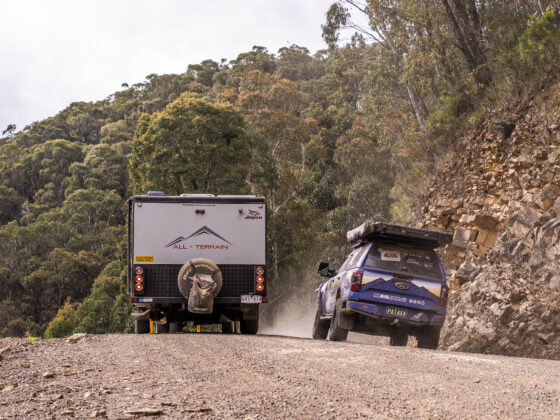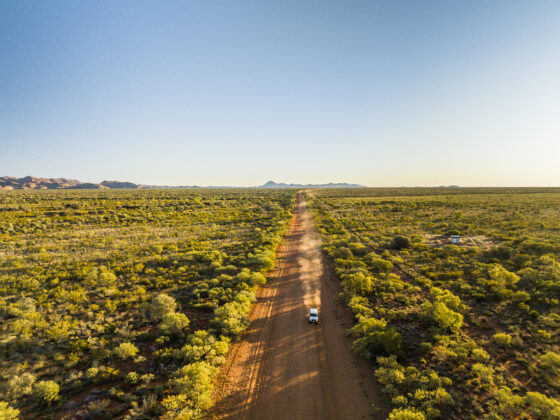
There’s something about the outback that stirs the soul, or mine at least. Kilometres of endless, red-hued nothingness, interrupted only by raw and utterly jaw-dropping beauty, or a homicidal kangaroo throwing itself at your bull bar, reminding you just how vast and unforgiving this country can be. For most, it’s a place you tackle with a fully-equipped 4X4, and these days, even a caravan, as well as enough supplies to feed a small army. But 160 years ago, two blokes decided to take on this landscape armed with a dining table, some camels and a bit of swagger.
This is the story of The Burke and Wills Expedition—a saga of ambition, disaster, and sheer stubbornness. What fascinates me about this story isn’t just the exploration or the tragedy—it’s how you’re constantly reminded of their journey when travelling through outback Australia. You can criss-cross their route, stand at the same camps, and feel the echoes of history whispering through the landscape. Their expedition has become part of the outback’s very DNA, and if you’re like me, it’s a story that never quite leaves you.
A Grand Idea or a Fool’s Errand?
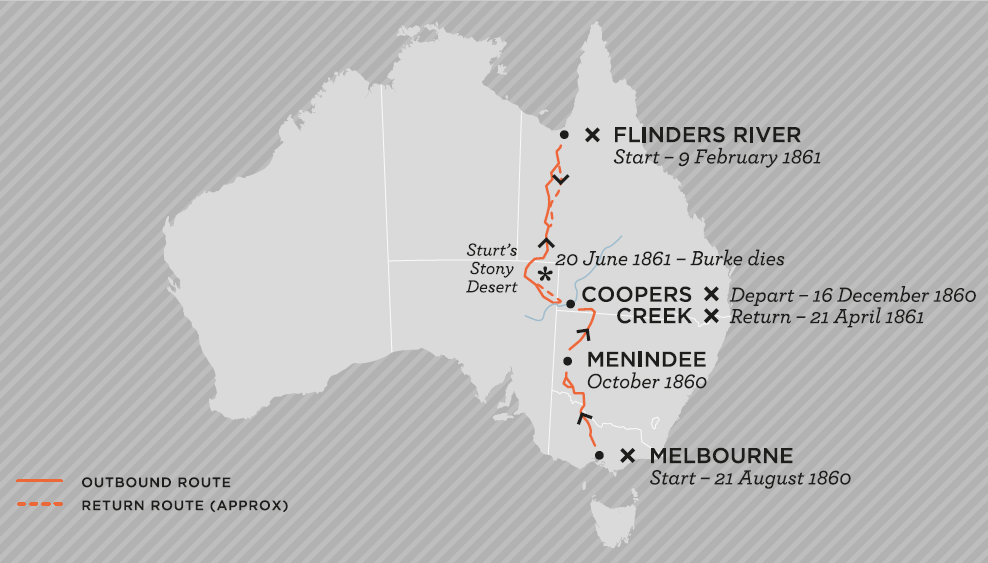
In 1860, Melbourne was flush with cash from the gold rush, and the city’s leaders were itching to make their mark on the map. The idea was simple: be the first to cross the continent from south to north, from Melbourne to the Gulf of Carpentaria—a tidy 2,500 kilometres across some of the most hostile terrain known to man. How hard could that be?
Enter Robert O’Hara Burke, an Irish copper with no real experience in exploration, and William John Wills, an astronomer and surveyor who at least knew how to read the stars. Burke was chosen to lead the Victorian Exploring Expedition, which might seem odd considering his lack of experience, but what Burke lacked in knowledge, he made up for in confidence. And a bit of recklessness, if we’re being honest.
Burke’s leadership was… let’s call it questionable. For starters, a few members of the team had to be sacked for being drunk on the job—before they’d even made it out of Melbourne. Not exactly a promising start. And then there was the gear. They brought enough equipment to start a small civilization: 20 tonnes of supplies, including a cedar-topped table, a Chinese gong (because clearly that’s essential in the bush), and enough rum to float a beached battleship. It was a logistical nightmare from day one.
The Journey Begins: Melbourne to Menindee
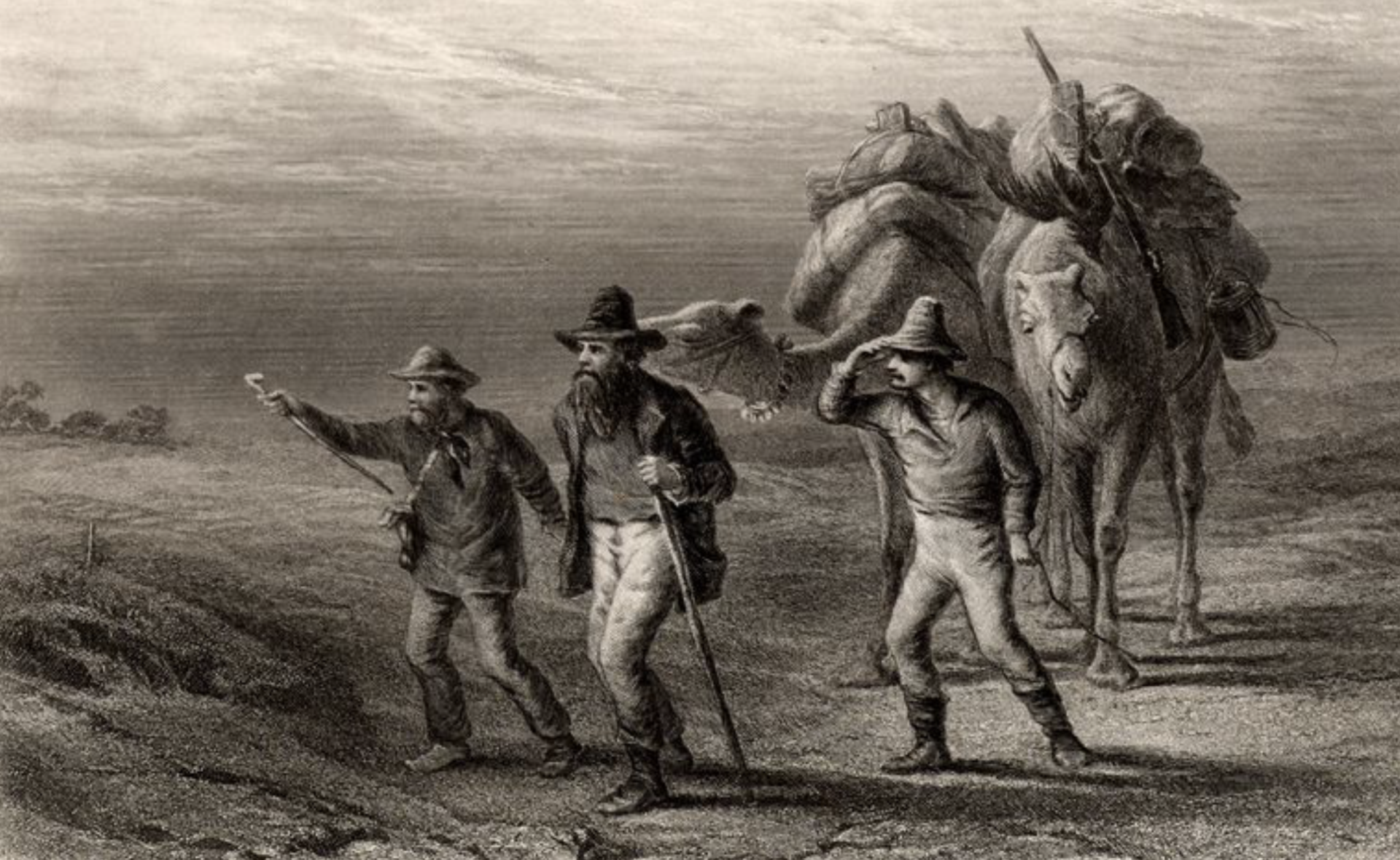
In August 1860, 19 men, 26 camels (because someone decided they were the future of Australian transport), and 23 horses (because not everyone believed camels were the future of Australian transport) finally set off from Melbourne, cheered on by thousands. Their first destination was Menindee, a small town near the Darling River in New South Wales. It should have been straightforward, but instead, it became a slog. By the time they reached Menindee in October—two months later—some of the party members were already at their breaking point. The heat, rough terrain, and the slow progress had taken its toll. Horses died, the camels struggled, and tempers flared.
At Menindee, Burke made the first of many questionable decisions. Instead of waiting for the rest of the group to catch up, he split the expedition, leaving behind the slower members with the bulk of the supplies and charging ahead with a smaller, lighter team. From here, Burke wanted to make his way to Cooper Creek—still about 700 kilometres away—and establish a base camp before making the push to the Gulf.
Cooper Creek: The Main Camp and the Gamble
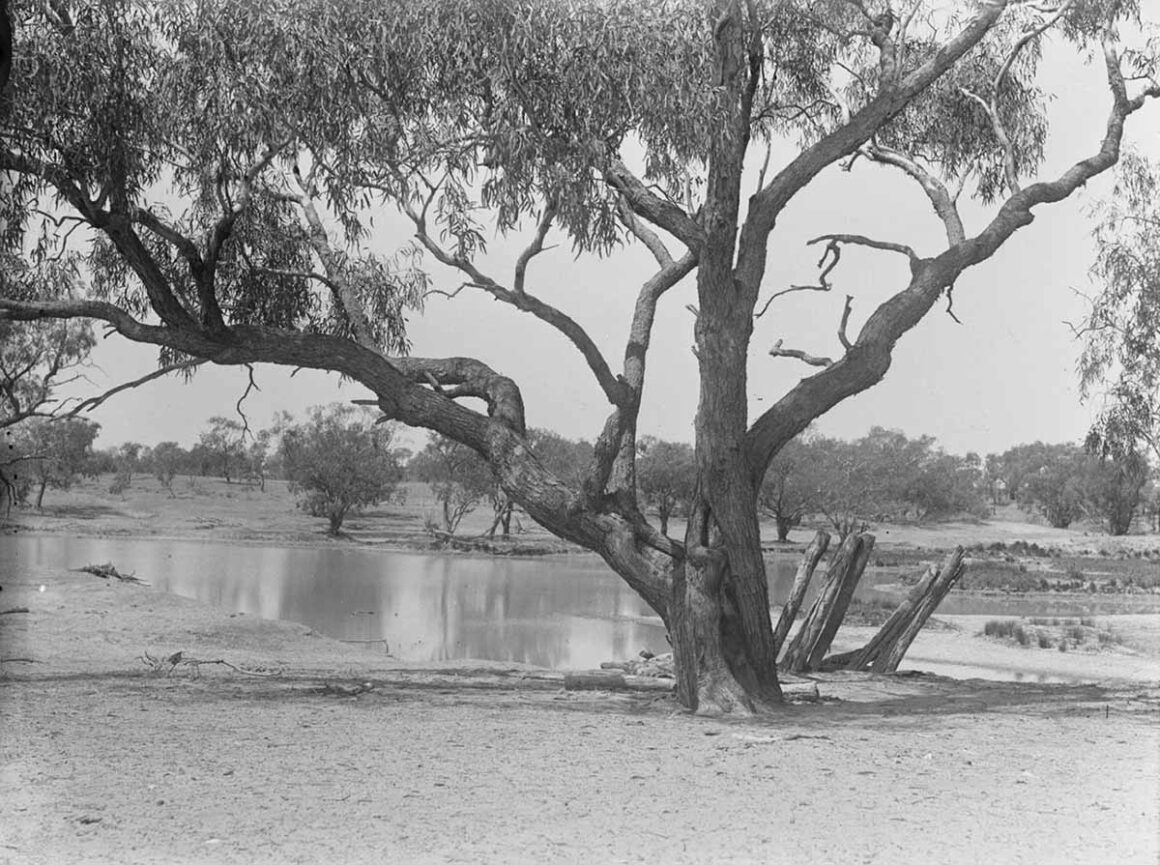
Cooper Creek was reached in November, and it became the expedition’s main camp—Camp 65. Burke’s plan initially, was to wait out the blistering summer there and regroup before heading north. But patience wasn’t Burke’s strong suit. Instead of resting and resupplying, Burke—ever the impatient fella—decided to split the party again. He left most of his men behind at Cooper Creek under the command of William Brahe, with instructions to wait for three months. Burke, Wills, John King, and Charles Gray pushed north with six camels and a horse, determined to reach the Gulf.
The journey north was grueling. The heat was oppressive, the landscape brutal, and their animals were beginning to drop like flies. The camels, who were initially thought to be perfect for the harsh outback conditions, struggled as their hooves cracked on the scarred Aussie earth. By the time they reached the northern limit of their journey—Camp 119, near the Gulf of Carpentaria on the 11th of February 1861—they were exhausted.
Camp 119: The Edge of Glory and Doom
Camp 119 is a place I visited myself, located along what is now The Savannah Way. It’s a spot that still remains one of the most surreal historical places I’ve ever visited. Standing there, you realise that this wasn’t just a story you read about in history class. These men were right here, battling the very elements you can feel around you. Here, they stood, so close to their goal but utterly broken by the journey. Burke and Wills had made it to the Gulf—or almost.
After minimal respite they decided to push further, hoping to see the ocean itself. Burke, Wills and two other men left Camp 119 and fought their way toward the coastline, but what they encountered was nothing short of a nightmare. Instead of a clear path to the sea, they were faced with swamps and dense mangroves, completely impenetrable. After a few days of futile attempts to break through the mangroves, they turned back, utterly defeated. They never laid eyes on the ocean, and despite being so close, the Australian landscape stood in their way, mocking their efforts.
This failed detour wasn’t just a blow to their morale—it cost them precious time and energy. Their supplies were already low, and the delay meant they were now racing against time to get back to Cooper Creek before it was too late.
The Return to Cooper Creek: A Tragic Twist
The return journey was a nightmare. They were bruised, dehydrated, and utterly exhausted. The camels began to die—one by one. Gray, one of the four men, became gravely ill and eventually died of starvation. The remaining three buried him and pressed on, their own survival hanging by a thread. By the time Burke, Wills, and King reached Cooper Creek, they were on the brink of collapse.
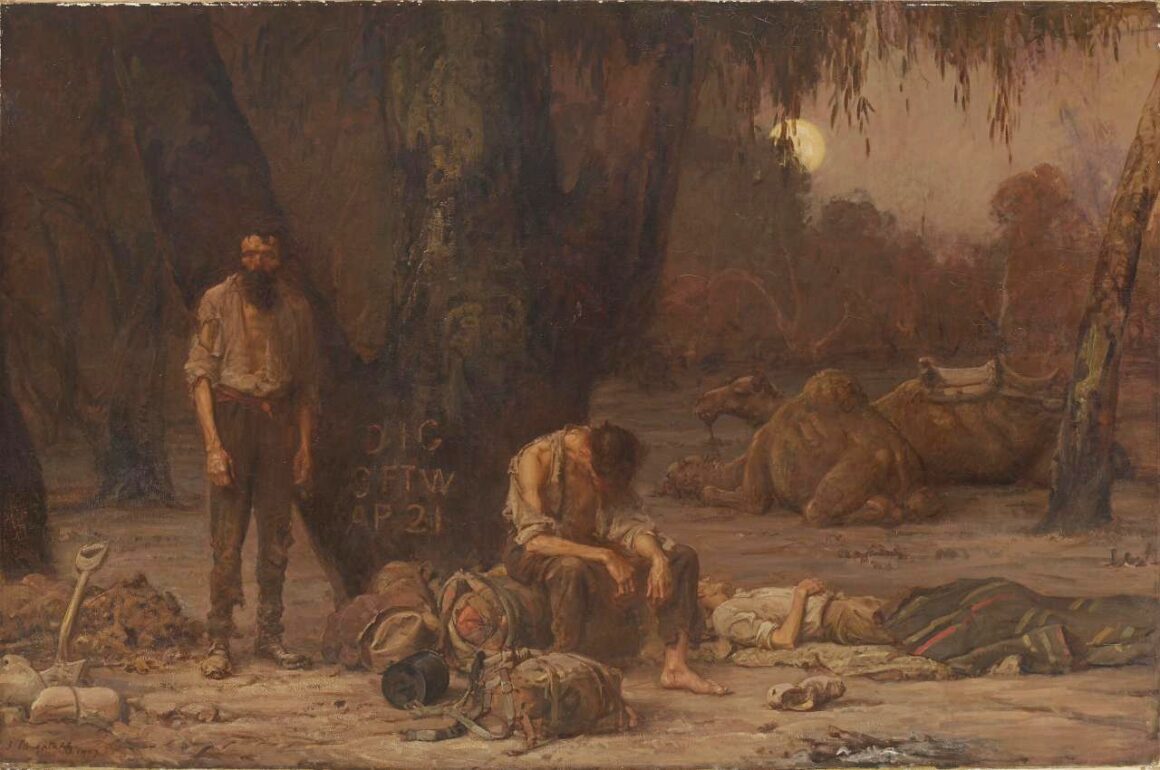
Here’s where the story takes its most tragic turn. Burke had given Brahe orders to wait at Cooper Creek for three months, but by the time the exhausted trio stumbled back into the camp, Brahe and the others had already left—just nine hours earlier.
To make matters worse, Brahe had buried some supplies for them in a cache marked “DIG,” but it wasn’t nearly enough. Instead of following Brahe’s retreating party, Burke, Wills, and King made a fatal decision to stay near Cooper Creek, hoping to survive on what little supplies they had left. What followed were weeks of sheer misery. Burke and Wills weakened rapidly, unable to find enough food to sustain them. The local Aboriginal people, the Yandruwandha, offered assistance, but Burke, in his arrogance, refused much of their help, believing they would survive on their own.
Eventually, Wills succumbed to starvation. Burke died shortly after, both men broken and defeated. John King, the last survivor, was rescued by the Yandruwandha, who continued to provide him with food and water until a search party found him months later.
Camels, Gongs, and a Legacy
The thing that’s always intrigued me about this whole saga is that from the start, it felt like the universe was giving them every sign to turn back. Men dying, some only days apart, equipment failing and the rigours of the outback. But they kept going. Destined for what can only be described as heroic failure.
Their story lives on, not just because of their incredible ambition or the tragedy that befell them, but because they represent something uniquely Australian: the relentless urge to explore, to push the boundaries of possibility and to take on the outback.
It’s an urge a huge number of Australians still act on today, only under very different circumstances. Travelling the remote outback in my Ranger these days, I often feel like a modern-day explorer while admiring the courage and determination of early pioneers.
Final Thoughts
The outback still carries their story in its bones, from Cooper Creek to Camp 119 and beyond. It’s a constant reminder of what can happen when ambition, ego, and nature collide. Their story will always be part of the outback’s allure—a reminder that Australia is as much about the stories of those who didn’t make it, as it is about the ones who did.