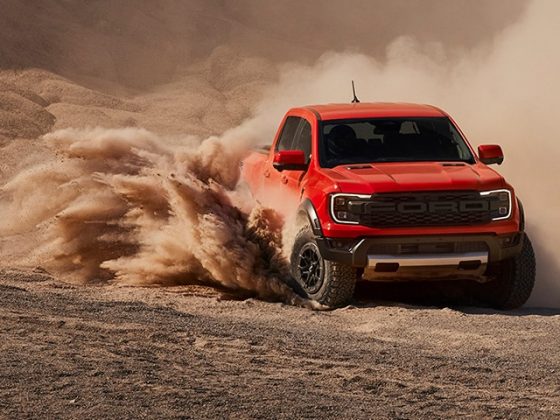

There’s a familiar moment in the evolution of almost every touring 4X4. It starts life feeling reasonably sharp and predictable, then slowly accumulates a bull bar, winch, canopy, drawers, fridge, roof rack, awning, spare tyre, water tank and enough recovery gear to extract a small excavator. Somewhere along the way, it starts driving like a wet sponge. The steering feels slower, corners require more commitment and sudden direction changes become something you’d rather avoid. Usually, the first instinct is to blame the suspension.
But suspension is only part of the equation. Weight distribution matters enormously, and two 4X4s carrying exactly the same total weight can behave completely differently depending on where that weight is positioned. The further weight moves upwards, rearwards or towards the extremities of the vehicle, the greater its effect can be on handling. Keeping a vehicle under its legal GVM is obviously essential, but that number alone doesn’t tell the whole story. Axle loads, centre of gravity and the position of heavy accessories all influence how a loaded 4X4 accelerates, brakes, corners and responds when something suddenly goes wrong.
The Roof Is the Worst Place for Heavy Stuff
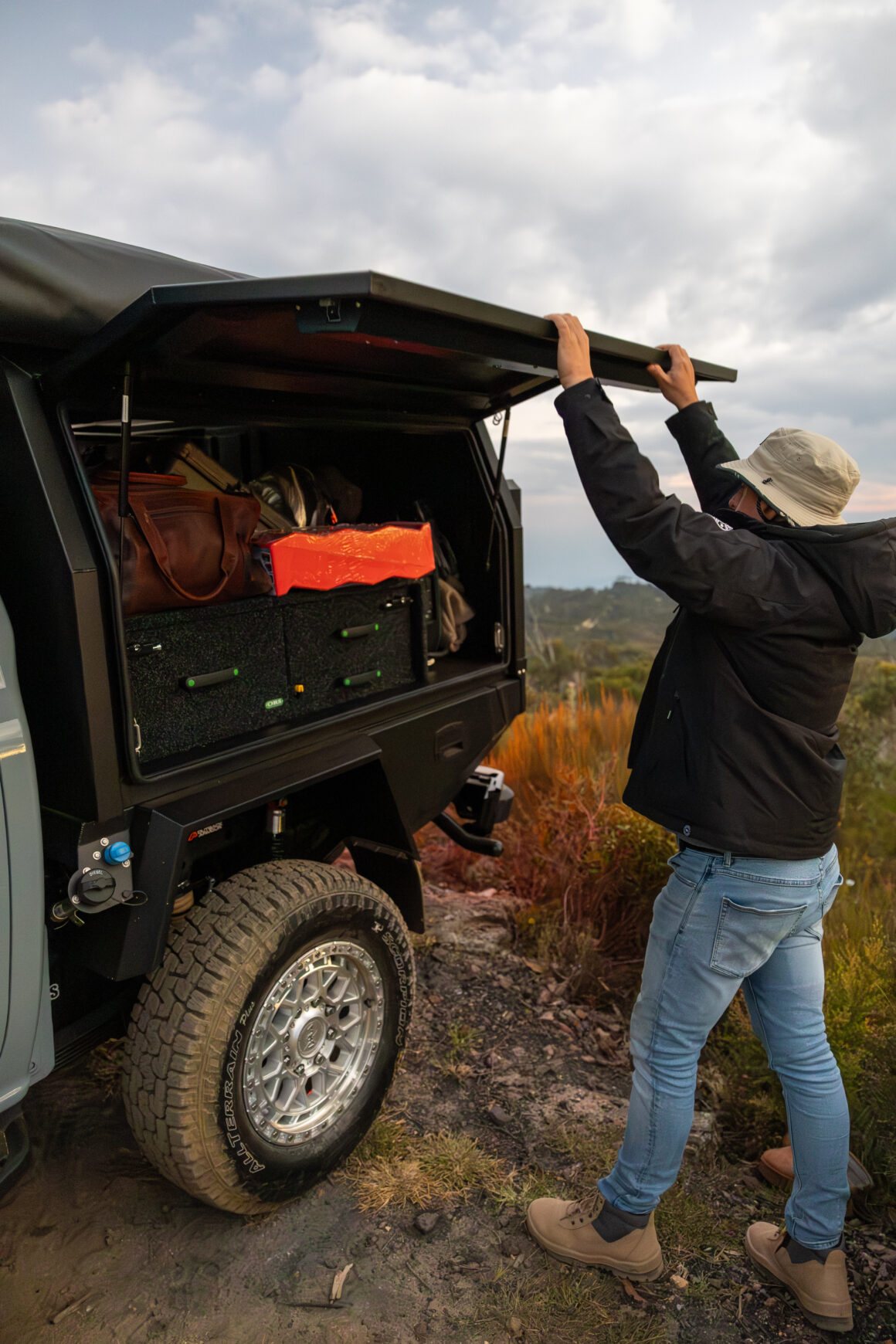
Roof racks have transformed how we set up touring vehicles, but they’ve also made it incredibly easy to put weight in arguably the worst possible location. Roof-top tents, awnings, spare wheels, recovery boards, jerry cans, storage boxes and full-length platforms can quickly add serious mass several feet above the road. Every kilogram placed up there raises the vehicle’s centre of gravity, increasing body roll and making the vehicle more sensitive to sudden changes of direction. Off-road, that higher centre of gravity becomes even more noticeable when traversing side slopes, climbing uneven terrain or dropping a wheel into a hole.
A suspension lift adds another consideration. A modest lift doesn’t automatically make a 4X4 unsafe, but raising the vehicle while simultaneously loading its roof compounds the effect. The goal should be to keep genuinely heavy items as low as practical. Tools, spare parts, water and recovery equipment are generally better positioned around floor height than overhead. Roof racks are brilliant for bulky but relatively light gear such as swags, camp chairs or empty storage equipment. A roof-top tent may be unavoidable if that’s your preferred setup, but that makes everything else you put upstairs more important. Just because there’s space on the rack doesn’t mean you should fill it.
The Rear Axle Is Doing More Work Than You Think
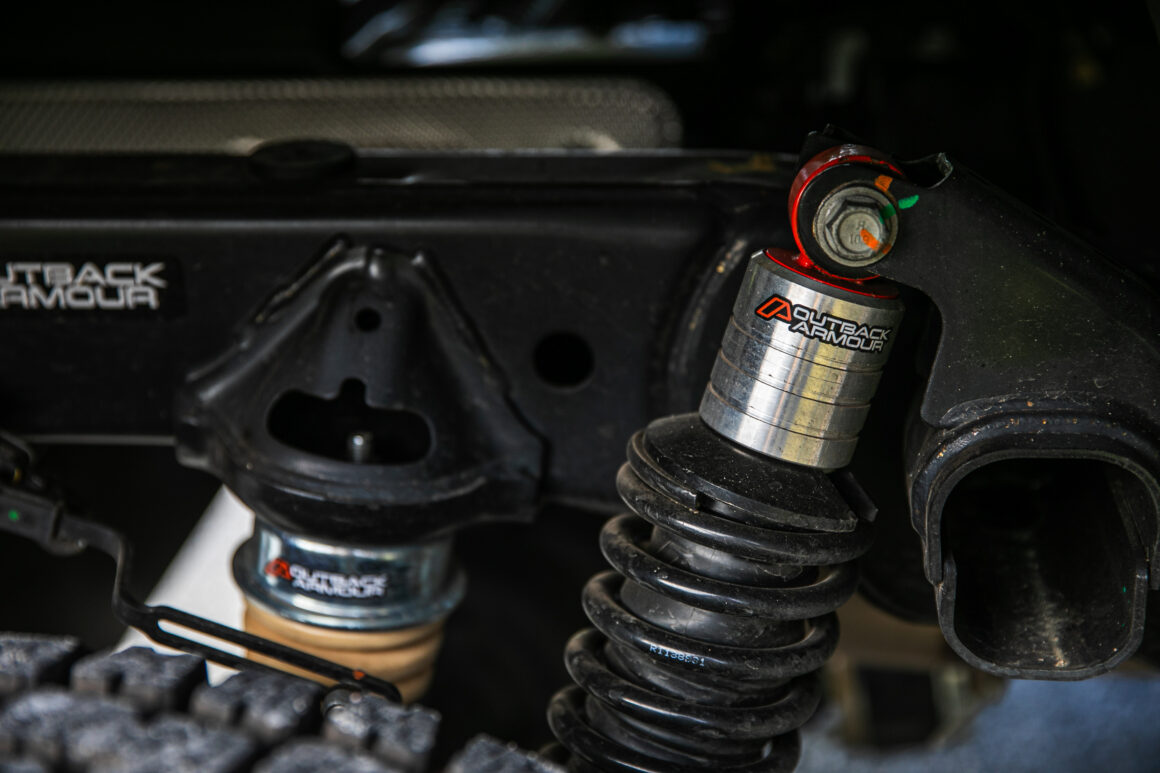
The back of a touring ute is another place where weight can quietly get out of hand. Long-range tanks, water tanks, drawers, fridges, canopies and loaded toolboxes all add up, but accessories mounted behind the rear axle deserve particular attention. Rear bars, dual spare-wheel carriers, jerry-can holders and towbar-mounted equipment don’t simply add their listed weight to the vehicle. Because they sit behind the rear axle, they act like leverage on the chassis, increasing the load carried by the rear axle while potentially reducing load on the front.
That can change the way a ute drives dramatically. As the rear becomes heavily loaded, steering can feel lighter and less responsive, braking balance changes and the vehicle may become more prone to pitching and wallowing. It’s particularly relevant with dual-cab utes, where the rear axle is already relatively far forward compared with the end of the tray or canopy. Where possible, heavy permanent items such as water tanks, batteries and spare wheels should be positioned low and as close to, or forward of, the rear axle as practical. A 60-litre water tank is roughly 60kg of water alone. Put that right at the back and its effect is very different to carrying the same 60kg low and centrally between the axles.
Build Around Weight, Not Just Available Space
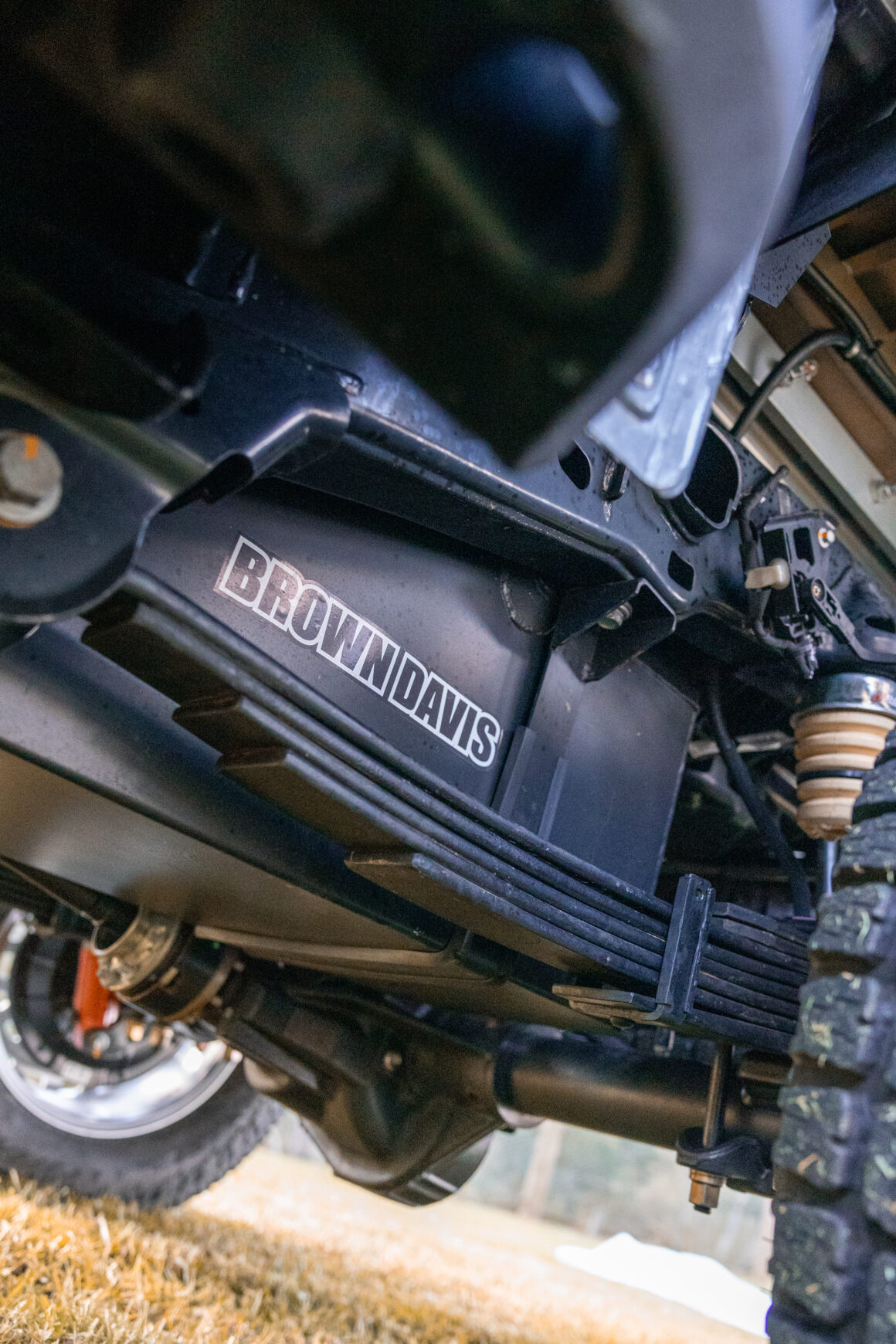
The best touring builds aren’t necessarily the lightest, but they’re usually the ones where weight has been considered from the beginning. It’s easy to design a setup around empty spaces: spare wheel fits here, water tank fits there, recovery gear goes on the roof because there’s room. A better approach is to start with the heaviest items and decide where they should live before filling the remaining space. Batteries, water, tools, spare parts and recovery equipment should generally be kept low and central wherever the vehicle layout allows it.
It’s also worth putting a completed touring vehicle over a weighbridge rather than relying on accessory brochures and rough calculations. Ideally, weigh the front and rear axles separately in genuine travel trim, with passengers, fuel, water and the gear you normally carry. That tells you far more than a single total weight figure. Suspension upgrades can help a vehicle manage additional load, but heavier springs and upgraded shocks can’t magically fix poor weight placement or move an overloaded rear axle forward. If your 4X4 feels vague, top-heavy or strangely reluctant to change direction, don’t immediately start shopping for new suspension. Take a good look at where the kilos are sitting. Sometimes the best handling upgrade doesn’t cost anything more than moving some stuff.