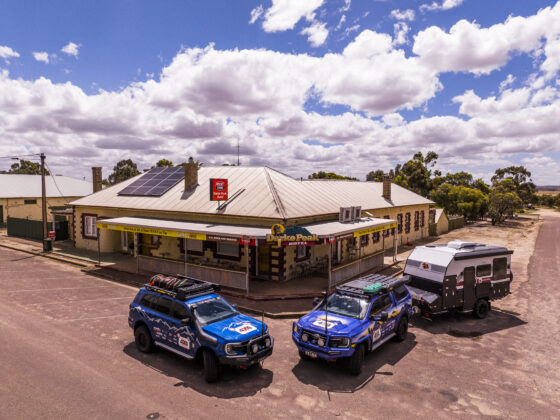

Venturing off-road with your caravan or camper trailer opens up a world of adventure, granting access to Australia’s diverse and beautiful landscapes. However, it’s a journey that requires skill, knowledge, and above all, preparation. In this guide, we’ll explore the art of off-road towing, offering tips and tricks to ensure you, your 4X4, and your trailer return from your adventures in one piece.
Understanding Your Trailer’s Capabilities
A Strong Foundation
Before planning any off-road excursion, it’s crucial to understand the capabilities of your trailer. Its design and construction determine where it can and can’t go. For instance, if you own an ‘on-road’ caravan, it won’t be suitable for off-road adventures due to low clearance and lighter-duty suspension components and construction. You run the risk of literally shaking it apart at the seams on even mild corrugations. Instead, consider a semi-off-road or dedicated heavy-duty off-road van, built to handle low-range tracks, sand, and other challenging terrains with better ground clearance and stronger construction.
The Importance of Clearance
Clearance is one of the most critical factors when taking a trailer off-road. Trailers with good clearance can tackle most rough terrains without scraping their underbelly against rocks and ruts. A trailer’s clearance is often determined by its suspension package specification. While independent, coil-sprung, or air-bagged setups are desirable, even a well-rated leaf spring setup can suffice if you’re pounding out dirt roads rather than looking for trouble.
Off-Road Tyres: Your Trailer’s Best Friend
The tyres on your trailer are equally as important as those on your 4X4. Opt for Light Truck (LT) designated tyres, which offer better puncture resistance, higher load ratings, and longer lifespans than Passenger (P) rated tyres.
While the choice between mud tyres and all-terrain is largely dependent on your specific needs, most experts recommend all-terrain tyres for off-road trailers, as they balance puncture resistance, weight, rolling resistance, and noise effectively. Remember to adjust the tyre pressures on both your 4X4 and trailer when going off-road. This not only helps prevent punctures but also increases flotation on soft surfaces like sand.
Don’t Forget the Details
An off-road hitch is another critical component of your off-road towing setup. It should offer maximum articulation, be easy to hitch and unhitch, and be rated adequately for the weight of your van. Once you’ve chosen the right trailer and fitted it with the appropriate gear, you should consider additional protection measures. For instance, fitting a stone deflector can prevent rocks and dirt from damaging the front of your van.
Furthermore, regardless of how well-sealed your van is, taking measures to prevent dust ingress is advisable. This could involve using a forward-facing hatch or snorkel to pressurise the van, or even just sticking plastic film across some vents.
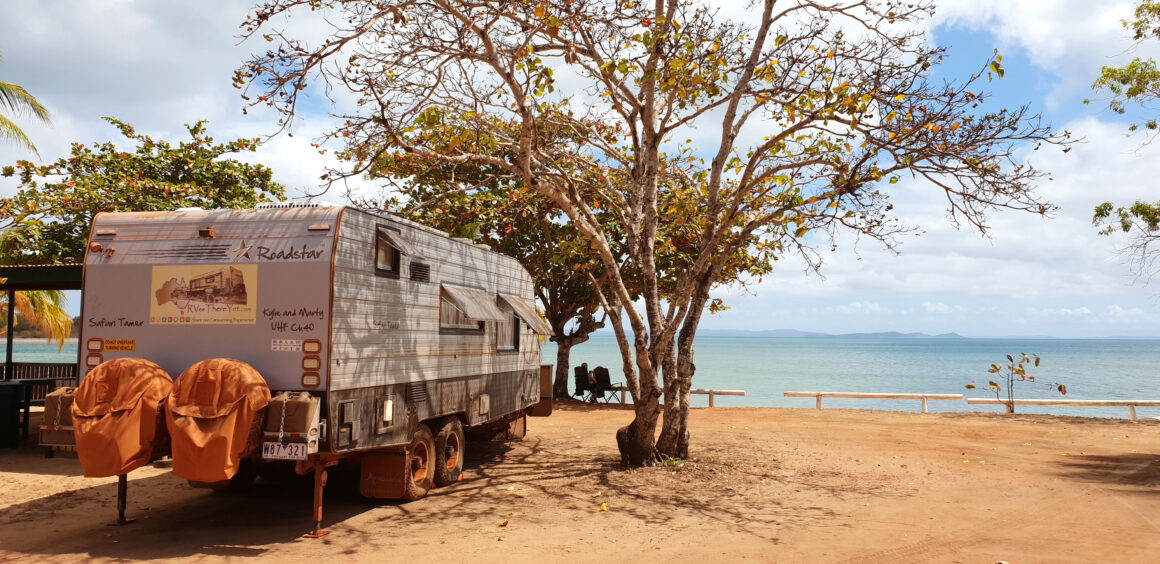
Understanding Your 4X4’s Capabilities
Matching Your 4X4 to Your Trailer
Equally important to understanding your trailer’s capabilities is understanding your 4X4’s capabilities. Some 4X4’s are better suited to towing than others, and how well your 4X4 matches your trailer can significantly impact your off-road towing experience.
For instance, towing a heavy trailer with a low-powered 4X4 can make certain off-road situations incredibly difficult without the grunt to get through an obstacle. On the other hand, having a highly capable 4X4 is only so beneficial if your trailer lacks the necessary clearance or ability to withstand off-road conditions.
Towing Capacity and Weight Limits
It’s crucial to ensure your 4X4 is up to the task of legally towing your trailer. Loading your vehicle and trailer for a trip and taking them over a weighbridge can help ensure your setup remains legal and can withstand the rigours of rough roads. Remember, you’ll need to be within the law to have any hope of an insurance claim in the event of an accident. Your braked towing capacity is only half the battle, you’ll also need to stay within your Gross Combined Mass, and your individual axle weights as well.
Consider Your Turning Circle
Towing a trailer reduces your vehicle’s manoeuvrability. Trailers tend to cut corners, so always give a wide berth when turning.
Interchangeable Spares
Depending on where you’re going, it can be helpful to have wheels and tyres that can be interchanged between the vehicle and the trailer. This effectively gives you two spares from the get-go.
Monitor Transmission Temperatures
If you’re towing off-road with an automatic 4X4, you’ll need to monitor transmission temperatures. Depending on the 4X4 you’re piloting you may need to fit an aftermarket gauge to be able to keep an eye on it, the little red light only pops up on your dash when you’re well and truly cooked. If you’re planning on regularly towing in soft sand it’s worth fitting up an external transmission cooler too.
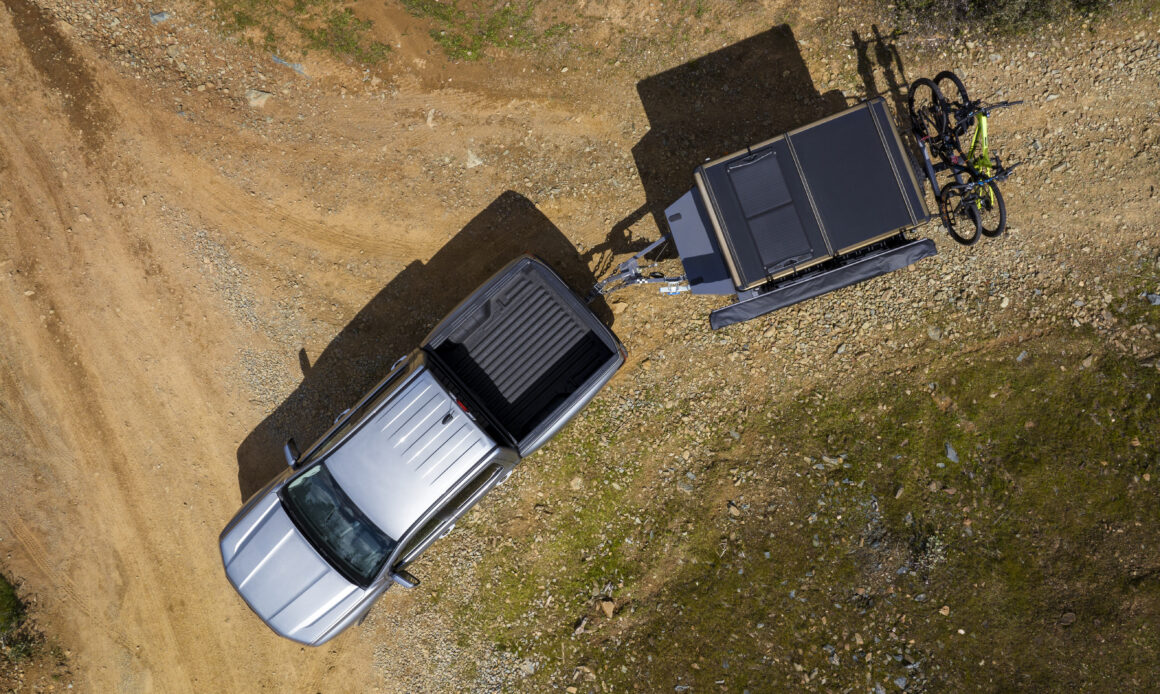
Tackling Different Terrains
The Ups and Downs
Hill climbs can be particularly challenging when towing off-road. The added weight of the trailer can significantly decrease your 4X4’s capabilities and increase the strain on its components. When ascending hills, maintaining momentum is key. This doesn’t mean hitting the hill at high speed, but rather maintaining a constant speed that suits the terrain.
Descending hills, on the other hand, is about control. The weight of the trailer pushing your 4X4 downhill can increase the risk of brake lockups and loss of control.
Navigating Mud and Sand
Mud and sand also present unique challenges. In these conditions, minimising resistance is crucial, so ensure the trailer follows the 4X4’s wheels as closely as possible, this is when you’re thankful the trailer’s wheel track matches the tow-tug.
In sand, maintaining momentum is essential. The added weight and resistance of a trailer mean you’ll need more momentum or possibly a lower gear.
Traversing Rivers
Trailers pose a unique challenge in river crossings. They typically have a large surface area to weight ratio making them prone to floating. In flowing water, they can drift sideways and take you with them. The added weight and resistance of pushing through water can place a lot of load on your 4X4s drivetrain to get through so play river crossings safe.
Handling Steep Tracks
Steep 4X4 tracks are more challenging when towing. Maintaining momentum on the way up is critical while starting your descent as slowly as practical is key to controlling speed. In both conditions you’ll want to be a gear lower than usual. Going downhill if the trailer starts to drift a quick press of the trailer brakes (without the tow-tugs being activated) can help pull it back into line.
Remember, no matter how well-prepared you are, off-road towing is a challenging endeavour. It requires skill, knowledge, and a healthy respect for the power of nature. So, take your time, be safe, and enjoy the journey.
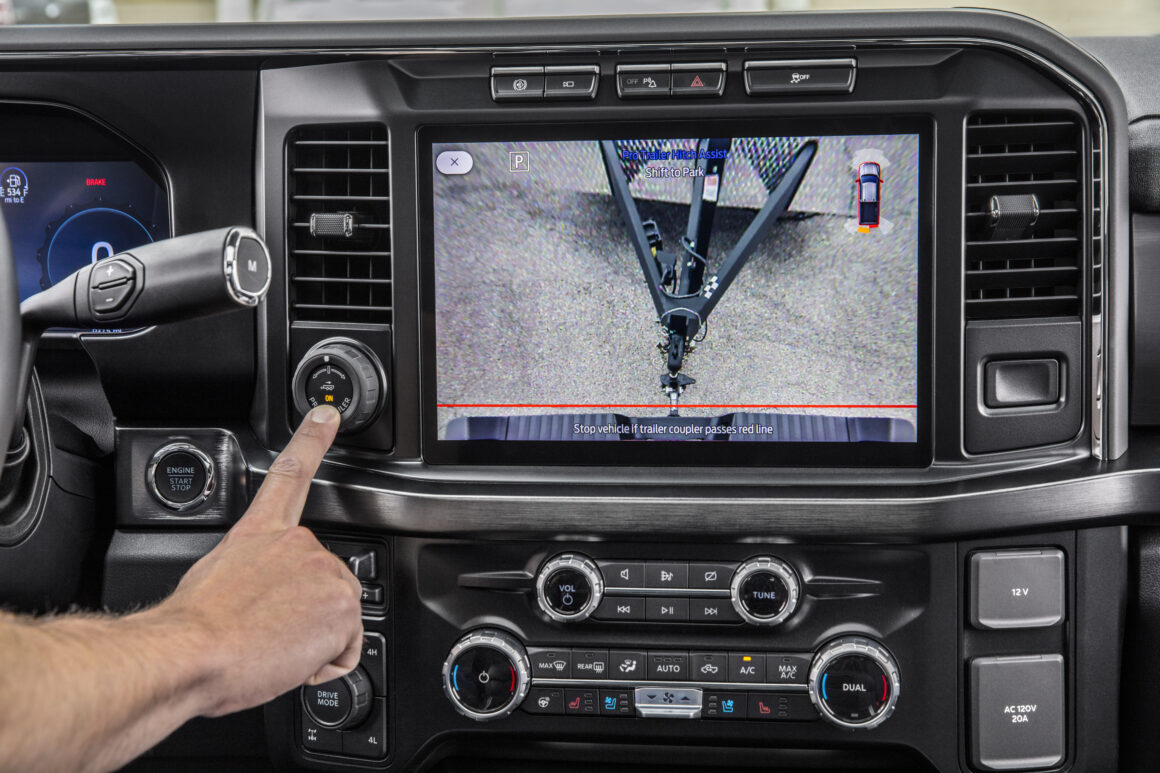
Make Technology Work For You
Ford’s introduction of the Pro Trailer Backup Assist technology in its 2024 Ranger and Everest models is a game-changer for Australian 4X4 enthusiasts and families who regularly engage in towing, whether off-road or on. By using a control dial, drivers can intuitively steer their trailer, negating the need for the counterintuitive steering inputs that have traditionally made reversing with a trailer a daunting task. The system enables precise, stress-free manoeuvring, making it a boon even for seasoned drivers.