
The electric vehicle revolution is well and truly upon us…or is it?
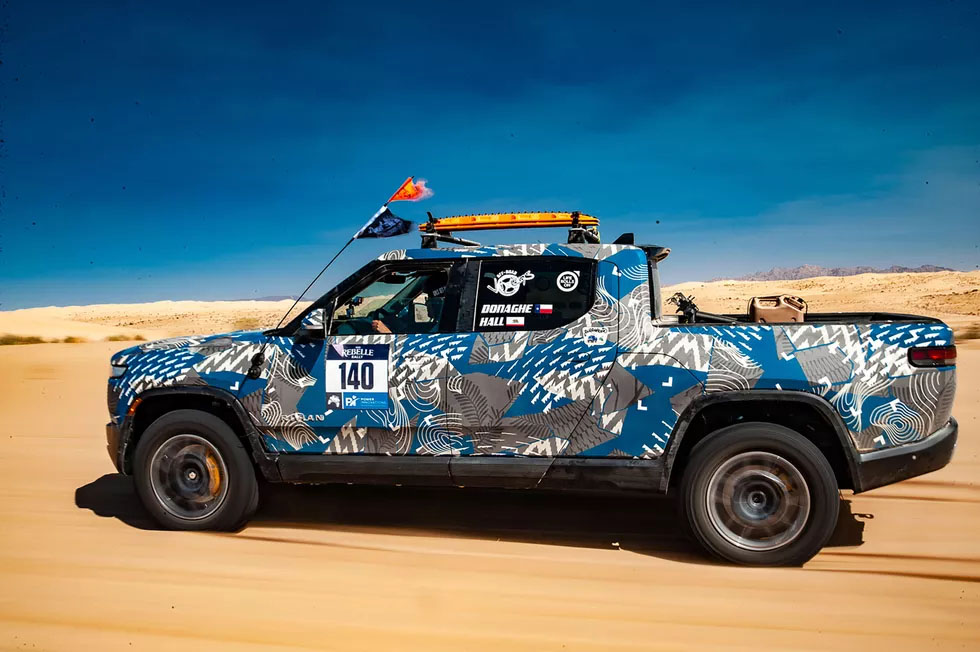
The statistics don’t lie. The electric vehicle share of the market in 2020 was around 0.78%, and in 2021, 1.57%. There are another 30 or so EVs being launched into our market, including specialist Polestar. Overseas, Norway is above 75% EV new-car sales, and Rivian has delivered the world’s first EV 4X4 to customers in the USA.
So EVs are inevitable, right? Yes, and no. Today, EVs can easily replace the vast majority of road cars and SUVs, which are mostly used in our capital cities for short trips, or excursions into the country of maybe 150km or so. Yes, I know that’s not you, but you’re not the average Australian motorist. With a range of 400-500km, the average Aussie driving 14,000km a year – which is 38km per day – can easily have their car needs met by an EV, especially as both range and charging options are improving. My experience of running an EV is that you can drive around town all day, charge off a 10A plug overnight at 10km of range per hour, and be good to go at 100% the next day which is why EV owners rarely use public chargers in their home city.
The big barrier to EV adoption is cost-effectiveness, as EVs cost more than petrol/diesel equivalents and the average Aussie won’t see their money back over a 5-year lifecycle. But that’ll change, and when it does, expect EV adoption to take off… for road cars.
Now let’s turn our attention to what you and I drive, which would be a touring 4X4, powered by an internal combustion engine (ICE). And here we have problems with the EV equivalent, the first of which is scaling and payload.
The bigger the vehicle, the greater the weight and the bigger the frontal area which creates drag. Let’s say we have Car X, and double the width, height and length. That means 8 times the volume, and maybe not 8 times the weight, but certainly more than double. And that means a lot of extra battery power. Diesel is far, far more energy-dense than batteries; a 22kg “e-jerry” can store 4kWH of power, which is equivalent to, guess now…0.4L of diesel. And as you know, 22kg is one jerrycan which is 22L, about the same as 220kWH. To put it in perspective, a big EV battery is 100kWH and the Rivian 4X4 runs around 135kWh. This also explains why the “just carry a battery” idea doesn’t really work; 4kWh of power will only move a 4X4 a few kilometres, unlike a jerrycan of diesel which also gets lighter when used.
So how does any EV manage to get so far on energy equivalent to a tiny amount of diesel? The answer is conversion efficiency. Petrol/diesel engines convert maybe 25% of the energy into propulsion, whereas EVs are around 80% efficient. So back to our e-jerry. That 4kWH of power will translate to 3.2kWh of power being used to propel the vehicle. Whereas the diesel jerrycan with 22L of diesel energy will translate to 5.2kWh of energy being used to propel the vehicle, so much, much closer now but still a big difference in favour of the ICE.
But the problem remains; larger vehicles need increasingly large battery packs and that makes them heavier, so they need even larger packs, it’s a vicious circle. And, the larger the battery, the longer it takes to charge. All this is why we don’t see very large battery-powered vehicles.
4X4s are by their nature larger than road cars, and there’s a further problem, payload. We need lots of it, but EVs are using a lot for the battery. This isn’t much of a problem for road cars as their payloads are small, and they are small, but 4X4s need payloads of 700kg, preferably 1000kg plus, and adding that onto an already heavy vehicle makes for a pretty big GVM.
Then there’s towing. We know how EVs do a lot with very little energy. Well, the Rivian has a drag coefficient of 0.28. The equivalent sized F-150 is around 0.59, so double. So, adding say a roof rack to a Rivian EV has a bigger percentage increase of drag effect than the same to an F-150. This is important because we tend to add a lot of draggy accessories to our vehicles such as bars, lights, off-road tyres, roof racks and snorkels, although EVs won’t need them! Again, that isn’t a problem with road cars.
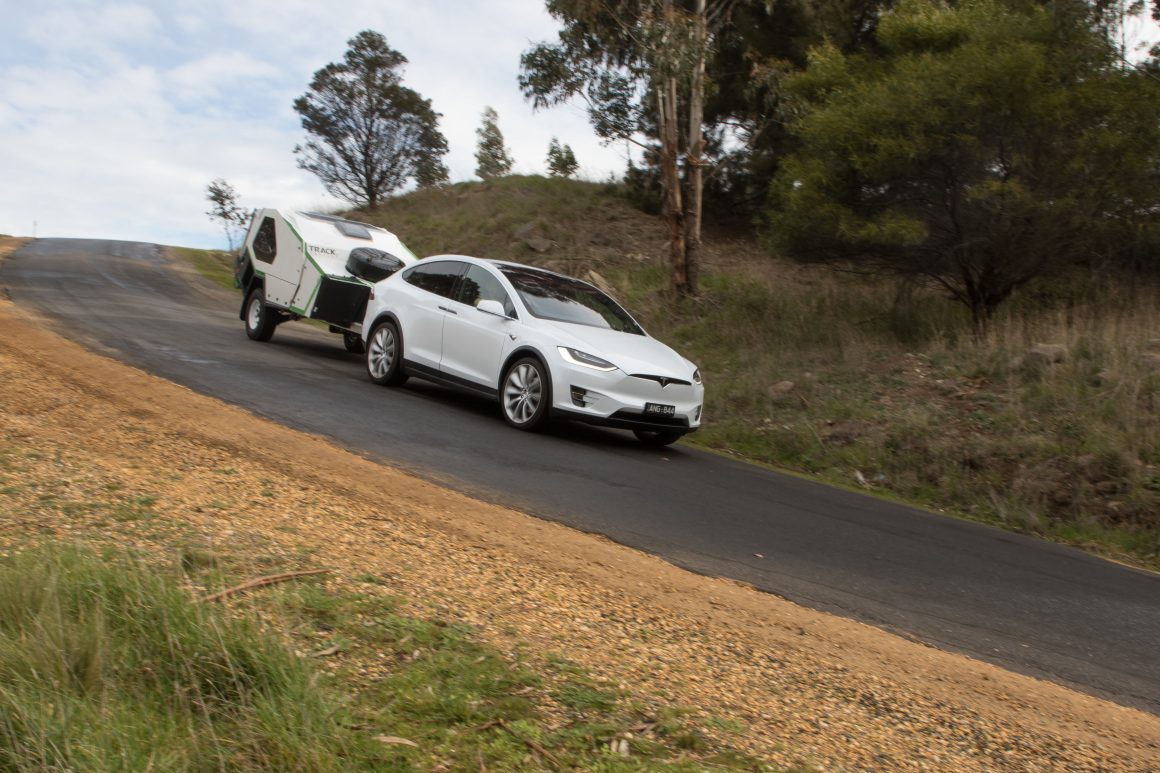
Then we have towing and it’s the same problem. Say an EV has a drag factor of 0.5, and the diesel 1.0. We add a trailer of drag factor 0.5 to both. The EV has now doubled its drag to 1.0, but the ICE has only increased by a factor of 50% to 1.5. The reason why this is important is that at speeds above about 60km/h the major factor of a vehicle’s energy use is aerodynamic drag, and that’s even more so at towing speeds of 80-100km/h. So that’s why Rivian suggests that towing cuts their vehicle’s range by 50%, not something you’d see in a diesel truck.
But the only problem with EV 4X4s is the range. For capability offroad, they will match or better ICE, and definitely improve on reliability as well as storage space. Yes, they’re heavier, but the weight is low and central, so the weight penalty isn’t as bad as you think, and they even tow better, just not very far.
So electric vehicles can certainly replace road cars in the city now and can do the job for interstate trips albeit not as quick or easy as petrol/diesel. But the technology simply doesn’t exist for EVs to replace 4X4s for our purposes of touring and towing.