In a world seemingly screaming for new electric vehicles, the new Ford Ranger is an unusual rockstar. Powered purely by diesel engines, it has attracted popularity hitherto unseen in this nation. Before a single vehicle was shipped to an owner, 17,000 orders were placed. This unprecedented demand is anyone’s guess, but by my estimation it comes for three good reasons.
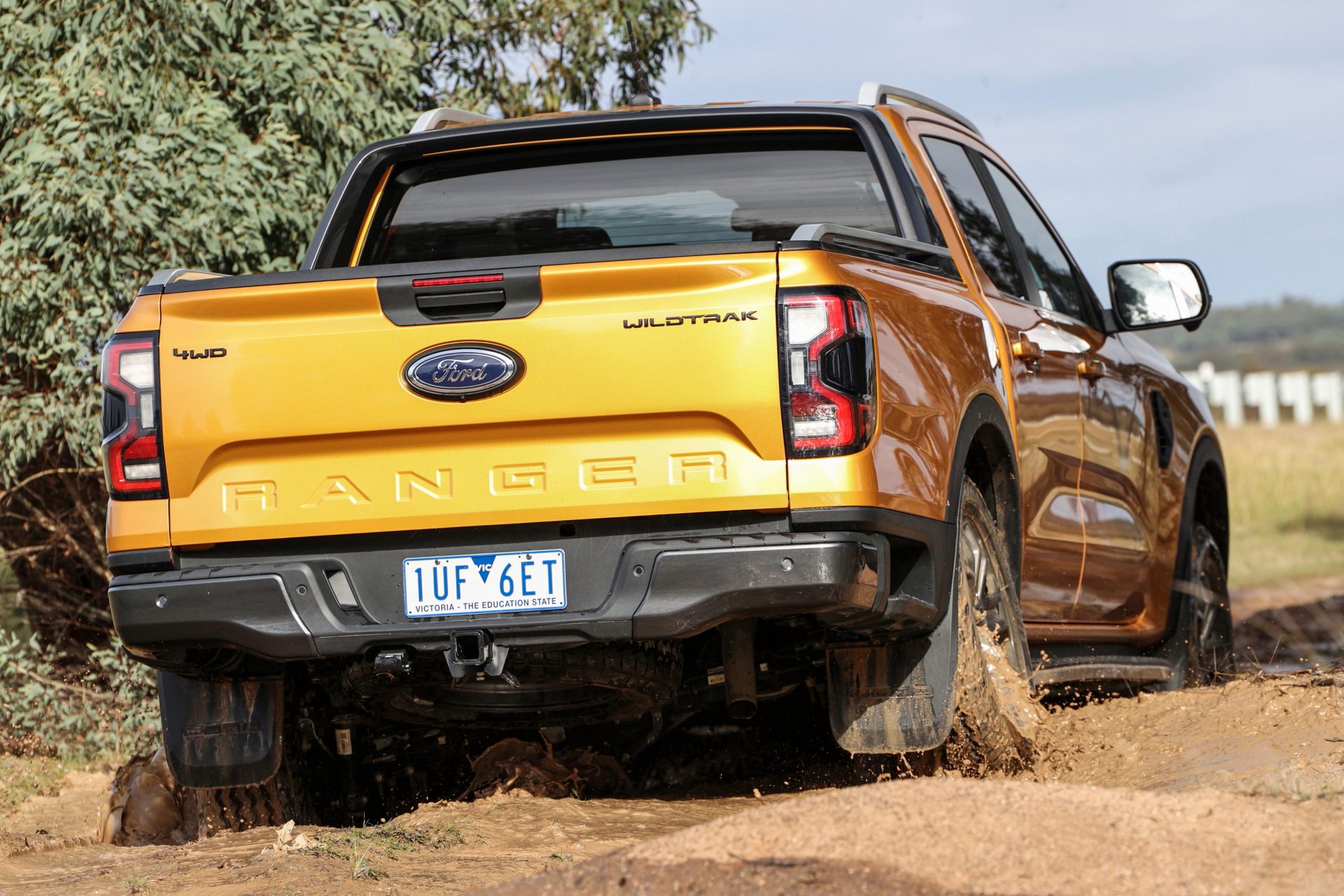
The last model, particularly in its latest incarnation, was incredibly popular and packed with good tech. Always number one or two on the best sellers list, it was great to look at and feature-packed. The new model features an even bolder look, which quite obviously appeals to the Australian market. It’s no ugly duckling. There’s a bold and striking front end with C-clamp headlamps that give little doubt as to its family resemblance. If it was a child. You’d say it’s a chip off the old man’s block (the old man being an F-Truck). And Aussies do like a tough-looking ute.
But the killer blow in the new Ford Ranger. And the reason for so many confident pre-orders is the new 3.0-litre V6 turbo-diesel engine. The previous gen 2.0-litre bi-turbo diesel was no slouch, but in Australia, V6 means sales. And with 600Nm on tap, Australia, your prayers have been answered. The most popular model thus far, is the Wildtrak V6 – the highest specification vehicle other than the yet-to-be-released Raptor.
Australia first
While the new Ford Ranger is destined for 180 different markets worldwide, it was designed by Ford in Melbourne Australia. Ford began the design process by having workshops with owners, where they not only said what they want, but demonstrated how they used their vehicles. This flowed into loads of modifications on the vehicles.
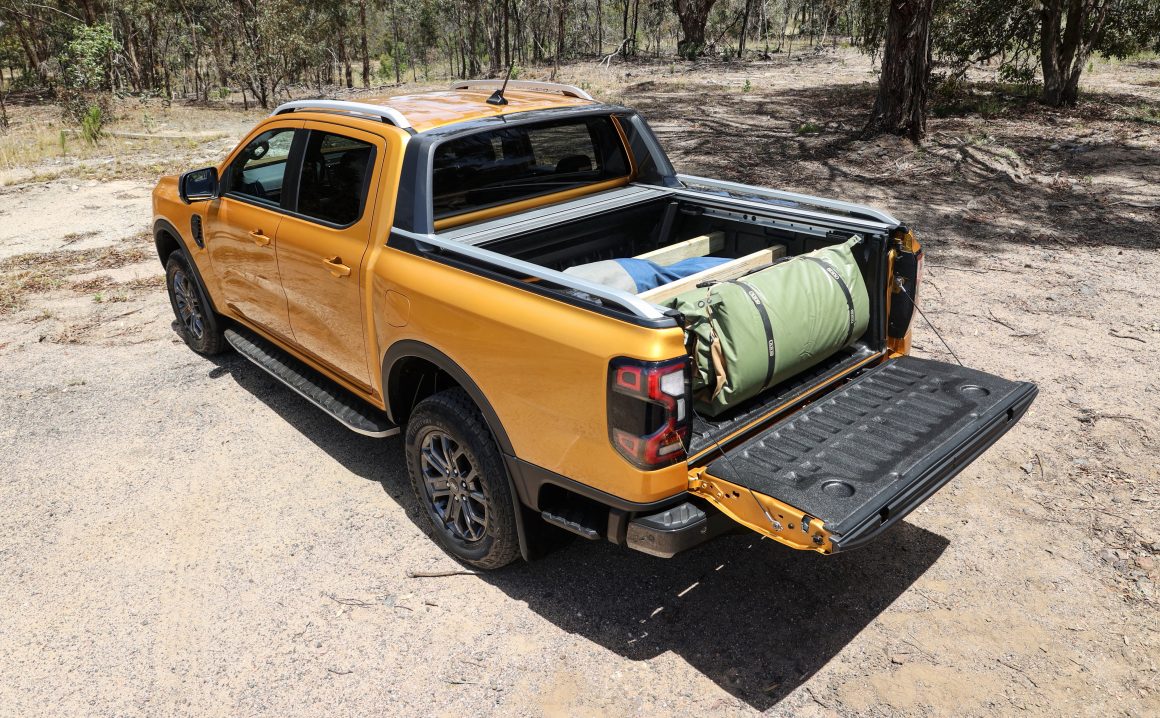
The step on the rear quarter panel for example, eliminates the need to climb on a slippery tyre to leap up into the tray. The wireless phone charger holds your biggest iPhone, and taps seamlessly into the entertainment system. There are new tie-down hooks in the tray that can be moved on rails at will. There are new rear seat air-con vents in the WildTrak to cool rear passengers. And as 80% of Aussie Ranger owners like to tow stuff, an electronic brake controller has been included as standard. And these are just the start of the story – there are loads more changes worthy of mention.
Accessories a la ARB
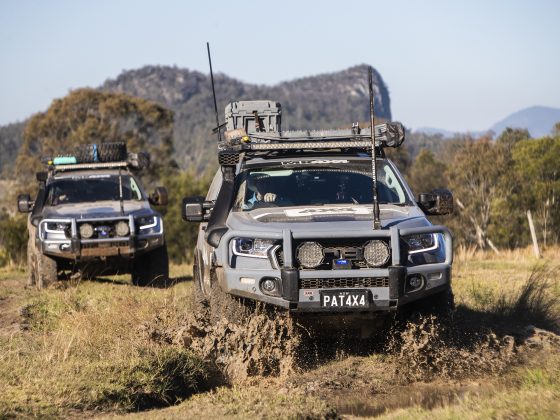
While conducting their research for the new Ranger, they discovered that the vehicle is the most accessorised Ford in the world. More people fit accessories to their Ranger than they fit to their F-150, Mustang – anything. Sure, more Ford accessories are on offer for an F-150. But that doesn’t mean that people actually bother to install them. The Ranger, however, is different – people simply love to mod them. In a secret squirrel project for the last four years, Ford looked around the world for a company that could complement the new Ranger with ITS accessory range. They decided on ARB, which would prove rather handy, as both companies’ engineering teams reside in Melbourne.
Ford committed a team of ten to the ARB collaboration. And they began by asking ARB what would make the vehicle easier to modify? ARB came back with a shopping list of things that would aid the modification process, and Ford responded. New strategically placed holes in the chassis would mean no holes would need to be drilled for the side steps. A reinforced tub area means the compressor could be mounted with ease. New electrical connectors meant accessories could be quickly connected. Even a new long-range fuel tank would be recognised by the computer. The fuel gauge instantly recalibrated to suit the extra capacity. Literally hundreds of changes were made.
ARB have over 380 parts in their catalogue ready to go for the vehicle launch. Having said that, get your orders in soon because wait times of up to three months are being quoted from ARB right now. The other bonus with the ARB collaboration is the fact that you can now order your modifications directly from the Ford dealer, safe in the knowledge they will not void your vehicle warranty as the accessories have been tested by Ford. There may be a hole in the transaction though, when it comes to insurance.
It appears that if you get say, a $75K Ranger and add $25K worth of accessories, you may not be offered insurance to the value of $100K. Ford’s representatives at the launch hadn’t considered the insurance option, which usually happens at the dealer level. It may be worth you doing your own research to find an insurer to cover a fully modified vehicle. I would doubt the dealer offering will cover mods and off-road recoveries etc.
First impressions
In the flesh, the Ranger is bold and imposing. And that squared-off front end is practical too. From the driver’s seat, you can see exactly what’s at your front corners. When off-road in the higher-specced models, a forward-facing camera gives you incredible forward vision. If you’d have told me that the forward-facing camera would be useful, I’d have shrugged it off, but having seen it in action, I’m a believer.
For starters, the screen is crystal clear – not low res like the previous model. And your tyre tracks are laid out in front of you, showing exactly where on the track your tyres will go. In technical situations off-road, this will come in really handy. Yet I can also see advantages for those situations where your mind wanders, and you forget exactly what the topography looks like. Picking a line has never been easier. Of course, off-road environments can get messy, so Ford have installed a little water jet to clean your camera lens. Fancy.
The interior of the Ford is significantly bigger, thanks to the widened cabin and widened stance of the rig (50mm). You can really feel this in the lateral legroom department, as there is now ample space for splayed legs. Interior door handles have been redesigned too, so that with one hand you can grab the handle and push it – a simple but nice touch. There is even new storage cubbies under the rear seats, thanks to the scalloped undersides of the rear pews. This could be a nice spot to stow a flat lithium battery perhaps.
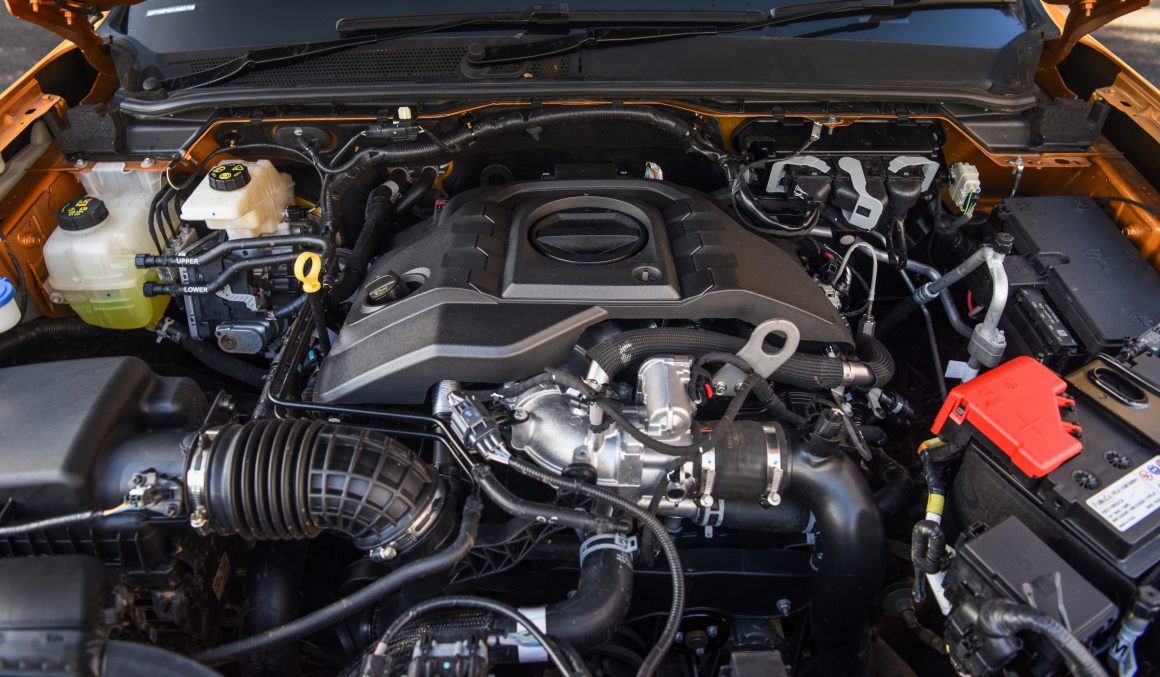
Speaking of batteries, Ford have created a void in the engine bay, that is perfect for an additional battery. This is wonderfully thoughtful, however, few modern lithium batteries are recommended for underbonnet storage, so this could prove a challenge. Having said that, there are plastic vents on both sides of the front quarter panels, that are designed to allow air to flow through the engine bay and keep temps down. While we’re under the bonnet, the alternator looks to be quite low, however with standard bash plates, they should hopefully not be too affected by mud.
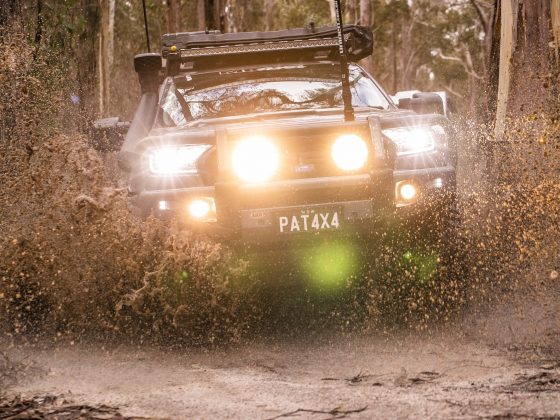
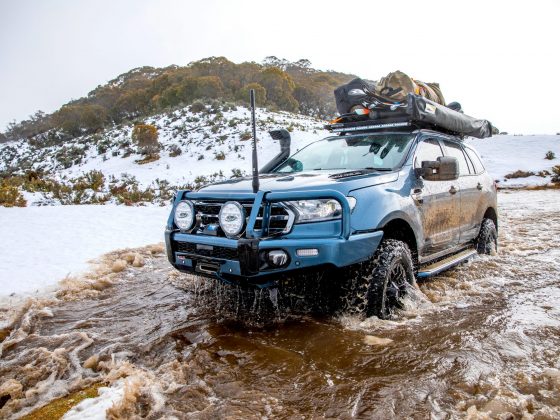
One point of concern is the air intake, that sits proud and wide at the front of the engine bay. This is great for sucking in cool air, but would also be problematic whilst undertaking deep water crossings. I’d definitely recommend a snorkel if water crossings are on your agenda. Incidentally, the Ranger retains its impressive 800mm wading depth.
And finally, the bonnet lacks gas struts – an interesting omission. Perhaps given the modest price increase over the preceding model, a lack of gas struts was considered an issue for your mechanic, but not for you. Of course, four-wheel drivers like us would love to see gas struts, but no doubt the aftermarket industry will have a solution next week.
The drive
I managed to have a steer of both the 2.0-litre bi-turbo model at the launch, and the V6. The bi-turbo has a number of modifications over the previous model, including a new engine cover to improve NVH levels, along with new electric fans. They’ve also improved the 10-speed auto, with new shift patterns and decreased lag. Overall, this torquey engine felt good and will save you some good coin off the V6. Although being a two-litre engine, it requires higher revs and is definitely noisier as it has to work harder than its big brother.
The no-brainer engine choice is most definitely the V6. It is incredibly quiet, and the torque really comes into its own off-road. When climbing 50-degree inclines, you can really just caress the throttle, knowing that there is ample torque to get you up there, no matter how slow you go. The 2.0-litre on the other hand needs to rev higher and lacks the ‘I’ve got this’ confidence of the V6. So if you can afford it, the V6 is the best choice, and being the flagship engine, will reward you when it comes time to sell.
On the highway, the V6 is super quiet, and the designers fitted a nice big noise-suppressing cover. So if you want to hear the donk, best to fit an aftermarket exhaust. The six-pot oiler comes from the Ford family of engines, even dating back to the TD Territory, but it has been modified significantly to suit the off-road and commercial applications required for the Ranger. Over 15 major changes have been made to the engine and layout, including the modified sump, which allows oil feed to be uninterrupted, even at steep off-road angles.
The new Ford Ranger is surefooted out of the gates, and encourages both spirited and sedate driving. The electrically assisted steering is precise, and the added width means the vehicle can be thrown around the bends with ease. The 10-speed automatic transmission is a sweet piece of engineering, as it always seems to be in the right gear. New shift scheduling programs have been introduced, and the gear changes are almost imperceptible.
The launch vehicles had a great ride, but were basically unladed, which is a challenge with leaf springs. Having said that, they rode well, if a little firm, which is expected from an empty tray.
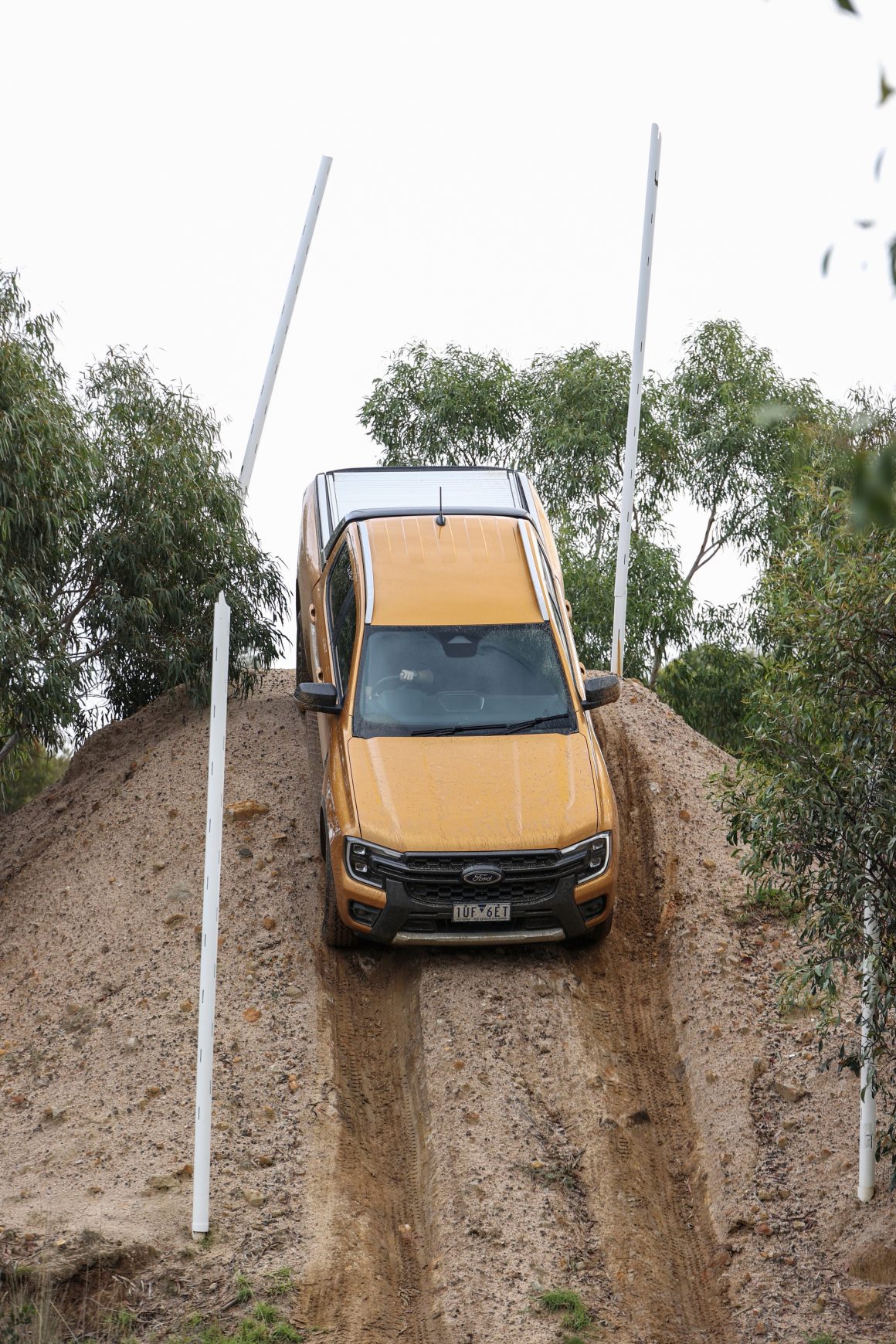
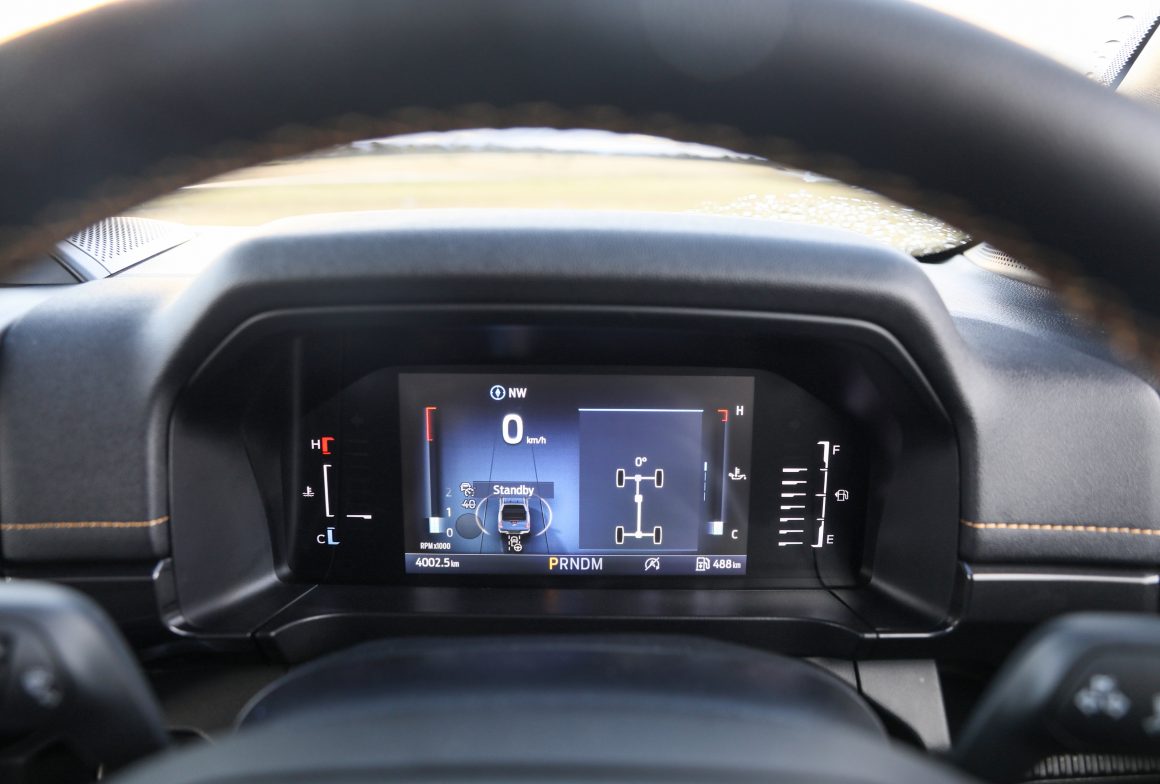
Off-road, the Ranger makes four-wheel driving feel like child’s play. A circular dial allows you to shift from 2WD to 4WD high and low range, while a series of modes adapt the drive to the terrain. You can specify mud and ruts, sand, snow etc and the 10 or 12-inch screen shows a wonderful image of the power being distributed to your wheels. It also highlights whether your rear diff is locked, by glowing orange. Hill descent control works brilliantly, as we tested it out on a 60-degree decline at the Anglesea Proving Ground. You can make the vehicle go faster or slower, by either pressing the accelerator or brake, or utilising the plus and minus buttons on the cruise control. It’s really just so simple and foolproof – and surely the most visually pleasing systems on the market.
Safe as houses
While many of the features (like Birds-Eye camera’s) are optional on the Ranger, safety is not optional. This is an admirable attempt by Ford to bring safety to the masses, no matter the bank balance. Hence, all models feature nine airbags, and features like Evasive steer assist, which provides steering assistance to help avoid a collision. There is also post-impact braking and rear cross-traffic alert standard across the range. Blind spot monitoring is also included, and it even recognises when a trailer is towed, and adapts to that too. The standard brake controller is a nice piece of work too. You can manually adjust gain, but you can also preset programme the dimensions of up to ten trailers. So if someone is unfamiliar with the adjustment of a certain trailer, they can simply dial in the specific trailer, and avoid flat-spotting their tyres while they work it out!
The Ranger Wildtrak features Matrix headlights, which recognise oncoming traffic, and shadow the oncoming car from high beam. This eliminates the need to dip your high beam, unless of course, you’ve fitted aftermarket spotlights.
Those into carrying big loads, will notice that the GCM has increased by 200 to 300kg depending on models.
Last words
The previous generation Ford Ranger was incredibly popular, but in the last year or so, competitors were hot on the heels with their new releases. With this latest generation, the competition has their work cut out for them. No matter where you look – safety, tech, engines, transmissions, off-road systems – the Ford is the clear winner. The biggest challenge you’ll have is getting your hands on a vehicle – particularly a WildTrak as they’re selling like hotcakes. The Raptor will be launched next month, so we’ll keep you posted on that launch as well.
THE SPECS
Engine – 3.0-litre turbo-diesel V6
Power – 184kW @ 3,250rpm
Torque – 600Nm @ 1,750rpm
Kerb weight – 2353kg
Payload – 997kg
Gross Vehicle Mass – 3350kg
Gross Combined Mass – 6400kg
Price – $70,190 + on roads