
Sure, he has an iconic track named after him, but Cecil Madigan was no one-trick pony!
Any 4wder and tourer worth their salt has at least heard of the infamous Madigan Line in the north of the Simpson Desert. It is one of those last remaining tracks here in Australia where you can truly be isolated and forging your own path. Where when the wind blows you have to rely on your navigational skills as the track disappears before your very eyes. We suspect that’s exactly how Mr Madigan would like it, being an explorer at heart as he was.
Born in Renmark in South Australia in 1889. Madigan was raised by his Mother after his Father passed away in the Kalgoorlie goldfields. The early loss never held him back, particularly when it came to academic endeavours. Madigan attended Adelaide High School and earned a Scholarship to continue his education at the University of Adelaide. There he received his Bachelor of Science degree in 1910. He studied mining engineering and geology but also had a keen interest in meteorology.
In 1911 Madigan had moved to England after winning a Rhodes scholarship. He had planned to study Meteorology, however, fate intervened. An Australian explorer by the name of (Sir) Douglas Mawson (you know, that bloke off the old $100 note) was also in the UK raising funds for an Antarctic expedition. After meeting with Madigan, Mawson appointed him to the party as Meteorologist. He’d be in charge of taking and setting up the equipment for the many meteorological readings that would be recorded daily. The Rhodes scholarship would have to wait.
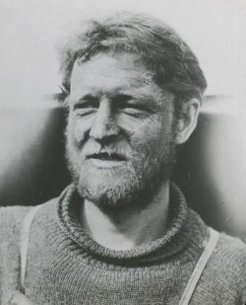
“Madigan found himself in a region of Antarctica known as Adelie Land”
By the Summer of 1912, Madigan found himself in a region of Antarctica known as Adelie Land. Here, what we now know as the “Mawson Huts” were established. After waiting out the winter and taking the detailed daily weather reports, the following summer was spent exploring. Four teams ventured off in differing directions. Mawson taking a team south, and Madigan led his sledging team to the east. They were out in the icy wasteland for three weeks. Each team returned safely to base having made some fairly significant discoveries. Including proof that Antarctica was home to coal reserves.
Things didn’t go so well for Mawson and his team, however. Mawson only just making it back to base after having lost one man down a bottomless crevice. Another succumbed to the cold and malnutrition. That Mawson actually made it back at all was nothing short of a miracle. It proved just how perilous life in the southern extremes was. Madigan was rewarded for his duty in the higher latitudes with the distinguished Polar Medal.
By 1914 the remaining member of the expedition were home. Madigan the exception, he had just started term one of his Oxford schooling. However, duty called. This time Mother England was calling her sons to war. Madigan once again deferred his education to serve King and country!
“That Mawson actually made it back at all was nothing short of a miracle”
Madigan served in the Royal Engineers, 76th Field Company, Guards Division, becoming a Captain in 1916. He served on the front lines in France and was wounded, and after recuperating went back to France in May 1916. After the war, he returned to Magdalen College, and completed his degrees. He took first-class honours in geology and won blue ribbons in rowing and boxing. In 1920 he went as assistant government geologist to Sudan. Here he first encountered deserts and the use of camels in geological field operations. It was an experience that would serve him well on his return home to Adelaide in 1922. Finally, with the cold of the Antarctic, and the war behind him, he took on the role of lecturer in the field of Geology at Adelaide University. A role he held onto until his death.
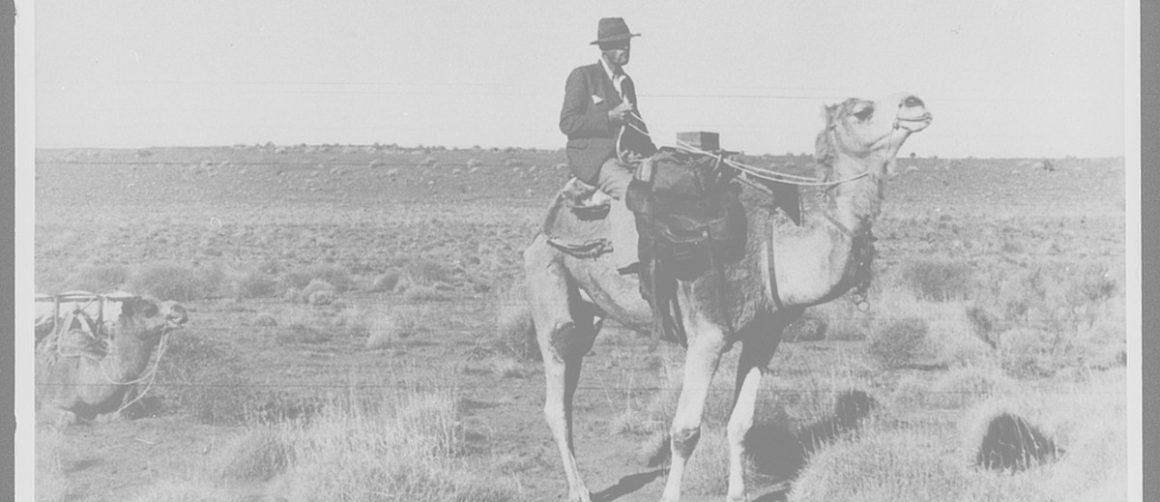
The 1920’s were an interesting time for exploration and geology. And that meant it was interesting times too, for Cecil Madigan. He spent a lot of time devoted to aerial geographical surveys throughout central Australia. Thus pioneering new techniques to cover the huge distances that the region commands. This led to Madigan developing a fascination with the area. Particularly Lake Eyre and the deserts to the north. By the 1930’s Madigan attention was further north again. Leading a team equipped with camels (as he had experienced in Sudan) through the West McDonnell Ranges, along with the James Range and Waterhouse Ranges, and had studied them geologically and established how they were formed. He also took the time to visit several meteor craters. One important specimen he discovered, the Huckitta Meteorite can still be seen today in the Adelaide Museum.
“This expedition was one of, if not the last great classic exploration expedition to be carried out in Australia”
In 1939, Madigan set out to explore an area he named the Simpson Desert. The name a tribute to the president of the South Australian branch of the Royal Geographical Society of Australasia. Alfred Allen Simpson. Madigan hypothesised that the trackless region was nothing but a barren wasteland. In the winter of 1939 his expedition set out to prove this. His team of nine, including a biologist, a botanist, a photographer and a radio operator, along with nineteen camels, made the perilous crossing from Andado station in the Northern Territory to Birdsville in just twenty-five days. It was a trek that did indeed prove Madigan’s previous conclusions that the area was a wasteland.
This expedition was one of, if not the last great classic exploration expedition to be carried out in Australia. Along the way Madigan and his team also pioneered the use of mobile radio communication. They even made national broadcasts along the way.
Madigan’s camps can still be visited today. But the traveller must be wary, the country has not changed a great deal since Madigan’s journey. It’s an undertaking for the experienced and well-prepared adventurer alike. It also happens to be one of the most rewarding undertakings anyone can do, passing through breathtakingly beautiful country. Its beauty only matched by its sheer untouched ruggedness.
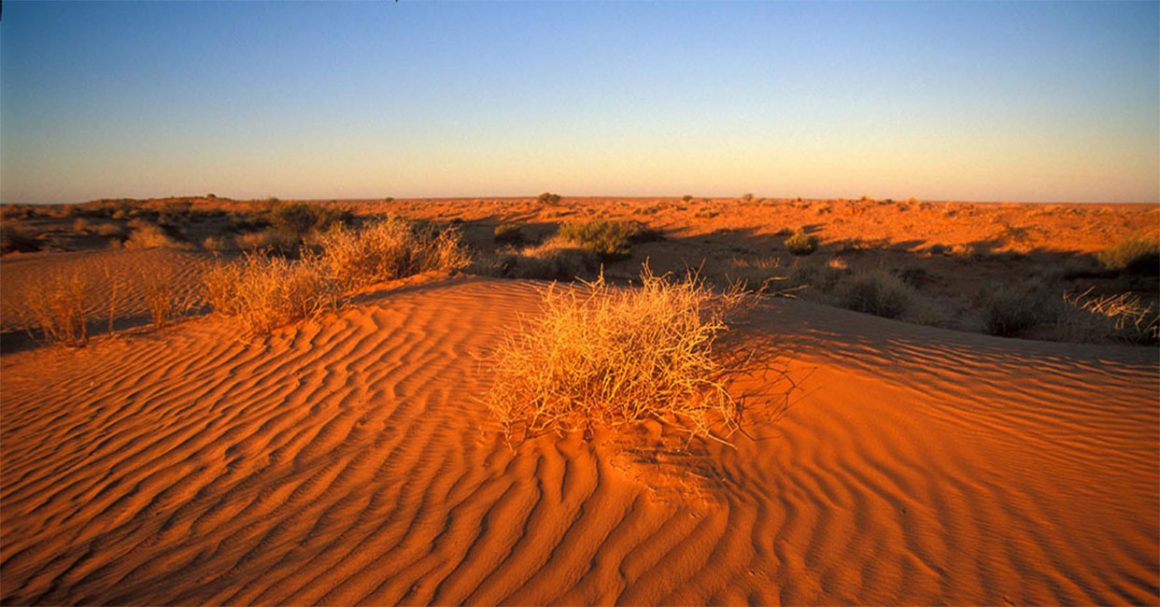
“We reckon it’s fair to say that Cecil Madigan is the epitome of the classic Australian “unsung hero””
Madigan’s legacy is so much more than we as 4WDers know him for – that bleak and lonely track snaking its way through the desert that he named. Madigan was a fellow of the Geological Society of London, president of the Royal Society of South Australia (1936), a council-member and its Verco medallist (1945), president of the geographical section of the Australian and New Zealand Association for the Advancement of Science (1937), and Clarke memorial lecturer to the Royal Society of New South Wales (1938). He received the Murchison grant of the Royal Geographical Society in 1941 and was a local councillor of the Royal Geographical Society of Australasia in 1939-46. He was State chief commissioner of the Boy Scouts’ Association from 1934 and also worked for the Legacy Club and the National Co-ordinating Council for Physical Fitness.
Madigan died in Adelaide of coronary vascular disease in January 1947 and was buried in Centennial Park cemetery. We reckon it’s fair to say that Cecil Madigan is the epitome of the classic Australian “unsung hero”, who contributed so much to his country through exploration, education, war and community. But perhaps our favourite is the one and only, the Madigan Line.