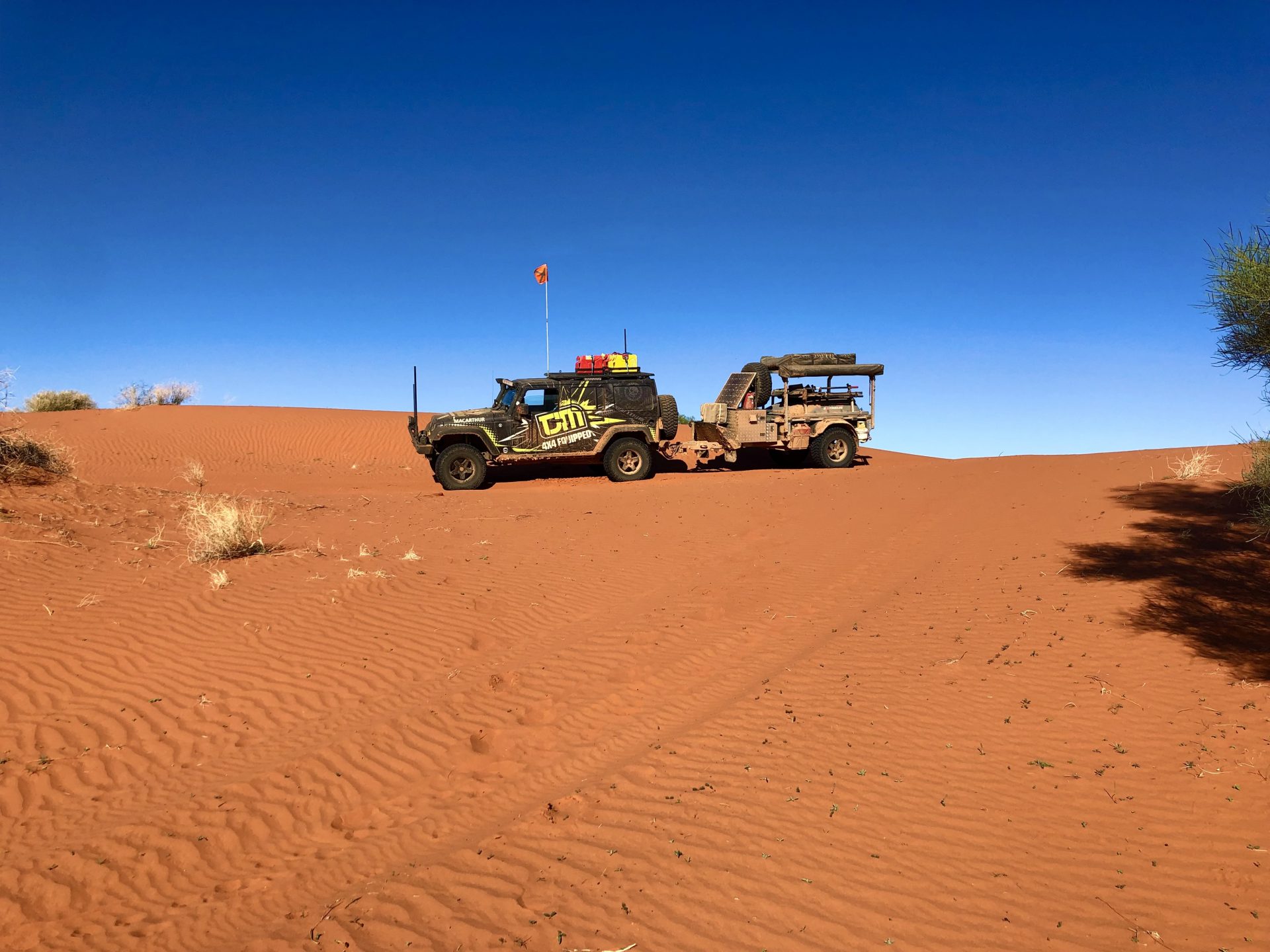
If you’re considering crossing the Simpson Desert with a trailer, you might want to read this first…! It might save you a lot of trouble.
So, you’re wanting to cross the Simpson Desert and you may be wondering if you can bring your camper trailer or some other type of trailer you have for a particular purpose. There could be many reasons you’re considering towing across the Simpson. You might not have enough space to bring the equipment and supplies for you and your family, you might want the comfort and convenience of a trailer, or you might already be travelling somewhere with a trailer and want to include a Simpson crossing in your journey.
There’s a good chance that if you turn to many of the online platforms for advice on the subject, you’ll be met with sternly worded replies about how you can’t tow in the Simpson, or that it should be illegal, how you’ll be stuck and destroy your gear, or that you’re an environmental vandal. Most people will tell you flat out no that you can’t tow across the desert, whether they’ve done it themselves or not. Some of these statements may be true, or partially true, but it all depends on the circumstances. The main reason behind the general suggestion not to tow in the desert is due to the track damage you can cause when getting stuck and digging holes climbing a dune, which can make the tracks quite rutted and unpleasant to drive. Another reason I believe is valid is the burden you can place on others in your convoy when you have to be recovered over and over or break down and have to be rescued. These reasons can also apply to a vehicle not towing though if they aren’t prepared or have their tyre pressures too high.
I’ve completed several Simpson Desert crossings, in several directions, and via several routes. Two of those crossings, I towed a camper trailer. Both trailer towing crossings were done in different vehicles, and towing a different trailer each time, and both were part of larger trips which made it necessary to bring the trailer along for the ride. From my experience crossing with and without towing, I can offer some points to consider that may help you make your decision on whether to bring that extra bit of kit!
Towing with a trailer will make your crossing more difficult than if it were just your vehicle, there’s no getting around this fact. This is because you’re dragging essentially a deadweight anchor in a low traction environment. When you need to climb a dune, more load is put on the four wheels driving the vehicle and can create a situation where you’re skipping and bouncing up the climb, or you just sink down to your axles. Once you’ve stopped forward momentum it’s then fairly likely you’ll need to reverse back down that dune you were trying to climb, which has an added level of difficulty with a trailer attached, so consider your reversing skills as part of the decision.
As with towing in general, but especially in rough terrain such as the desert, the ball weight of your trailer needs to be taken off your vehicle’s payload capacity. Having a fully-loaded vehicle, towing a trailer has been the cause of many chassis bends in the Simpson and other places you’re likely to hit the rough stuff. Some forward fold camper trailers can have a 200kg+ ball weight, so is the reduction of gear carrying capacity in your vehicle worth the tow?
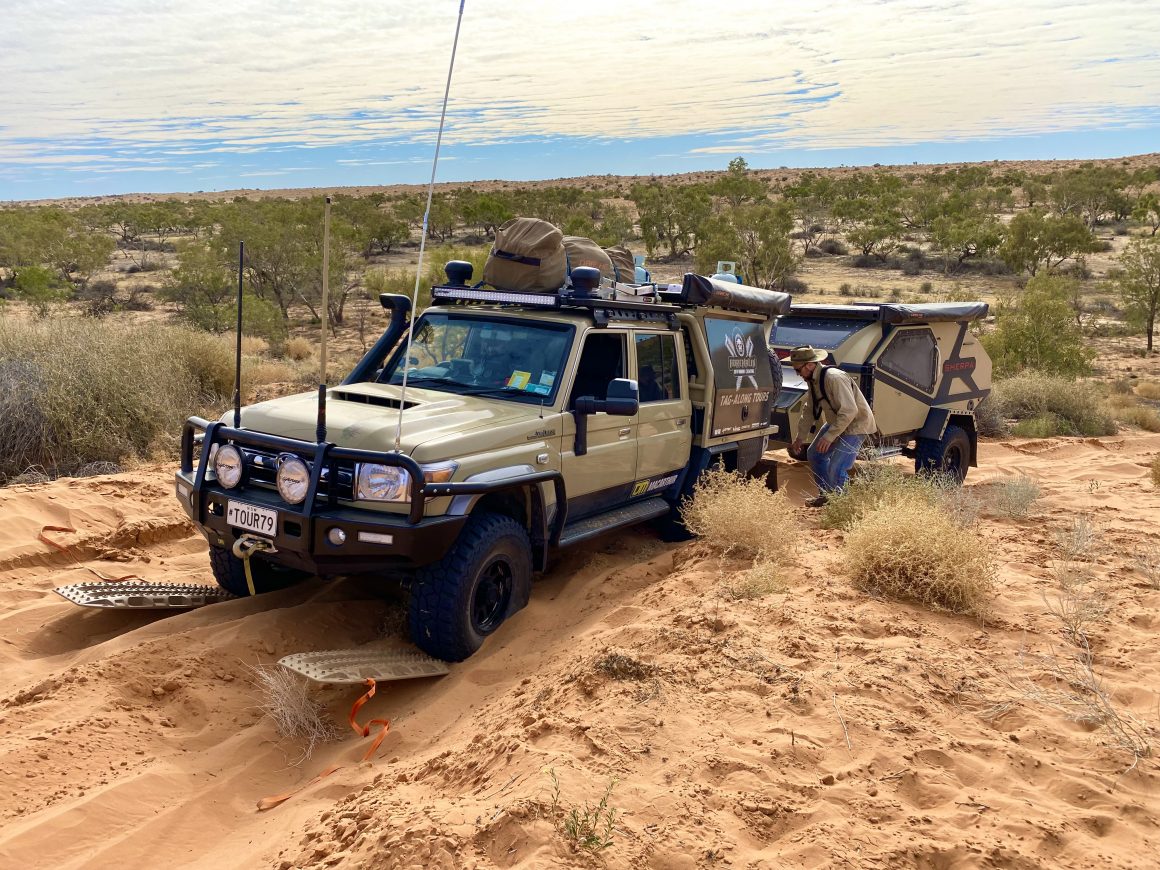
Towing is harder on your vehicle’s driveline. Aside from the weight considerations mentioned above, your entire driveline is going to be pushing harder to get that extra non-driven weight up and over each dune. For example, you’ll generate more heat in your engine and transmission. I’ve seen vehicles cook their automatic transmissions crossing under 10 dunes from Big Red, towing what looked to be a reasonably sized trailer.
You will use more fuel towing in the sand. Sand driving is already thirsty on the old fuel consumption figures, so do you have the extra fuel capacity to cross the Simpson with that trailer? When we’re planning a sand crossing, we typically budget for around double the fuel usage we would normally get when driving on the road. This is more than you need but builds in a nice safety buffer.
Is your trailer up to the task? Many trailers, including those with an ‘off-road rating’ simply will not stand up to the punishment of a Simpson Desert crossing and come out the other side in one piece. Even if your trailer has all the good gear on it, is it simply too heavy to make the crossing? Both trailers I have towed across the desert were under 1000kg, ran 35” tyres, had good quality suspension, and were quality Australian built trailers. Consider the setup and pack up time of your trailer as well, as you will be setting up your trailer at the end of each day’s travel and packing it up again in the morning before the flies get to you! Other than potentially at Dalhousie springs, there’s really no reason anyone would spend more than one night in the same location in the Simpson.
Recovery of vehicles and equipment from the desert is an expensive exercise once it becomes beyond the capability of you and your convoy. A recovery from Mt Dare or Birdsville can be anywhere up to $10,000 depending on how far in you are and the nature of the recovery. This can happen without a trailer as well, but as with all the challenges in the Simpson, towing a trailer adds to the risk.
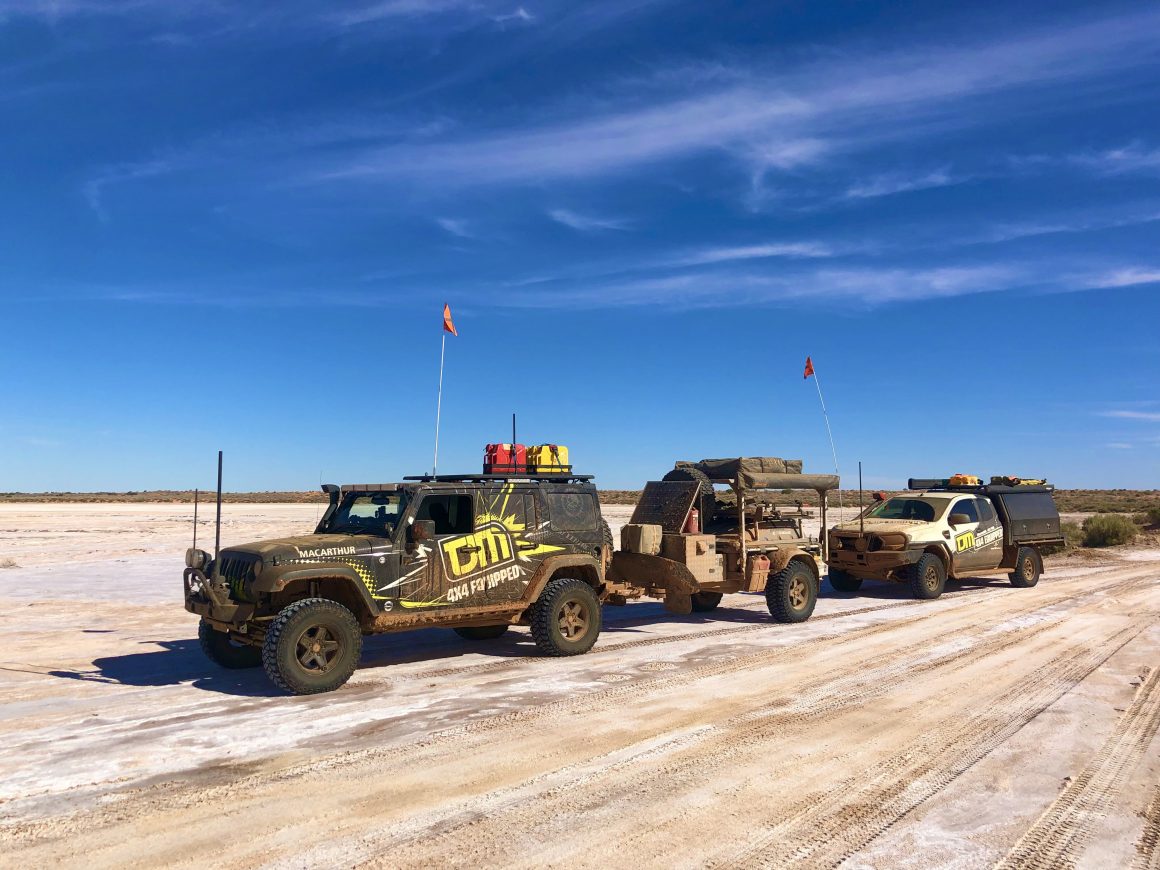
There are around 1100 sand dunes in the Simpson if you’re crossing East to West or West to East. Consider this in the time, food, and water supplies you’re allowing for your trip then factored in some recovery time if you’re going with others, and even more recovery time if you’re going on your own.
Finally, if it’s your first Simpson Desert crossing, my suggestion would be not to tow, go see what it’s like so you can make the judgement based on first-hand information on the trip you want to tow on down the line. If you still want to tow and believe you have the right kit to do it, here’s some advice that might help you along the way.
- Lower your tyre pressures! – All of them, including the trailer. Getting that extra footprint with the trailer will help it roll along the top of the sand the same way it helps your car’s tyres.
- Go with someone not towing – and have them in front of you for quick recovery when you get stuck. Make sure they’re patient because they’ll probably be recovering you a lot!
- Avoid the bounce – Whilst it may be tempting to try and get some momentum to get up that rough-looking sand dune, you’re far better off climbing as slow as you can get away with, than feeding the power if you feel the car start to lose momentum. Bouncing your way up sand dunes is a sure-fire way to bend tow bars and cause damage to the vehicle, trailer, and track for those behind you.
- Consider your route – The easiest crossing of the Simpson is West to East on the French Line, due to the shape of the dunes. If you’re planning on towing, this would be the pick of routes.
- Secure everything – remove anything likely to flex continually and break, like racks or other external attachments. Don’t take your boat on top of your trailer, there’s just no need for it.
- Put your trailer on a diet before the trip – Take anything off or out of it that you won’t need on the trip. The lighter the trailer, the less it will impact your travel.
- Maintenance – Make sure your trailer is in good working order before you leave, just as you do for your car. Check bearings and bushes, couplings, latches, and suspension components, because everything is about to get a workout! Bring spare wheel bearings if you know how to change one on the track.
- Check over your trailer at regular intervals. I make a habit of walking around and looking under my trailer just about every time I stop in the desert so that I can get on top of anything that may have started to work its way loose to ensure it doesn’t break off and get left in the desert.
And the golden question, would I tow across the desert again? If I don’t have to, I certainly won’t. It’s one less thing to worry about and makes for a much easier crossing without a trailer with less wear and tear on my gear.