

When it comes to poisonous snakes in Australia, their reputations are more myth than reality. We try to set the record straight.
Australia tops the list of countries for having the most dangerous animals. Up near the top of this list are snakes. There are about 170 species of terrestrial snakes and 32 seas snakes. Of these snakes, 104 are venomous, 40 to humans, but only 12 are likely to inflict a bite that could kill you. We are fortunate here in Australia to have a very effective first aid treatment for snake bites. On average, we see 3000 snake bites a year, with an estimated 300 lives saved by antivenom. We have an antivenom program thanks to The Australian Reptile Parks venom milking program, which has been running since the 1950s and continues to be the sole provider of snake venom in this country. Due to this program, Australia only sees an average of 2-3 deaths per year from snake bites.
Most species during our winter months in the cooler climates of Australia will become inactive. The duration of inactivity depends on the species and where they live. Some snakes like the Tiger Snake and Copperhead are tolerant of colder conditions, so they may still be active during the cooler months. Most snakes are more active during the warmer months, and this is when you are more likely to encounter a snake. Snakes could be active all year round in the warmer climate of northern Australia. Some snakes like the Inland Taipan are more active during winter as the summer temperatures where these snakes live are extreme. The Coastal Taipans are active all year round. They are more likely to be out and about for longer during the cooler months as it takes them longer to warm up. Summer usually only sees them more active during the mornings and afternoons, avoiding the midday warmer temperatures. So, it pays to be snake aware all year round.
Snakes can’t hear the way we do. Instead, they pick up on sound vibrations. Most snakes will sense you coming and retreat for cover before you even see them. However, this is not true for all snakes all of the time. Some snakes will stay still, relying on their camouflage and the ability to remain perfectly still to avoid being noticed by a predator. Death Adders are an excellent example of this. As ambush predators, they remain still waiting on their prey to come to them. A Death Adder is a snake you are more likely to stand on when out bushwalking. By wearing sturdy boots and long pants, you reduce the risk of a bite penetrating your skin, as the fang length of our venomous snakes will struggle to get through.
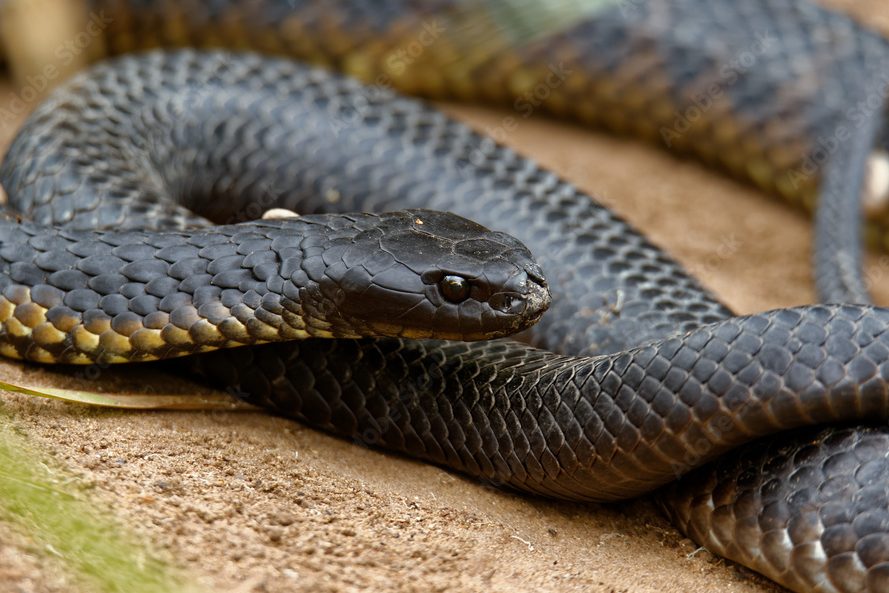
Ever seen a snake, gone to get someone to show them your discovery only to find it’s gone when you come back. The snake has taken the first opportunity to retreat to safety. To a snake, we are a predator. Snakes aren’t out there to kill us, and they will not chase you down to envenomate you. A snake that feels trapped or threatened will defend itself. A snake feeling threatened will usually display some warning signs. Some snakes will rear up, lifting the front portion of their body off the ground. Species like the Red Bellied Black, Tiger, and King Brown/Mulga snake will flatten their neck, making them appear larger. Other snakes like the Eastern Brown or Taipans like to open their mouths to intimidate the predator. If the predator hasn’t backed away and the snake still feels threatened, it may try mock strikes or lunges. These behaviours can also lead to what snake handlers refer to as offensive advancing. We’ve all heard stories of people claiming to have been chased by a snake, and if a snake came towards me, I would probably feel the same way. Snake handlers want people to understand that the snake is not chasing you. The snake is trying to warn you off so they can get to cover or until they feel safe. If you come across a snake, the best thing you can do is remain calm and give the snake plenty of space. If you find yourself too close to a snake, stand very still and wait for the snake to move on and when it’s safe to do so, slowly move away.
We should all have in our first aid kits a compression bandage. The newer indicator bandages make it very easy to get the correct tension. When a snake bites you, the venom enters your lymphatic system. The venom can only enter your bloodstream when it gets to your lymph nodes. The closest lymph nodes to your limbs are in your armpits or groin. A compression bandage slows down the flow of the lymphatic fluid. Should you get bitten by a snake, you need to remain calm and stay still. Call 000. Don’t attempt to drive yourself to a hospital. Keeping your heart rate and movement down and the application of a compression bandage buys you time. Do not cut or suck the bite site, and do not apply a tourniquet. Wrap your compression bandage three times around the bite site, then wrap the rest of the entire limb, leaving the fingertips or toes exposed. Immobilise the limb by applying a splint. Don’t worry about identifying the snake. The hospital can take swabs of the bite and blood tests to work out which antivenom you require. Assume all snake bites are venomous, don’t wait for symptoms.
Many of us out there are afraid of snakes. There are many myths out there that fuel our fear. Hopefully, I’ve helped to dispel a few of those and make you think of snakes a little differently. Snakes play an essential role in our ecosystem, just like all our flora and fauna. Remember that they want nothing to do with us, so respect their space and enjoy the great outdoors.
Shelley Lord
Dispelling Myths with some Facts
- Snakes don’t protect their young. The mother leaves soon after laying her eggs or giving birth to live young; except for a carpet python, who will coil around her eggs.
- The Coastal Taipan has the largest fangs of any Australian Venomous Snake, up to 13mm.
- The Death Adder is the fastest striking Australian Venomous snake.
- Australia’s largest venomous snake is the King Brown/Mulga Snake, reaching 2-2.5m and weighing 3-6kg.
- King Brown/Mulga Snake is part of the Black Snake Family.
- The Eastern Brown Snake attributes to the most bites/deaths in Australia.
- The Eastern Browns fangs are very short, at only 3mm.
- Horses and Cattle cause the most animal-related deaths in Australia.
- The Inland Taipan, also known as the Fierce Snake, becomes a darker colour in winter and lighter colour in summer.
- Snakes are Not territorial. They do have a home range.
- Black Snakes don’t keep brown snakes away. Black Snakes and Brown Snakes prefer different habitats and different food sources.