




There was a line dropped over the weekend that cut straight through the usual corporate PR fluff. Ford CEO Jim Farley, speaking during the Australian Grand Prix in Melbourne, warned that the engineering team behind the Ford Ranger could move overseas if conditions here continue to become harder for manufacturers to operate.
And then he followed it up with a quote that raised more than a few eyebrows. Australia, he said, has to decide whether it wants to keep engineers… or become “a nation of hairdressers and bankers”. It’s a blunt way of putting it. But it also touches on a much bigger question about where Australia sits in the global automotive industry today.
Because despite the closure of local car manufacturing nearly a decade ago, Australia still plays a surprisingly important role in the development of one of the most important vehicles in the world. The Ford Ranger.
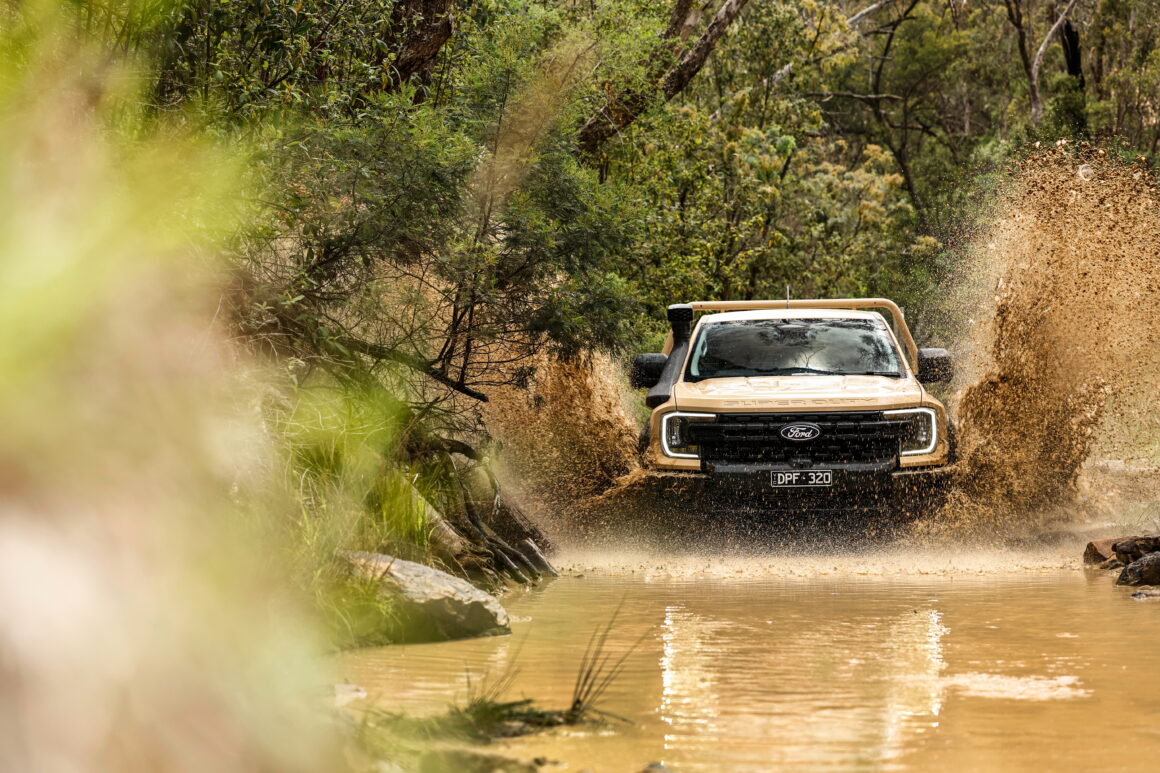
The Ranger Is More Australian Than You Think
While Rangers are built in Thailand and sold all over the planet, much of the engineering and development happens right here in Australia. Ford’s engineering hub at Broadmeadows in Melbourne has been responsible for shaping not just the Ranger, but the Everest as well. It’s also played a key role in vehicles like the Ranger Raptor and even contributed to programs like the Bronco.
In other words, Australia didn’t just lose the factories when local manufacturing shut down. We kept something arguably just as valuable, the brains behind the vehicles.
That engineering base has helped turn the Ranger into one of the most successful dual-cab utes on the planet. It’s not just a local favourite either. The Ranger now sells in markets across Europe, Asia and North America, and it’s become one of Ford’s most important global products.
Here at home, the Ranger has also become the country’s best-selling vehicle. The Everest dominates its segment too. Together, those two vehicles accounted for nearly 90 per cent of Ford Australia’s sales last year. That’s an extraordinary level of reliance on a pair of vehicles largely shaped by Australian engineers.
Why Australia Became A Ute Engineering Powerhouse
There’s a reason companies like Ford have historically trusted Australian teams to develop tough vehicles. Australia is basically the world’s harshest test lab for dual-cab utes. Long distances, high temperatures, rough corrugations, remote touring, heavy towing, it’s the sort of environment that quickly exposes weaknesses in a vehicle.
Design a ute that survives Australian conditions and there’s a good chance it’ll handle just about anything the rest of the world throws at it. That’s why Australian engineering teams have played such a major role in shaping vehicles like the Ranger. Our conditions force manufacturers to design for durability, load carrying and long-distance reliability.
And as anyone who’s spent time touring knows, those things matter.
The Global Competition Is Heating Up
But the global market is changing rapidly. Chinese manufacturers are pouring enormous resources into the dual-cab segment. Models like the BYD Shark and GWM Cannon Alpha are already entering markets traditionally dominated by Japanese and American brands. More competitors means more pressure on development costs, speed and innovation.
From a global manufacturer’s perspective, engineering work can theoretically be done anywhere. If one country becomes too expensive or too complicated to operate in, that work can shift somewhere else. Farley made that point fairly directly. The engineering capability that currently exists in Australia, he said, could just as easily be moved to other countries like Vietnam or China.

A Bigger Question For Australia
This isn’t just about Ford. It touches on a broader question Australia has been grappling with ever since the last locally manufactured Holden and Falcon rolled off the production lines. What role does this country actually want to play in the automotive industry?
Australia still has world-class engineers. The success of the Ranger program proves that. But maintaining that capability requires investment, support and a business environment that makes it viable for global companies to keep that work here. Otherwise the risk is simple. The expertise leaves. Once engineering programs move overseas they rarely come back, because the entire ecosystem of suppliers, knowledge and talent tends to move with them.
Why It Matters
For most Australians, the idea of vehicle engineering shifting offshore might feel like an abstract industry story, but it has real implications. When vehicles like the Ranger are developed here, they’re shaped by Australian conditions and Australian use cases. Towing caravans across the Nullarbor. Touring remote tracks. Surviving brutal corrugated outback roads. Local engineers understand those demands because they live them.
Lose that connection and the centre of gravity shifts elsewhere.
The Ranger will still exist, of course. It’s far too important globally for that to change anytime soon. But the question Ford’s CEO raised is a fair one. Does Australia want to remain a place that designs and engineers complex machines? Or are we comfortable leaving that work to other countries and getting what we’re given?


4 comments
Yes we need to increase production of many products in Australia.
Unfortunately company greed and investor profits has directed most things to be made overseas now.
The Australian caravan industry will be next if people don’t support, buy Australian, and walk away from the Chinese imports.
This has nothing to do with manufacturing in Australia, remember midway through the development of the Next Gen Ranger, Ford US retrenched all of the Ford Australian Powertrain & PTSE teams, and brought the work back to the US when Trump was last in Government. It has everything to do with Ford of US getting its hands on all the development money which is paid by all the countries that sell the Ranger globally., now that they sell over 600, 000 Rangers ! Ford US didn’t want this platform back at the start of PX , they don’t understand the global market full stop. When are the Ford Family going to wake up and get rid of Farley who came from Toyota in US.
Ford & GM took almost $1billion from the Federal Govt to remain here then ran back to the US. The article didn’t state the reasons why Farley said that or what he wanted to see implemented..
This article asks if we want to Engineer things, well the answer is yes and there are so many examples out there covering so many Engineering disciplines from civil, to electronics.
But it suggests Ranger Engineering moving, so what is the threat that has Ford looking (if they are) to move?