



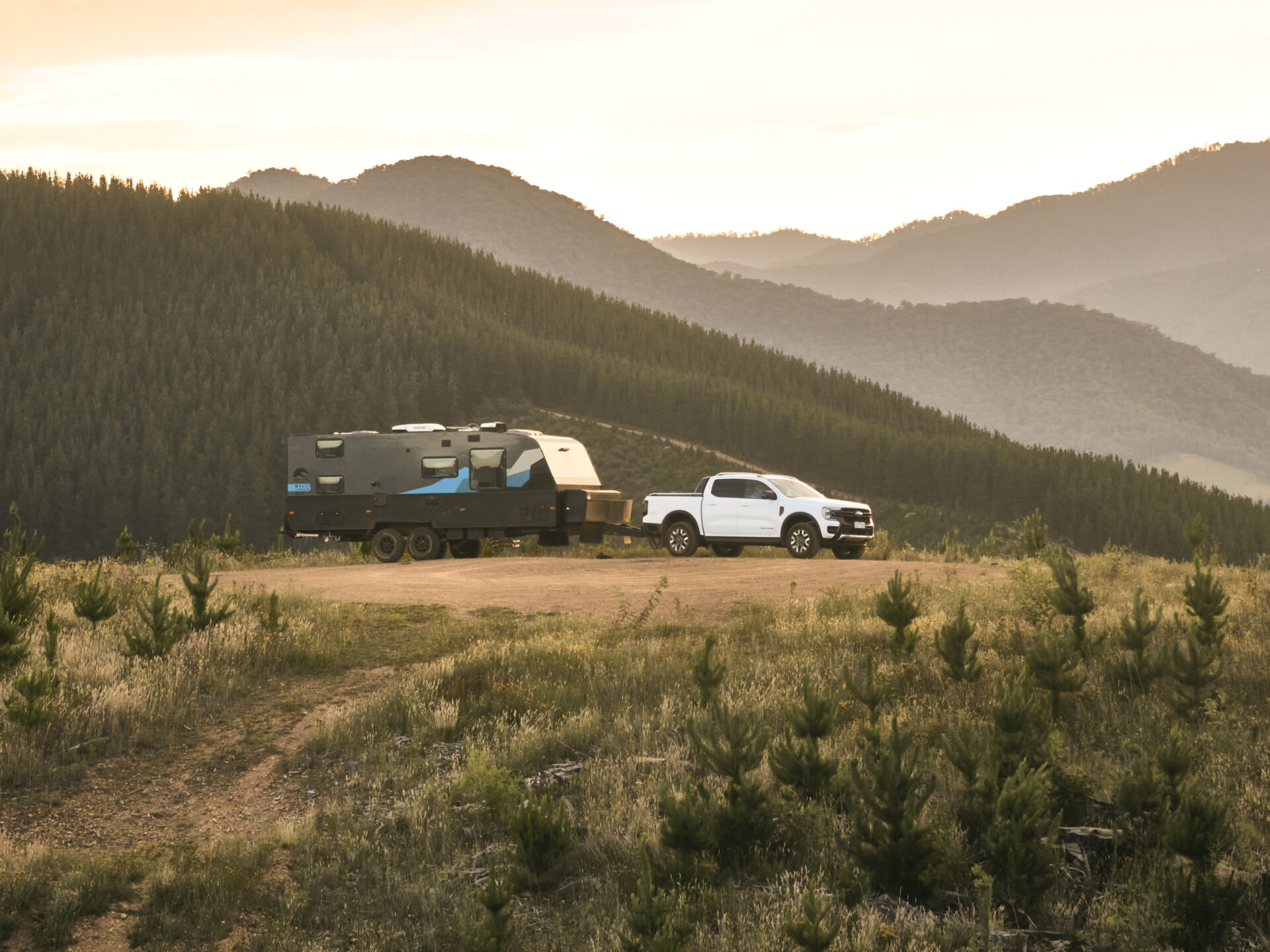
If you’ve camped anywhere popular over Christmas or Easter, you’ve probably felt it. That low-level tension when you roll into a spot expecting a chance at a riverbank camp, only to find the whole frontage blocked out. Not tents. Not campfires. Just caravans parked nose-to-tail, nobody around.
That’s exactly what sparked the latest debate along the Murray River at Davis Beach near Tocumwal. Footage doing the rounds shows a row of unattended caravans sitting in absolute A-grade positions, with travellers questioning whether those sites were actually being used, or simply held for later.
This isn’t about whether people are allowed to camp for long periods. It’s about what camping means. Traditionally, camping has implied presence, you’re there, you’re set up, you’re part of the shared environment. Once a campsite becomes something you can reserve by parking a van weeks early and leaving it empty, the whole dynamic shifts.
So the real question isn’t “is it legal?”. It’s whether this is how public camping was ever meant to work.
What the rules say, and what they don’t
On paper, this one isn’t black and white. Parks Victoria allows extended stays along parts of the Murray, with a maximum camping period of up to six weeks. That’s generous by Australian standards and reflects how heavily these areas are used during peak seasons.
But rules written for extended stays weren’t designed with unattended camps in mind. They assume someone is actually living there, not just storing a caravan as a placeholder. That’s where the spirit of the rules starts to clash with how they’re being used.
At the same time, Goulburn-Murray Water has made it clear that reserving public foreshore for exclusive use isn’t permitted. That applies to gazebos, pontoons, structures, and arguably anything left behind to prevent others accessing shared space.
The result is a grey zone. One authority says extended camping is allowed. Another says reserving space isn’t. Campers are left guessing, and frustration fills the gap where clarity should be.
Courtesy vs entitlement on the riverbank
This is where the conversation gets uncomfortable, because most of us know the difference between legal and reasonable. Parking a van early and staying put is one thing. Parking it early, leaving for days or weeks, and expecting the spot to remain untouched is another.
Free camping has always relied on a shared understanding. Take your turn, don’t overstay your welcome, and don’t lock others out. Once entitlement creeps in, that unwritten agreement starts to crumble.
For families travelling full-time, day trippers just wanting a swim, or 4X4ers chasing a night or two by the river, empty caravans blocking access don’t feel like camping, they feel like exclusion. And when enough people feel excluded, the pressure builds for enforcement, bookings, fees, and fences.
We’ve seen this pattern before. Popular spots don’t get shut down because of numbers alone. They get regulated because behaviour forces management’s hand. That’s the part worth paying attention to.
Where do we draw the line?
Nobody wants more rules. Nobody wants rangers policing camps like a caravan park. But doing nothing isn’t neutral either, it quietly shifts public land toward whoever dumps their caravan there early, whether they’re present or not.
So maybe the better question is this: should a campsite only count as “in use” if someone is actually using it?
That doesn’t mean banning long stays. It doesn’t mean rushing people through. It simply means recognising that public space works best when access stays fluid and shared, especially during peak periods.
If we want free camping to survive in places like the Murray, the solution probably isn’t tighter legislation, it’s better behaviour before someone else steps in to enforce it for us.
So what do you reckon?
Is leaving a caravan unattended fair enough?
Or has that crossed a line that puts public camping at risk long-term?


8 comments
Don’t think there should be any question about it – every campsite should be attended to be considered taken!
Like most things, the pre positioning of a van on the river bank or other prime position would have started with just one or two doing it. This then leads to others not wanting to miss out, so they do the same thing. Quite quickly you have all the spots pre taken for when the holidays arrive to the exclusion of everyone else.
You hit the nail on the head in your article where this behaviour, if it continues, will most likely lead to length of stay being mandated and then policed, and who wants current free campsites to change because of the actions of a few selfish people.
Perhaps as suggested, if you’re actually camping, then you’re actually staying in your van. If you are not staying in your van then you should move out of the way and stop being inconsiderate of others and take a few moments to understand what free camping is all about.
As a local of the murray River. I was fishing cod opening weekend at the start of December this year, and saw Weiss beach at Tocumwal with 10+ caravan lined up on the beach front. This beach is only a short distance down stream from Davis Beach..
One of the 10+ caravan was occupied.
Time and time again I hear same story that peopel book blocks ofdays or weeks and never use them as they only pay for what they use and seems many doing wrong thing, I been thinking of buying a van and touring, but most say there is a seriuos problem about finding camp sites and turn up and no sites and booking is difficult becuase its hard to work out how long it takes to get to point A to point B and it seems you need to book months or weeks in adance and while touringnit supposed to be relaxing but the stress of being somewhere trying to plan a camp spot in the future is near impossible as we may travel each day we come accross areas and spots like to stay for extra time or dont like it and move on, obviousley its a seriuos problem booking so far ahead , madness and we hearing so many problems It may not be worth investing in a van or camper to be hassled with pre booked site and getting there on the day.. really makes it hard, old way of 1st in 1st served or booking day before is far better not weeks or months ahead
A slightly different perspective from a motorhome owner… We sometimes find our campsite for the night earlier in the day and like to indicate we will be back that same day after going exploring in our only vehicle. (Same would apply for car campers too)
Quite different from “reserving a site” for days or more in advance before actually sleeping there.
Have experienced the same thing in WA at a place just outside of Collie called Lake Kapwari . People book in advance and then don’t show up or show up and move because they didn’t like their camp site and take some one else’s, yes it gets interesting. The only thing that improved it was now you pay.
This type of behaviour is unacceptable as Australians. A fair go mate. That’s not fair, that’s sending businesses broke just so that these people can book in advance and use the site or not. Make them pay and see what happens.
I know how to fix this problem but I’d rather not say it, they wouldn’t do it again.