
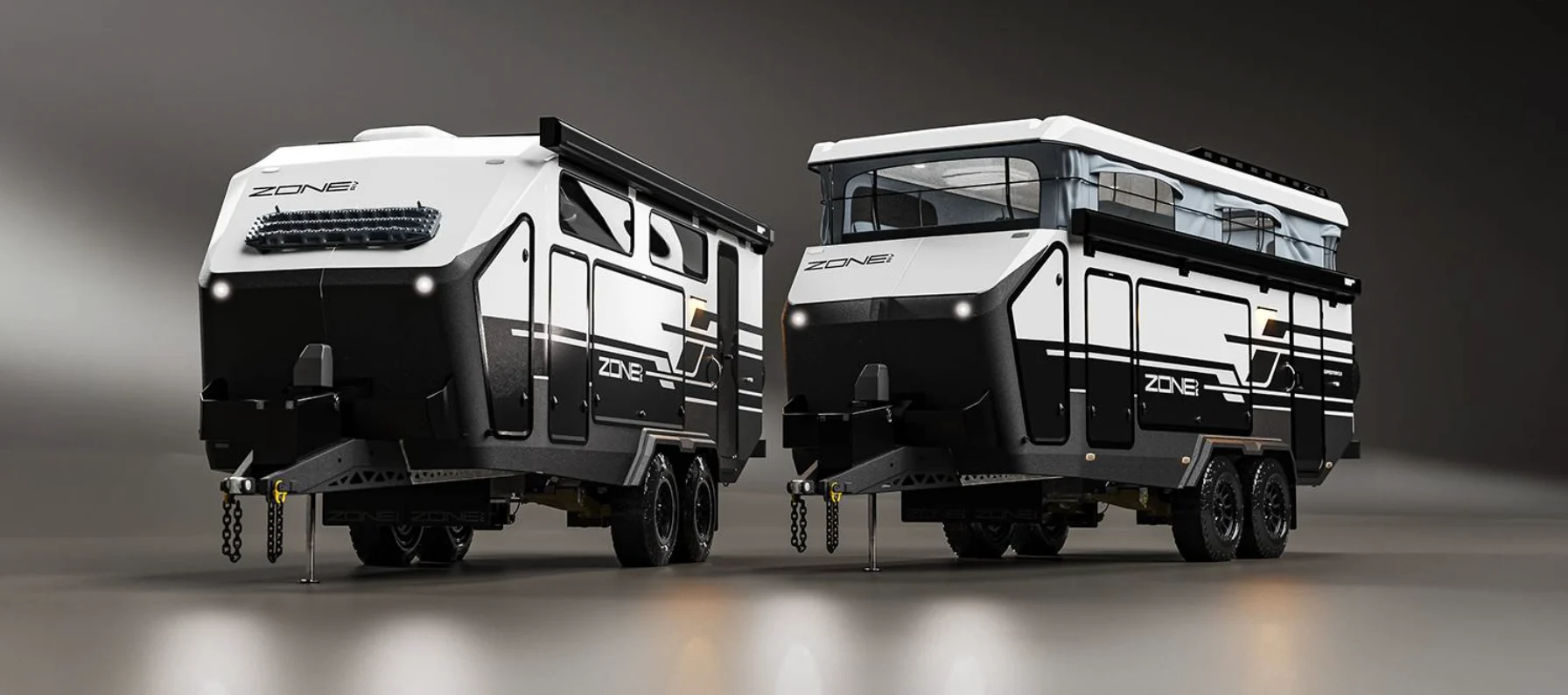
The collapse of Zone RV sent a shockwave through the touring community late last year. Now there’s a new chapter. Melbourne-based Essential Caravans has officially purchased the assets of the failed Sunshine Coast luxury van builder, with production set to continue from the Coolum factory. On paper, that sounds like a rescue story. Jobs are largely saved. Vans will keep rolling out the door. The brand survives.
But for more than 100 customers who had collectively paid around $10 million in progress payments for vans that were never delivered, it’s a far more complicated ending. And if you’re in the market for a new off-road caravan, this is one of those moments worth paying attention to.

What Actually Happened
Zone RV went into administration in December owing creditors around $42 million. By January, it had moved into liquidation. Customers who had made staged progress payments, in some cases exceeding $150,000, suddenly found themselves unsecured creditors in a business that no longer existed in its previous form.
That unsecured creditor status is critical. In a liquidation scenario, banks and secured lenders are paid first. Employees come next. Customers sit at the back of the queue alongside suppliers. Historically, that often means recovering very little.
The sale to Essential Caravans, reportedly worth about $8 million, allows the factory to continue operating and vans to keep being built. However, the new owner has made it clear he cannot absorb the debts owed to previous customers.
Essential has said it will offer affected buyers the chance to purchase new vans at cost price. For some customers who only paid small deposits, that may represent a discount opportunity. For others who paid significant progress instalments, it means finding another substantial sum to secure a caravan they effectively already funded once.
It’s a tough pill to swallow.
A Shift In Payment Structure
One of the more significant changes announced by Essential is the scrapping of Zone RV’s former progress payment model.
Under the old structure, customers paid a 5 per cent deposit, followed by large instalments during construction, with the final 20 per cent due at completion. That system places considerable cashflow reliance on future builds and customer money.
Going forward, Essential says it will move to a more traditional 10 per cent deposit with no further payments required until the van is ready for delivery.
That’s a meaningful change. It reduces the financial exposure for buyers during the build process and signals a more conservative operating model. In an industry that experienced explosive growth during the COVID travel boom, a more cautious approach may be exactly what’s needed.
Liquidator Investigation Continues
Cor Cordis, the appointed liquidator, will now focus its attention on investigating alleged insolvent trading by former Zone RV director David Biggar. Allegations have been reported to ASIC, and further creditor updates are expected in coming months.
While the sale preserves the manufacturing operation, the legal and financial aftermath is far from resolved.
The liquidator has defended the strategy of keeping a skeleton workforce operating after the collapse, overseeing the completion of more than 40 vans and reducing the creditor shortfall by several million dollars. That decision likely improved the attractiveness of the business to potential buyers.
Still, it doesn’t undo the losses faced by many customers.
The Bigger Picture For Touring Australia
The broader caravan market is still adjusting after the post-pandemic surge. Demand spiked, order books stretched well beyond a year in some cases, and manufacturers expanded quickly to keep pace. Rising material costs, labour pressures and cooling demand have since tightened margins across the sector.
The Zone RV situation highlights how exposed customers can be when large progress payments are tied up in long build times.
For buyers, it reinforces a simple reality: ordering a custom off-road caravan isn’t just an exciting touring decision, it’s a significant financial commitment. Understanding deposit structures, build timelines and company stability matters as much as suspension specs and lithium capacity.
The caravan industry remains strong overall, and many manufacturers continue to operate responsibly and profitably. But this episode will likely encourage both businesses and customers to rethink how deals are structured.
Touring across Australia has never been more popular. That appetite isn’t fading anytime soon. What may change is how carefully buyers assess where their money goes before the first wheel even hits the dirt.


