




There is a certain anxiety that comes with switching up a critical part of your camping setup. We are creatures of habit. We like our diesel tanks full, our tyres muddy, and our showers hot. For years, gas has been the go-to for heating water in the bush. It is reliable, familiar, and easy to understand. But as rigs get more advanced and lithium battery tech becomes the norm, the shift to all-electric systems is gaining serious momentum.
The big question everyone asks is about capacity. Specifically, can a compact electric unit really do the job? We have spent the last couple of years running a 10-litre Aus J hot water system to see if the numbers stack up in the real world. The unit in question is the Duoetto, a 12V/240V system that looks deceptively small. On paper, 10 litres sounds like nothing.
But the reality of living with this system has taught us that looking at the raw litre count is the wrong way to calculate comfort. It turns out, you don’t need a 44-gallon drum of boiling water to get clean after a day on the tracks. You just need to understand the physics of the mix.

The maths behind the shower
When you look at a brochure and see “10L capacity,” it is easy to dismiss it. Most people assume that means you have ten litres of water to shower with. If that were true, you would barely get your hair wet. The trick lies in the temperature. These units heat that ten litres to a properly high temperature. You aren’t showering in that water directly unless you want third-degree burns.
You are mixing that super-heated water with ambient cold water from your main tank. This is where the magic happens. By the time you temper that hot water down to a comfortable 38 or 40 degrees for a shower, your usable volume has effectively doubled. Suddenly, that 10-litre tank is delivering 20 litres or more of warm shower water.
In our experience, that is plenty for two people to have a decent scrub, or three if you are being conservative. If you are using a water-saving shower head (which you should be doing in the bush anyway), the range extends even further. We found that the anxiety about running out of hot water disappeared pretty quickly once we adjusted to the rhythm of the system.
Does 12V heating kill your batteries?
The second biggest objection to electric hot water is the power draw. Old school 12V thinking suggests that heating elements are the enemy of batteries. It is a fair concern. Heating water takes a lot of energy. A 12V element draws a significant amount of amps. If you stare at your battery monitor while it is heating, you might get a fright seeing it pull 25 amps.
But you have to look at the duration, not just the instant draw. A 12V fridge might only draw 3 or 4 amps, but it does so 24 hours a day, cycling on and off constantly. The hot water system pulls hard, but it finishes the job quickly. To heat the tank for showers, it might run for an hour. Once the water is hot, the insulation keeps it there for a long time.
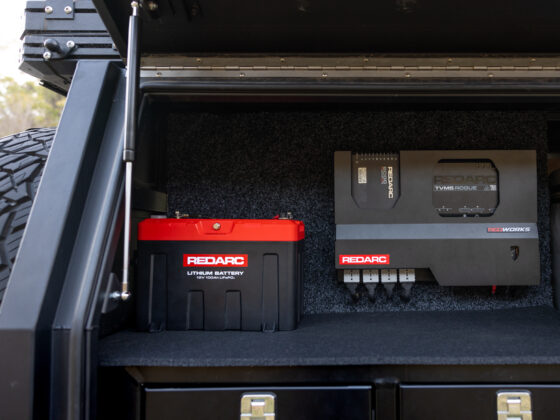
We found the daily consumption was surprisingly manageable. With a modern lithium setup and a decent solar array on the roof, the energy budget balances out easily. You aren’t running this thing all day. You heat it, you use it, and you let the solar top you back up. It is a sprint, not a marathon. The alternator also does the heavy lifting if you heat the water while driving to camp. By the time you pull up the handbrake, the water is already hot.
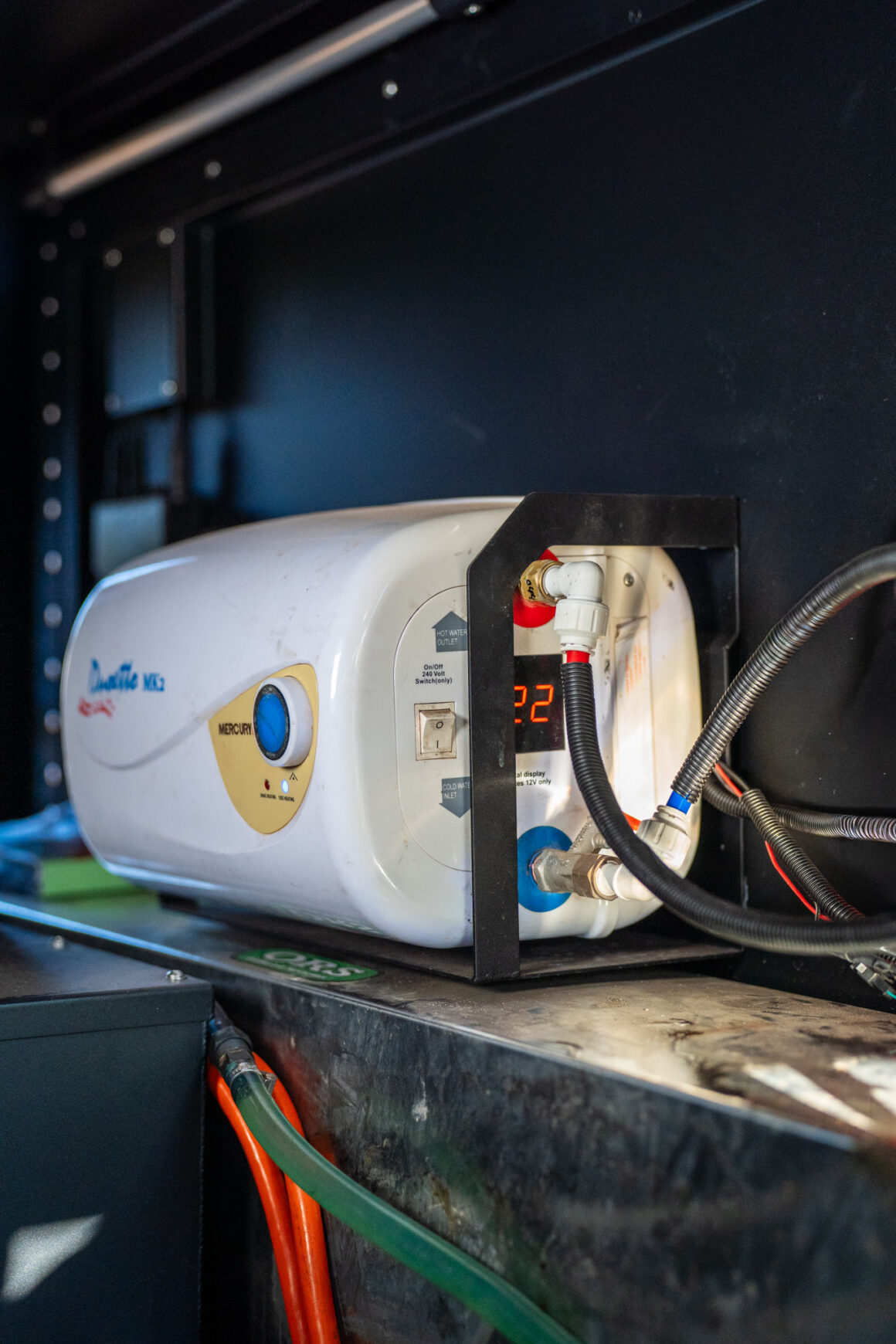
Ditching the gas bottle
One of the most underrated benefits we found over the last two years is the simplicity of a single-fuel setup. Moving away from gas means one less thing to worry about. We no longer have to stress about gas bottle levels, regulator leaks, or the potential hazards of carrying LPG on rough corrugations.
Gas creates moisture, it creates fumes, and it requires strict ventilation compliance. Electric systems are clean. There is no open flame, no exhaust, and no smell. For those of us who sleep in the back of our vehicles or in compact campers, that safety factor is huge. Jay King, the designer behind these units, points out that the industry is swinging this way for a reason. It is safer and simpler. It feels self-sufficient in a way that swapping a gas bottle at a servo never does.
The verdict on the electric switch
After living with the Aus J system for a couple of years now, the skepticism has worn off. The 10-litre capacity is a non-issue once you understand the mixing logic. The power draw is easily handled by modern electrical systems. The build quality has held up to the vibrations and dust that come with touring Australia.
Is it the same as a long, wasteful shower at home? No. But for a hot, reliable clean-up after a long day of driving, it is more than enough. The convenience of having hot water ready to go without lighting a pilot light or setting up a gas ring is brilliant.
The future of remote touring is looking increasingly electric. We are seeing induction cooking take off, and hot water is the next logical step. It simplifies the build, cleans up the canopy, and reduces the number of consumables you need to carry. If you are building a new rig or refitting an old one, don’t let the “10L” number scare you off. It punches well above its weight.



2 comments
Great article and I will look into the heater to replace our gas system on the van
Couldn’t agree more. Electricity is the way. We have a van with a full gas oven plus Weber BBQ. Our plan is to ditch the oven ( will release space internally which we can use for important stuff like booze) and use an induction cook top.
The BBQ can then act as the oven ( which we have never used anyway). As the Weber uses so little gas we could downsize our gas bottle from 9Kg to 4.5kg. Big weight saving there. Unfortunately our HWS is gas but we will look at replacing it.
I really look to save weight where I can. We do 20-25,000km per year. One kilo saved is the equivalent of saving the energy required to shift one tonne one kilo so if I save 10kg it accumulates to a significant fuel saving over a trip.
We are “lucky” as our van jas 800W solar plus 3200W invertor and 400amm Li batteries.. We also have two 200W remote panels so we can park in the shade and still power up. We have Dc/DC charging for on the move but if the weather is good I disable it so the van does not draw from my vehicle ( slight fuel saving there) and charges from the roof top panels. This has proved to work well & from overnight stops we fully recharge by noon or before.
A great alternative to gas yes. But the article fell short of two points, can this unit pre heat whilst driving safely and also how long does the unit keep the water relatively hot. Like over night or just an hour. It then could be used for washing the morning dishes .