
He’s your quintessential guide to regaining control of your trailer on your next trip to avoid trailer sway.
It’s the dreaded, terrifying and potentially deadly event, trailer sway. You’ve likely seen it before, it’s the caravan’s equivalent of a bucking bull.
One moment everything seems entirely normal. You’re travelling behind a van, wondering where the tow vehicles occupant’s slice of paradise will be for the night. The next, you’re watching as the van threatens to throw itself and the vehicle towing it towards oncoming traffic or into the nearest tree. In seconds, the situation has the ability to change from holiday to hospitalisation. So, what is trailer sway and how can we avoid it?
What is trailer sway?
Trailer sway, also known as snaking, or fishtailing, is when a trailer or caravan begins to move from side to side on its own. It’s most likely to happen on non-articulated vehicles, where the tow hitch is placed well behind the vehicle’s axles.
Avoiding trailer sway
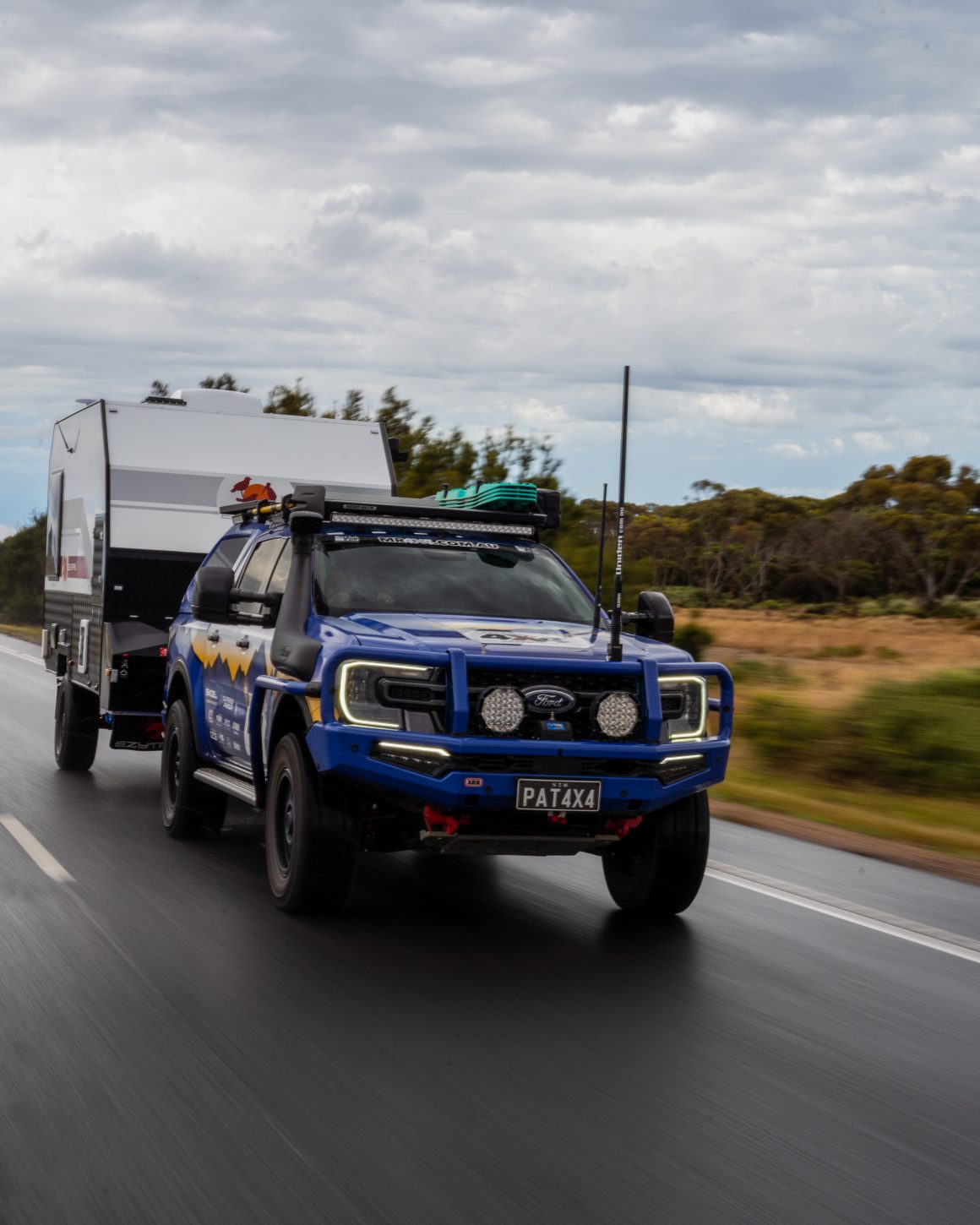
In the words of RVSafe Program Coordinator, Wylva Hall, trailer sway is most commonly caused by an incorrectly loaded caravan. “When packing your caravan it’s important to place heavy items as close to the axle of the caravan as possible. If heavy items are placed at the rear of the trailer or caravan it can result in instability, which leads to trailer sway,” says Wylva.
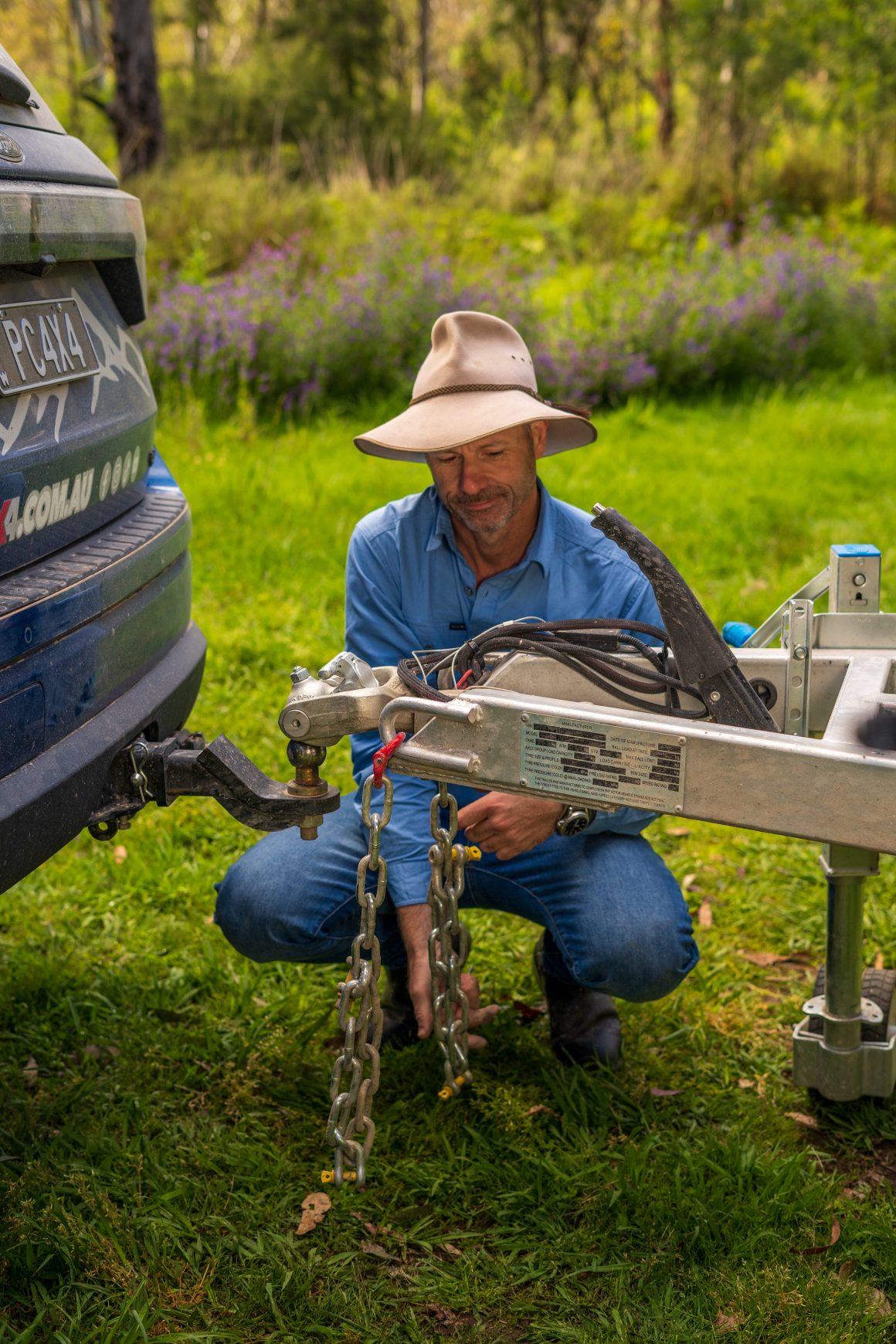
With heavy items stowed in the correct position, the next thing to consider is your tow ball weight. As a rule of thumb, you should aim to keep your tow ball weight within 10% of Aggregate Trailer Mass (ATM). Going above or below this figure leads to two different scenarios, both potentially catastrophic. If you go above 10% of your ATM the handling characteristics of the tow vehicle drastically change. If you go under, you’re inviting trailer sway.
Trailer sway isn’t just caused by incorrectly positioned loads and tow ball weight though. There’s another factor: Mother Nature. Strong wind can upset a trailer or caravan and cause sway, the faster you’re travelling when the gust hits you dictates the strength of the sway. The same thing is possible when overtaking a larger vehicle, such as a road train which creates its own wind caused by the rush of air between the two vehicles.
Stopping a swaying trailer or caravan
It’s more than likely that in your towing career you’ll experience trailer sway. According to a study by Monash University, once a trailer has begun to sway, you have about three oscillations (trailer sways) before regaining control becomes almost impossible. This means knowing what to do and being able to do it effectively is a time-critical and potentially lifesaving endeavour. So take notes.
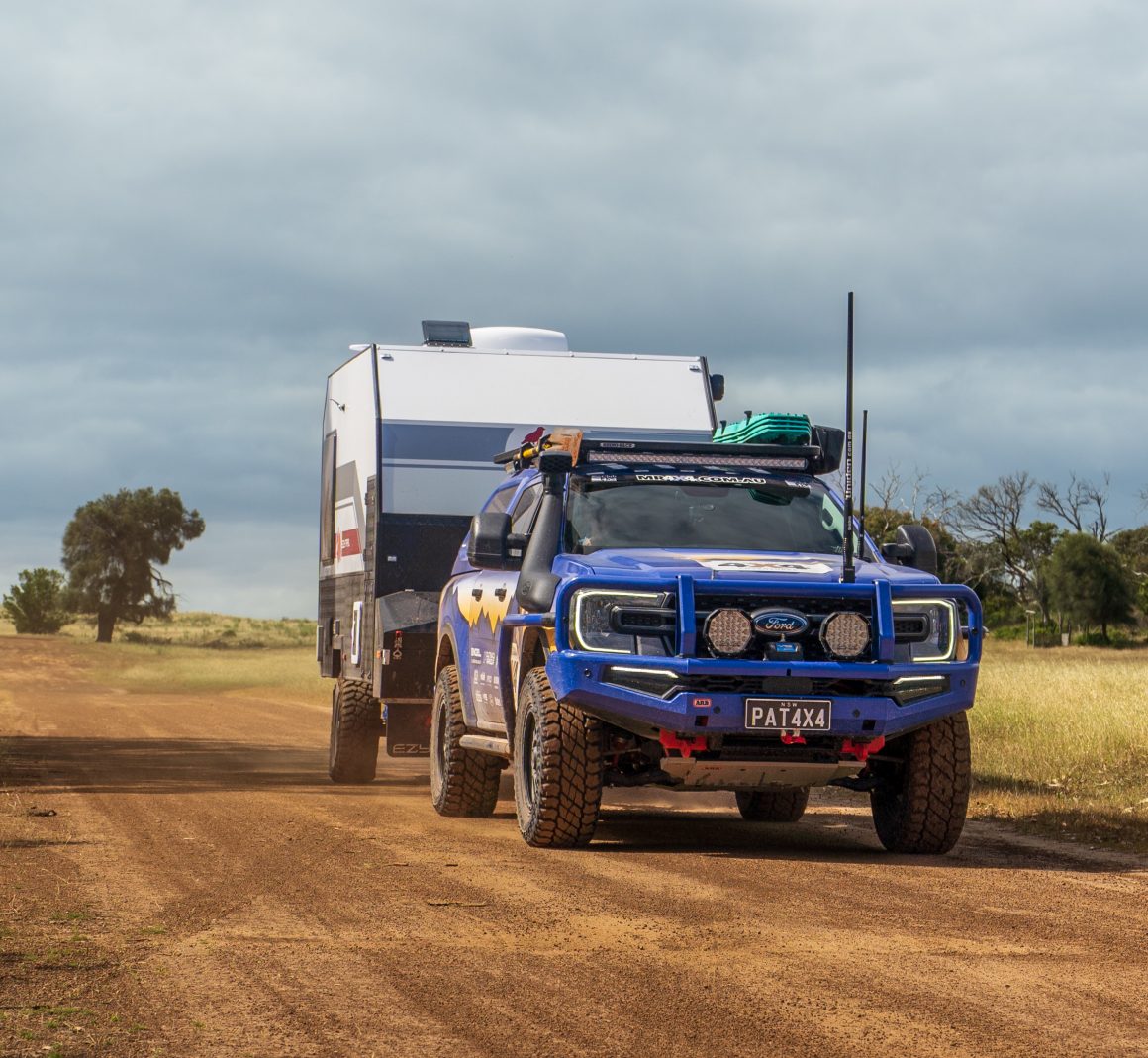
STEP ONE: Take a deep breath and stay calm, you’ve got this. It’s easier said than done, I know. But, staying calm is a fundamental part of regaining control of your caravan or trailer. If you’re calm, your movements will be fluid and your thought process clearer.
STEP TWO: Decrease speed by lifting your foot off the accelerator, NOT by using the vehicle’s brakes. If there was an out-of-control vehicle tailgating you, you wouldn’t come to a sudden stop, would you? It’s no different when towing. While the tow vehicle may be able to make it to a relatively quick and controlled stop, the out-of-control trailer or caravan can’t. Firmly applying the brakes of the tow vehicle perpetuates the sway of the trailer while the trailer maintains most of its momentum and attempts to overtake you, a situation made worse by the fact it’s still attached to the vehicle towing it.
STEP THREE: Firmly hold the steering wheel and avoid making sharp movements.
STEP FOUR: Gently apply your trailer brakes by using the brake controller. Doing this pulls the trailer straight and places it back within the track of the tow vehicle, allowing you to regain control. It’s a great idea to practice reaching and adjusting your trailer brake controller when you’re stationary to create muscle memory for when you need it. When having your brake controller fitted you should have it placed in a central location that’s easily accessible from the driver’s seat.
Myth busting: Should you accelerate to stop the sway?
There’s a common misconception that eliminating trailer sway can be achieved by accelerating. To put it simply, it’s just not true. As the speed of the tow vehicle increases, the stability of the trailer or caravan decreases. The driver of a tow vehicle shouldn’t attempt to regain control of a swaying trailer by accelerating.
Learnt a thing or two here? We hope so. At the end of the day, adventuring is all about picking up new skills and growing your confidence each trip. Caravan sway is avoidable and sure as heck makes for a smoother trip away.