There’s a lot to consider when it comes to fitting muddies vs all-terrains. Let’s take a look at the pros and cons of each…
Considering the age-old question still comes up when talking among my mates, I figured it was time to sit down and run through the pros and cons of fitting either muddies or all-terrains, and which tread pattern may be right for you. Tyre choice has become even more critical, now that we are finally seeing a bit of rain around the country, and we’re mostly sitting around at home getting our four-wheel drives sorted out with goodies and upgrades while we wait out this current mess. So, which style of tyre is right for you? Let’s have a look at their features and then their pros and cons, which will hopefully give us a solid answer as to which way to go.
All-terrain
All-terrains are the go-to for the vast majority of us. They’re a great compromise between off-road ability and on-road manners. As the name suggests, a quality all-terrain tyre will have tread blocks built to be able to grapple with the terrain they’re pointed at, whether rocks, sand, dirt or mud. That said, bitumen is one of those terrains they are called to travel, and often more than in the dirt or mud. They will often utilise a rubber compound that will last reasonably well on the blacktop, and not wear too quickly. This does make them more susceptible to cuts and abrasions in their tread compared to a mud-terrain.

More often than not, you’ll also notice the tread pattern is designed in a way that allows them to handle better on bitumen, in both the dry and the wet. The gaps between tread blocks are smaller, which also helps to reduce road noise. Then some will come in both a passenger and light-truck construction, which changes the carcass build, allowing for more or less sidewall flex and protection. Wherever possible, it’s wise to opt into the light-truck construction, for that added protection and strength in the tyre while you’re four-wheel driving.
Pros
- Good balance between on-road and off-road performance.
- Decent on-road and wet weather ability.
- Quieter than a mud-terrain.
- Usually longer life than a mud-terrain.
- A vast off-road increase over an OEM highway-terrain.
Cons
- Louder than a highway-terrain.
- There are varying degrees of aggressiveness; you’ll need to work out which AT is best for you.
Mud-terrain
Mud-terrains are becoming more of a specialist tyre than they used to be. Where the change in the tyre and tread design in all-terrains has become more evident with increases in technology, from appearances, mud-terrains still look like the big, old, chunky tyres we’ve always known. Looks, as we all know, can be deceiving.
With the increases in technology over the last few years, mud-terrain tyres are charging ahead with new tricks to make them handle better on the blacktop, and also better in the harder off-road trails. They don’t usually handle nearly as well on the bitumen as their all-terrain counterparts; however, they offer up the off-road ability and traction that some of us need.
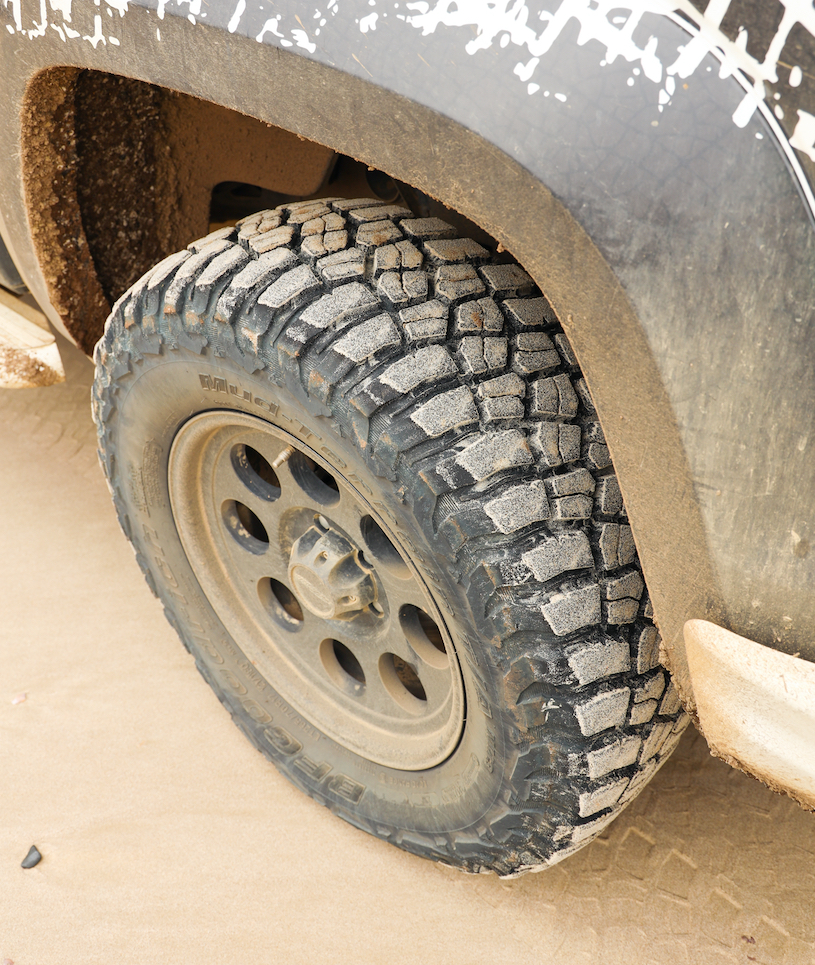
Tread patterns, as we said, are big and chunky; however, muddies are now including technology seen across the all-terrains range. Sipes in the tread blocks to assist while driving on wet roads, specific angled blocks to minimise on-road noise and improve on-road handling, scooped and dimpled blocks to create air pockets to help in ejecting mud, as well as stone ejector rips between the blocks.
Pros
- Excellent off-road ability against the highway-terrain or all-terrain option.
- Larger gap between tread-blocks allows better traction.
- Larger lugs and side-biters to increase traction when off-road.
- The best possible traction and performance in off-road terrain except sand and bitumen.
- All come in light-truck construction (more robust carcass and sidewall protection than some all-terrains).
Cons
- Rather loud on the blacktop.
- Poor bitumen and wet weather performance.
- Usually priced higher than all-terrain options.
Horses for courses
Now you’ll need to understand that when you’re looking at getting some new tyres for your four-wheel drive, and you’re trying to decide which is for you, that tyre choice is a very personal decision; especially when the choice transcends brands, and you’re weighing up between muddies and all-terrains. You’ll need to sit back a while and work out where you’ve taken your vehicle, and where you plan on going. There’s also your previous experiences to draw on; did you perhaps get stuck in a spot with all-terrains that a mud-terrain could have powered through? Would a mud-terrain have even helped or just made the situation worse?
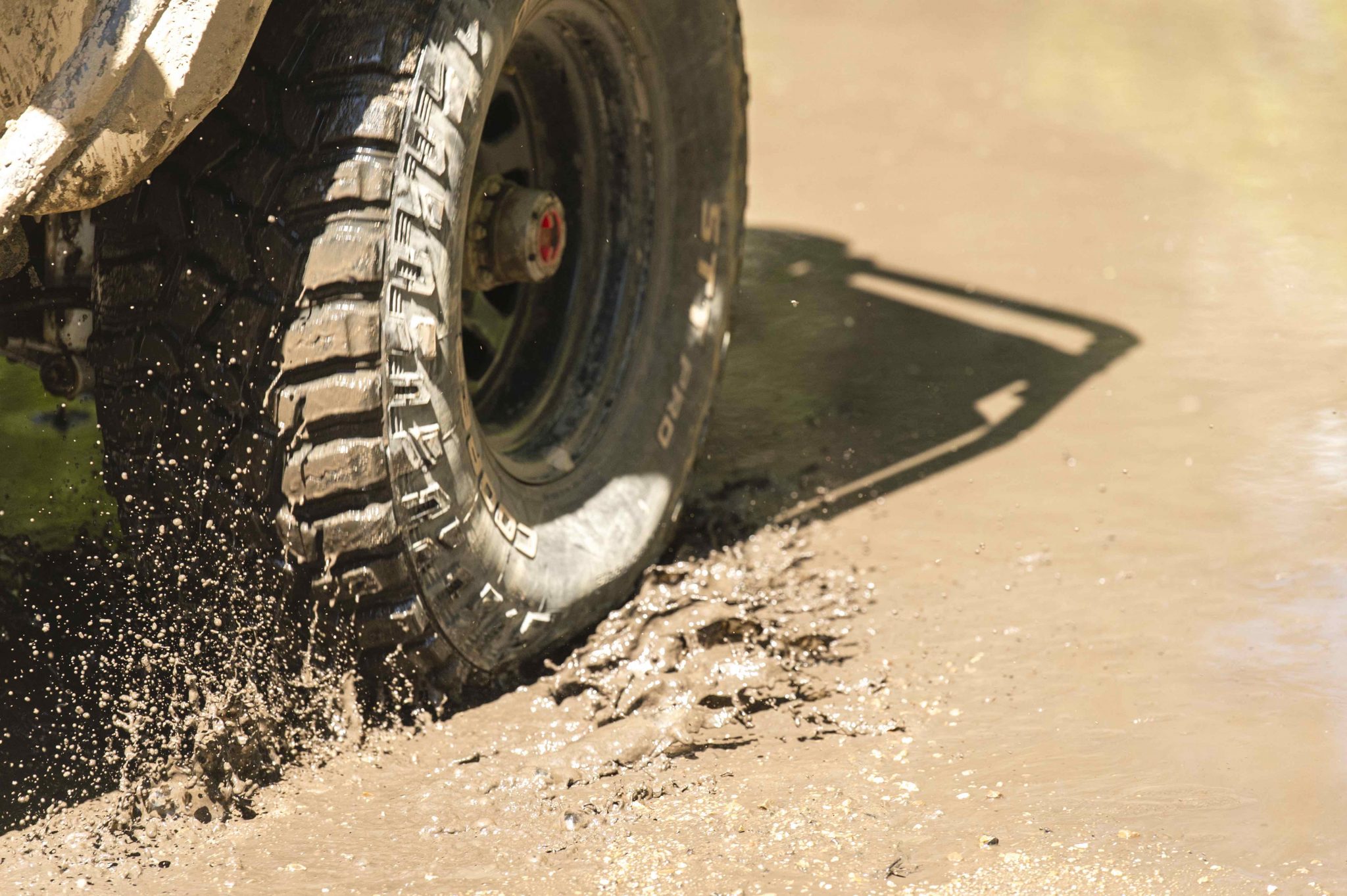
Personally, I do a lot of kilometres on the bitumen running down the M1 to the office and back for work in my HiLux… yet I run mud-terrain tyres, instead of all-terrains. Sounds a bit odd, right? The way I’ve always looked at it is, despite doing a fair bit on-road, I spend a fair bit of time off-road in it. Whether that be doing a tips-and-tricks article, or shooting custom vehicles, or even just out for a play on the weekend. I put up with the on-road noise and poor wet-weather characteristics (I actually drive it like I’m driving a three-tonne four-wheel drive, not a sports car) to know that I have access to all the traction I need when I’m not on the blacktop.
Your situation could be, and most likely is, completely different. You only venture off into the harder tracks or trails on the very odd occasion or don’t at all. Alternatively, you poke your nose down a trail that shouldn’t be attempted by any sane four-wheel driver without a monster truck, any chance you get.
Just look at the options you’ve got, and where you’re expecting to go into the future, and make a decision based on that.