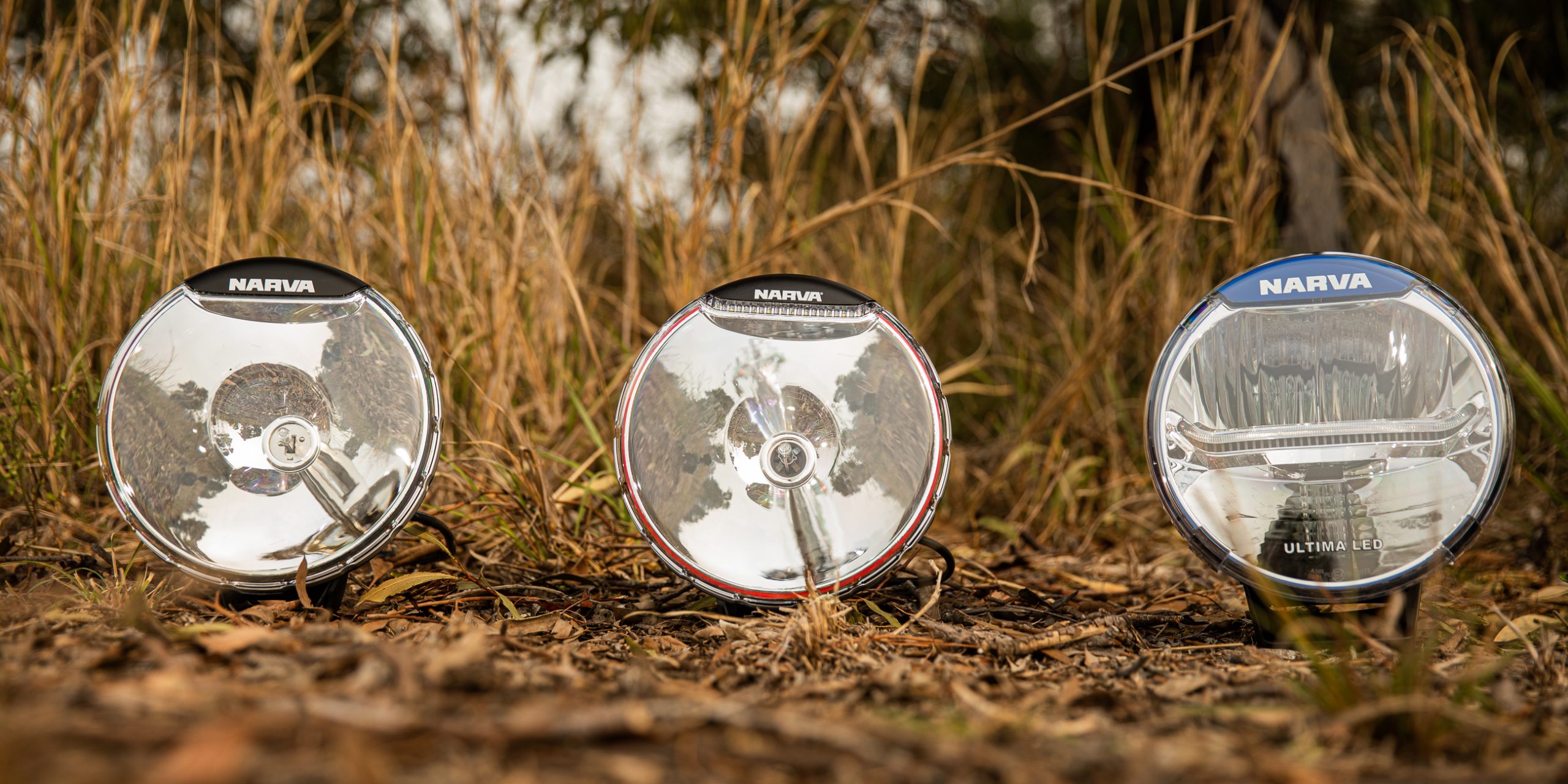
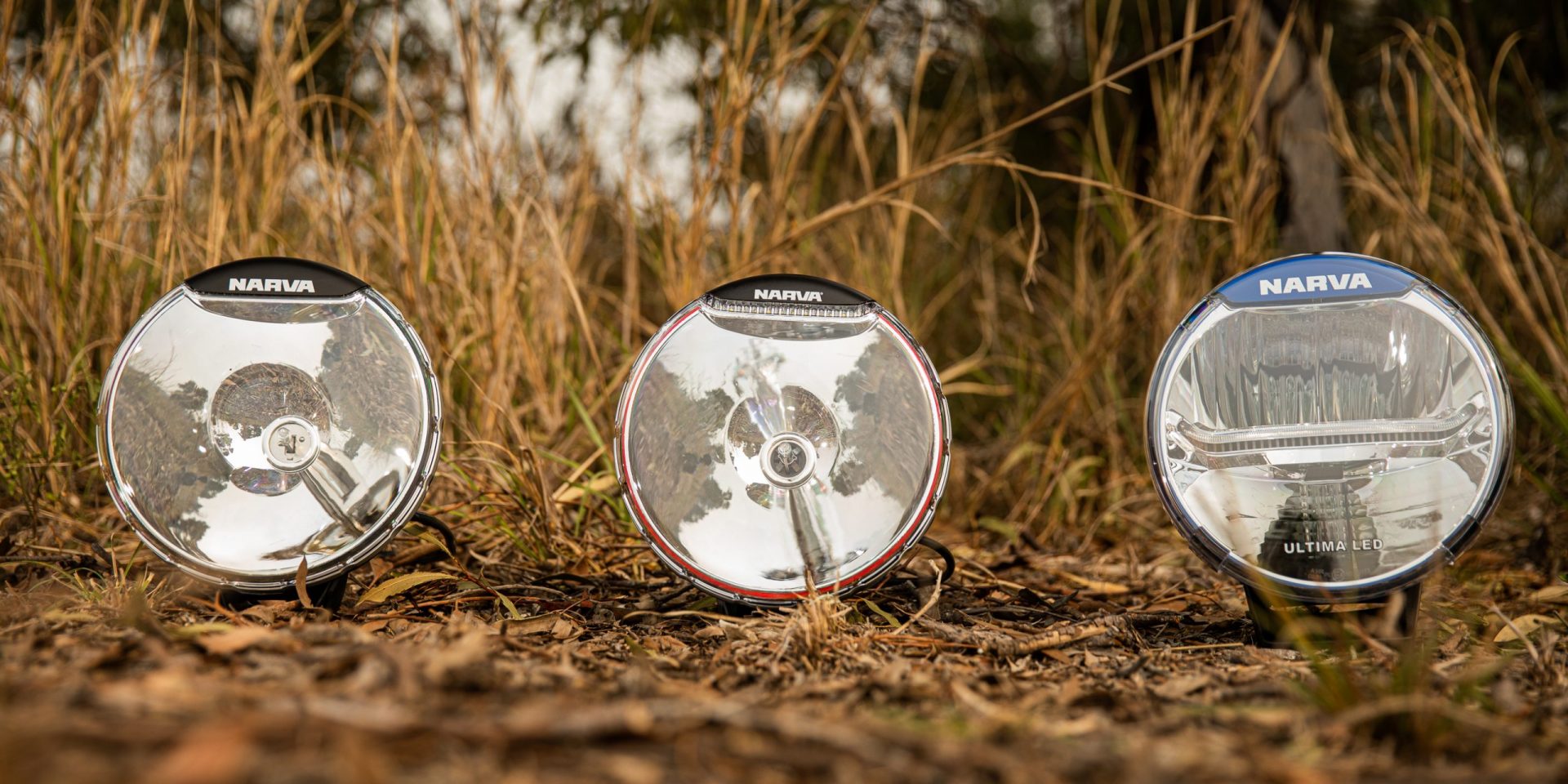
It’s the question that gets both Facebook experts and armchair engineers up in arms just about every day: Which is the best lighting technology for spotlights? Interestingly enough, the question is a lot more subjective than you may realise, where understanding the technology and the way light is generated will help you to choose the best lights for you.
In this article, we’ll look at the different technology of the lights most prevalent on the market, and in a follow-up article in a couple of weeks, I’ll take the lights out into the night and run some testing on their light output, power usage, heat issues, and which works best in which situation.
HALOGEN
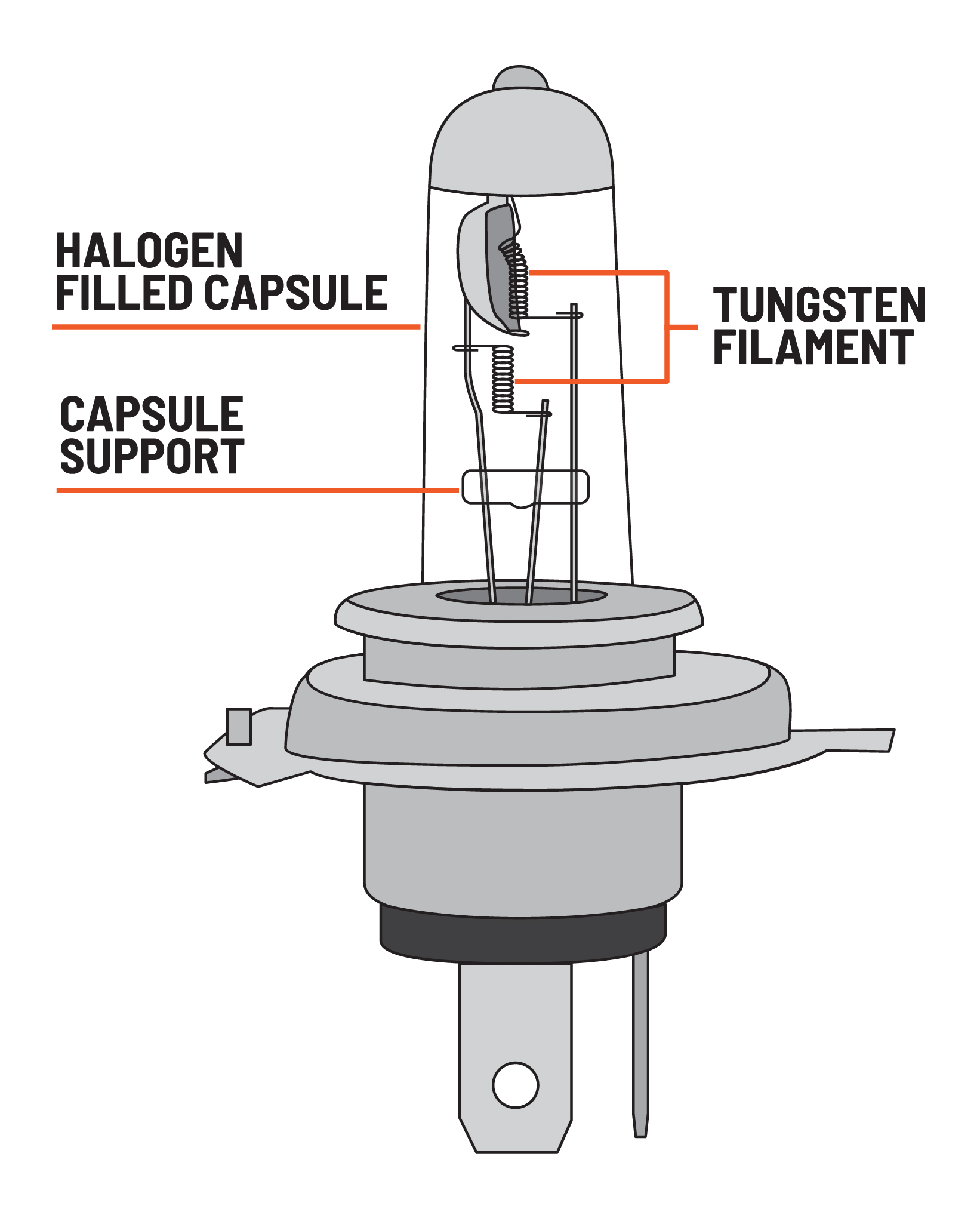
We’ll start with the grandad of the lot: Halogen incandescent bulbs.
Halogen bulbs have been around for a very long time; they are the simplest of our lights. Essentially the bulbs are sealed (not to be confused with ‘sealed beam’ lights) and have a wire filament (usually made from Tungsten) between two pins. Within the sealed bulb is an inert gas mixed with a touch of a halogen gas(usually iodine or bromide). The halogen within the bulb assists in keeping the tungsten together and allows the bulb to burn brighter than a standard incandescent bulb, and last longer.
The light they generate is due to the filament glowing when electricity is passed through it, and the resistance of that filament. The byproduct of the resistance is heat; with the filament glowing ‘white-hot’ you create light, which is then reflected out of the spotlight.
They are very inefficient (insofar as power usage vs light output is concerned) and are being phased out for use in your home. They are still available for use in automotive, however, and are still in use by a few light manufacturers.
HID – High-Intensity Discharge
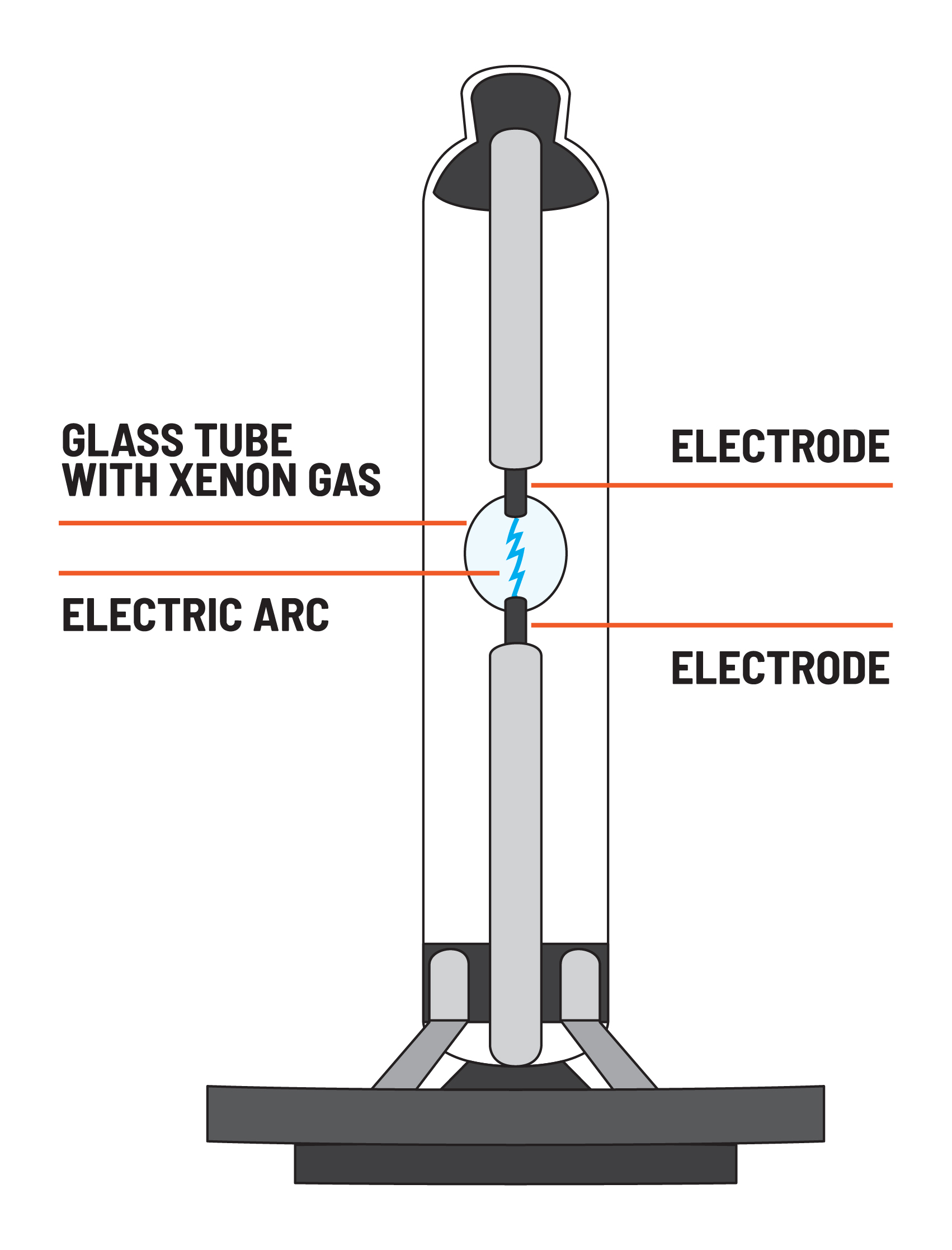
High-Intensity Discharge (or HID) is the newer kid on the block for production lighting. The mid-2000s saw many vehicle manufacturers switch to HID; however they have since (mostly) been replaced by LED headlights, but there are still more than a few HID spotlights on the market, as they work rather well for their intended use.
HID lights work by passing a massive voltage between two tungsten electrodes, creating an arc. This is housed within a transparent quartz or alumina arc tube, which contains a noble gas; most commonly being Xenon. The Xenon gas within the arc tube assists in increasing the brightness of the arc, and also controls the colour of the arc, and thus the colour temperature of the light output. Interestingly enough, different noble gasses offer different colours when an arc passes through them.
To create and maintain the arc, HID lights require an electrical ballast; similar to what your average Fluro lights have (the little white round ‘starters’). This pushes voltage up, often over 30,000 volts, by reducing the current going to the lamp.
As we said above, vehicle manufacturers are stepping away from HID in their standard lighting systems, in part due to issues with the ballasts wearing out, and also that lighting output can deteriorate by 70 per cent over a 10,000 hour usage period. This isn’t as critical in spotlights, as most users of these light systems do not run them the entire time the car is on during night hours, unlike headlights.
As a side thought, HID, or in this specific case arc lighting, is no new thing, being first demonstrated in 1705 by English scientist Francis Hauksbee.
LED – Light-Emitting Diode
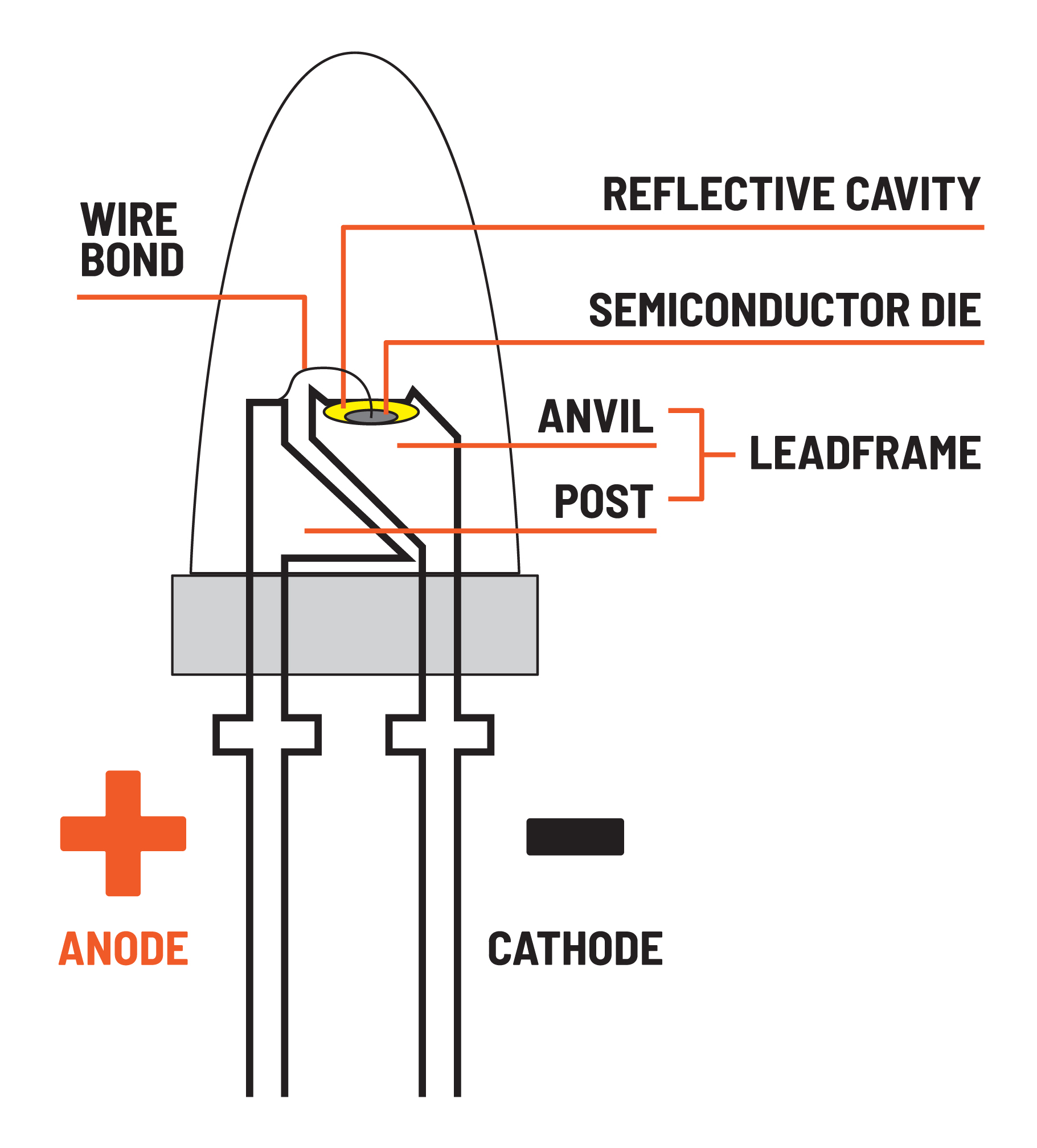
Light-Emitting Diodes (or LEDs) are no new thing. They’ve been around in mass production since the 1960s, and are probably the most efficient and simple of lighting options.
LEDs consist of an epoxy casing, anvil and post attached to the anode and cathode leg, a wire bond between the anvil and post, and a semiconductor die. Within the LED, light is emitted by the recombination of electrons and electron holes within the semiconductor die. The wavelength (or colour for our example), depends on the ‘band gap’ of the semiconductors used. We’re not going to go into the physics of it here, but it is simple enough to change the lighting colour based on the semiconductor used – for example red, green and blue.
Within the LEDs we see in spotlights, the white light is created by using phosphors within the LED, which generates a white light, and makes the LED appear a yellow colour when turned off.
The use of LEDs in spotlights, and indeed general vehicle lighting (both for Daytime Running Lights (DRLs) and headlights) has grown considerably over the past decade, as more and more people have taken up the technology, and more investment is being made into the research and development of the LEDs. It wasn’t that long ago where a 5-watt LED was considered huge, whereas now 10-watt is becoming the norm, with some LEDs up to 20-watts being utilised in lighting.
Possibly the greatest factors of LEDs is that they are relatively simple, inexpensive to make and are a solid-state bulb. There are no filaments or gasses needed to create light; so they’re more robust next to their counterparts. They also have a massive lifespan, upwards of 50,000 hours of burn time.
Efficiency is where they really shine (pun intended), with LEDs being able to put out comparable light 1/5th the wattage of a halogen globe; thus we’re seeing more and more LED lights being used within commercial and housing developments.