




Sutherland Shire Council in Sydney’s south is weighing up a crackdown on trailers and caravans being parked long-term on suburban streets after fielding close to 3,000 complaints in 2025 alone. That’s not a handful of grumpy letters to council. That’s sustained pressure from residents who reckon their streets are turning into storage yards.
And if this goes ahead, you can bet other councils around the country will be watching closely.
When Touring Culture Meets Suburban Reality
Let’s be honest. Australia loves caravans. We love boats. Jet skis. The idea of hooking up on a Friday and disappearing up the coast or inland for a week. But most Aussie blocks aren’t exactly designed for 22-foot vans and tandem boat trailers.
In places like the Sutherland Shire, where boating culture runs deep, trailers are often parked kerbside for months at a time. Residents have reportedly complained about reduced sightlines, safety risks near sports fields, blocked views, and the general visual clutter of bulky rigs lining suburban streets.
Council says it received more than 2,400 reports about boat-trailer parking and over 500 about caravans last year. And the solution being floated? Trial signage that reads “No Parking – Motor Vehicles Excepted.”
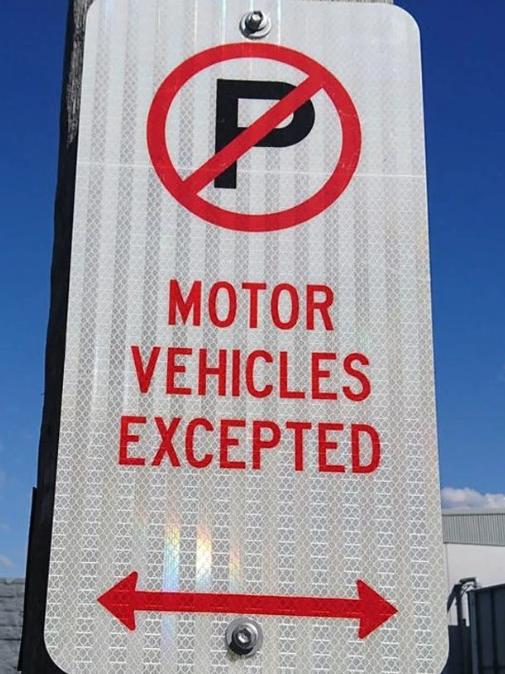
What That Actually Means
On paper, it sounds harmless. In practice, it’s clever.
Under NSW law, a motor vehicle is something that is self-propelled. Cars, utes, vans, motorbikes, no worries. But detached trailers, caravans, camper trailers and boat trailers don’t qualify because they don’t have their own engines.
So that signage effectively allows everyday cars to park, but excludes trailers.
It’s not an outright ban on caravans in the Shire. It’s targeted. Specific streets around town centres and sports grounds. Places like Tonkin Street, Gannons Road near Woolooware Golf Course, Woolooware Road and the Kingsway sports fields, could see the trial rolled out.
Council hasn’t made a final decision yet. A detailed report is due in April, including potential enforcement costs and whether legislative tweaks are needed.
But the intent is clear. Long-term street storage of trailers is under the microscope.
The Bigger Question: Is This Fair?
This is where it gets interesting. On one hand, if you live in a tight suburban street and someone parks a 7-metre van outside your house for nine months straight, you’re probably going to get cranky. Parking is already under pressure in metro areas. Add school drop-offs, sports days and peak-hour chaos, and it’s easy to see how tensions rise.
On the other hand, where are people supposed to put their gear? Caravan storage yards aren’t cheap. In Sydney, you’re often looking at thousands per year. Not everyone has a long driveway or side access. Many newer homes are built with minimal yard space.
And this isn’t just a Sydney problem. Sunshine Coast residents have been pushing for similar crackdowns. Northern Beaches has had ongoing complaints. If Sutherland sets a precedent, it could spread fast.
For the touring community, that’s the real concern.
Storage Versus Freedom
Here’s our take. Using public roads as permanent storage for recreational gear probably isn’t sustainable long term, especially in dense metro areas. But blanket bans feel like a blunt instrument. A better conversation needs to happen around infrastructure.
If councils want to restrict street parking for caravans and trailers, they should also be looking at affordable storage solutions. Partner with private operators. Create designated long-term storage precincts. Offer ratepayer discounts. Something that acknowledges this is part of Australian lifestyle, not a fringe hobby.
Because here’s the reality, caravan ownership has boomed post-COVID. Domestic travel is huge. Remote work means more people are taking extended trips. This isn’t going away.
Trying to squeeze it out of sight without offering alternatives will just create resentment.
What 4X4ers and Tourers Should Watch For
If you own a van, boat, or camper trailer, here’s what you should be doing right now:
First, keep an eye on your local council agendas. These things don’t just appear overnight. They start as motions, go to reports, then trials.
Second, understand the signage rules in your state. “Motor Vehicles Excepted” signs can quietly change what’s legal without you realising.
Third, be realistic about how long your rig sits on the street. There’s a difference between loading up before a trip and leaving it parked out the front of your neighbours house for two months.
Fourth, engage constructively. If councils are calling for submissions, don’t just jump online and vent. Make the case for balanced solutions.
Because if the narrative becomes “caravan owners don’t care about anyone else,” it gets very easy for councils to tighten the screws.
The Cultural Shift We’re Seeing
What this really highlights is a bigger shift in Australian cities. Blocks are getting smaller. Streets are busier. Councils are under pressure from both sides, residents demanding parking access and recreational owners wanting flexibility.
We’re transitioning from the era where everyone had a quarter-acre block and side access for the tinny, to tighter urban living where street space is prime real estate. That friction is only going to increase.
I don’t think we’ll see nationwide bans on caravans in suburban streets. But I do think we’ll see more targeted restrictions, more signage like this, and more enforcement around “long-term storage” on public roads.
And once one council proves it can be done without too much backlash, others will follow. The last thing we want is touring becoming something only viable for people with acreage or deep pockets for storage yards.




12 comments
Caravan owners must have an ability to bring their vans in from storage and to load up, then to unload at the completion of what ever travel they undertake.
Hence, full blanket no parking becomes problematic. Perhaps a 72 hour maximum is a solution!
If councils didn’t let subdividers make the blocks so small and roads to narrow they wound have somewhere to park them, the roads are too narrow for the mount of cars in the suburbs now, it is just greed so they can put as many homes in these suburbs, Australia is not short of land we have that much of it, so why make the blocks so small.
If you want to own a caravan, boat, jet ski, et al, it’s your responsibility to find somewhere to store it. It sounds harsh, but the neighbours shouldn’t have to suffer for your hobby.
All kerbside parking in residential areas should require a local council permit, to ensure the vehicle/van/trailer etc can be traced easily to the owner. Caravan owners should have to factor in parking costs to total cost of ownership. Long term (> 4 hour) parking spaces on public streets should be auctioned off quarterly to the highest bidder, generating much needed revenue for councils.
Having had my van in storage previously, it will cost at least $1250/yr & go upwards from there. It is a great idea to have dedicated storage & given the extra rego & insurance revenue gained since the increase in van life popularity perhaps state government, local councils, & insurers could get together & devise a scheme to benefit all. Maybe councils could have a yearly charge to users that get subsidised by the state government & insurers. Less congestion, less damage, less theft, claims go down.
Sell the van, buy a motor home? That would appear to be OK under that proposal.
And you didn’t mention the rapid move to unit dwellings – many without even enough car parking space for the number of units, let alone any recreational/trailing vehicle. But it is OK to leave a car out front for as long as I like (as long as it is registered)?
Firstly have a talk with your neighbours, if the Councils walk in ‘heavy handed’ they will probable go to bat for you. I think this type of problem arises in suburbs and areas where the streets are very narrow and force traffic to cross the middle to pass by. A blanket ban maybe simple however, not fair to everyone. As for storage areas, they are not subject to ‘any form of regulation’. I can see some storage owners taking advantage of this and resulting in substantial rising costs and on-going. I do see some boats/trailers that look as it they haven’t been in the water for years. Tarps, torn, not properly secured, the boats in poor condition, dirty, covered in leaves, branches etc. I think Council could send the owners a letter asking them to tidy things up and therefore not have a eyesore in the street. This has to be approached in a fair manner with consultation and on a street by street approach, not just another Council cash collection method.
If blanket bans came in it will create many issues. For example: What would I do to drive my caravan from the Central West to sleep overnight in my van near Pennant Hills where my caravan maintenance shop is? I need to arrive by 7:30am. NB: I only sleep. Dinner/ toilet in public space prior.
What will happen for those touring Australia & wanting to visit family & friends in a city/regional town et al? Where do they park?
It’s a big conversation with many angles & sides. I do understand the frustration etc of locals who have a long-term van/ trailer outside their narrow street. Even where I live, on a narrow street, I am only allowed to park on one side of the street as it’s a bus route. Their are units close by and lots of vehicles.
The problem has been around for a long time, and the problem belongs to the local council. The councils allow the developers to design a new estate with only 550square meter blocks, place a 4-bedroom home on the block. That can mean there are 5 vehicles that require to be garaged in the house. The developer/builder only builds a two-car garage that will only fit two vehicles the size of a RV4 if you are lucky.
The streets are only 3 to 4 meters road width many trades no longer can drive their vehicles into a residential area. With streets now designed to slow the car driver we will see lanes from 2.80 – 3.25m.
I have asked many members of the Australian Caravan Club what their current situation with caravan storage and all is have indicated that the cost is beginning to impact on their lifestyle due to the cost of storage.
Councils/Shires need to talk to their constituents to gain a knowledge of the situation. 500 letters within the Sutherland Shire are minor regarding caravans. Sutherland Shire has several storage facilities within the Shire.
It would be interesting if the there is enough storage available.
I’m in full support of no long term trailer boat and caravan parking kerbside or on the footpath.
There needs to be exceptions for when loading, unloading or maybe cleaning.
A daylight limit of 8-10 hours? Especially if the drive way access is limited to the owner’s property to reverse the boat trailer or caravan into limited space.
The NSW government has laws in place to deal with parked caravans, boats, etc since 2021. See here: https://www.leeton.nsw.gov.au/Your-Council/Council-News/Media-Releases/Public-Spaces-Unattended-Property-Act-2021-now-active
This is for all of NSW.