




We’ve all seen it. You’re rolling through a campsite and a dual-cab bounces past. It is stiff as a board and the rear end sits three inches higher than the front. It looks tough, sure. But the poor bloke driving it is probably losing a filling every time he runs over a pebble.
There is a massive misconception in the 4X4 world that “Heavy Duty” automatically means “Better”. We tend to treat suspension like a buffet. We pile our plates high with the stiffest springs and biggest shocks we can find. We do this just in case we decide to carry a pallet of bricks to the Cape one day. The reality? Most of us are over-springing our rigs. And it’s ruining the ride.
Suspension isn’t about lifting a 4X4 to the moon. It’s about managing weight. It’s physics, pure and simple. You might fit springs designed to carry 800kg of constant load. But if you are only carrying a swag and a carton of stubbies, your suspension isn’t able to do its job. It isn’t absorbing bumps. It is transmitting them straight into the chassis, and your spine.
Conversely, under-springing is just as dangerous. We’ve all seen the “Squat” happening involuntarily on the highway. Headlights pointing at the stars, steering vague, and the bump stops copping a flogging.
The trick is finding the Goldilocks zone. And more often than not that’s going to mean making a call to an expert.
The Daily Driver and The Swag Chucker
Let’s be honest. A huge chunk of 4X4 owners aren’t crossing the Simpson Desert every other Tuesday. They’re driving to work, doing the school run, and hopefully hitting the beach or a bush track on the weekend.
If this is you, chances are you don’t need a GVM upgrade. Or anything “Heavy Duty” most likely. And you definitely don’t need springs designed for a constant 800kg load. You need compliance. You need comfort.
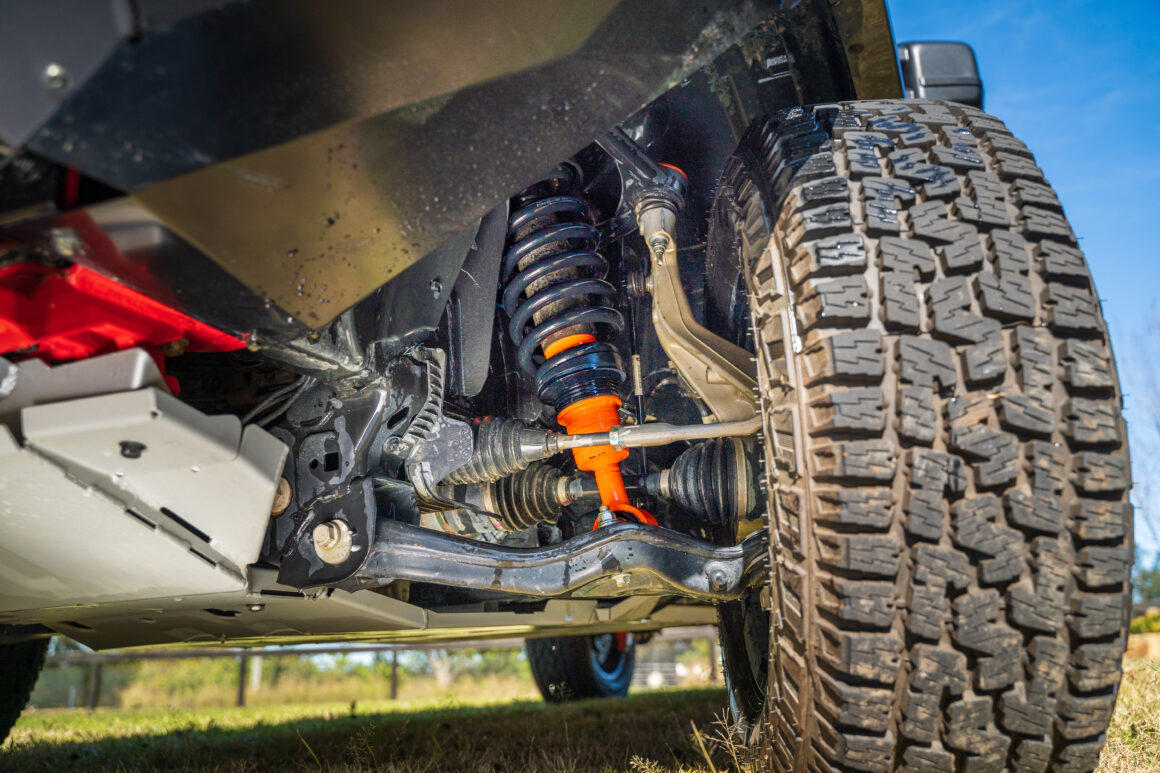
For this setup, we’d be looking at a lighter sprung setup that’s good for near stock weights. In the Outback Armour world it’s called their Trail range. These are designed for vehicles that are largely unladen. They give you that crucial lift for ground clearance and better approach angles. However, they are valved and sprung to ride smoothly without needing half a tonne of gear in the tub to settle them down. It means you can drive to work on Monday without needing a kidney belt.
The Weeklong Warrior
This is the most common build we see. You’ve probably slapped a bullbar and winch on the front. Maybe you’ve got a drawer system in the back and a fridge that lives there permanently. Every chance you get you throw in the recovery gear and a week worth of food to tick off another trip.
You’ve added constant weight. If you stuck with stock suspension here, you’d be sagging. If you went with the Trail option, you might find it a bit soft in the corners.
This is where a slightly firmer sprung setup shines. You want something around that 500kg constant spring weight range. For Outback Armour that’s their Expedition range. It’s designed for vehicles that have some permanent accessories fitted. It strikes a balance between handling the extra kilos of your bar work and fridge, while still offering decent flex off-road. It’s the middleweight champion. Capable and tough, but not overly harsh when you aren’t loaded up.
The Big Lap Tourer and The Work Ute
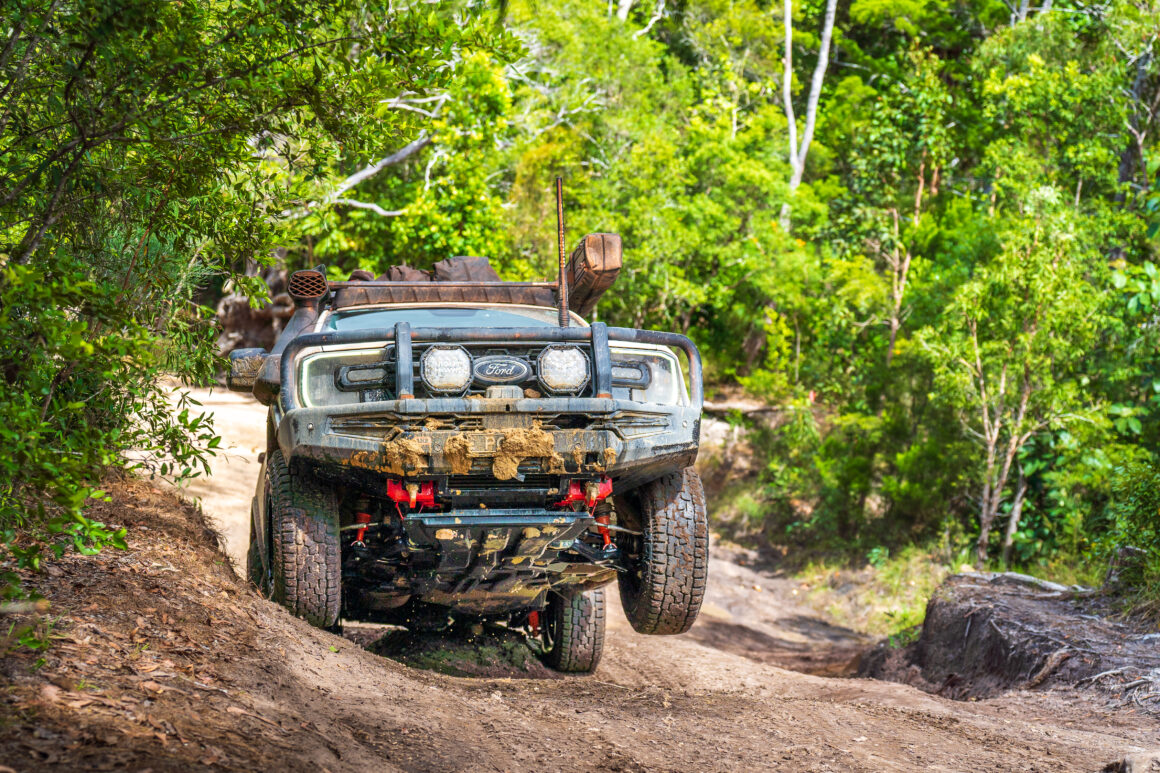
Here is where things get serious. You’re building a rig to lap the map. You’ve got an aftermarket tray, a canopy, dual spares, and a 12V system that could power a small village. Or, maybe you’re a tradie. Monday to Friday, that tray is loaded to the gunwales with tools, compressors, and materials.
In these scenarios, weight is your biggest enemy. Standard suspension simply cannot cope. This is specifically what the Expedition HD and Expedition XHD (Extra Heavy Duty) lines from Outback Armour are engineered for. We are talking about springs designed to hold up 800kg+ of constant load.
However, if you are pushing these limits, you need to have a serious conversation about a GVM Upgrade. A GVM upgrade isn’t a nice to have kind of thing. You either need one or you don’t. If you need one, it is not up for discussion.
It isn’t just about stopping the sag. It is about legality and safety. If your tourer is heavy, you are likely pushing past your factory Gross Vehicle Mass. It’s not just a set of springs. It is a company like Outback Armour vouching that they’ve addressed the weak points and certified them for the weight.
Don’t Guess, Weigh It
Finally, a quick note on towing. Remember that your tow ball weight counts as payload. If you’re towing a 3.5T van, you likely have a few hundred kilos pushing down on your rear axle. That happens before you’ve even put a fridge in the tub. That puts you squarely in the heavy-duty or GVM territory.
The biggest takeaway here? Don’t guess. Don’t just buy the “2-inch lift” your mate bought.
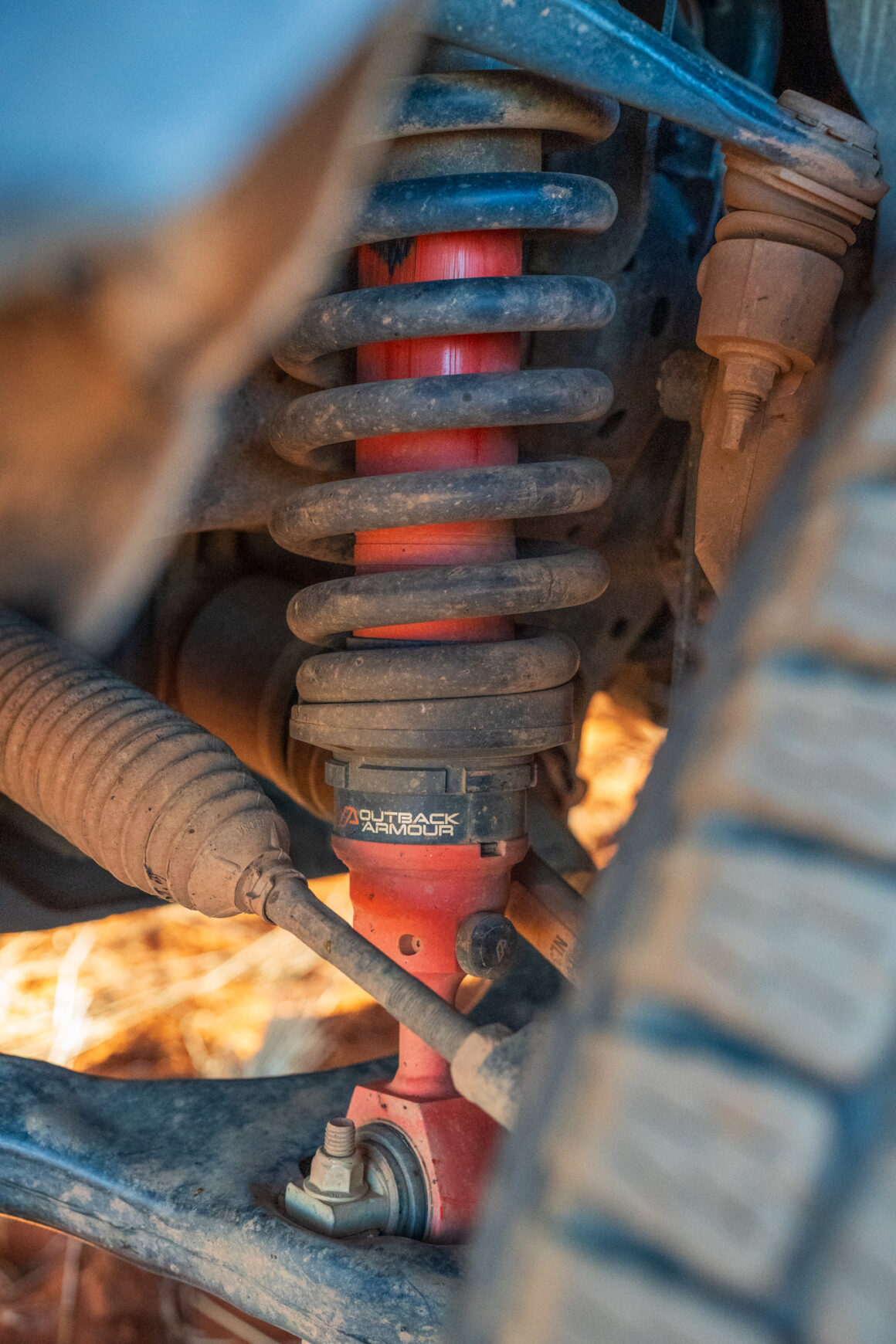
The biggest advice we can give is to head to your local Outback Armour dealer first. They are the experts on the ground. You can easily find your closest one using the postcode search feature on the website. Some of these dealers even have scales in their workshop, just like the team does at HQ. That takes a massive amount of guesswork out of the equation. They can look at your specific numbers and tell you exactly which setup matches your reality.
Buy the suspension for the vehicle you have, not the vehicle you wish you had. Your back (and your passengers) will thank you.