
Devil by Name, Not by Nature. Shelly Lord takes a look at one of Australia’s most misunderstood and endangered marsupials.
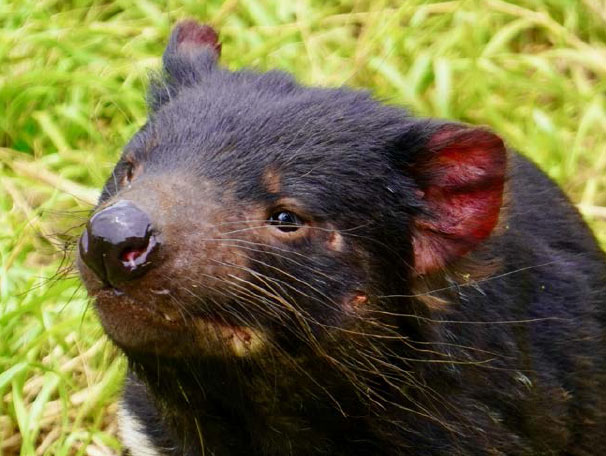
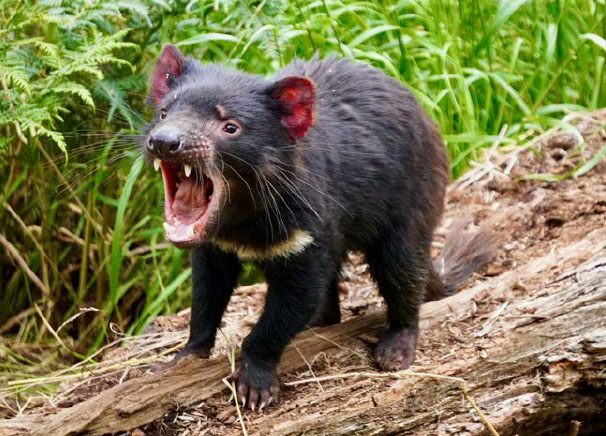
The Tasmanian Devil is possibly one of our more misunderstood native animals. Early European settlers named them “The Devil” after hearing screeches and growl’s coming from the bush at night. Then later being portrayed as a ferocious, spinning cartoon character called “Taz” that would eat anything in his path. There seem to be many people out there who are fearful of the Tassie Devil, believing it is an aggressive and evil animal. Tassie Devils have the most powerful bite for the weight of any animal, strong enough to crush bones. However, these nocturnal carnivorous marsupials are shy and prefer to run away.
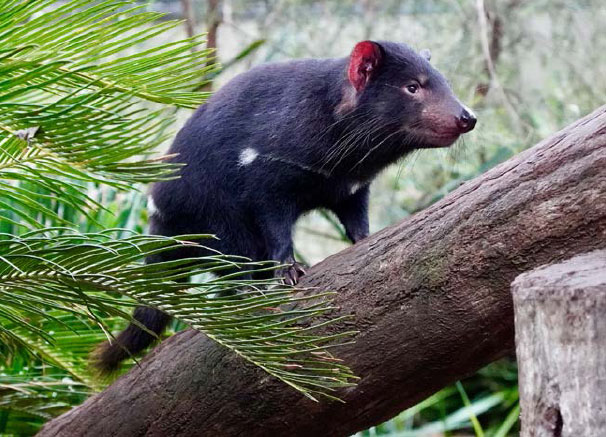
Tasmanian Devils have coarse black fur, and most have a white stripe on their chest. Some devils have white markings on their rump, with no two markings on a devil being the same. They are pretty small, stocky animals, with the males being larger than the females. A healthy male devil can weigh between 8-and 14kg while the female will weigh between 5-and 9kg. Although not a very big animal, standing up to 30cm at the shoulders, a Tassie Devil can eat up to 40% of its body weight in one day. Tassie Devils are not fussy eaters, and they will eat every part of the animal. They don’t work together to hunt for food. It’s every Devil for themselves.

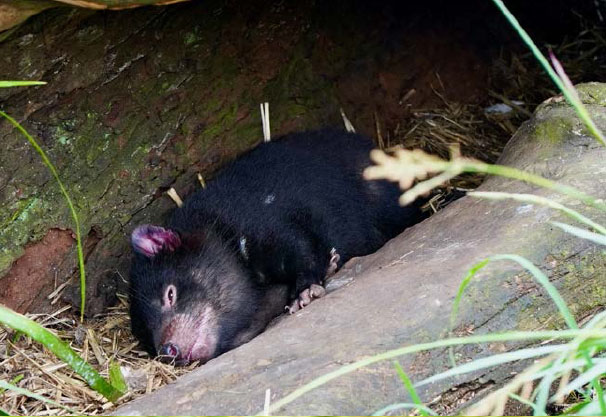
Travelling up to 16km in search of food, Tassie Devils will use their good sense of smell to scavenge for their food. Eating a lot of carrion Devils are nature’s clean-up crew with many devils coming together to eat. Solitary by nature, Devils will communicate or fight for their space on a carcass. Posturing, coughs, growls, snorts, sniffs, and screeches make for a noisy meal. Devils aren’t equipped to take down large prey. However, they are opportunists. Small or infant animals or the sick and injured also make perfect Devil meals. Devils help control feral animal populations. A kitten or fox pup left in a den is an ideal meal for a Tasmanian Devil.
A wild Tasmanian Devil has a very short lifespan of 5-6 years. This number increases in captivity up to 8 years. Sexually mature at 2 years old, the breeding season is between March and April. The gestation period is 21 days, and like all marsupials, Devils give birth to live young. Devils will give birth to 30-40 imps, but there are only 4 teats in the mother’s backward-facing pouch. Once born, the strongest 4 imps will make their way inside and suckle for 4 months. After 4 months, the young joeys will stay with mum for another 5-6 months in the den.
The Tasmanian Devil is an endangered species. The most prominent threat is Devil Facial Tumour Disease (DFTD). First recorded in 1996, the disease has spread throughout Tasmania. The tumours first appear around the mouth before spreading over the face and neck. This fatal disease spreads from Devil to Devil through contact, like biting, fighting, and mating. Once infected, the tumours make it hard for a Devil to eat or drink, and the Devils suffer a long, horrible death as their bodies shut down from starvation and dehydration. The DFTD can hide from the Devil’s robust immune system, and scientists are still working on a cure for the disease. Unfortunately, in 2014 a second strain of the disease was detected in the Channel area of Tasmania, DFTD2. It’s not the first struggle the Devils have faced. In the early 1800s, there was a coordinated effort to eliminate the species because farmers blamed them for killing their livestock. Tasmanian Devils became a protected species in June 1941 with a law passed, and their numbers steadily rose. Humans are still responsible for declining numbers in Devil populations. With the Devils being nocturnal and their favourite meal being carrion, too many find themselves victims of car strikes.
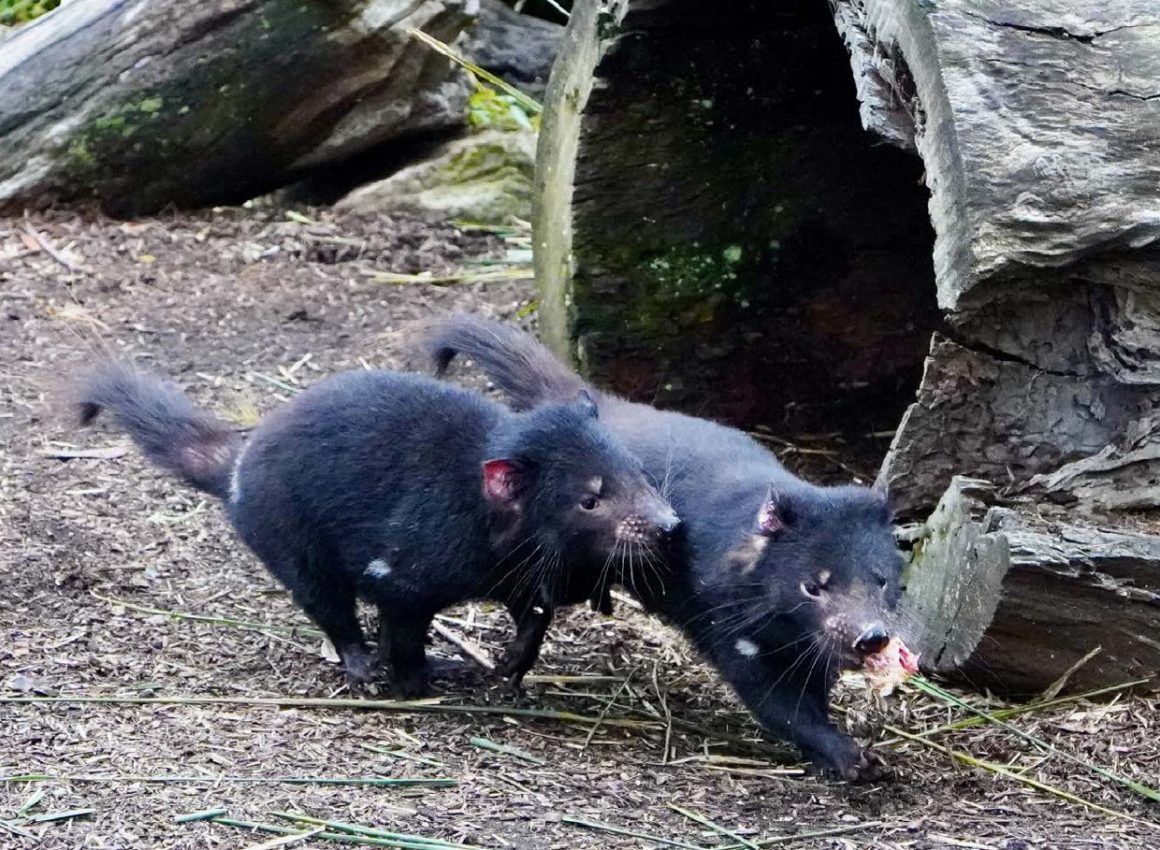
The fight is on once again to save these beautiful animals. Conservation of the Tasmanian Devil is crucial for the balance of the ecosystem. There are around 35 zoo breeding programs in the Save The Tasmanian Devil Program. The largest of these programs is Aussie Ark. Founded in 2011 as Devil Ark. The program started with 44 Devils up in the Barrington Tops in NSW. Aussie Ark is working to build an insurance population of Devils here on the mainland. The program has proved successful, with more than 390 devil joeys born at the sanctuary. In 2020, Aussie Ark released 26 Tasmanian Devils into a 400-hectare, feral-free, fenced sanctuary. The release is the first time in over 3000 years that the Tasmanian Devils have roamed part of the mainland. The Long-nosed Potoroo and the closest living relative to the Devil, the Eastern Quoll, were released along with the Tassie devil into the sanctuary. These 3 endangered species join the already existing 50 different species of mammal, 278 birds and 18 frog species, all now protected from feral animals.
So what does the future hold? So far, nothing has worked to combat the spread of DFTD. If the disease does wipe out the wild population in Tasmania, the plan is that the breeding programs will re-establish a wild population again. It’s no secret that Aussie Ark would love to see a wild population of Tasmanian Devils back on the Australian mainland. The Tasmanian Devil is one of Australia’s native apex predators and could assist in the control of feral predators killing thousands of our native animals a day.
If you would like more information or would like to help save the Tasmanian Devil, please visit.
Aussie Ark: aussieark.org.au
Save The Tasmanian Devil Program: tassiedevil.com.au