
William John Wills was the man behind the success of the epic Burke & Wills story. He is an unsung Aussie hero, but you have heard of him?
He is an unsung hero, but you have heard of him. Seems like an oxymoron, doesn’t it? You mention the name William John Wills in any outback pub, and there will be a bit of head-scratching, but mention Burke & Wills, and you’ll be met with knowing nods and maybe even a deprecating monologue on how foolish they were.
But to focus on the few bad choices they made is to do the whole story, and in particular, William John Wills, a massive injustice.
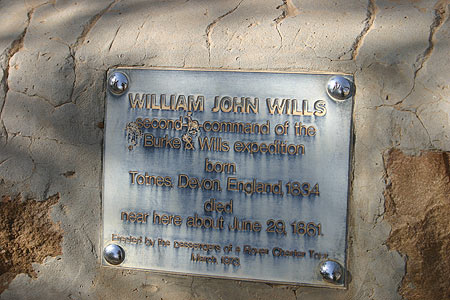
Wills was born in Devon, England in 1834 to Dr William Wills, and his wife Sarah. Will’s early life in England saw him attend St Andrews Grammar, and he was also tutored by his father. After school, he worked with his father while undertaking courses at a couple of local hospitals.
Like a lot of folks in the UK at the time, Dr Wills had a keen interest in Australia, in particular, the gold mining that was taking the world by storm. An 18-year-old Wills and his brother Thomas both boarded the Janet Mitchell in Dartmouth and set sail for Australia, arriving in Port Phillip in January of 1853. For Wills, the adventure of a lifetime had begun!
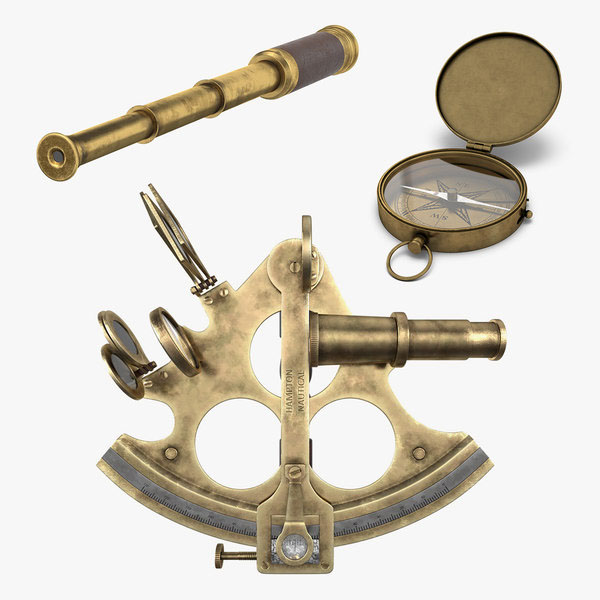
The brothers Wills at first got jobs as shepherds at Deniliquin in NSW, which suited William’s temperament and enthusiasm to embrace his new surroundings perfectly. Wills had a thirst for knowledge and had a particular interest in the natural world, astronomy, geography, mathematics, literature and exploration. The boys stayed in Deniliquin until their father joined them in October 1853, then they relocated to Ballarat. Dr Wills opened a medical practice, and young William worked here alongside his father assisting in surgical procedures. This of course, was never going to satisfy William, the taste of an outdoors life in Deniliquin had given him the desire to see more of this new country he was now in. He took a gig as a Surveyor and also volunteered as an assistant at the astronomical and magnetic observatories in Melbourne under a bloke called Professor Gail Neumayer. Professor Neumayer was a member of Melbourne’s Royal Society, a fellowship dedicated to all things educational and well-to-do. The meeting of Neumayer and Wills was a timely one.
In the mid-1850s in Melbourne, times were exciting. The booming gold rush was enticing people from all over the world, and Melbourne had quickly become one of the fastest-growing cities in the world, and thanks to the sheer quantities of gold, one of the richest! It was also a time of transition. Up until now, news from Mother England had been arriving in Australia by ship, and this news was always of great importance. It contained things like the prices of wool, ore and other commodities that Australia had proven to be a good source of, however with the time it took for the news to arrive, quite often it would be totally outdated before it even arrived.
A new invention called the telegraph had come into existence, and it was quickly being put into use around the world. This meant that news that would take months to come around the world, could arrive in just days thanks to the network of telegraph stations popping up all over the world. It was quickly decided that the best point of landfall for this new telegraph to make its way to Australia from Jakarta would be around present-day Darwin.
Adelaide, in South Australia, had always been the dropping-off point for the ships that carried the news from England, and Adelaide did not want to lose the rights to the news. So the South Australian Government decided to put together an exploration party to find a way north from Adelaide to Darwin in order to run an overland telegraph line. A bloke named John Macdoull Stuart was chosen to head up the party. It was a wise choice, as Stuart had worked under the pioneering explorer, Charles Sturt, and he had what it took as a draughtsman, surveyor and navigator to map out a course.
Back in Melbourne, the men of the Royal Society felt that it would be up to them to steal away the news from Adelaide, and win it for Melbourne – the most prestigious place in the colony! After a lot of meetings, forming of committees and subcommittees, eventually, a leader was found to head up the expedition, Robert O’Hara Bourke. Bourke possessed none of the skills required to lead such a party, with the exception of being a leader of men, and being sufficiently committed to the cause. He was fit and strong, commanded respect, and was ready to die to achieve his goal.
Thanks to his association with Professor Neumayer, William Wills was appointed to the exploration party as Surveyor (better known as the chief navigator), astronomer and third in command.
The party left Melbourne to much fanfare on August 20, 1860, with enough men, provisions, stock and camels to sink a ship! It was impractical and cumbersome, and extremely naïve of the organisers to think that bathtubs and a 20ft oak table would be absolute necessities. The plethora of stores and equipment led to a lot of bickering, and in Menindee Burke dismissed his second in command, George Landells. Landells was the man in charge of the camels, and some say he was only in it for the glory. He was not missed by the exploration party. This dismissal meant that Wills was promoted to second in command of the biggest and best-equipped exploration party ever in Australia’s history.
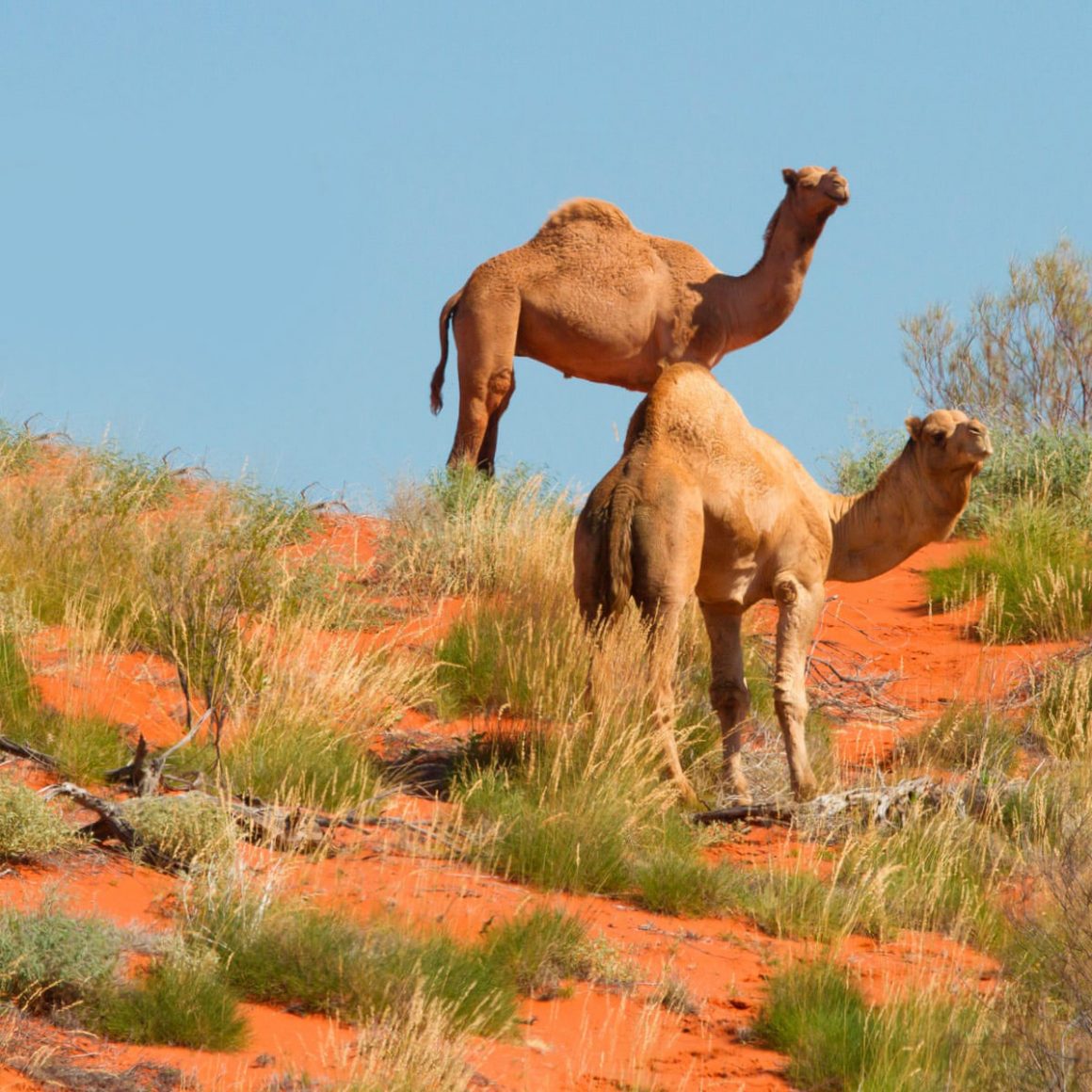
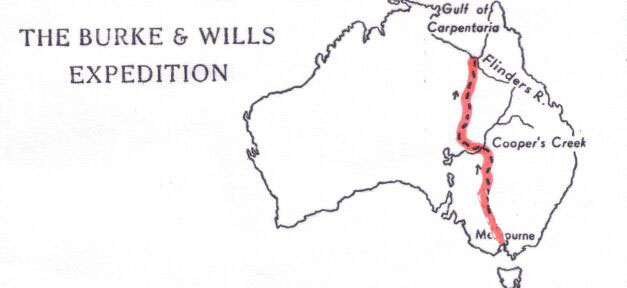
At Menindee Burke split the party and took a much more manageable group of men, stock and supplies to the base camp at Cooper Creek, near present-day Innamincka.
It was decided that Burke, Wills and two other men, Gray and King would leave the safety of Cooper Creek and make a dash for the gulf. The men were aware that the mission had become somewhat of a race between them and Stuart’s South Australian party, and Burke was determined to win the prize for Melbourne. A young German, William Brahe was left in charge of the Cooper Creek camp, and Burke instructed him to wait three months, after which time they should head back to the Darling River and base camp of Menindee, where the bulk of the stores still resided. However, it was Wills, the only member of the party who seemed to understand the enormity of the task ahead, that spoke privately to Brahe and asked him to hang on for four months if he could.
The party left Cooper Creek and reached the Gulf of Carpentaria on February 11, 1861. Will’s diary (he was a prolific writer, unlike Bourke) details the physical toll the journey had taken on the men, who had walked the entire way. Rough terrain, hostile natives, tropical heat and monsoonal rain all took their toll. But worse still was the shortness of rations and illness that plagued the party. One man, Charlie Gray didn’t make it back to Cooper Creek at all, and the party spent an exhausting day giving him a proper burial and send off.
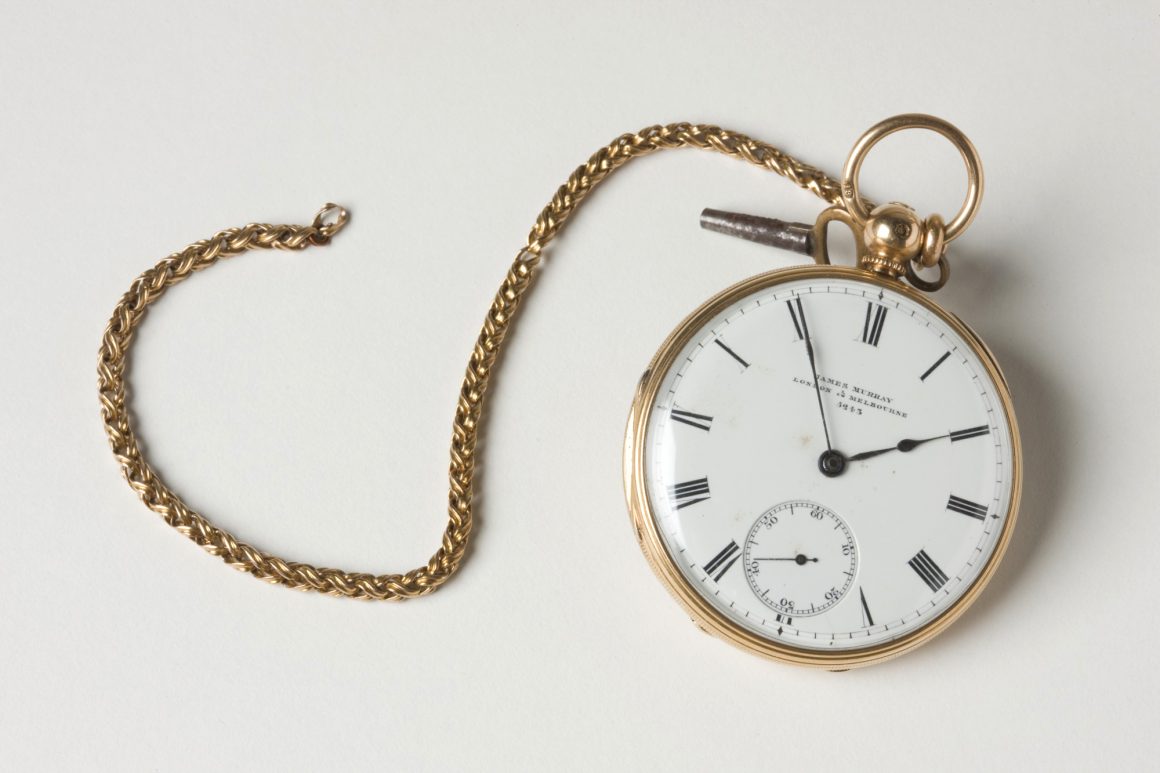
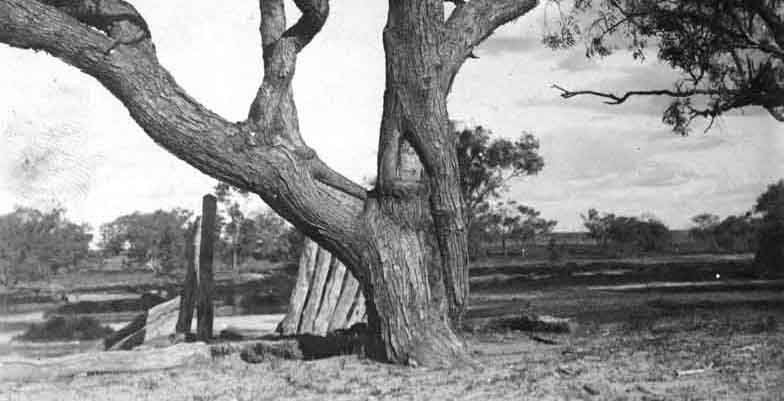
Quite unbelievably, Wills led the party back to the very same tree that they had departed from four months earlier. When you consider that all Wills had were astronomical charts, a few basic instruments and his skill as an astronomer and surveyor, it was quite a feat to come back to the exact spot from which they had departed. Alas, however, Brahe had left that morning. The men were weak and stayed to replenish their strength from the stores that Brahe had buried, and marked out by carving the word DIG into the huge Coolabah tree. They gave themselves no chance of catching up with the main party. Wills argued strongly that the best course of action was to head back slowly and steadily toward Menindee, but Bourke had other ideas. He asserted that they could make it to an outlying post further down the creek.
Of course, this proved to be wrong. Both men perished in the desert and the place of Will’s death can be found a few kilometres southwest of Innamincka, and it is still a haunting place to visit today.
The Burke and Wills story is one that has become the stuff of legend, and the variety of calamitous decisions made by Burke had sealed their fate. But the fact that the party had traversed the continent and made it back to the Dig Tree at all was all down the sheer brilliance of Wills, and it is this brilliance that is all too often overlooked when the Burke and Wills story is told. He truly was a pioneering hero, and we can only wonder at what else he may have gone on to achieve had he survived.